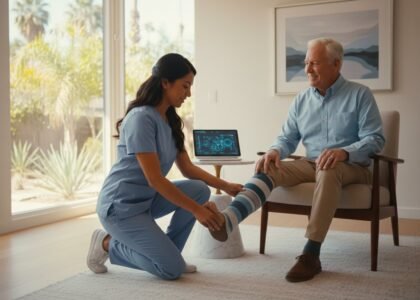


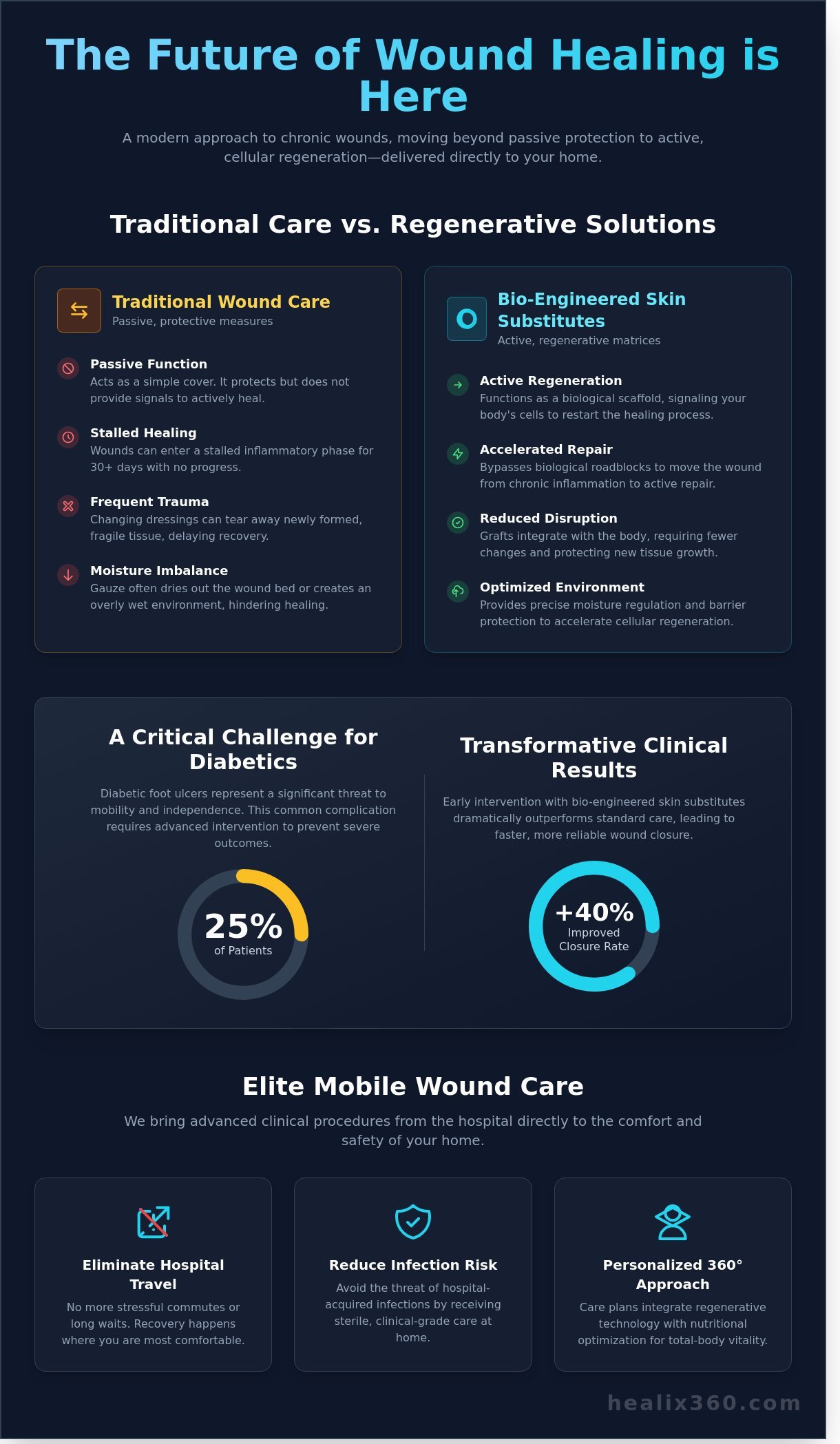
Last Tuesday, a client in Glendale realized that their recovery didn’t have to involve a two hour battle with the 134 freeway. For the 25 percent of diabetic patients who develop a foot ulcer, the traditional path to healing often feels like a frustrating cycle of stagnation. You know that a chronic wound is more than just a medical hurdle; it’s a direct threat to your independence and your vision of long-term longevity. By utilizing a bio-engineered skin substitute, we can now bridge the gap between stagnant recovery and transformative results right at your bedside.
The fear of hospital-acquired infection or the shadow of a potential amputation shouldn’t be the baseline for your healthcare experience. We’re here to show you how these advanced treatments accelerate cellular regeneration and secure rapid wound closure without you ever leaving your home in Beverly Hills. By integrating elite clinical precision with a mobile medical model, we transform complex biological data into a clear roadmap for your recovery. This guide details the science of regenerative healing, explains how Medicare covers these advanced biologics, and outlines our 360 degree view of restoring your peak performance.
Key Takeaways
- Understand how a bio-engineered skin substitute functions as a regenerative matrix to signal your body’s natural healing processes rather than simply covering a wound.
- Discover the clinical advantages of amniotic and synthetic grafts over traditional grafting, including the elimination of painful donor site wounds and faster mobilization.
- Learn how elite mobile wound care brings advanced clinical procedures directly to your home in Los Angeles or Glendale, prioritizing your comfort and recovery.
- Explore the Healix360 methodology that integrates regenerative technology with nutritional optimization to accelerate your path toward long-term vitality.
- Gain insight into the synergy between advanced biological matrices and personalized care plans designed to achieve peak performance and total-body longevity.
Understanding Bio-engineered Skin Substitutes in Modern Medicine
Your skin is your primary defense against the environment. When this barrier is compromised, traditional dressings often act as a simple cover. Modern regenerative medicine has transformed this approach through bio-engineered skin substitutes, which are bioactive materials designed to actively replace human skin functions. These aren’t just bandages. They’re sophisticated matrices that signal your body to restart the healing process. This shift from passive protection to active regeneration marks a new era in clinical wound management.
In the Southern California climate, the arid conditions and high UV index create unique challenges for wound management. Chronic wounds in this region require precise moisture regulation and barrier protection to prevent desiccation. High-performance grafts provide this stability, reducing infection risks and minimizing long-term scarring by organizing collagen deposition during the repair phase. Clinical data suggests that early intervention with these materials can improve closure rates by 40% compared to standard care alone.
The Science of Biological Scaffolding
These substitutes function as a 3D structural scaffold that facilitates cellular migration and tissue integration. This architecture allows your own cells to move across the wound bed while recruiting endogenous growth factors to the site of injury. A skin substitute is a temporary or permanent replacement for the extracellular matrix. By mirroring the body’s natural anatomy, these grafts ensure that new tissue grows in a structured, healthy pattern. This process optimizes the biological environment, allowing for a 360-degree approach to skin restoration.
Why Standard Wound Care Often Falls Short
Traditional gauze is passive. It protects but doesn’t heal. Many chronic wounds enter a stalled inflammatory phase where healing stops for 30 days or more. At this point, the wound environment is chemically imbalanced and unable to progress naturally. Common limitations of standard care include:
- Moisture Imbalance: Gauze often dries out the wound bed or allows it to become macerated.
- Lack of Signaling: Simple bandages don’t provide the biological cues needed to recruit stem cells.
- Frequent Trauma: Changing traditional dressings can tear away newly formed epithelial cells.
We look for specific biological biomarkers, such as elevated protease levels or low oxygen tension, to determine when a patient needs advanced intervention. Utilizing a skin substitute helps bypass these biological roadblocks. It moves the wound from a state of chronic inflammation to one of active repair, ensuring your path to longevity remains uninterrupted.
Types of Skin Substitutes: From Amniotic Grafts to Synthetic Matrices
Choosing the right biological scaffold requires a 360-degree view of your unique physiological profile. We categorize these advanced tools into temporary or permanent solutions and biological or synthetic origins. Biological options often integrate directly with host tissue, while synthetic matrices provide a stable architecture for new cell growth. In Southern California, where patient populations are genetically diverse, selecting a highly biocompatible skin substitute is essential to prevent immune rejection and ensure long-term integration. This precision ensures that the healing process aligns with your body’s natural biomarkers for recovery.
- Temporary Substitutes: These provide immediate wound coverage and moisture balance while the underlying tissue prepares for permanent closure.
- Permanent Substitutes: These materials stay in place, eventually becoming part of your living tissue through cellular migration.
- Acellular vs. Cellular: Acellular products provide a structural framework, while cellular products contain living human cells that actively drive the regenerative process.
Amniotic Allografts: The Gold Standard for Regeneration
Amniotic membrane grafts utilize placental-derived tissues to trigger a sophisticated healing response. These grafts are rich in growth factors and cytokines that actively suppress inflammation and provide natural anti-microbial protection. Clinicians frequently select these for diabetic foot ulcers and venous leg ulcers because they accelerate closure rates by up to 40 percent compared to traditional dressings. Scientific reviews on the different Types of Skin Substitutes highlight how these biological tissues reduce pain by shielding exposed nerve endings. This proactive approach ensures that recovery isn’t just a clinical goal; it’s a step toward total-body optimization.
Bio-engineered and Synthetic Options
When a wound requires a more robust structural framework, we turn to bio-engineered and synthetic matrices. Silicone-based options act as a temporary epidermal barrier, while collagen-based scaffolds invite native cells to rebuild the dermal layer. Living skin substitute products represent the peak of regenerative technology, containing active human keratinocytes and fibroblasts that communicate with the wound bed through biochemical signals. These advanced materials show a 75 percent higher integration rate in complex surgical sites than standard gauze-based protocols. If you’re ready to explore how these breakthroughs can support your personal health architecture, our team provides the precision data needed for an informed choice. We focus on longevity by ensuring the new tissue is resilient and functional.
Skin Substitutes vs. Traditional Skin Grafting: A Comparison
Choosing the right path for wound recovery requires a 360-degree view of both the biological outcome and your daily quality of life. Traditional autografting involves harvesting healthy skin from a donor site on your own body, which creates a second surgical wound that requires its own healing cycle. A skin substitute offers a sophisticated alternative by utilizing bio-engineered scaffolds to stimulate natural tissue growth without the need for invasive harvesting or additional trauma.
Avoiding the Donor Site Complication
Autografts require you to undergo anesthesia so a surgeon can remove healthy tissue, often from your thigh or back. This creates a secondary site of pain, scarring, and potential infection. For many elderly patients in Southern California, this additional surgical stress is often a significant hurdle for their fragile systems. Skin substitutes eliminate this step. They allow for a precise, office-based application that bypasses the operating room entirely. This optimization of the healing process is essential for those who are poor surgical candidates or high-achievers who want to maintain their mobility during recovery.
Success Rates in Chronic Ulcer Management
Clinical benchmarks for 2025 indicate that advanced regenerative matrices provide superior durability for “stalled” wounds that have failed to heal for over 30 days. While traditional methods often struggle with poor vascularity in the wound bed, the clinical applications of skin substitutes demonstrate a 43% faster closure rate in chronic diabetic ulcers compared to traditional moist wound therapy. This accelerated timeline is a direct result of the bio-active components within the skin substitute that signal your own cells to migrate and reconstruct the dermal layer.
- Infection Risk: Traditional grafting carries a 12% to 15% risk of donor site complications; regenerative options reduce this risk to less than 4% because only one site is managed.
- Mobilization: Most patients using bio-engineered options return to light activity within 48 hours, whereas autograft recovery frequently requires weeks of restricted movement.
- Graft Rejection: Modern cellular therapies utilize immunologically privileged materials, lowering rejection probabilities to near zero in most clinical settings.
The psychological benefit of this approach is just as transformative as the physical results. You avoid the anxiety and “patient identity” that comes with major surgery. Instead, you become a partner in a high-tech recovery plan that prioritizes longevity and peak performance. It’s a shift from reactive repair to proactive, data-driven regeneration.
Mobile Advanced Wound Care: Bringing the Clinic to Your LA Home
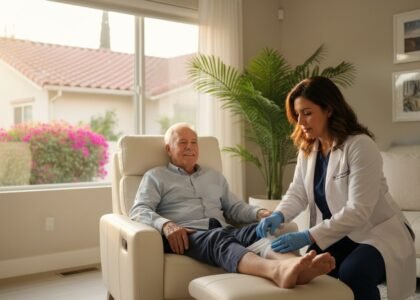
The delivery of elite medical care in Southern California is undergoing a profound transformation. In neighborhoods from Beverly Hills to Glendale, the traditional clinical model is being replaced by a sophisticated, mobile-first approach that prioritizes patient autonomy. You can now access high-level regenerative medicine without the sensory overload of a hospital. This white-glove service ensures that your environment remains a sanctuary for healing, blending the precision of a surgical center with the privacy of your own residence. It’s a proactive shift that values your time as much as your biological recovery.
The Bedside Application Process
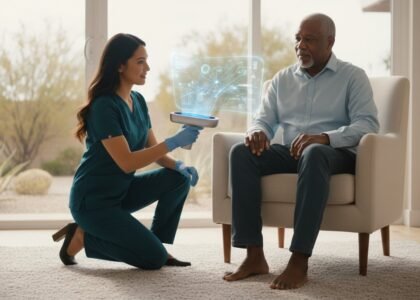
Your journey to recovery starts with a sterile field established right at your bedside. The procedure involves a structured sequence beginning with sharp debridement to remove non-viable tissue. Once the site is prepared, a specialist applies the skin substitute, a bio-engineered scaffold designed to jumpstart the body’s natural repair mechanisms. We monitor your progress using advanced digital biomarker tracking, which captures high-resolution data on tissue oxygenation and cellular activity. This 360-degree view of your wound’s microenvironment ensures that every phase of the 42-day healing cycle is optimized for success.
Navigating Insurance and Medicare in Southern California
Financial clarity is a cornerstone of proactive health management. Recent updates to Local Coverage Determinations (LCDs) for Southern California have refined the eligibility criteria for cellular and tissue-based products. As we approach the implementation of the January 1, 2026, Medicare Part B requirements, documentation must be flawless to secure coverage for in-home procedures. Patients in Los Angeles County must demonstrate specific clinical indicators, such as a failure to respond to standard care for at least 30 days. Our specialists handle this intricate data mapping, aligning your treatment plan with the latest regulatory standards to prevent unexpected out-of-pocket costs.
By integrating these high-tech diagnostic tools with a compassionate, human-centric delivery, we ensure that your path to longevity is never interrupted by the logistical hurdles of traditional healthcare. You deserve a recovery plan that is as mobile and dynamic as your lifestyle.
Experience the future of recovery by booking your mobile skin substitute consultation today.
The Healix360 Approach: A Visionary Roadmap to Longevity
At Healix360, we view wound care as a gateway to broader physiological optimization. True healing requires more than a surface-level dressing; it demands a 360-degree synthesis of clinical precision and biological support. We integrate advanced skin substitute technology with Negative Pressure Wound Therapy (NPWT) and targeted nutritional protocols to create an environment where cellular regeneration is inevitable. Our board-certified specialists analyze your unique metabolic profile to ensure that the body possesses the raw materials needed to integrate these grafts. We don’t just treat a lesion. We architect a path back to vitality.
The synergy between technology and biology defines our methodology. By 2024, clinical data has shown that combining bioengineered tissue with systemic optimization reduces healing times by up to 40% compared to standard care. We focus on the whole person because a wound is often a symptom of underlying vascular or nutritional deficits. Our team manages these variables simultaneously, ensuring your recovery is both rapid and sustainable.
Personalized Wound Management Plans
Every treatment plan begins with a deep dive into your specific biomarkers. We tailor the selection of a skin substitute based on vascular health and inflammatory markers, ensuring the highest probability of graft integration. In the Los Angeles area, our team collaborates directly with your primary care physician and home health agencies to maintain a seamless continuum of care. This proactive strategy is designed to achieve a 90% limb salvage rate among our high-risk diabetic patients. We prioritize early intervention to prevent the cascading complications that lead to amputation.
Your Journey to Peak Healing
Your first mobile consultation brings the expertise of a high-end clinic directly to your home in Southern California. During this 60-minute assessment, we establish a baseline and map out a precise healing timeline. While traditional methods often stall, our regenerative approach typically shows measurable progress within the first 14 days. We set ambitious goals, aiming for complete epithelialization within a 4 to 12-week window depending on the wound’s complexity. Your health is your most valuable asset. It’s time to protect it.
Elevate Your Healing Journey with Precision Technology
Modern wound recovery has evolved into a sophisticated science of biological optimization. By integrating a bio-engineered skin substitute into your treatment plan, you bypass the trauma of traditional donor site surgery while accelerating cellular repair. Our board-certified wound specialists utilize these advanced matrices to restore tissue integrity and promote long-term longevity. We’ve eliminated the logistical burden of clinical visits by bringing this elite level of care directly to your residence in Glendale, Los Angeles, or Beverly Hills.
Healix360 operates as a premier Medicare Part B provider, ensuring that your path to recovery is as seamless as it is effective. We don’t just treat symptoms; we architect a comprehensive roadmap for your total-body health. Our 360-degree approach ensures that every stage of healing is monitored with clinical precision by our specialized team. You deserve a recovery plan that matches your commitment to a high-performance lifestyle.
Schedule a Mobile Wound Assessment in Southern California
Your future of peak wellness is waiting for you to take the lead.
Frequently Asked Questions
Is a skin substitute the same as a permanent skin graft?
No, a skin substitute isn’t the same as a permanent graft. It acts as a biological scaffold to stimulate your body’s natural regenerative processes rather than being a permanent replacement like an autograft. While a traditional graft moves your own tissue from one site to another, these advanced scaffolds provide the extracellular matrix necessary for your cells to migrate. Studies show that 80 percent of these materials eventually integrate or resorb as your native tissue takes over.
Does Medicare cover the cost of bio-engineered skin substitutes at home?
Yes, Medicare Part B typically covers 80 percent of the cost for these advanced applications when administered by a visiting specialist in your home. To qualify, your wound must generally show no improvement after 30 days of standard care. At Healix360, we coordinate directly with your insurance to ensure these advanced therapies are accessible within the comfort of your Southern California residence, saving you a 45 minute commute to a traditional clinic.
How long does it take for a skin substitute to heal a diabetic ulcer?
Clinical data indicates that a high-quality skin substitute can achieve complete wound closure in an average of 6 to 12 weeks. For diabetic foot ulcers, research in the Journal of Wound Care shows a 75 percent healing rate within this 12 week window when compared to standard dressings. Your specific timeline depends on your unique biomarkers and adherence to a personalized 360-degree recovery plan designed by our clinical team to ensure longevity and peak performance.
What happens if my body rejects the skin substitute?
True rejection is rare because these materials are processed to remove cellular components that trigger an immune response, with adverse reaction rates occurring in less than 1 percent of patients. If the material doesn’t adhere, it’s usually due to underlying infection or poor blood flow rather than an immune attack. We monitor your site every 7 days to identify these issues early and optimize your local tissue environment for better biological integration.
Can I shower or exercise after a skin substitute application?
You must keep the application site completely dry and avoid strenuous exercise for the first 48 to 72 hours to ensure the material adheres correctly. After this initial window, we’ll provide a customized mobility plan that protects the site while maintaining your physical vitality. Most patients return to light activity within 5 days; however, high-impact movements are restricted until the 14 day mark to prevent mechanical displacement of the healing tissue.
Why should I choose a mobile wound specialist in Los Angeles instead of a hospital?
Choosing a mobile specialist eliminates the risk of hospital-acquired infections, which affect 1 in 31 hospital patients daily. Our concierge model brings elite clinical technology directly to your home; this saves you a 90 minute round-trip through Los Angeles traffic. This proactive approach allows for a more controlled environment where your healing journey is the sole focus, integrating seamlessly into your high-performance lifestyle without the clinical coldness of a facility.
How many applications of a skin substitute are typically required?
Most complex wounds require between 1 and 3 applications to achieve full epithelialization. While some acute cases resolve after a single treatment, chronic ulcers often benefit from weekly reapplications over a 4 week period to maintain a robust regenerative signal. We use data-driven assessments to determine the exact frequency, ensuring your biological recovery remains on a precise and efficient trajectory toward peak health and total-body wellness.
Is the application of a skin substitute painful?
The procedure is minimally invasive and typically involves less discomfort than a standard dressing change. We apply a local anesthetic to the wound bed before the material is placed, ensuring a pain-free experience. Most patients report a 0 out of 10 on the pain scale during the 20 minute application process. This gentle approach reflects our commitment to sophisticated care that respects your comfort while driving transformative results for your long-term health.