
Treatments & Modalities
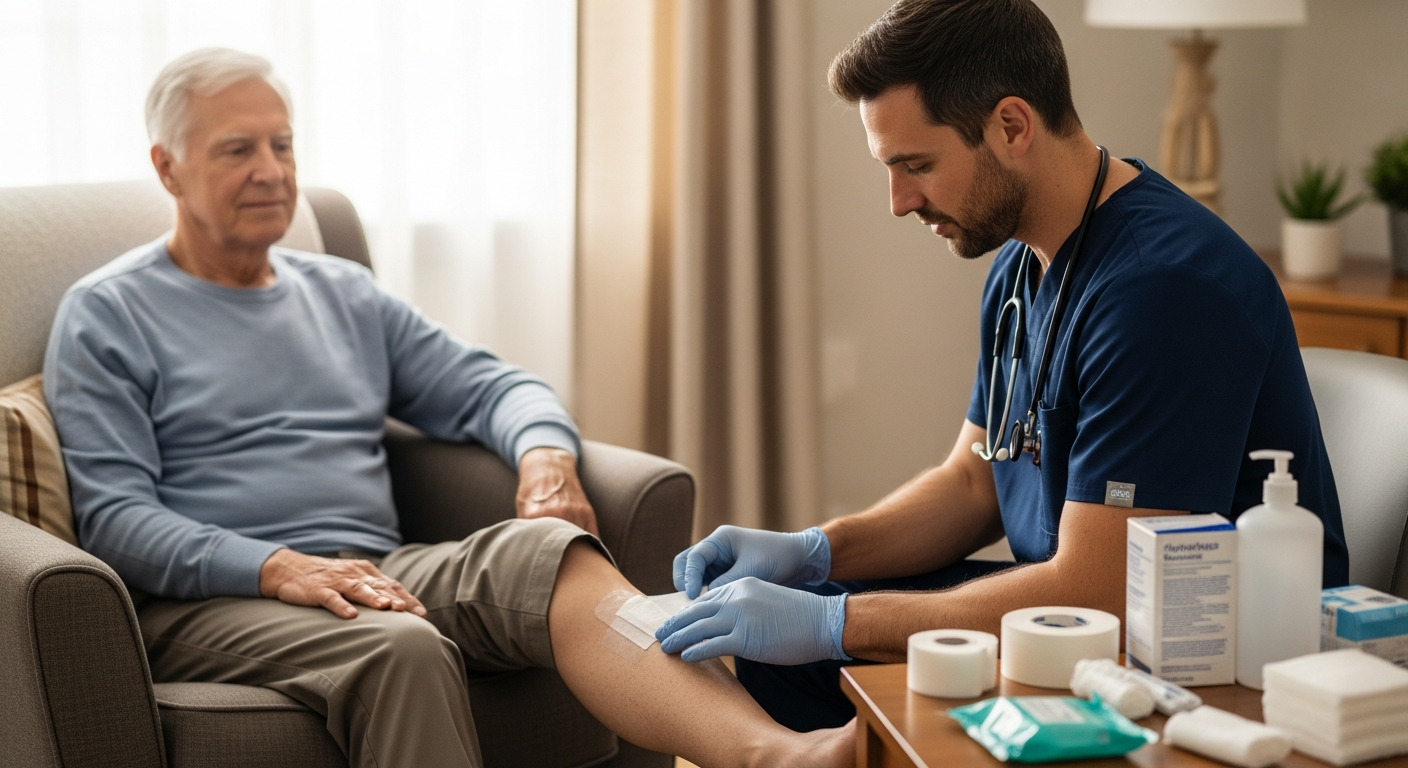
Evidence-based wound care delivered by licensed physicians and nurse practitioners; including sharp debridement, infection management, compression therapy, offloading, and advanced wound care products such as skin substitutes when clinically appropriate.
Debridement & Wound Bed Preparation
Sharp Debridement
Surgical removal of necrotic tissue using a scalpel or curette.
Learn More →
Mechanical Debridement
Physical removal of debris and devitalized tissue using force or friction.
Learn More →
Enzymatic Debridement
Application of chemical enzymes to dissolve dead tissue.
Learn More →
Autolytic Debridement
Using the body's own enzymes and moisture to soften and remove dead tissue.
Learn More →
Santyl (Collagenase) Enzymatic Debridement
Prescription enzymatic ointment that selectively digests necrotic tissue without damaging healthy tissue.
Learn More →
Advanced Therapies & Biologics
Wound Vac Therapy (Negative Pressure Wound Therapy / NPWT)
Wound vac (NPWT) applies a controlled vacuum system to promote healing and manage heavy drainage.
Learn More →
Skin Substitutes
Bioengineered tissues applied to wounds to stimulate rapid cellular growth.
Learn More →
Amniotic & Placental Allografts
Advanced biological dressings derived from donated human birth tissues.
Learn More →
Bioengineered Skin Substitutes
Laboratory-grown cellular matrices to replace lost tissue in severe wounds.
Learn More →
UltraMIST Therapy System
Low-frequency, non-contact ultrasound therapy that delivers acoustic energy to stalled wound beds.
Learn More →
Regranex (Becaplermin / PDGF) Growth Factor Therapy
FDA-approved recombinant platelet-derived growth factor gel for diabetic foot ulcers.
Learn More →
Specialized Dressings & Antimicrobials
Collagen Dressings
Topical dressings that provide a structural matrix to accelerate healing.
Learn More →
Antimicrobial Silver Dressings
Dressings infused with silver ions to eradicate bacteria and manage infection.
Learn More →
Hydrocolloid & Hydrogel Dressings
Moisture-donating and moisture-retentive dressings to optimize the healing environment.
Learn More →
Foam Dressings
Highly absorptive polyurethane dressings for managing moderate to heavy exudate.
Learn More →
Alginate & Hydrofiber Dressings
Ultra-absorptive dressings derived from seaweed to manage extreme drainage and bleeding.
Learn More →
Biologic Dressings
Naturally derived dressings that deliver growth factors and structural proteins to chronic wounds.
Learn More →
Collagen Particles & Powders
Sprinkleable collagen matrix that conforms to irregular wound beds and tunnels.
Learn More →
Professional Dressing Changes
Clinician-performed sterile dressing changes that maintain moisture balance, manage exudate, and protect the healing wound bed.
Learn More →
Topical Antibiotic & Antimicrobial Treatments
Locally applied antibiotic and antimicrobial agents that reduce surface bioburden and control localized wound infection.
Learn More →
Compression & Offloading Support
Diagnostics & Infection Management
Wound Cleansing & Irrigation
Pressurized mechanical flushing to remove bacteria and debris.
Learn More →
Wound Bed Preparation
Comprehensive protocol addressing tissue, infection, moisture, and edges.
Learn More →
Infection Management
Targeted clinical protocols to eradicate biofilm and localized bacterial burden.
Learn More →
Photography & Digital Measurement
Advanced digital tracking to precisely monitor healing trajectories.
Learn More →
Wound Cultures
Targeted microbiology testing to identify infection-causing organisms and guide antibiotic therapy.
Learn More →
Advanced Wound Assessments
Comprehensive multi-modal evaluation that combines vascular, nutritional, infection, and tissue analysis.
Learn More →
Vascular Assessment
Non-invasive bedside testing, ABI, TBI, and Doppler, to confirm adequate blood flow before treatment.
Learn More →
In-Home Wound Evaluations
Comprehensive bedside wound evaluation delivered in the patient's home, facility room, or care setting.
Learn More →
PCR Wound Testing & Skin Culture Analysis
Molecular DNA-based identification of wound pathogens and resistance genes, complementing traditional culture and sensitivity testing.
Learn More →