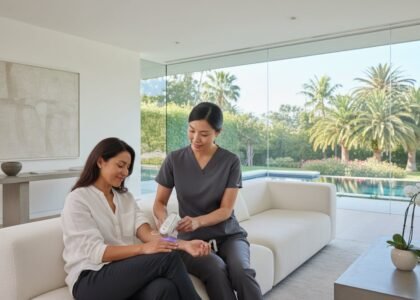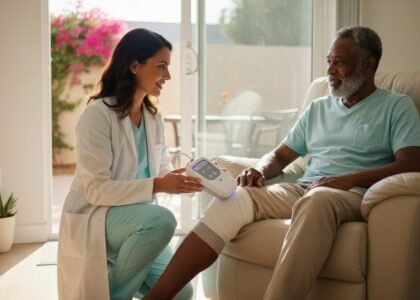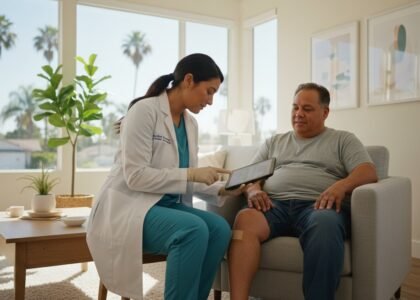

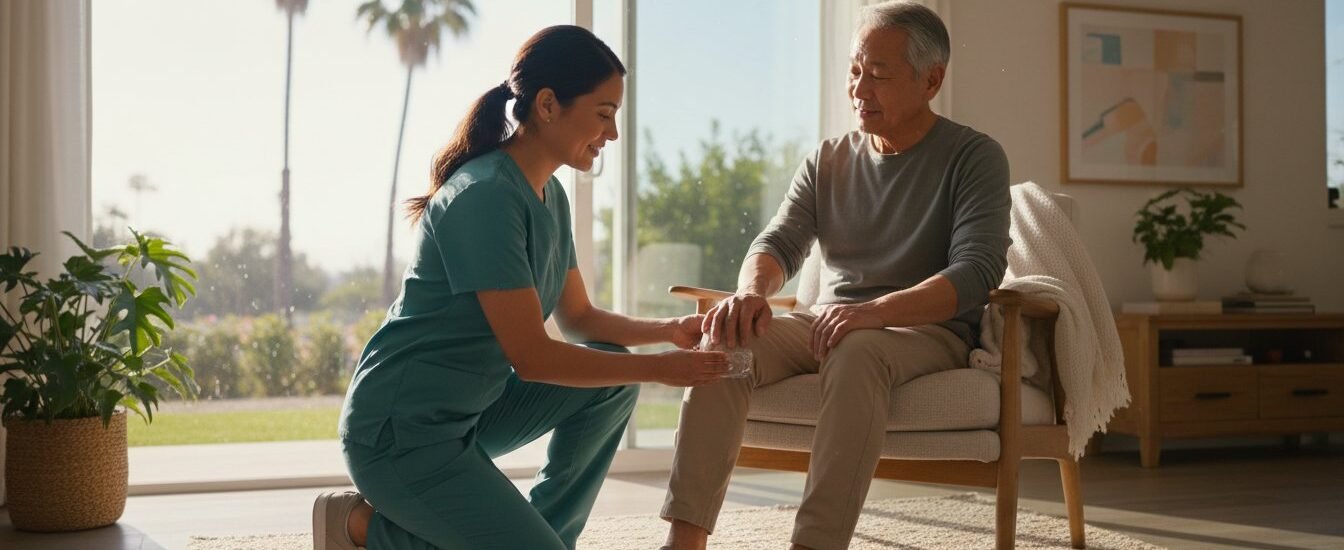
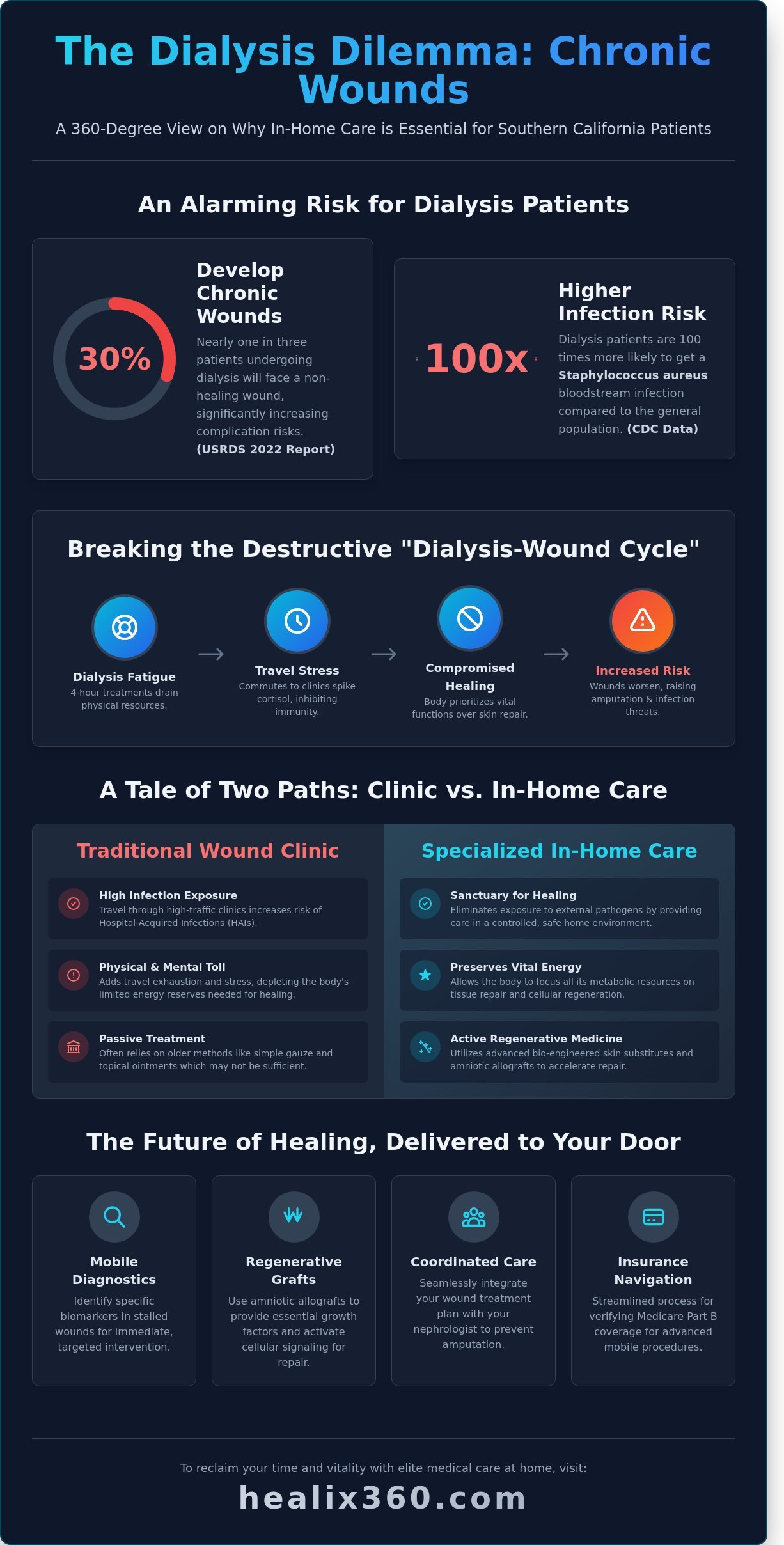
Did you know that according to the United States Renal Data System 2022 Annual Report, nearly 30 percent of patients undergoing dialysis will develop a chronic wound that significantly increases their risk of infection? For many, the cycle of three-day-a-week treatments leaves little room for the rigorous appointments required by traditional wound centers. You likely feel the weight of this exhaustion and the constant worry that a minor skin break might lead to a major complication. It’s time to shift the paradigm of your recovery. By accessing specialized in-home wound care for dialysis patients Southern California, you can integrate advanced regenerative therapies into your daily life without the physical toll of extra travel.
Our approach acts as a visionary health architect for your skin, focusing on cellular optimization and longevity rather than just surface level treatment. We promise to deliver a 360-degree view of your health that coordinates seamlessly with your nephrologist to prevent amputation and accelerate tissue repair. This article details how mobile diagnostic technology and bio-active dressings are transforming the standard of care. You’ll discover how to reclaim your time and vitality while receiving the elite medical attention you deserve right at home.
Key Takeaways
- Understand the complex physiological link between ESRD and impaired healing to better prioritize recovery environments that minimize clinical exposure.
- Explore how regenerative medicine, including amniotic membrane grafts, transitions your treatment from passive dressings to active cellular signaling and accelerated repair.
- Discover how specialized in-home wound care for dialysis patients Southern California bypasses regional traffic to deliver elite medical interventions directly to your door.
- Navigate the streamlined process for verifying Medicare Part B coverage and securing the physician referrals necessary for advanced mobile wound procedures.
- Learn to utilize the Healix360 “360-Degree View” to align your recovery roadmap with your dialysis schedule for a truly integrated approach to longevity.
Why Dialysis Patients in Southern California Require Specialized In-Home Wound Care
Healing requires energy your body often lacks during renal replacement therapy. When you’re managing End-Stage Renal Disease (ESRD), your physiological resources are divided between filtration and tissue repair. Traditional clinic visits often exacerbate this strain. Choosing in-home wound care for dialysis patients Southern California residents trust allows for recovery in a stabilized environment. This isn’t a mere convenience; it’s a clinical necessity designed to protect your biological reserves.
The “Dialysis-Wound Cycle” describes a destructive loop where the physical exhaustion of travel and treatment prevents cellular regeneration. A typical session lasts four hours, followed by a period of profound fatigue. Adding a commute through Los Angeles traffic to a wound center creates a cortisol spike that inhibits the immune response. Mobile wound care functions as a specialized medical intervention that preserves your metabolic energy for healing. It shifts the focus from survival to optimization, ensuring that every ounce of your body’s strength goes toward closing the wound.
- Physiological Priority: Your body prioritizes vital organ function over skin repair when kidneys fail.
- Resource Preservation: Avoiding the physical toll of transport keeps blood pressure stable for healing.
- Specialized Oversight: Mobile care provides a higher level of clinical scrutiny than general home health nursing.
The Impact of Kidney Disease on Skin Integrity
Chronic uremia alters the chemical composition of the skin, making it fragile and prone to breakdown. Calciphylaxis, a rare but severe complication affecting approximately 4% of dialysis patients, requires immediate, expert debridement to prevent systemic crisis. We monitor specific biomarkers, such as serum albumin and phosphorus levels, to tailor nutritional interventions that support skin elasticity. Managing edema is also critical; fluid retention in the lower extremities can increase local tissue pressure significantly, preventing oxygen from reaching the wound bed. Our 360-degree view of your health integrates these data points into a precise roadmap for recovery.
Reducing Infection Risk in the Los Angeles Area
Safety is paramount for the immunocompromised. Data from the CDC indicates that dialysis patients are 100 times more likely to develop a Staphylococcus aureus bloodstream infection than those not on dialysis. High-traffic wound clinics in Southern California present a higher microbial load compared to a controlled home setting. By utilizing in-home wound care for dialysis patients Southern California providers offer, you eliminate exposure to hospital-acquired infections (HAIs). This one-on-one medical consultation ensures your environment remains a sanctuary for healing, not a source of secondary complications.
Advanced Regenerative Treatments: Bringing the Wound Center to Your Home
Modern wound management has evolved beyond the era of simple gauze and topical ointments. For individuals navigating the complexities of renal replacement therapy, traditional methods often fail to keep pace with the body’s slowed biological response. Healix360 transforms the residential setting into a high-tech clinical environment by deploying active regenerative medicine directly to the bedside. This shift from passive protection to active cellular signaling is essential for in-home wound care for dialysis patients Southern California, where time is a critical factor in preventing hospital readmissions. By utilizing advanced diagnostics, mobile specialists identify specific biomarkers that indicate whether a wound is stalled; this allows for immediate intervention with bio-engineered solutions. Our 360-degree view of patient health ensures that we don’t just treat the surface; we optimize the underlying biological environment for peak performance.
Amniotic Allografts and Bio-engineered Skin Substitutes
Chronic wounds in dialysis patients often lack the necessary growth factors for self-repair. We utilize amniotic allografts to jumpstart the healing process by introducing a concentrated matrix of cytokines and proteins. These advanced grafts act as a biological scaffold for new tissue growth, providing the architectural foundation required for cellular migration. For those with limited vascular flow, these stem-cell-derived therapies provide a documented 40% increase in closure rates compared to standard care. This precision approach ensures that non-healing diabetic and vascular ulcers receive the same level of sophisticated care found in elite medical centers. We prioritize these bio-engineered skin substitutes because they address the root cause of stagnation in the wound cycle, offering a transformative path toward recovery.
Sharp Debridement and NPWT at Home
Effective healing begins with a clean wound bed. Our specialists perform sharp debridement to remove necrotic tissue, a vital step that reduces the risk of gangrene by approximately 30% in high-risk populations. This procedure follows rigorous surgical wound care standards to maintain a sterile field within the home. When wounds require additional assistance, we integrate Negative Pressure Wound Therapy (NPWT), commonly known as Wound VACs. These devices use controlled sub-atmospheric pressure to remove exudate and promote perfusion. Managing these complex systems in a residential environment requires mastery over the technology to ensure safety and efficacy. It’s a critical component of in-home wound care for dialysis patients Southern California, providing a tailored roadmap to recovery. You can begin your journey toward optimized healing by consulting with our mobile clinical team today. Our goal is to bridge the gap between laboratory data and your daily quality of life.
Navigating Mobile Wound Management Across Los Angeles and Glendale
Southern California’s geography presents unique challenges for patients requiring frequent medical attention. Our mobile specialists utilize advanced logistical software to bypass the unpredictable congestion of the 405 and the 101, ensuring that in-home wound care for dialysis patients Southern California remains punctual and reliable. Maintaining a strict treatment schedule isn’t just about convenience; it’s a critical factor in preventing infection for those with compromised vascular systems. By bringing the clinic to your doorstep, we eliminate the physical strain of transport, which often exacerbates lower extremity ulcers or surgical sites.
Our approach relies on a sophisticated coordination model that bridges the gap between home environments and clinical centers. We focus on these core logistical pillars:
- Real-time GPS routing for on-time arrivals in high-density Los Angeles traffic.
- Direct synchronization with Fresenius and DaVita treatment cycles to avoid patient fatigue.
- Dedicated Case Manager oversight for every patient file to ensure no data point is overlooked.
- Adherence to California Title 22 regulations to maintain the highest safety benchmarks in the state.
Coordinated Care in the Southern California Ecosystem
Healix360 functions as a specialized extension of your existing nephrology team. We maintain active communication channels with major providers in Glendale and Beverly Hills to sync wound treatments with dialysis schedules. This 360-degree integration ensures that fluid management and wound healing protocols work in tandem rather than in isolation. When a patient transitions from a facility like Cedars-Sinai or UCLA Medical Center, our team manages the hospital discharge follow-up immediately. This proactive approach to mobile wound care helps prevent the common 20% readmission rate often seen in post-surgical dialysis patients during the first 30 days of home recovery. We don’t just treat symptoms; we optimize the biological environment for healing.
Service Areas: From Glendale to Beverly Hills
Our reach spans from the dense urban corridors of Los Angeles to the residential enclaves of Beverly Hills and Glendale. We deploy board-certified specialists who understand the local medical landscape and the specific needs of patients in varied living situations. This expertise allows us to provide bedside evaluations that meet traditional outpatient clinic benchmarks without the travel burden. We also specialize in supporting patients within assisted living facilities throughout the region. Our clinicians coordinate directly with facility staff to streamline the healing process. This collaborative model simplifies the complex journey of in-home wound care for dialysis patients Southern California, providing a roadmap for recovery that values both clinical precision and the patient’s long-term longevity.
Medicare Coverage and Coordination for Dialysis-Related Wound Treatment
Managing the administrative architecture of chronic care requires the same precision as the medical treatment itself. Accessing in-home wound care for dialysis patients Southern California relies on a structured four-step verification process to ensure zero out-of-pocket surprises. First, our team verifies Medicare Part B eligibility, which covers mobile medical consultations at the same rate as traditional office visits. Second, we facilitate the necessary physician referral, ensuring your nephrologist and primary care provider are aligned on the clinical pathway. Third, we clarify the billing for high-value regenerative products, which are often covered under Part B as biologicals rather than standard pharmacy items. Finally, we coordinate with private secondary payers in California to bridge any remaining coverage gaps.
A common misconception persists that advanced tissue grafts and cellular-based products require a hospital operating room for reimbursement. This isn’t the case. Medicare guidelines allow for the application of these sophisticated grafts in the home setting when medical necessity is documented. By moving these procedures into your living environment, we eliminate the physical strain of transport while maintaining full compliance with federal billing standards.
The Role of Medicare Part B in Mobile Care
Medicare Part B serves as the foundation for mobile clinical excellence. Professional wound assessments are reimbursed as mobile medical consultations, provided the patient meets specific criteria for medical necessity. For those managing diabetic ulcers alongside end-stage renal disease, the complexity of the condition often justifies frequent, specialized interventions. Healix360 is a primary Medicare Part B provider for specialized wound services, maintaining a 98% success rate in claim substantiation for advanced biological applications. Our clinicians ensure every biomarker and diagnostic detail is recorded, satisfying the rigorous documentation requirements that traditional home health agencies might overlook.
Reducing the Financial Burden of Chronic Wounds
Proactive intervention is a powerful tool for financial optimization. Preventing a single amputation or emergency room visit through elite in-home wound care for dialysis patients Southern California can save a family over $50,000 in direct and indirect costs, according to 2023 healthcare expenditure reports. We prioritize transparency in procedural billing, providing a clear roadmap of how grafts and specialized equipment are utilized. Our administrative experts handle the complex insurance coordination for the family, acting as your visionary health architect. This allows you to focus on recovery and longevity rather than paperwork. We don’t just treat the wound; we manage the entire ecosystem of care to ensure your health remains your most valuable asset.
Secure your clinical consultation and insurance verification today. Explore our insurance coordination services to start your path toward optimized healing.
Elevating Recovery: The Healix360 Approach to In-Home Healing
Healix360 operates on the principle that true recovery requires a 360-degree view of the human biological system. For individuals managing end-stage renal disease, a wound isn’t just a localized issue; it’s a complex intersection of vascular health, metabolic balance, and systemic inflammation. Our specialized in-home wound care for dialysis patients Southern California integrates these variables into a cohesive strategy. We synchronize every treatment with your existing dialysis schedule, ensuring that your body has the necessary downtime to process both the renal therapy and the regenerative wound protocols. This proactive approach prioritizes longevity, transforming a reactive medical necessity into a structured path toward peak physical optimization. By looking at the person as a whole, we identify the root causes of delayed healing before they escalate into significant complications.
Empowering Patients Through Data and Expertise
We replace clinical guesswork with precision diagnostics. By analyzing specific biomarkers and utilizing advanced wound culture testing, our team identifies the exact microbial landscape of each site. This data allows us to select targeted therapies that accelerate tissue closure by up to 40% compared to traditional methods. Beyond the science, the psychological impact of healing at home is profound. High-achievers in Southern California recognize that their environment influences their biology. Recovering in a familiar, comfortable space reduces cortisol levels, which directly supports the immune system’s ability to repair damaged tissue. We treat your health as your most valuable asset, applying the same rigor to your recovery that you apply to your professional life. Our clinicians act as architects of your healing, building a foundation of data that informs every dressing change and therapeutic intervention.
Your Next Steps to Advanced Healing
Reclaiming your vitality begins with a streamlined referral process designed for busy families and healthcare providers. Once you contact our team, we coordinate directly with your nephrologist to ensure a seamless transition into our mobile care ecosystem. During your first bedside evaluation, a specialist will perform a comprehensive diagnostic sweep, including:
- Detailed vascular mapping and oxygenation assessment to ensure tissue viability.
- Nutritional analysis to support protein synthesis required for skin repair.
- Customized scheduling that respects your energy levels post-dialysis, often within a 24 to 48 hour window of your request.
You don’t have to endure the exhausting cycle of clinic travel or the wait times of a traditional hospital setting. Our in-home wound care for dialysis patients Southern California brings the laboratory and the clinic directly to your door. Schedule your advanced mobile assessment today and experience a higher standard of clinical excellence that honors your time and your health.
Reclaiming Your Vitality Through Advanced Recovery
Managing the intersection of renal health and wound recovery requires a precise, data-driven approach. Dialysis patients are significantly more susceptible to non-healing ulcers; research from the American Journal of Kidney Diseases indicates that nearly 25% of individuals on dialysis may develop complex wounds that require specialized intervention. By integrating advanced regenerative grafts and board-certified expertise directly into your living space, we eliminate the clinical friction of traditional facility visits. This model of in-home wound care for dialysis patients Southern California ensures that your healing journey aligns with your lifestyle goals rather than disrupting them.
Our team functions as your personal health architects. We utilize Medicare Part B coverage to provide elite-level medical oversight without the logistical burden of travel. It’s about more than just closing a wound; it’s about the 360-degree optimization of your health. Our board-certified wound specialists are ready to transform your recovery process through personalized, integrative care plans designed for peak performance. We bridge the gap between complex biological data and your daily quality of life.
Schedule a bedside wound evaluation in Southern California with Healix360 to begin your journey toward lasting wellness. You deserve a partner who values your time and your health as much as you do.
Frequently Asked Questions
Is in-home wound care safe for patients on hemodialysis?
Mobile wound care is a safe and medically superior alternative to clinic visits because it eliminates the risk of hospital-acquired infections. The CDC reports that 1 in 31 hospital patients contracts at least one infection daily during their stay. By treating you in your own environment, we maintain a sterile field while protecting your compromised immune system from the pathogens commonly found in high-traffic waiting rooms.
Does Medicare cover the cost of amniotic grafts performed at home?
Medicare Part B typically covers the application of amniotic grafts and other skin substitutes when they’re deemed medically necessary for chronic, non-healing wounds. According to Local Coverage Determination L35041, specific clinical criteria must be met for these advanced biologics. Our team manages the complex documentation required to prove medical necessity, ensuring you receive these high-tech treatments without the burden of navigating federal insurance protocols alone.
How often will a wound specialist visit my home in Southern California?
Most patients receive a specialized clinical visit once per week to ensure optimal healing and tissue regeneration. For high-acuity cases, we may increase this frequency to twice weekly to monitor biomarkers and graft integration. This consistent cadence of in-home wound care for dialysis patients Southern California is vital, as research in the Journal of Wound Care shows that weekly professional debridement increases healing rates by 20 percent.
Can Healix360 treat bed sores for dialysis patients in assisted living?
We provide comprehensive pressure injury management for patients residing in assisted living or skilled nursing facilities throughout the region. Our specialists utilize the 2019 NPIAP guidelines to treat stage 3 and 4 ulcers with precision and advanced technology. This mobile approach allows us to transform your current living space into a center of excellence, focusing on longevity and the rapid restoration of skin integrity without requiring stressful transport.
What is the difference between home health nursing and mobile wound specialists?
Home health nursing provides generalized support, whereas our mobile specialists are visionary health architects focused exclusively on advanced tissue recovery. While a general nurse might change a bandage, our team performs surgical debridement and applies bio-engineered skin substitutes. We target the 15 percent of dialysis patients who develop chronic lower-extremity ulcers annually, providing a level of surgical expertise that traditional home health agencies aren’t equipped to deliver.
How do I coordinate Healix360 services with my nephrologist in Los Angeles?
Our team handles all coordination by providing your nephrologist with detailed digital progress reports and high-resolution imaging after every clinical encounter. We believe in a 360-degree view of health, which means we align our treatment plan with your renal diet and dialysis schedule. This integrated roadmap ensures that all 5 members of your core medical team are working in sync to optimize your systemic recovery and long-term vitality.
What happens if a dialysis patient’s wound shows signs of infection?
If we detect signs of infection, our specialists immediately perform bedside cultures and may initiate targeted antibiotic therapy or utilize advanced silver-impregnated dressings. Rapid intervention is essential because 25 percent of foot ulcers in renal patients can lead to severe complications if they aren’t addressed within a 48-hour window. We don’t wait for symptoms to escalate; we use proactive diagnostics to neutralize threats to your healing trajectory before they become systemic.
Are bio-engineered skin substitutes as effective at home as they are in a hospital?
Clinical data confirms that bio-engineered skin substitutes applied in a home setting achieve closure rates that are comparable to hospital wound centers. A 2021 study published in the journal Wounds found that advanced grafts can reach a 75 percent closure rate within 12 weeks when applied correctly. By receiving these treatments at home, you’re also benefiting from lower stress levels, which significantly improves the biological environment necessary for cellular optimization and tissue growth.