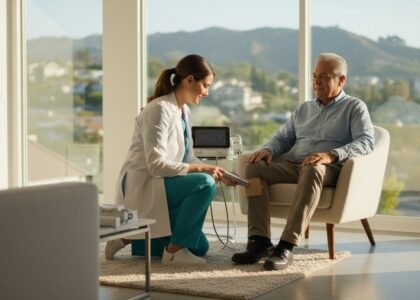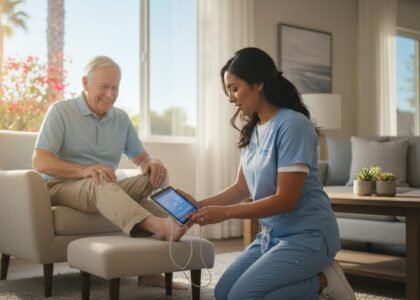


When dealing with a chronic wound, the last thing you need is the stress of traveling to appointments, especially when mobility is limited and every trip feels like climbing a mountain with your wound slowing you down. Mobile wound care changes that equation completely by bringing specialized treatment directly to your home.
This isn’t just about convenience, though that’s a huge part of it. It’s about getting expert-level care without the barriers that often prevent people from accessing the treatment they desperately need.
What Is Mobile Wound Care?
Mobile wound care means healthcare professionals come to your home to provide wound treatment services. Instead of you traveling to a clinic or hospital, a trained wound care specialist arrives at your doorstep with all the equipment and expertise needed to treat your wound properly.
These aren’t basic bandage changes you could do yourself. Mobile wound care specialists bring advanced treatment capabilities, specialized dressings, and clinical expertise directly to patients. They assess wounds, perform debridement when necessary, apply advanced therapies, and monitor healing progress just as thoroughly as they would in a traditional clinical setting.
The model works particularly well for people with limited mobility, those recovering from surgery, elderly patients, and anyone dealing with chronic conditions like diabetes that make travel difficult.
Who Benefits Most From Mobile Wound Care?
Certain groups of people see dramatic improvements in their healing outcomes and quality of life when they switch to mobile wound care.
Elderly patients with mobility challenges often struggle to make regular clinic appointments. Getting dressed, arranging transportation, waiting in waiting rooms, all of this takes a toll. Mobile care eliminates these obstacles completely.
People with diabetes who develop foot ulcers need consistent, specialized attention. Missing appointments due to transportation issues or physical difficulty can lead to complications. Having care come to them ensures continuity of treatment.
Post-surgical patients recovering at home benefit enormously. Rather than disrupting their recovery by traveling for wound checks, they can heal in the comfort of their own space while still receiving expert monitoring.
Patients with limited transportation options or those living in rural areas face real barriers to accessing specialized wound care. Mobile services bridge this gap, ensuring geography doesn’t determine healing outcomes.
The Clinical Benefits Are Real
Multiple studies show that mobile wound care isn’t just more convenient, it actually produces better clinical outcomes than traditional in-clinic care for many patients.
Patients receiving wound care at home demonstrate higher compliance with treatment plans. When care happens in a familiar environment without the stress of travel, people follow recommendations more consistently. This directly translates to faster healing.
Home-based care allows for more personalized treatment. Wound care specialists can observe the patient’s actual living conditions, identify environmental factors affecting healing, and provide tailored education that fits the patient’s specific circumstances.
Infection rates decrease with mobile wound care. Patients avoid exposure to hospital-acquired infections, and early detection of problems becomes easier with regular home visits. Healthcare providers can spot warning signs before they escalate into serious complications.
Studies show that mobile wound care reduces hospital readmissions by up to 30 percent. When patients receive consistent, high-quality care at home, fewer wounds deteriorate to the point of requiring emergency intervention or hospitalization.
What Happens During a Mobile Wound Care Visit?
Understanding what to expect helps patients feel more comfortable with the home care model.
The first visit typically involves a comprehensive assessment. The wound care specialist examines the wound thoroughly, taking measurements and photographs to establish a baseline. They review your medical history, current medications, and any factors that might affect healing.
Treatment follows evidence-based protocols. The specialist cleans the wound properly, removes dead tissue if needed, and applies appropriate dressings. They’re equipped with the same advanced wound care products used in clinical settings, from antimicrobial dressings to specialized tissue-promoting materials.
Education forms a crucial component. Your wound care provider explains proper care techniques, warning signs to watch for, and lifestyle modifications that support healing. They teach family members or caregivers how to assist between visits when appropriate.
Follow-up visits happen on a schedule tailored to your wound’s needs. Some wounds require care several times a week, others need weekly attention. The frequency adjusts as healing progresses. Specialized mobile services ensure you receive the right level of care throughout your healing journey.
Advanced Treatments Available at Home
Modern mobile wound care goes far beyond basic dressing changes. Many advanced therapies that once required clinic visits can now be administered at home.
Negative pressure wound therapy, which uses controlled suction to promote healing, is fully portable. Mobile specialists bring the necessary equipment and train patients or caregivers on device management.
Biological therapies like amniotic membrane grafts and collagen dressings can be applied during home visits. These regenerative treatments accelerate healing by providing growth factors and structural support directly to the wound bed.
Compression therapy for venous leg ulcers works particularly well in the home setting. Specialists can ensure proper application and adjust compression levels as swelling decreases and healing progresses.
Some mobile wound care programs even offer advanced diagnostic capabilities. Portable imaging technology allows for precise wound measurement and tissue assessment without requiring the patient to travel to imaging facilities.
Cost Effectiveness and Insurance Coverage
One of the biggest questions people have about mobile wound care is affordability and whether insurance will pay for it.
The good news is that Medicare covers home health services, including wound care, when you’re homebound and under a physician’s care plan. Most private insurance plans also cover medically necessary home wound care services.
Patients save on transportation costs, lost wages from time off work for appointments, and the indirect costs of caregiver burden. Healthcare systems benefit from reduced facility overhead and more efficient resource allocation.
The average cost savings per patient receiving mobile wound care compared to traditional clinic-based care ranges from $1,500 to $2,000, primarily through avoided hospitalizations and complications.
Technology Integration in Mobile Care
Modern mobile wound care leverages technology to enhance treatment quality and communication.
Digital wound imaging systems allow specialists to take standardized, calibrated photographs during each visit. These images track healing progress objectively and can be shared with the broader care team for consultation.
Secure telehealth platforms enable communication between visits. If you notice changes in your wound or have concerns, you can connect with your wound care provider remotely for guidance without waiting for the next scheduled visit.
Electronic health record integration ensures all members of your healthcare team stay informed. Your primary care physician, specialists, and home care providers all have access to current wound status and treatment plans.
Some programs use artificial intelligence to analyze wound images and predict healing trajectories. This helps providers adjust treatment plans proactively rather than reactively.

Choosing the Right Mobile Wound Care Provider
Not all mobile wound care services offer the same level of expertise and support. Knowing what to look for helps ensure you receive quality care.
Verify that providers have proper wound care certification. Look for credentials like Certified Wound Specialist or similar designations that demonstrate advanced training beyond basic nursing skills.
Ask about the range of treatments they can provide at home. Quality mobile wound care programs should offer access to advanced therapies, not just basic dressing changes.
Inquire about their response protocols. How quickly can they adjust your care plan if the wound isn’t progressing? Do they have backup specialists available for consultation on complex cases?
Check whether they coordinate with your other healthcare providers. Effective wound care requires communication across your entire medical team. Your mobile provider should actively collaborate with your doctors.
Making the Transition to Mobile Care
If you’re currently receiving wound care at a clinic and considering switching to mobile services, the transition is usually straightforward.
Start by discussing the option with your current healthcare provider. They’ll need to write orders for home health services and provide the medical justification for homebound status.
Your mobile wound care provider will coordinate directly with your physician to establish a treatment plan. They’ll review your wound history, current treatments, and any previous challenges you’ve experienced.
The first home visit will be more comprehensive than subsequent ones as the team establishes your baseline and sets up your care routine. Be prepared to ask questions and share any concerns about managing your wound at home.
Most patients find that after the first visit or two, home care feels completely natural and much less stressful than clinic appointments.
The Future of Wound Care
Mobile wound care represents a shift toward patient-centered healthcare delivery. As technology continues to advance and evidence supporting home-based care grows, these services will become increasingly sophisticated.
Emerging capabilities like remote monitoring through wearable sensors may soon allow continuous wound assessment between visits. Artificial intelligence could provide real-time alerts when wounds show early signs of problems.
The model also addresses broader healthcare challenges like clinician shortages and overtaxed hospital systems. By moving appropriate care into homes, healthcare resources can be allocated more efficiently.
For patients, the future means even greater access to specialized care without the barriers that currently prevent too many people from getting the treatment they need. Mobile wound care isn’t just a temporary accommodation, it’s a sustainable model that improves outcomes while respecting patients’ needs for comfort, convenience, and dignity.
If you’re dealing with a chronic wound and struggling with the demands of traditional clinic visits, exploring mobile wound care options could transform your healing experience and significantly improve your quality of life.
Frequently Asked Questions (FAQs)
1. How do I qualify for mobile wound care services?
To qualify for mobile wound care, you typically need to be considered homebound, meaning leaving home requires considerable effort due to illness, injury, or disability. You must be under a physician’s care with a documented wound that requires skilled nursing intervention.
Most programs require that your wound hasn’t healed with standard care approaches. Your doctor will assess your situation and determine if you meet the criteria. Medicare and most insurance plans cover mobile wound care when medically necessary for homebound patients.
2. How often will a mobile wound care specialist visit my home?
Visit frequency depends on your wound’s severity and healing progress. Initially, complex wounds might require visits two to three times per week. As healing progresses, the frequency typically decreases to weekly or bi-weekly visits.
Your wound care specialist will create a customized schedule based on your specific needs. They’ll adjust the frequency as your wound improves or if complications arise. Between scheduled visits, you’ll receive instructions for daily wound care and know when to contact the team with concerns.
3. What equipment does the mobile wound care team bring?
Mobile wound care specialists arrive fully equipped with everything needed for comprehensive treatment. This includes various types of advanced wound dressings, cleaning solutions, debridement tools, measurement devices, cameras for wound documentation, and protective equipment.
They bring specialized products like antimicrobial dressings, collagen matrices, and compression wraps. For patients requiring negative pressure wound therapy or other advanced treatments, they provide and set up the necessary devices. You don’t need to purchase any wound care supplies yourself.
4. Can mobile wound care specialists handle complex wounds?
Yes, certified mobile wound care specialists are trained to manage complex chronic wounds including diabetic foot ulcers, pressure injuries, venous leg ulcers, surgical wounds, and traumatic injuries.
They can perform debridement, apply advanced biological dressings, manage infection, and coordinate with physicians for additional interventions when needed. Many mobile programs have access to consulting specialists for particularly challenging cases.
If your wound requires hospital-level intervention like surgery, your mobile team will coordinate that care while continuing to manage your wound recovery at home.
5. What if my wound isn’t improving with mobile wound care?
If your wound shows inadequate progress, your mobile wound care specialist will reassess the treatment plan and identify barriers to healing. They may recommend additional testing, consult with specialized physicians, adjust dressing types, or introduce advanced therapies.
The team will evaluate factors like nutrition, blood sugar control, circulation, and infection that might be impeding healing. In some cases, they might recommend temporary clinic visits for specific procedures or coordinate with vascular surgeons or other specialists. The goal is to adapt your care plan until effective healing occurs.