

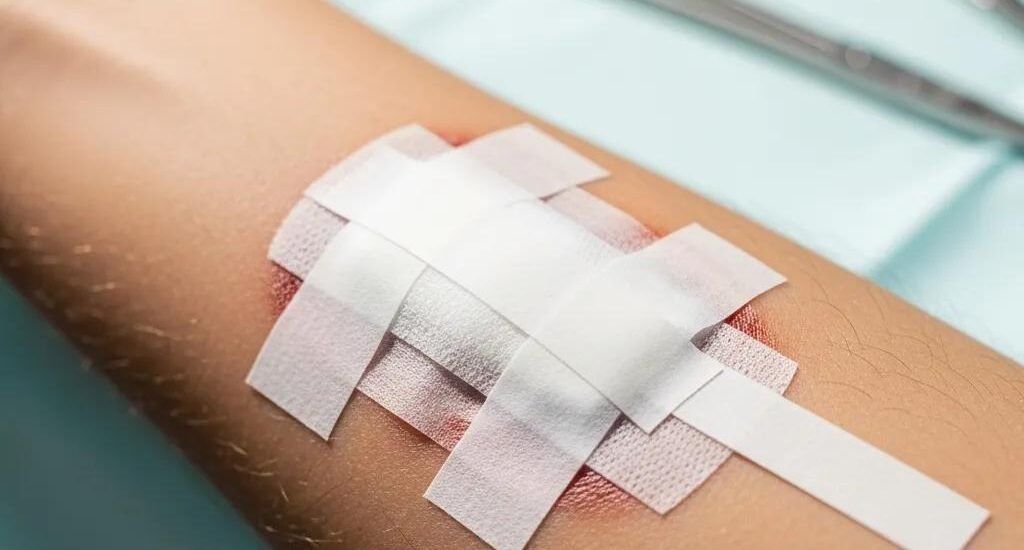
Avoid These Common Wound-Care Mistakes: Practical, Clinician-Backed Guidance for Safer Healing
Wound care directly affects how quickly and well you recover. Small, avoidable errors—like improper cleaning or the wrong dressing—can cause infections, slow healing, and lead to complications. This guide shares clear, clinician-backed advice to help you avoid common pitfalls, care for wounds safely at home, spot signs of infection, and know when to get professional support. We’ll also explain how mobile, advanced wound care from Healix360 Advanced Mobile Wound Care Specialists can reduce risks and improve outcomes.
Most Common At-Home Wound Care Mistakes
Home wound care is where a lot of preventable mistakes happen. Learning the most frequent errors helps you protect your wound and speed recovery.
How Improper Cleaning Leads to Infection and Slower Healing
Poor cleaning introduces bacteria and irritates tissue, which delays repair. Typical errors include using non-sterile materials, skipping handwashing, or applying harsh agents like rubbing alcohol directly to the wound. These practices increase the chance of cellulitis, abscesses, and other complications. Use sterile saline or clean water to rinse, wash your hands first, and clean gently—avoid scrubbing or strong antiseptics on open tissue.
Why the Wrong Dressing Can Stall Recovery
Using an inappropriate dressing changes the wound environment. Non-breathable materials trap moisture and encourage bacterial growth; overly absorbent dressings can dry out the wound and cause scabbing. Match the dressing to the wound: for low-to-moderate drainage, hydrocolloid dressings often work well; for heavily draining wounds, alginate dressings absorb excess fluid. Choosing the right dressing supports a balanced healing environment.
What Are the Signs of Wound Infection and When to Act?
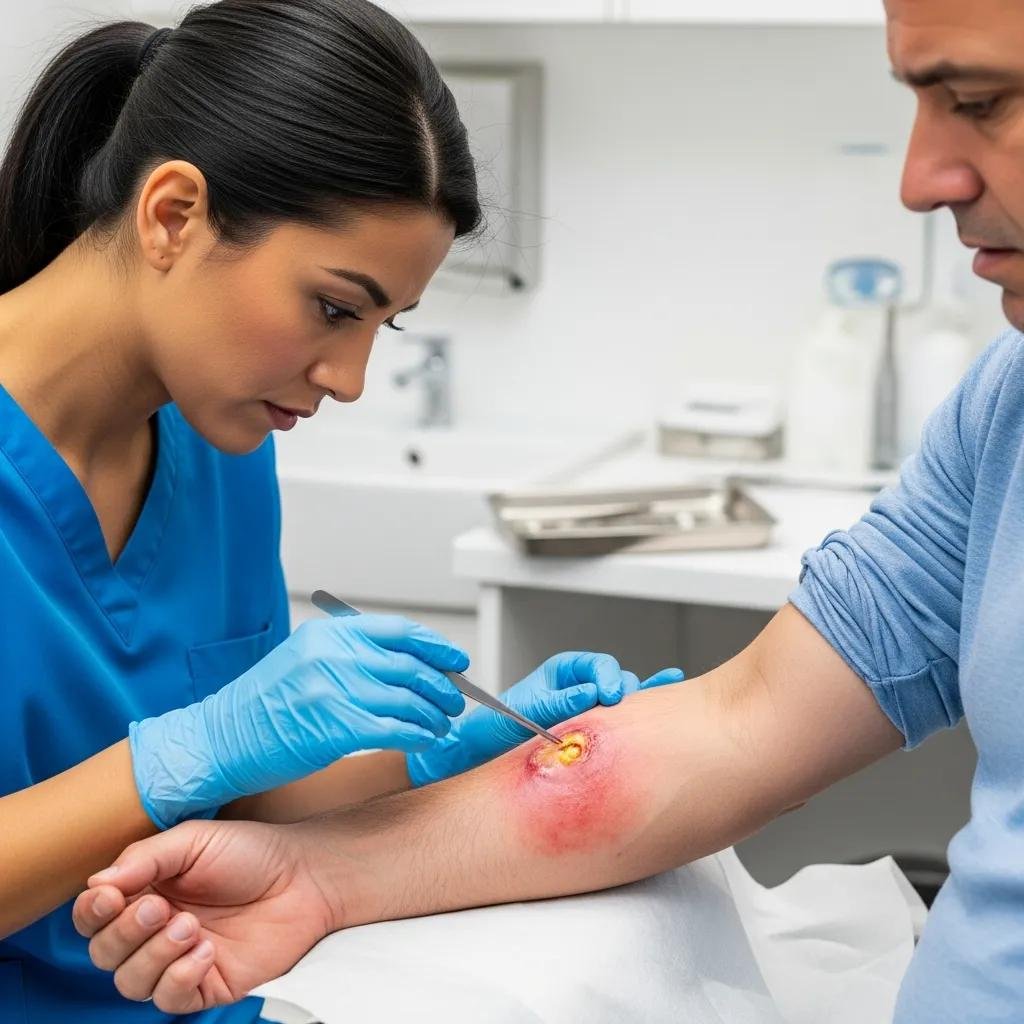
Spotting infection early lets you get timely treatment and avoid complications. Know what to look for and act promptly.
Early Infection Signs to Watch For
Watch for increasing redness, swelling, warmth, new or worsening pain, and pus or unusual drainage. Other warning signs include fever or spreading redness around the area. If you notice any of these, contact a healthcare professional quickly—early evaluation can prevent progression.
When infection is suspected, clinicians often use lab tests to confirm and guide treatment.
Lab Methods for Diagnosing Wound Infections
Current literature identifies three common laboratory techniques used to diagnose wound infections: deep-tissue biopsy, needle aspiration, and swab culture.
Diagnostics for wound infections, S Li, 2021
When to Seek Professional Wound Care
Seek professional care if you see signs of infection or if the wound isn’t improving within roughly one to two weeks (timeframes vary by wound type and severity). People with diabetes, poor circulation, or weakened immune systems should contact a clinician sooner. Specialists can offer advanced treatments, targeted diagnostics, and education you can’t get from self-care alone—helping prevent complications and support healing.
How to Clean a Wound Correctly: Step-by-Step Best Practices
Cleaning a wound the right way lowers infection risk and sets the stage for healing. Follow simple, reliable steps each time you care for the wound.
Cleaning Agents to Avoid and Why
Some agents damage healthy tissue and slow recovery. Avoid hydrogen peroxide and undiluted iodine on open wounds—these can harm cells and delay healing. Instead, use sterile saline or clean running water to rinse the wound. You can use mild soap around the wound area, but don’t put soap directly into the wound. These gentler options preserve tissue and support recovery.
Evidence-based reviews compare how different cleaning agents affect healing and infection control.
Wound Cleaning Agents & Healing Efficacy Review
A concise review summarizes the efficacy of common wound cleaning agents and their impact on healing outcomes.
Wound cleaning and wound healing: a concise review, 2013
Safe, Effective Wound Cleaning Techniques
Follow these practical steps for routine wound cleaning:
- Wash hands: Always wash your hands with soap and water before touching the wound.
- Rinse the wound: Gently flush with sterile saline or clean water to remove dirt and debris.
- Pat dry: Lightly pat the area dry with clean cloth or sterile gauze—don’t rub.
- Apply dressing: Cover with an appropriate dressing, secure it comfortably (not too tight), and change it when wet or soiled.
These steps reduce infection risk and help the wound heal in a healthy, controlled environment.
When to Seek Professional Wound Care: Avoid Dangerous Delays
Delaying medical attention increases the risk of chronic wounds, spreading infection, and systemic complications such as sepsis—especially for people with underlying health conditions. If a wound worsens, shows infection signs, or fails to improve in a reasonable time, arrange professional evaluation without delay.
How Healix360’s Mobile Wound Care Reduces Common Mistakes
Healix360 brings experienced wound-care clinicians to your home, removing barriers to timely, expert treatment. Our team identifies and corrects common at-home errors, tailors treatment plans, and uses advanced regenerative options when appropriate. That combination—education, hands-on care, and targeted therapies—helps prevent complications and gets patients back to health faster.
Preventing Wound Complications Through Proactive Care
Stopping complications starts with proactive steps: good wound hygiene, correct dressings, monitoring for trouble signs, and managing conditions that impair healing.
How Underlying Conditions Affect Wound Healing
Chronic conditions like diabetes, vascular disease, and obesity can reduce blood flow, slow immune response, and raise infection risk. If you have any of these conditions, work closely with your care team to optimize medical control and follow a wound-care plan tailored to your needs.
How Advanced Treatments Like Regenerative Medicine Support Recovery

Advanced options—such as negative pressure wound therapy, biologic dressings, and regenerative medicine—can stimulate tissue repair and help stubborn or chronic wounds respond when standard treatments fail. These tools, combined with personalized care plans, improve healing chances and reduce recurrence.
Frequently Asked Questions
What are the best practices for dressing a wound at home?
Start with clean hands. Choose a sterile dressing suited to the wound’s drainage level and secure it comfortably. Replace the dressing if it becomes wet, dirty, or loose. Check the wound daily for increased redness, swelling, warmth, pain, or drainage—any of these should prompt a clinician visit.
How can I tell if a wound is healing properly?
Signs of healing include gradually less redness and swelling, reduced pain, shrinking wound size, and pink, granular tissue forming in the wound bed. Drainage should decrease over time. If you don’t see steady improvement within one to two weeks, or if symptoms worsen, seek medical advice.
What should I do if my wound starts to smell?
A persistent, foul odor can signal infection or dead tissue. Gently clean the area with sterile saline, apply a fresh dressing, and monitor for other signs of infection. If the smell continues or you see increased redness, swelling, or pus, contact a healthcare professional promptly.
Can I use home remedies for wound care?
Some remedies—like medical-grade honey—have documented benefits, but many household treatments can be risky. Avoid unproven or non-sterile substances. For minor wounds, stick to evidence-based cleaning and dressing; for anything more serious, check with a clinician before trying home remedies.
How does nutrition affect wound healing?
Nutrition is fundamental to repair. Adequate protein, vitamin C, zinc, and overall caloric intake support tissue regeneration and immune function. Hydration is also important. If you have concerns about nutrition during recovery, speak with your clinician or a nutrition specialist to optimize your intake.
What are the risks of ignoring a non-healing wound?
Leaving a wound untreated can lead to chronic wounds, severe infection, tissue loss, or systemic spread (sepsis). Underlying problems such as poor circulation or diabetes can worsen outcomes. If a wound isn’t closing or is getting worse, schedule professional care—early intervention matters.
Clinician-Backed Tips to Sidestep Common Wound Care Mistakes
Simple, consistent care prevents most wound complications. Clean wounds gently with sterile saline or clean water, use dressings matched to the wound, watch for infection, and get prompt professional help when needed. If you want advanced, in-home support, Healix360’s mobile wound-care team offers expert treatment and personalized plans to help you heal safely and faster. Take action early—your recovery depends on it.