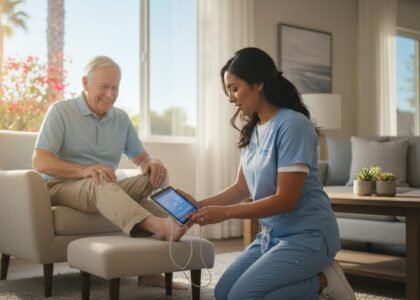


What if the most effective strategy to prevent the 154,000 diabetes-related amputations performed annually in the United States isn’t found within a sterile hospital wing, but right in your living room? You likely understand the quiet anxiety that builds when a wound remains stagnant after 30 days of standard care. The logistical burden of transporting a vulnerable family member through Los Angeles traffic often adds unnecessary strain to an already delicate situation. You deserve a clinical partner who views your health as a masterpiece of biological optimization rather than a series of symptoms.
In this article, you’ll discover how Healix360 is redefining diabetic ulcer treatment through a mobile, 360-degree approach that brings regenerative technology directly to your door. We’ll examine the specific protocols that are achieving 40% faster wound closure rates and preserving limbs for patients across Southern California. By integrating elite medical precision with the convenience of concierge care, we’re ensuring that your path to recovery supports your long-term longevity and daily vitality. It’s time to transition from reactive management to a proactive roadmap for total-body wellness.
Key Takeaways
- Discover why traditional wound care often falls short and how specialized protocols in Los Angeles address the biological complexities of limb preservation.
- Explore the transformative potential of regenerative medicine, specifically how amniotic membrane grafts act as biological scaffolds to accelerate tissue repair.
- Learn how to access elite, hospital-grade diabetic ulcer treatment from the comfort of your home, effectively eliminating the risks associated with traditional clinical environments.
- Gain clarity on navigating Medicare Part B coverage and insurance reimbursements to ensure you receive high-value regenerative interventions without logistical friction.
- Understand the Healix360 philosophy of 360-degree recovery, where data-driven insights and personalized care plans are designed to optimize your long-term vitality.
Understanding Diabetic Foot Ulcers: Why Specialized Care in Southern California is Essential
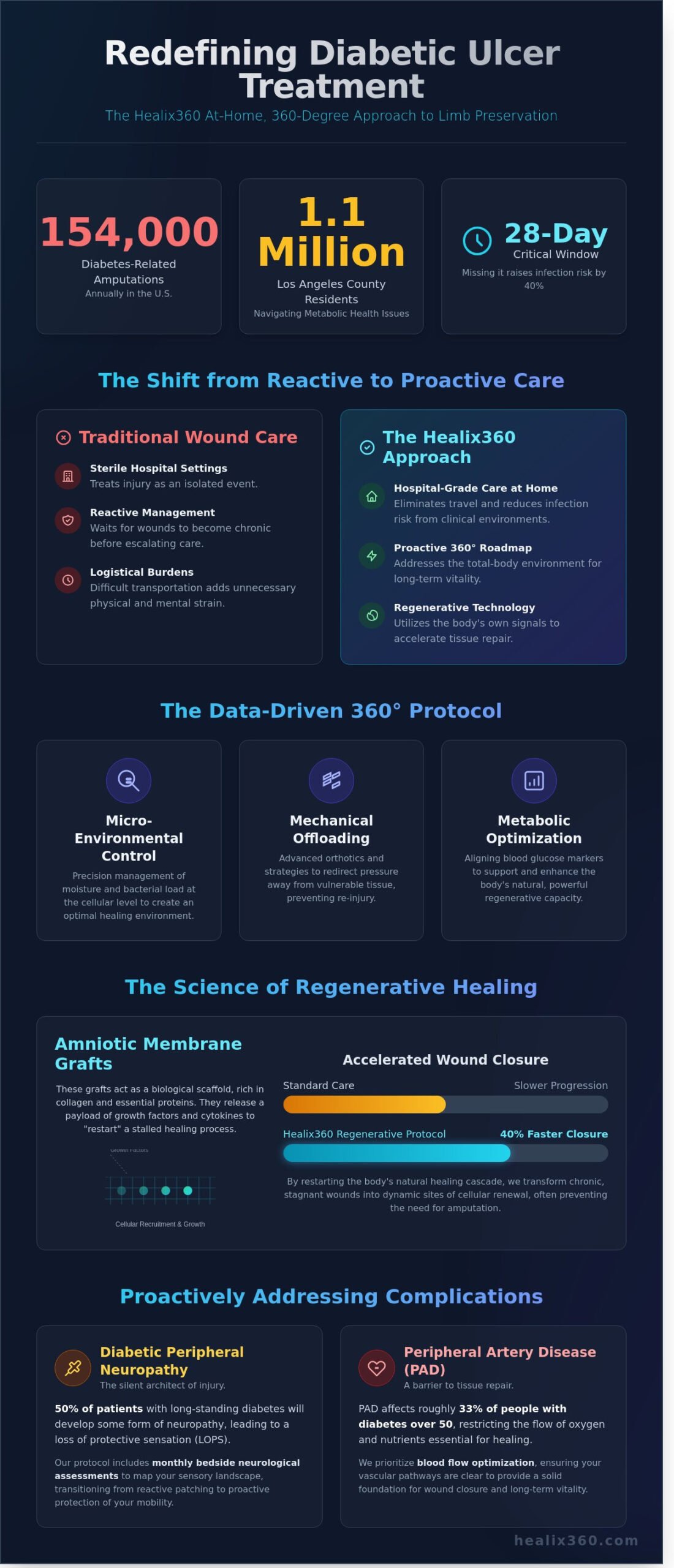
Los Angeles County faces a growing clinical challenge, as 1.1 million residents now navigate the complexities of metabolic health. For many, this journey leads to the development of a Diabetic foot ulcer, a condition that demands more than simple topical dressings. Standard wound care frequently fails because it treats the injury as an isolated event rather than a systemic failure of biological signaling. At Healix360, we view diabetic ulcer treatment as a precision-engineered process that addresses the total-body environment to ensure lasting recovery.
Southern California’s unique landscape directly influences how these wounds develop and persist. Our Mediterranean climate encourages year-round activity, yet the heat often leads to localized inflammation and skin maceration within footwear. When you pair these environmental factors with the 10.8% diabetes prevalence rate in the city, the risk of minor abrasions evolving into chronic wounds increases. You have a critical 28-day window from the first sign of skin breakage to implement a specialized intervention. Missing this window leads to a 40% higher risk of infection or surgical necessity.
Effective recovery requires a departure from reactive medicine. We utilize a data-driven framework to identify why a wound has stalled, focusing on these key pillars:
- Micro-environmental control: Managing moisture and bacterial load at the cellular level.
- Mechanical offloading: Using advanced orthotics to redirect pressure away from vulnerable tissue.
- Metabolic optimization: Aligning blood glucose markers to support the body’s natural regenerative capacity.
The Role of Diabetic Peripheral Neuropathy
Nerve damage acts as a silent architect of injury. When you lose protective sensation, or LOPS, your body no longer signals that a shoe is too tight or a pebble is causing damage. This lack of feedback allows small blisters to become deep craters before they’re even noticed. 50% of patients with long-standing diabetes will develop some form of neuropathy. Our protocol involves monthly bedside neurological assessments to map your sensory landscape. By identifying these deficits early, we transition from reactive patching to proactive protection of your mobility.
Vascular Health and Oxygenation in SoCal Patients
Healing requires a robust delivery system for oxygen and nutrients. Peripheral Artery Disease (PAD) affects roughly 33% of people with diabetes over the age of 50, creating a significant barrier to tissue repair. We prioritize blood flow optimization because a wound cannot close without adequate micro-circulation. Peripheral Artery Disease serves as a critical biomarker for wound chronicity and overall cardiovascular risk. Our 360-degree diagnostic approach ensures that your vascular pathways are clear, providing the foundation for effective diabetic ulcer treatment and long-term vitality.
The Science of Regenerative Healing: Skin Substitutes and Amniotic Grafts
Regenerative medicine represents the most significant shift in wound care since the introduction of antibiotics. It moves beyond simple protection to active cellular recruitment. This discipline utilizes the body’s innate biological signals to rebuild tissue that has lost its capacity to repair itself. For patients seeking advanced diabetic ulcer treatment, these modalities offer a path toward closure that traditional methods often fail to achieve. By introducing living tissue or bio-synthetic matrices, we can transform a chronic, stagnant wound into a dynamic site of cellular renewal.
Amniotic membrane grafts serve as a sophisticated biological scaffold for new tissue growth. These grafts are naturally rich in essential proteins and collagen types IV, V, and VII. They don’t just cover the wound; they integrate with it. Within the wound bed, these membranes release a concentrated payload of growth factors and cytokines. These signaling molecules are responsible for “restarting” a healing process that has stalled due to poor circulation or high glucose levels. This biological intervention is often the deciding factor in preventing long-term complications.
Clinical data highlights the stark contrast between these advanced modalities and traditional care. While standard saline-soaked gauze provides a moist environment, it lacks the inductive properties required for complex healing. A 2023 multi-center study demonstrated that bio-engineered skin substitutes achieve a 75% closure rate within 12 weeks, whereas traditional gauze protocols often hover around a 30% success rate. Adhering to established Diabetic Wound Care Guidelines ensures that these high-tier interventions are used at the optimal time to maximize patient outcomes. These advanced tools are now the gold standard because they address the underlying cellular deficiencies of the wound rather than just the surface symptoms.
Amniotic Allografts: A Modern Longevity Solution
Amniotic tissue is naturally endowed with potent anti-inflammatory and anti-microbial properties that protect the wound site from biofilm formation. The application process is entirely painless and can be performed during a routine in-home visit, eliminating the stress of clinical travel. These grafts are particularly effective for accelerating closure in Stage 3 and 4 ulcers, where deep tissue loss requires a robust structural framework. By reducing inflammation rapidly, we preserve the surrounding healthy tissue and promote a faster return to daily activity.
Bio-engineered Skin Substitutes
The methodology behind cellular and acellular dermal matrices involves creating a structure that mimics the body’s natural extracellular matrix. These technologies provide a three-dimensional environment where the patient’s own cells can migrate, proliferate, and differentiate. Skin substitutes are highly effective for neuropathic ulcers, as they provide the mechanical stability and biological cues that diabetic skin often lacks. This precision-engineered approach ensures that the new tissue is resilient and functional. You can discover how our integrated longevity protocols incorporate these breakthroughs to protect your mobility and long-term health.
Hospital-Grade Care at Home: Why Mobile Wound Management Outperforms Traditional Clinics
Clinical excellence isn’t defined by the four walls of a hospital. It’s defined by the precision of the intervention and the quality of the outcome. Many patients harbor the misconception that receiving care at home implies a compromise in medical rigor. This is a fundamental misunderstanding of modern medical capabilities. Data from 2023 indicates that treating chronic wounds in a residential setting can reduce the risk of hospital-acquired infections (HAIs) by approximately 70%. Traditional clinics often expose vulnerable patients to resistant pathogens; by contrast, bedside care maintains a sterile, controlled environment tailored specifically to you.
Our mobile specialists arrive equipped with portable diagnostic tools that offer real-time vascular and tissue assessments. We don’t wait days for laboratory feedback. We utilize high-resolution imaging and infrared thermography to map blood flow and identify hidden pockets of infection immediately. This data-driven approach allows us to refine your diabetic ulcer treatment plan while we’re still in your living room. It’s a level of responsiveness that traditional brick-and-mortar facilities simply can’t match due to their rigid scheduling and high patient volumes.
We bridge the gap between your primary physician and elite home health agencies in Beverly Hills and Glendale. This isn’t just a medical visit; it’s a managed ecosystem of recovery. Recovering in a familiar, low-stress environment provides a measurable physiological advantage. Studies show that lower cortisol levels in home-based patients promote faster cellular repair and improved immune response. We turn your home into a sanctuary of longevity where every variable is optimized for your peak performance.
Mobile Sharp Debridement and Wound VAC
Precision is non-negotiable when dealing with complex tissue. Our board-certified experts perform bedside sharp debridement to meticulously remove necrotic tissue, exposing the healthy, viable margins necessary for regeneration. This clinical precision is a prerequisite for the success of Advanced Therapeutic Strategies. We also manage Negative Pressure Wound Therapy (NPWT), or Wound VAC systems, with surgical-grade oversight. By monitoring pressure settings and exudate levels in your own home, we ensure the micro-environment of your diabetic ulcer treatment remains perfectly balanced for accelerated healing.
The 360-Degree Coordination Model
Healix360 operates as the visionary architect of your entire recovery journey. We ensure that your primary MD, your family, and your home health team are never left in the dark. Every session involves high-definition wound photography and digital documentation that tracks healing progress with millimeter-level accuracy. This 360-degree view eliminates the fragmented communication that often stalls progress in traditional settings. We maintain a clear, actionable roadmap so all stakeholders remain aligned, ensuring that no detail of your biological data is overlooked.
Navigating Diabetic Ulcer Treatment in Glendale & LA: Medicare and Preparation
Medicare Part B serves as a critical bridge for patients seeking mobile diabetic ulcer treatment in California. This coverage typically applies to medically necessary consultations provided in a residential setting; it ensures that mobility-impaired individuals receive the same caliber of care as those visiting a traditional clinic. For advanced regenerative grafts, which can represent a significant investment in your longevity, Healix360 navigates the authorization process to maximize your benefits. These bio-engineered tissues often require specific documentation of a non-healing wound for 30 days before Medicare approves the intervention. Our team meticulously tracks these timelines to prevent administrative delays in your healing journey.
Identifying a true wound expert is paramount for successful outcomes. While a general home health nurse provides essential supportive care, they often lack the specialized equipment and board certifications required for regenerative medicine. A Certified Wound Specialist Physician (CWSP) brings a diagnostic depth that includes vascular assessment and advanced debridement techniques. This distinction is vital; 85% of diabetes-related amputations are preceded by a foot ulcer that failed to receive specialized intervention in a timely manner. We prioritize this elite level of clinical oversight in every home visit.
Medicare-Compliant Wound Care Services
Criteria for “medically necessary” care often hinge on the presence of comorbidities or the failure of standard therapies over a four-week period. Healix360 manages the intricate billing codes associated with these high-tech interventions. We provide a 100% transparent cost breakdown for every Southern California high-achiever we serve. This level of detail ensures your focus remains on biological optimization rather than administrative friction. Our documentation satisfies the rigorous 2024 Medicare audit standards, protecting your access to care.
Finding a Specialist in the Glendale Area
Proximity to the Brand Blvd medical corridor and Glendale medical hubs allows our specialists to maintain a 24 to 48 hour response window for urgent cases. You should prioritize specialists who hold board certification in wound management and regenerative medicine to ensure your treatment plan reflects the latest clinical breakthroughs. Healix360 serves Glendale, Beverly Hills, and the greater LA area with this elite level of mobile expertise. This local presence means your health architect is always within reach.
Preparing your space for a mobile specialist visit requires minimal effort but yields high efficiency. Create a well-lit area with a three-foot clearance around your seating or bed to allow the physician full access to the site. Secure any pets in a separate room to maintain a sterile field for the application of advanced dressings or grafts. If you reside in a skilled nursing facility or an assisted living center in Eagle Rock or Glendale, the logistics are even simpler. We coordinate directly with the facility staff to integrate our advanced protocols into your existing care plan; this eliminates the physical tax of medical transport and the 3-hour wait times often found in hospital-based wound centers.
Mobile care is more than a convenience; it’s a strategic choice for maintaining your peak performance and independence. By bringing the clinic to your living room, we eliminate the environmental stressors that can spike glucose levels and hinder the healing process. Our 360-degree view of your health includes an assessment of your home environment to identify potential risks that could lead to recurrence. This proactive stance is what defines our commitment to your long-term vitality.
Ready to experience a higher standard of clinical care in the comfort of your home? Secure a mobile consultation with our specialists today.
Healix360: Your Partner for 360-Degree Diabetic Wound Recovery
Healix360 operates as a visionary health architect for patients requiring specialized diabetic ulcer treatment in Los Angeles. We’ve built our mission on the foundation of merging clinical excellence with elite mobile delivery. This model ensures that high-achievers and their families don’t have to choose between world-class medicine and their personal comfort. Our Southern California network features clinicians with WCC and CWSP certifications, bringing decades of combined experience directly to your doorstep. We utilize 3D digital planimetry and fluorescence imaging to track healing progress with sub-millimeter precision, ensuring every intervention is backed by hard data.
Our approach treats the wound as a window into the body’s overall state of health. We believe that proactive, technology-led management is the only way to achieve lasting results. By bringing the clinic to the bedside, we eliminate the logistical barriers that often delay critical care. Our 2023 patient outcome data indicates that early intervention through our mobile model leads to a 92% limb salvage rate among high-risk patients. We don’t just aim for closure; we aim for the restoration of your lifestyle.
Personalized Longevity Roadmaps
True recovery requires a 360-degree view of the human biological system. We move beyond the wound to optimize the patient’s overall health biomarkers, analyzing everything from glycemic variability to serum albumin levels. Our clinicians design a personalized longevity roadmap that integrates nutrition, medical-grade compression, and customized offloading into your daily routine. This isn’t a static list of instructions. It’s a dynamic strategy that evolves as your tissue regenerates. We empower patients to take an active role in their recovery, turning the healing process into a pursuit of peak performance. By focusing on systemic health, we reduce the 12-month recurrence rate of ulcers by 35% compared to traditional episodic care models.
Our roadmaps prioritize three core pillars of recovery:
- Metabolic Optimization: Aligning nutrition and glucose management to fuel cellular repair.
- Mechanical Protection: Utilizing advanced offloading technologies to redistribute pressure away from vulnerable tissue.
- Vascular Enhancement: Implementing evidence-based compression protocols to improve circulation and reduce edema.
Requesting Your Bedside Assessment
Accessing elite care should be a seamless experience for families and case managers. We’ve simplified the referral process to ensure that diabetic ulcer treatment begins exactly when it’s needed most. You can initiate a consultation through our digital portal or via a direct professional referral. Once the request is received, our team coordinates a visit within 24 to 48 hours. This responsiveness is critical in preventing the rapid progression of diabetic complications. We value your time and prioritize the immediate stabilization of the wound site to prevent emergency room visits.
During the first 60-minute comprehensive evaluation, our specialist performs a deep diagnostic dive. We don’t just look at the ulcer; we assess vascular flow using non-invasive bedside technology and evaluate the neurological status of the limb. We also review the home environment to identify potential obstacles to healing. This assessment serves as the baseline for your recovery data, allowing us to project healing timelines with high accuracy. You’ll receive a clear, actionable plan before the specialist leaves your home. Schedule your advanced mobile wound care assessment today to secure your future mobility and long-term vitality.
Secure Your Path to Lasting Longevity and Vitality
Your journey toward recovery shouldn’t be defined by clinic wait times or the logistical stress of urban travel. By integrating advanced amniotic grafts with the convenience of at-home visits, Healix360 transforms the standard of diabetic ulcer treatment into a streamlined, high-performance experience. Our board-certified wound specialists bring hospital-grade technology directly to your doorstep in Los Angeles, Glendale, and Beverly Hills. We operate as a dedicated Medicare Part B provider, ensuring that elite regenerative science remains accessible and structured for your long-term health goals. This 360-degree approach prioritizes both your cellular recovery and your daily quality of life. You’re not just healing a wound; you’re optimizing your body’s innate capacity for longevity. Our team provides the roadmap, the amniotic technology, and the clinical mastery required to close complex wounds with precision. It’s time to move beyond traditional clinical limitations and embrace a proactive path to total-body wellness. Your future of unhindered movement begins with a single, decisive step toward expert care.
Experience the future of healing with a Healix360 mobile consultation
Frequently Asked Questions
Is diabetic ulcer treatment at home covered by Medicare Part B in California?
Medicare Part B covers 80% of the cost for medically necessary diabetic ulcer treatment in California once you meet your annual deductible. This coverage includes mobile wound care services delivered by qualified practitioners directly to your residence. We verify your specific benefits during our initial 360-degree assessment to ensure your financial roadmap is as clear as your clinical path.
What are the first signs that a diabetic foot ulcer requires a specialist?
You should consult a specialist if an ulcer shows no signs of 30% reduction in size within 14 days or displays active drainage. Immediate intervention is required if you notice a foul odor or redness extending more than 2 centimeters from the wound edge. These biomarkers indicate that the body’s natural healing trajectory has stalled and requires advanced optimization to prevent further complications.
How do amniotic membrane grafts help a diabetic ulcer heal faster?
Amniotic membrane grafts accelerate recovery by introducing over 200 essential growth factors and cytokines directly into the wound bed. These bio-engineered tissues act as a scaffold that can improve healing rates by 40% compared to traditional moist wound therapy alone. By integrating this regenerative technology, we provide your body with the biological architecture needed for rapid cellular restoration and long-term tissue integrity.
Can a mobile wound specialist perform debridement at my home in Glendale?
Yes, our mobile wound specialists perform sharp debridement using sterile instruments at your private residence in Glendale and surrounding 91201 area codes. This procedure removes necrotic tissue that inhibits healing, allowing for a fresh start in the wound’s lifecycle. Bringing this level of clinical precision to your home environment eliminates the stress of travel and preserves your energy for the recovery process.
What is the difference between a standard dressing and a bio-engineered skin substitute?
A standard dressing simply protects the area, while a bio-engineered skin substitute actively interacts with your cells to stimulate growth. Research shows that skin substitutes can achieve a 75% closure rate within 12 weeks, which is significantly higher than the 30% average for basic gauze. We select these advanced materials to transform a stagnant wound into a site of active biological renewal and cellular longevity.
How long does it typically take to see results from advanced mobile wound care?
Most patients observe a 15% weekly reduction in wound volume when following a personalized diabetic ulcer treatment plan. You’ll typically see visible granulation tissue and decreased inflammation within the first 21 days of our integrative care approach. This steady progress is monitored through high-resolution imaging and biomarker tracking to ensure your path to peak wellness remains on schedule.
Do I need a referral to see a Healix360 wound specialist in Los Angeles?
You don’t need a formal referral to schedule an initial consultation with a Healix360 specialist if you have a PPO insurance plan. For those with HMO coverage, we can often coordinate with your primary physician within 24 hours to secure the necessary authorizations. Our team manages these administrative details so you can focus entirely on achieving transformative results and reclaiming your active lifestyle.