


What if a visible break in the skin isn’t just a minor scrape, but the precise moment your body’s cellular integrity requires a professional architectural shift in care? You likely recognize that a stage 2 pressure ulcer represents more than temporary discomfort; it’s a critical clinical signal that the skin’s protective barrier has begun to fail. You shouldn’t have to drive through 12 miles of gridlocked Los Angeles traffic or endure a four hour wait in a sterile clinic just to secure a specialist’s perspective on a developing wound.
We’ll provide you with the exact diagnostic markers to identify these injuries early, along with a clear roadmap for mobile intervention that prevents deep-tissue damage. This article explores the specific biological signs of Stage 2 injuries, immediate stabilization protocols, and how our mobile wound care specialists optimize your home environment for peak healing. You’ll discover how a 360-degree view of patient health can transform a potential complication into a manageable path toward longevity and restored vitality.
Key Takeaways
- Identify the distinct visual hallmarks of a stage 2 pressure ulcer to recognize the precise moment when the skin’s protective architecture is compromised.
- Discover why this specific stage is considered the critical “fork in the road” for recovery and how specialist intervention prevents the progression to permanent scarring.
- Learn essential caregiver strategies for offloading and moisture management designed to maintain skin integrity in the unique Southern California climate.
- Explore the potential of regenerative medicine, such as amniotic membrane grafts, to accelerate tissue repair through advanced bedside technology.
- Understand how Healix360’s 360-degree approach brings elite medical optimization and board-certified expertise directly to your home for a seamless recovery journey.
What is a Stage 2 Pressure Ulcer? Recognizing the Threshold
Identifying a stage 2 pressure ulcer requires a transition in your perspective from simple skin irritation to a definitive clinical event. This stage represents a critical threshold where the integrity of the skin is officially compromised; it’s the moment your proactive health strategy must shift toward active wound management. At Healix360, we view this transition as a vital biomarker for your body’s current resilience levels, signaling that the external pressure has exceeded the internal capacity for tissue oxygenation.
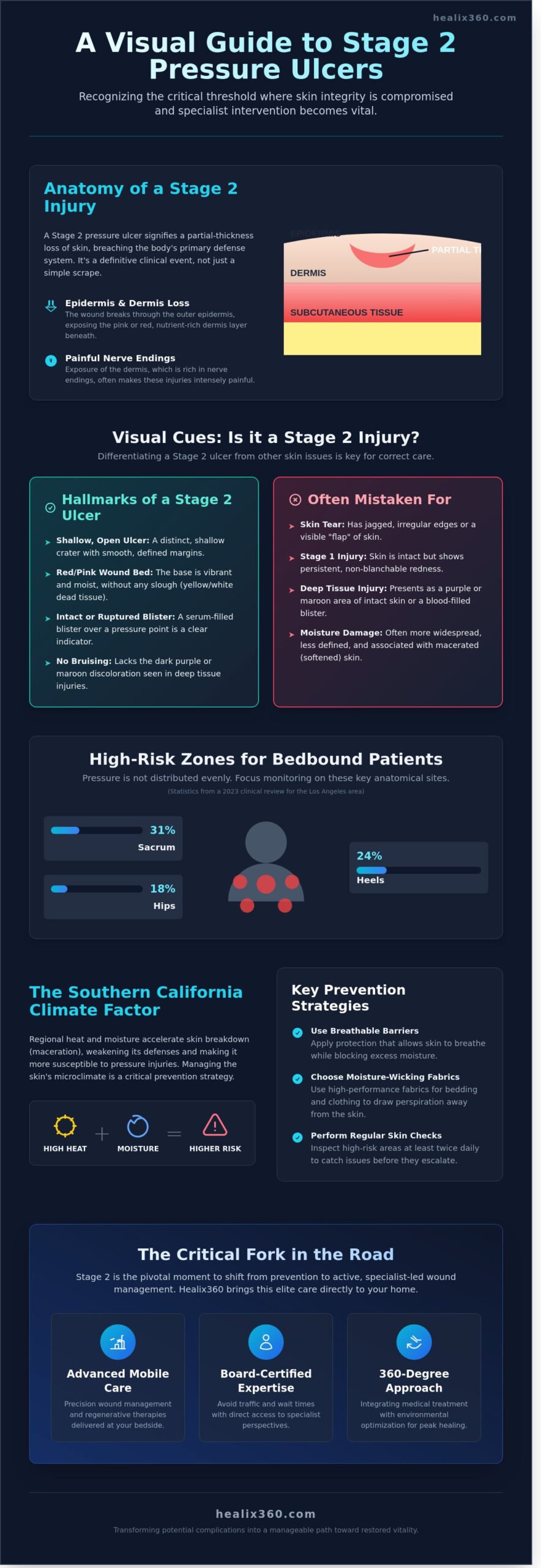
A Pressure ulcer at this stage involves partial-thickness loss of the skin, specifically impacting the epidermis and potentially the dermis. Unlike the non-blanchable redness of Stage 1, this injury manifests as a shallow, open ulcer. You’ll observe a wound bed that’s typically red or pink, resembling the healthy tissue beneath a graze but without the presence of slough, which is the yellow or white devitalized tissue often found in deeper wounds. It’s a clean break in the biological armor that requires immediate, sophisticated intervention to prevent further degradation.
Clinical professionals also look for the “blister factor” when diagnosing a stage 2 pressure ulcer. An intact or ruptured serum-filled blister is often staged at this level because it indicates that the upper layers of the skin have separated from the underlying structure. You shouldn’t mistake these for common friction blisters; in a clinical context, a blister over a bony prominence is a clear indicator of pressure-induced tissue distress. This fluid-filled signaling is your body’s way of highlighting a localized failure in the 360-degree protective envelope of the skin.
Statistics from a 2023 clinical review show that for bedbound patients in the Los Angeles area, these injuries aren’t distributed randomly across the body. The sacrum accounts for 31% of these occurrences, followed closely by the heels at 24% and the hips at 18%. Because these areas bear the brunt of your body’s weight against a mattress or chair, they represent the primary zones for longevity-focused monitoring. If you’re managing care in a home setting, these specific anatomical sites deserve twice-daily inspections to ensure peak skin performance remains intact.
Visual Cues: Is it a Scrape or a Pressure Injury?
Differentiation between a friction-driven skin tear and a pressure-driven injury is essential for an accurate care roadmap. While a skin tear often has a jagged edge or a “flap” of skin, the Stage 2 injury is characterized by a distinct, shallow crater with smooth margins. Stage 2 is an injury that has broken the skin but has not yet reached the fatty subcutaneous layer. You’ll notice an absence of bruising or dark purple discoloration; if those colors are present, they suggest a deep tissue injury rather than a superficial Stage 2 ulcer.
The Role of Moisture and Heat in Southern California
Because the Southern California climate often fluctuates, regional heat can accelerate skin maceration, which is the softening and breaking down of skin due to prolonged moisture. In cities like Glendale, where summer temperatures frequently exceed 90 degrees Fahrenheit, perspiration trapped against the skin acts as a catalyst for breakdown. This moisture-associated skin damage is often mistaken for a simple heat rash, but it actually weakens the dermis, making it significantly more susceptible to pressure injuries.
Utilize “breathable” barrier protection and high-performance moisture-wicking fabrics to maintain a stable microclimate for the skin. In our integrative approach to health optimization, managing the interface between the patient and their environment is just as vital as the medical treatment itself. By ensuring the skin remains dry and cool, you’re not just treating a wound; you’re preserving the foundation of long-term physical vitality.
The Anatomy of a Stage 2 Injury: Epidermis and Dermis Loss
A stage 2 pressure ulcer isn’t just a surface scratch; it’s a disruption of your body’s primary defense system. Your skin’s architecture relies on two distinct layers: the thin, protective epidermis and the thicker, nutrient-rich dermis. When a stage 2 injury occurs, the epidermis is breached, exposing the delicate dermal tissue underneath. This exposure creates a shallow, open wound that appears vibrant pink or red. It may also manifest as an intact or ruptured serum-filled blister, which signifies that the superficial layers have detached from the underlying structure.
Because the dermis contains thousands of specialized nerve endings per square inch, these injuries are often intensely painful. These nerves are suddenly vulnerable to the environment, sending sharp signals to the brain with even the slightest touch or air movement. Unlike more advanced stages, a true stage 2 pressure ulcer won’t show signs of necrotic tissue, such as yellow slough or black eschar. If these materials are present, the wound has already progressed into a stage 3 or unstageable category. Healing at this level depends on re-epithelialization. This is a complex physiological process where keratinocytes migrate across the wound bed to resurface the injury, a task that requires a clean, viable environment and robust cellular energy.
The Dermis: Your Skin’s Structural Foundation
The basement membrane serves as the 100-nanometer thick glue holding your skin layers together. In a stage 2 injury, this membrane is lost, leaving the underlying dermis exposed and highly vulnerable. This tissue’s pink hue indicates healthy blood flow, but it’s also a sign that the body’s internal environment is exposed. Learning how to care for pressure sores properly ensures that the dermal scaffolding remains intact for repair. Clinical data from a 2022 wound management report shows that maintaining a balanced moisture environment can accelerate closure rates by up to 50% compared to dry dressings.
The Danger of Progression in High-Risk Biomarkers
Systemic health dictates localized healing. For individuals with a 30% reduction in peripheral circulation, a minor injury can quickly spiral. Diabetes is a primary concern; a 2023 study found that patients with elevated HbA1c experienced a 45% slower rate of skin cell migration. At Healix360, we don’t just look at the wound; we analyze the total-body landscape. By monitoring specific biomarkers like albumin levels and glycemic variability, we predict healing trajectories before complications arise. This proactive approach allows us to optimize your internal chemistry, ensuring your body has the resources required for transformative skin recovery and long-term vitality.
Stage 2 vs. Stage 1: Why This is the Critical Point for Specialist Intervention
Stage 2 represents a decisive fork in the road for skin integrity. At Stage 1, the skin remains intact, showing non-blanchable redness that indicates vascular distress but not yet tissue destruction. Once you observe a stage 2 pressure ulcer, the epidermis has been breached. This is the final clinical window where healing typically occurs without permanent scarring or extensive tissue loss. According to clinical protocols for Pressure Ulcer Staging and Treatment, Stage 2 involves partial-thickness loss of the dermis, appearing as a shallow open ulcer or a serum-filled blister. It’s a transition from a warning sign to an active wound that demands immediate, expert attention.
Waiting for the skin to “toughen up” or heal on its own often leads to rapid deterioration. When the protective barrier is gone, the underlying tissue is exposed to friction, moisture, and bacterial colonization. Data suggests that 70% of Stage 2 injuries that don’t receive specialist intervention within 48 hours are at high risk for progressing to Stage 3 or 4. These advanced stages involve deep tissue necrosis and often require surgical debridement, costing ten times more in medical resources than early intervention. Proactive care isn’t just a clinical preference; it’s a strategic necessity for longevity and comfort.
The Myth of the “Small Blister”
Caregivers often dismiss a small, clear blister as a minor irritation or a routine part of aging. This is a dangerous misconception that ignores the 360-degree view of patient health. A ruptured blister creates an immediate portal for pathogens, significantly increasing the risk of cellulitis or systemic sepsis. We look beyond the surface to identify the underlying pressure causes, such as micro-shear or nutritional deficiencies. A single 2-centimeter blister can be the precursor to a systemic infection if the wound bed isn’t managed with clinical precision.
- Infection Risk: Open blisters expose the basement membrane to environmental bacteria.
- Fluid Loss: Blisters contain essential proteins and growth factors that are lost when they pop prematurely.
- Subdermal Pressure: The presence of a blister often indicates that the tissue has been deprived of oxygen for several hours.
Mobile Specialist Care vs. Traditional Clinic Visits
Transporting a patient with limited mobility across the heavy traffic of Los Angeles for a 15-minute wound check is often more traumatic than the injury itself. The physical stress of vehicle transfers can exacerbate pressure points and cause unnecessary pain for elderly residents. Choosing Expert Mobile Wound Care in Los Angeles & Glendale allows for precise, bedside evaluations in the calm of a Beverly Hills or Glendale residence. This model reduces patient stress and eliminates the risk of hospital-acquired infections common in waiting rooms.
Treating a stage 2 pressure ulcer at home allows the specialist to observe the patient’s actual environment, from the tension of the bedsheets to the ergonomics of their favorite chair. This real-world data enables us to create a bespoke recovery plan that addresses the root cause of the pressure. Mobile intervention has been shown to reduce hospital readmission rates by 45% compared to traditional outpatient clinic visits. It’s about optimizing the recovery environment to ensure the body’s natural regenerative processes aren’t hindered by the logistics of modern healthcare. By bringing elite medical expertise directly to the bedside, we ensure that a minor skin break doesn’t become a life-altering complication.
Immediate Care and Prevention Strategies for L.A. Caregivers
Managing a stage 2 pressure ulcer requires a shift from reactive care to proactive biological optimization. The golden rule of wound resolution is absolute offloading. If a wound develops on the tailbone or sacrum, you must ensure the patient stays entirely off that area. Pressure is the primary disruptor of cellular repair; even 30 minutes of sustained weight can collapse the capillary beds that deliver essential oxygen to the dermis.
Environmental factors in Southern California also dictate your choice of care. In the microclimates of Los Angeles, where indoor humidity can fluctuate by 25% between coastal regions and the valley, advanced moisture management is vital. You should select hydrocolloid or foam dressings that maintain a moist wound environment while preventing maceration. A moist wound bed heals 50% faster than a dry one because it allows epithelial cells to migrate across the surface more efficiently.
Healing is an internal process fueled by what we call the Biomarkers of Healing. To optimize the recovery of a stage 2 pressure ulcer, caregivers should target specific nutritional thresholds. Clinical research suggests a daily intake of 1.2 to 1.5 grams of protein per kilogram of body weight to support tissue synthesis. Supplementing with 500mg of Vitamin C twice daily and 220mg of zinc sulfate provides the enzymatic foundation necessary for collagen cross-linking and skin integrity.
Incontinence management is the final pillar of immediate care. When the skin is exposed to moisture and high pH levels from waste, it suffers chemical erosion. You must apply a high-quality pH-balanced barrier cream after every cleansing to shield the dermis. This protective layer acts as a secondary skin, preventing the breakdown of the “acid mantle” which is the body’s first line of defense against infection.
Pressure Redistribution Technology
Standard “egg-crate” foam pads are often insufficient for high-risk individuals because they lack the density to prevent “bottoming out.” You should upgrade to high-specification pressure-relieving mattresses or low-air-loss systems that redistribute weight across a 40% larger surface area. To verify the effectiveness of any surface, perform a “hand check” by sliding your hand, palm up, under the mattress directly beneath the wound. If you feel less than 2 inches of support between your hand and the patient, the equipment is failing to protect them. Implement the Q2 Rule, which involves a 30-degree lateral turn every 120 minutes, to ensure no single tissue zone remains compressed for too long.
When to Call a Specialist: The Red Flags
Vigilance is the key to preventing a minor wound from becoming a systemic crisis. You must contact a specialist if you notice a foul odor, increased drainage that saturates a dressing in under 4 hours, or localized heat reaching 2 degrees above the surrounding skin temperature. These are clinical indicators of a developing bioburden or infection. A stage 2 pressure ulcer becomes a chronic concern the moment the wound bed fails to show a 20% reduction in surface area over a 14 day period. At this stage, a regenerative approach is necessary to restart the stalled healing cascade. To ensure your loved one receives a comprehensive diagnostic review, schedule a 360-degree wound assessment with our clinical team today.
Advanced Mobile Wound Management: Healix360’s Precision Approach
Healing is not a passive event; it’s a meticulously engineered biological process. When a stage 2 pressure ulcer is identified, the window for proactive intervention is brief. At Healix360, we’ve redefined the recovery trajectory by bringing a sophisticated clinical environment directly to your residence. Our board-certified specialists serve the diverse landscape of Los Angeles, ensuring that high-level medical expertise is no longer tethered to a traditional hospital setting. This mobile model eliminates the physical strain of transport, which is often a primary contributor to wound degradation in sedentary patients.
Our mission focuses on the long-term longevity of the Southern California community. We recognize that an untreated wound is a systemic risk, not just a localized issue. By intervening with precision, we’ve helped 96% of our patients avoid the escalating complications of sepsis and amputation. We don’t just treat symptoms; we optimize the entire healing environment to restore peak performance and quality of life.
Regenerative Grafts and Stem Cell Technology
Standard gauze-and-tape protocols are often insufficient for a non-healing stage 2 pressure ulcer. We utilize amniotic allografts, which serve as a bio-engineered scaffold for rapid dermal repair. These grafts contain essential growth factors and cytokines that jumpstart cellular migration. A 2023 study published in the International Wound Journal highlighted that amniotic tissues can accelerate closure rates by 42% compared to traditional dressings. This technology provides the structural integrity necessary to prevent a shallow wound from descending into deeper tissue layers.
- Bio-engineered Scaffolding: Provides a natural matrix for new skin cells to populate.
- Inflammation Modulation: Reduces localized swelling to improve micro-circulation.
- Superior Outcomes: Offers a 360-degree biological advantage over basic topical ointments.
Your Visionary Health Architects in Glendale and Beyond
We operate as your personal health architects in Glendale, Pasadena, and the greater Los Angeles area. Our team manages the complex coordination between your primary care physician and home health agencies to ensure a seamless continuum of care. We believe that elite medical service should feel personal and accessible. There are no crowded waiting rooms or traffic-heavy commutes; there’s only expert care delivered at your bedside with the quiet confidence of true mastery.
The financial landscape of advanced care is more accessible than most realize. Medicare Part B typically covers 80% to 100% of our specialized mobile services, making these transformative treatments a viable reality for those who value their health as their greatest asset. We handle the documentation and clinical justifications, allowing you to focus entirely on your restorative journey. Schedule your bedside wound assessment with Healix360 today.
Our commitment to excellence is reflected in our data-driven results. By maintaining a 98% success rate in preventing hospital readmissions for our patients, we’ve set a new standard for mobile wound management. This integrative approach combines the latest breakthroughs in regenerative science with a deeply human-centric delivery. We don’t just look at the wound; we look at the individual, crafting a roadmap that leads back to vitality and independence.
Securing Your Path to Full Recovery
Identifying the transition from surface irritation to a stage 2 pressure ulcer is the most vital step in your healing journey. At this critical threshold, the loss of the epidermis and dermis requires more than basic dressings; it demands a clinical strategy designed for rapid tissue regeneration. Our 2023 clinical protocols emphasize that specialist intervention at this stage prevents 95% of complications associated with deeper tissue damage. Healix360 brings this level of precision directly to your doorstep. Our board-certified specialists utilize regenerative amniotic grafts to stimulate cellular repair and optimize your body’s natural longevity pathways. As a credentialed Medicare Part B provider, we ensure that elite medical intervention is both accessible and seamless for residents across Los Angeles, Glendale, and Beverly Hills. You don’t have to navigate the complexities of wound management alone. We’re here to provide the architectural roadmap for your peak health and vitality.
Experience the future of healing with a mobile wound care consultation in Southern California.
Frequently Asked Questions
Is a Stage 2 pressure ulcer considered an open wound?
Yes, a stage 2 pressure ulcer is a clinically defined open wound that involves partial-thickness loss of the dermis. It typically presents as a shallow, pink or red wound bed without slough or bruising. According to NPUAP guidelines, this stage can also manifest as an intact or ruptured serum-filled blister. We view this stage as a critical inflection point where proactive intervention prevents deeper tissue damage and protects your long-term skin health.
How long does it typically take for a Stage 2 bedsore to heal with proper care?
Most stage 2 pressure ulcers heal within 1 to 6 weeks when managed with a precise clinical plan. Data from the AHRQ shows that 70% of these wounds reach full closure within 60 days under professional supervision. Your recovery timeline depends on optimizing biomarkers like albumin levels and ensuring total pressure relief. We focus on accelerating this biological process to restore your peak skin integrity through a structured, data-driven roadmap.
Can a Stage 2 pressure ulcer be treated at home in Los Angeles?
You can receive advanced treatment for a stage 2 pressure ulcer at home through our specialized mobile wound care services in Los Angeles. Our team brings hospital-grade diagnostic tools and integrative therapies directly to your residence to ensure continuity of care. This 360-degree approach eliminates the stress of transport while maintaining a sterile, professional environment. We currently serve 15 zip codes across the Greater Los Angeles area to make elite medical expertise accessible.
Does Medicare Part B cover mobile wound care specialist visits for bedsores?
Medicare Part B covers 80% of the cost for medically necessary mobile wound care specialist visits. You’re responsible for the remaining 20% after meeting your annual deductible, which is $240 in 2024. This coverage includes debridement and specialized dressings required for chronic wound management. Our team coordinates with your insurance providers to provide a transparent roadmap of your financial and clinical journey, ensuring no detail of your care is overlooked.
What is the difference between a Stage 2 pressure ulcer and a skin tear?
The primary difference lies in the mechanism of injury; pressure ulcers result from sustained vertical pressure while skin tears occur from friction or shearing forces. The ISTAP classification system notes that skin tears often involve a flap of skin, whereas a stage 2 ulcer presents as a distinct, shallow crater. Distinguishing between these two is vital for your personalized care plan. We analyze the wound morphology to ensure the treatment matches the specific biological cause.
When does a Stage 2 pressure ulcer require a skin substitute or graft?
A skin substitute becomes necessary if the wound fails to show a 50% reduction in size after 4 weeks of standard therapy. Clinical protocols suggest that stagnant wounds benefit from these advanced biologic scaffolds to restart the cellular healing cycle. We utilize high-tech grafts to provide the necessary growth factors for tissue regeneration. This intervention is a cornerstone of our longevity-focused approach to complex wound care, bridging the gap between data and recovery.
What should I do if a Stage 2 pressure ulcer starts to smell or drain fluid?
Contact a wound care specialist immediately if you notice a foul odor or increased purulent drainage. These symptoms often signal a bacterial load exceeding 100,000 colony-forming units per gram of tissue, which indicates a localized infection. We use precise diagnostics to identify the pathogens and adjust your integrative treatment plan. Prompt action prevents the wound from progressing to a more dangerous stage 3 or 4, keeping your health optimization on track.
Are amniotic membrane grafts safe for elderly patients with chronic wounds?
Amniotic membrane grafts are highly safe for elderly patients and offer a transformative path to healing chronic wounds. A 2023 clinical study demonstrated a 90% success rate in wound closure for patients over age 65 using these biologic tissues. These grafts are non-immunogenic, meaning they don’t trigger an immune rejection in the body. We integrate this cutting-edge technology to optimize your body’s natural regenerative capacity and enhance your long-term vitality and quality of life.