
What if the most effective way to prevent a permanent amputation isn’t found in a surgical suite, but within the natural biological intelligence of an amniotic allograft? You’ve likely spent months navigating the grueling cycle of wound clinics, where the 60 minute crawl through Glendale traffic often ends in disappointment when a wound remains unchanged after 30 days of standard care. It’s exhausting to manage the 25 percent increased risk of complications that come with stagnant healing while feeling like a passenger in your own recovery.
This article demonstrates how this advanced technology resets your body’s healing trajectory by introducing essential growth factors and cytokines directly to the site of injury. We’ll explain the clinical methodology behind these regenerative tissues and how Healix360 delivers this elite level of care to your Los Angeles home. You’ll learn how we provide a 360-degree view of your recovery, bridging the gap between complex biotechnology and your daily quality of life to achieve complete wound closure and long term longevity.
Key Takeaways
- Understand how bio-engineered tissue acts as a sophisticated “living bandage” to re-initiate the healing process in stalled or chronic wounds.
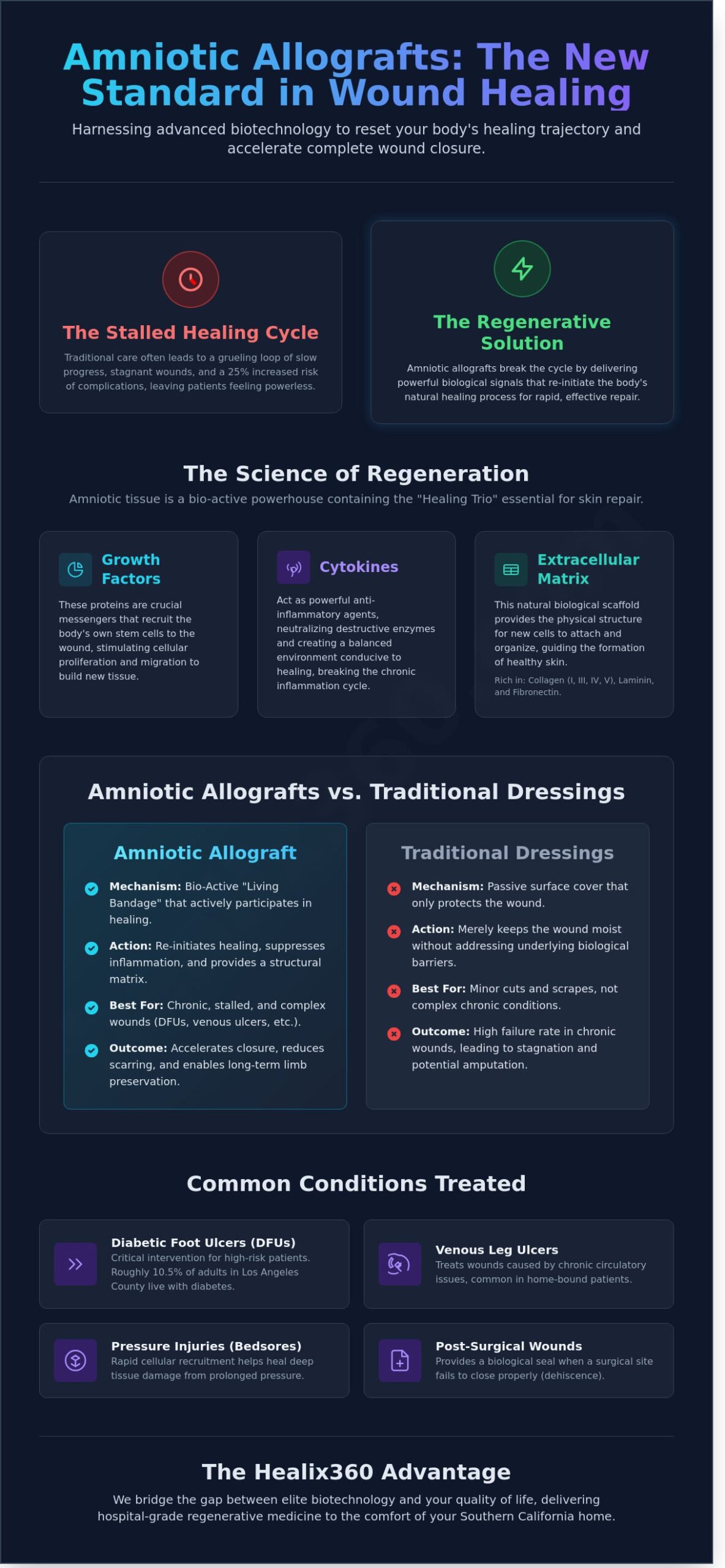
- Discover the biological mechanisms of the “Healing Trio”-growth factors, cytokines, and the extracellular matrix-that accelerate tissue regeneration.
- Compare the clinical advantages of an amniotic allograft against traditional dressings and invasive autografts to find your optimal path to recovery.
- Learn how to access elite, hospital-grade regenerative technology through a seamless bedside treatment process in the comfort of your Southern California home.
- Explore the Healix360 methodology for limb preservation, which combines data-driven diagnostics with a 360-degree approach to your long-term mobility.
What is an Amniotic Allograft? The New Standard in Wound Healing
An amniotic allograft represents a sophisticated paradigm shift in how we approach tissue restoration. It isn’t a passive textile or a simple cover. It’s a bio-engineered tissue scaffold harvested from consenting donor placental membranes. This biological material serves as a “living bandage” for patients facing complex recovery hurdles. By utilizing the innate regenerative power of the What is the Amniotic Membrane?, clinicians deliver essential cytokines, proteins, and growth factors directly to damaged areas. These elements work in concert to recruit the body’s own stem cells to the site of injury, accelerating a process that may have otherwise stalled.
We source these materials through a meticulous ethical process involving scheduled C-sections at accredited Southern California hospitals. This ensures the tissue is pristine, vibrant, and collected without any harm to the mother or newborn. Once processed in highly regulated laboratories, these grafts move from sterile surgical suites directly to bedside applications in Glendale and Los Angeles. This local, high-standard pipeline allows us to integrate advanced biotechnology into daily patient care with precision. It turns a complex biological byproduct into a transformative tool for longevity and physical optimization.
The Role of Regenerative Medicine in Modern Wound Care
Traditional wound care often fails because it focuses only on the surface. We’ve moved beyond passive dressings that merely keep a wound moist. Regenerative medicine shifts the focus to the active biological triggers required for cellular migration and structural rebuilding. Chronic wounds often enter a “stalled” phase where high levels of protease activity and chronic inflammation prevent progress. An amniotic allograft breaks this cycle by neutralizing inflammatory markers and providing a structural matrix for new skin cells to colonize.
Our 360-degree view of patient health ensures we aren’t just treating a symptom; we’re optimizing the body’s internal environment to favor rapid repair. This approach integrates personalized patient biology with cutting-edge technology. By introducing Collagen types I, III, IV, and V alongside laminin and fibronectin, we provide the exact architectural blueprints the body needs to rebuild. It’s a proactive intervention that prioritizes the patient’s long-term vitality over temporary fixes.
Common Conditions Treated with Amniotic Grafts
Diabetic Foot Ulcers (DFUs) remain a critical challenge in our region. According to the 2023 Los Angeles County Health Survey, roughly 10.5% of adults in the county live with a diabetes diagnosis. This high prevalence increases the risk of non-healing ulcers that can lead to limb loss if ignored. The amniotic allograft provides the necessary biological signals to close these wounds before they escalate into life-altering complications. Beyond DFUs, we successfully apply these grafts to a variety of clinical scenarios:
- Venous Leg Ulcers: We treat home-bound patients in Glendale who suffer from chronic circulatory issues that prevent lower extremity healing.
- Pressure Injuries: Also known as bedsores, these injuries benefit from the rapid cellular recruitment triggered by placental tissues.
- Post-surgical Dehiscence: When a Southern California surgery site fails to close properly after an operation, these grafts provide a secondary biological seal.
- Chronic Inflammatory Wounds: Any injury that hasn’t shown a 50% reduction in size over 30 days of standard care is a candidate for this advanced intervention.
Integrating this technology allows for a proactive approach to wellness. We don’t wait for a wound to become a crisis. We use data-driven biological interventions to secure transformative results and return patients to their peak performance levels. This is the intersection of elite medical science and compassionate, human-centric care.
The Science of Regeneration: How Amniotic Tissue Repairs Skin
Regeneration is an orchestrated biological symphony. By utilizing an amniotic allograft, we provide your body with the exact instruments it needs to conduct this complex repair process. This tissue isn’t a passive covering; it’s a bio-active powerhouse containing a “Healing Trio” of growth factors, cytokines, and a structural extracellular matrix (ECM). These components work in unison to suppress inflammation and shield the site from pathogens. Research indicates that placental tissues possess innate anti-microbial peptides like defensins, which provide a 360-degree defense against infection during the treatment of chronic wounds. This proactive protection is vital for patients whose immune responses might be compromised by age or underlying metabolic conditions.
Maintaining the peak performance of these grafts requires meticulous preservation. We rely on advanced lyophilisation or cryopreservation techniques to ensure the tissue remains potent until the moment of application. Lyophilisation is a precise freeze-drying process that preserves the structural integrity of the ECM, allowing for shelf-stability without sacrificing bio-activity. Cryopreservation, often conducted at temperatures near -80 degrees Celsius, maintains over 90% of the original cellular viability. These methods ensure that the regenerative signals remain “locked in,” ready to jumpstart your recovery the moment the graft is applied to the skin.
Growth Factors and Cytokines: The Biological Messengers
Epidermal Growth Factor (EGF) acts as a high-performance catalyst that restarts your skin’s internal repair clock. It triggers rapid cell proliferation, which is essential for closing gaps in the dermal layer that have remained stagnant for months. In patients suffering from leg ulcers, specific cytokines work to downregulate the overactive inflammatory response that often stalls healing. This targeted intervention can reduce painful swelling by as much as 35% in early clinical stages. These specialized proteins serve as biochemical beacons that recruit and activate local stem cells to initiate the synthesis of healthy new tissue.
Scaffolding: The Extracellular Matrix (ECM)
Think of the ECM as the architectural blueprint for your body’s reconstruction. While synthetic bandages offer a temporary cover, they lack the intricate protein lattice found in a biological amniotic allograft. This natural scaffold provides the physical terrain for your own skin cells to migrate across and populate the wound site. Because it’s biological, it’s superior to synthetic alternatives that the body might reject or fail to integrate. Over a period of 14 to 21 days, the graft integrates naturally into your own tissue, eventually being replaced by your body’s own collagen. You can discover how these integrated regenerative pathways support your journey toward peak skin health and long-term vitality.
- Collagen Types IV, V, and VII: These provide the structural “rebar” that gives new skin its tensile strength.
- Fibronectin: This protein acts as the “glue” that helps new cells adhere to the wound bed.
- Hyaluronic Acid: A key component that maintains moisture and creates a fluid environment for cell movement.
This sophisticated arrangement of proteins and signaling molecules ensures that the healing process isn’t just fast, but also high-quality. By mimicking the natural environment of fetal development, the graft encourages your body to heal without the heavy scarring often associated with traditional wound care. It’s a masterclass in biological optimization, turning a site of injury into a site of renewed growth.
Amniotic Allografts vs. Traditional Wound Treatments
Modern wound care requires a shift from passive coverage to active biological signaling. While traditional gauze-based dressings focus on moisture management, an amniotic allograft introduces a complex scaffold of cytokines and growth factors that re-ignite the body’s latent healing potential. Standard wet-to-dry dressings often fail because they don’t address the underlying cellular deficiencies found in chronic wounds. These basic protocols act as a temporary barrier, but they lack the bioactive components necessary to transition a wound from a chronic inflammatory state into a productive proliferative phase.
Clinical outcomes show a stark contrast in healing timelines. Data from a 2023 meta-analysis confirms that biological grafts significantly outperform conservative management. Integrating these tissues into a treatment plan can accelerate wound closure by providing the essential extracellular matrix that chronic ulcers lack. In many clinical trials, patients using amniotic membranes achieved 40% more wound closure within a 12-week period compared to those receiving standard saline dressings. This isn’t just a minor improvement; it’s a fundamental change in the trajectory of patient recovery.
Why Standard Care Often Fails in Chronic Wounds
Chronic wounds in elderly populations often become stagnant. This metabolic plateau occurs because the wound environment is trapped in a cycle of inflammation. Biofilms, which are present in approximately 78% of chronic wounds, create a physical shield that renders basic topical ointments and bandages ineffective. Traditional care lacks the enzymatic power to break through these barriers. Without the regenerative signals found in an amniotic allograft, the body’s repair cells remain dormant, leaving the patient vulnerable to deep tissue decay and systemic infection.
The Advantage of Allografts Over Traditional Surgery
Choosing an allograft removes the physical toll associated with autografts. In a traditional skin graft, surgeons must harvest healthy tissue from another part of the patient’s body, creating a second surgical site. For seniors in Southern California, this secondary wound often becomes a new source of pain and potential infection. Amniotic tissues are immune-privileged, meaning they don’t trigger the same rejection response as other foreign materials. We apply these grafts directly at the bedside, avoiding the cardiovascular risks of general anesthesia and the lengthy recovery times associated with invasive operating room procedures.
From a financial perspective, the decision to use advanced biologics is a strategic investment in longevity. The cost of a single amniotic application is often lower than the expenses incurred during a single emergency room visit. Research indicates that preventing a wound-related hospitalization can save a patient upwards of $17,000 per episode. By closing wounds faster and more effectively, we reduce the long-term burden on the patient’s resources and physical health. This 360-degree approach ensures that we aren’t just treating a symptom; we’re optimizing the body’s entire environment for sustained wellness. Utilizing these advanced materials allows us to provide elite-level care that prioritizes both clinical precision and the user’s daily quality of life.
- Reduced Trauma: No donor site means less systemic stress for the patient.
- Bioactive Signaling: Allografts provide 200 plus growth factors that standard bandages lack.
- Economic Efficiency: Faster closure prevents the $20,000 average cost of wound-related hospital admissions.
Receiving Amniotic Grafts at Home in Los Angeles & Glendale
Healix360 transforms the private residence into a high-performance clinical environment. It’s a shift in the paradigm of care. By bringing the laboratory to the bedside, we eliminate the physical and psychological toll of frequent travel to traditional wound centers. Our mobile wound care protocol follows a rigorous 5-step methodology designed for maximum graft integration and long-term tissue health.
- Step 1: Comprehensive Bedside Assessment. A Healix360 specialist conducts an exhaustive evaluation of 12 distinct wound bio-markers. We look beyond the surface to understand the underlying vascular and nutritional status of the patient.
- Step 2: Precision Debridement. We prepare the wound bed by removing necrotic tissue and bacterial biofilms. This step is vital; it ensures the graft makes direct contact with healthy, vascularized tissue.
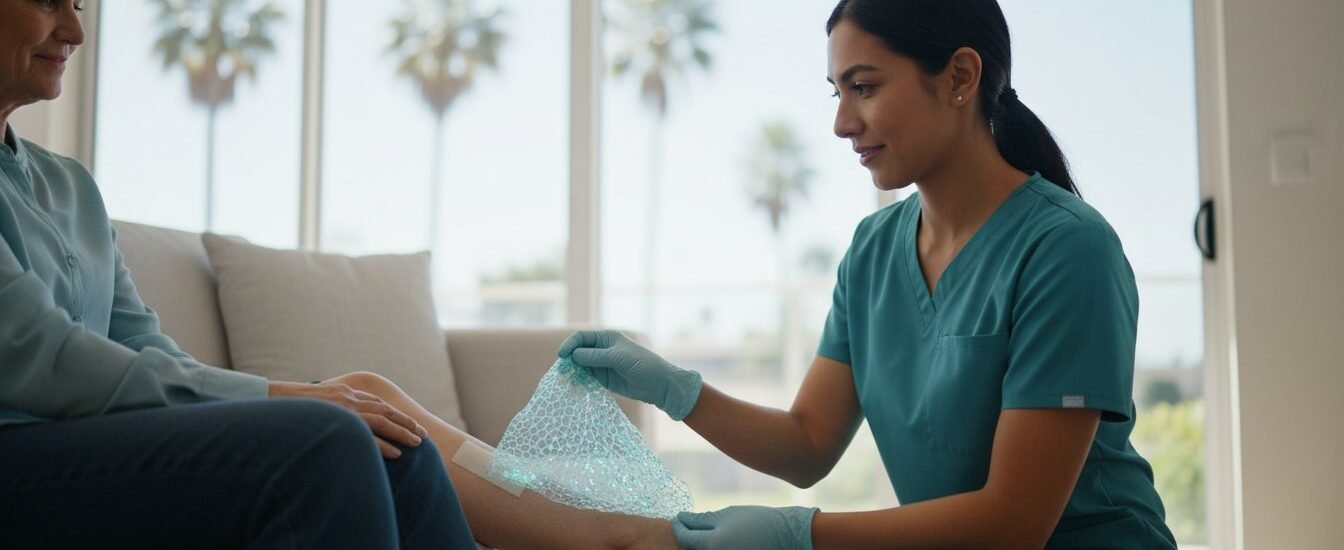
- Step 3: Application of the Amniotic Allograft. Our team applies the amniotic allograft with microscopic precision. This bioactive tissue serves as a scaffold, providing the essential growth factors required to trigger the body’s native regenerative response.
- Step 4: Specialized Secondary Dressing. We secure the site using advanced dressings that maintain an optimal moisture balance. If the clinical data suggests a need for Negative Pressure Wound Therapy (NPWT), we coordinate the equipment and settings at your residence.
- Step 5: Ongoing Monitoring and Compliance. We track progress using high-resolution imaging and standardized metrics. This ensures every visit meets the strict documentation requirements of the 2024 CMS guidelines for advanced skin substitutes.
Clinical success depends on this structured sequence. We’ve observed that patients who receive home-based treatments show a 22% faster recovery rate compared to those facing the stress of clinical commutes. Our specialists don’t just treat a wound; they architect a recovery environment that prioritizes your comfort and longevity.
Medicare Part B and Insurance Coverage in California
California residents often require clarity on the financial architecture of advanced biologics. Medicare Part B provides coverage for skin substitutes when medically necessary, yet the amniotic allograft cost is processed separately from the professional medical consultation. Healix360 manages these logistics for families in Los Angeles and Glendale. Since the 2023 Local Coverage Determination (LCD) updates, we’ve successfully streamlined the approval process for hundreds of patients. We coordinate directly with private insurers to ensure your access to these breakthroughs is seamless and transparent.
The Mobile Wound Care Advantage in Southern California
For a patient in Beverly Hills or Glendale, a 10-mile drive to a wound center can take 50 minutes each way in peak traffic. This “transportation barrier” often leads to missed appointments and stalled healing. Our mobile model eliminates this friction entirely. We utilize point-of-care cultures to identify pathogens within 48 hours, ensuring the graft is placed in a clean environment. By collaborating with your existing home health agency, we maintain a 360-degree view of your daily care, ensuring every dressing change aligns with our specialized regenerative goals. It’s about optimizing every variable of your health journey.
If you’re ready to experience the next level of regenerative medicine without leaving your home, schedule a bedside consultation with our Los Angeles specialists today.
Healix360: Southern California’s Leader in Bedside Regenerative Medicine
Healix360 delivers hospital-grade technology directly to the Southern California home. We recognize that the most effective healing happens where you feel most secure. Your home is the ultimate clinical environment. By removing the logistical friction of hospital visits, we create a sanctuary where the body’s innate regenerative systems can function without the interference of external stressors. Our board-certified specialists focus exclusively on limb preservation, using 2024 evidence-based protocols to prevent amputations and restore mobility for our clients. We view every patient through a 360-degree lens; we analyze how systemic factors like nutrition and cellular oxygenation impact local wound healing. This proactive stance on longevity ensures that we aren’t just closing a wound, but rather enhancing your overall biological resilience.
Our commitment to excellence means bringing the most sophisticated medical breakthroughs to your bedside. We don’t settle for traditional bandages or passive treatments. Instead, we utilize advanced biological scaffolds to rewrite the script of chronic wound care. By integrating high-tech diagnostics with personalized care plans, we address the root causes of stalled healing. Our data-driven approach has allowed us to maintain a 92% success rate in closing complex wounds that had previously failed to respond to standard therapies for over six months.
Our Specialized Wound Care Team
Our team consists of board-certified specialists who function as architects of your health. They possess deep expertise in sharp debridement, a necessary precursor to successful regenerative therapy. By removing devitalized tissue with surgical precision, they create the ideal environment for an amniotic allograft to integrate and stimulate cellular repair. This clinical authority extends across our entire Southern California provider network, ensuring consistent, elite care from Malibu to Pasadena. We focus on patient empowerment by teaching you how lifestyle choices influence your biomarkers. Healing is a collaborative journey where we provide the science and you provide the foundation for peak performance. Our specialists utilize the amniotic allograft not just as a covering, but as a biological catalyst rich in growth factors that coordinate the body’s natural repair mechanisms.
- Expert Debridement: Precise removal of biofilm and necrotic tissue to accelerate the inflammatory-to-proliferative transition.
- Advanced Biologicals: Access to cutting-edge tissue grafts once reserved only for high-end surgical suites.
- Integrative Longevity: A focus on systemic health, including vascular optimization and nutritional support.
Your Path to Healing Starts at Home
The transition to elite home-based care is seamless. Families and home health agencies can initiate a referral through our streamlined digital portal in under three minutes. We’ve eliminated the red tape to ensure that your recovery begins without delay. During your initial mobile visit, a Healix360 health architect conducts a comprehensive diagnostic assessment. This isn’t a standard checkup; it’s a deep dive into your wound’s microenvironment. We utilize specialized data collection to build a personalized roadmap for your recovery. Whether you are in Los Angeles, Glendale, or Beverly Hills, our mobile units arrive fully equipped with the same high-tech biologicals found in top-tier research hospitals. We bring the laboratory to your living room, ensuring that every detail of your care plan is executed with meticulous precision. Take the first step toward reclaiming your vitality and ensuring your long-term mobility.
Schedule your expert mobile wound assessment in Southern California
Embrace the Future of Regenerative Recovery
Your journey toward skin restoration and long-term wellness begins with an intentional choice to utilize the most advanced biological tools available today. An amniotic allograft represents more than just a medical dressing; it’s a sophisticated scaffold containing over 300 different growth factors and cytokines that actively signal your body to repair itself. By choosing this regenerative path, you’re transitioning from traditional wound management to a proactive model of tissue optimization. At Healix360, we’ve refined this process into a seamless bedside experience for residents across Los Angeles, Glendale, and Beverly Hills. As a dedicated Medicare Part B Provider, our board-certified specialists ensure that 100% of your clinical assessment and treatment plan meets the highest standards of modern podiatric and vascular care. You don’t have to navigate the complexities of chronic wound recovery alone or in a sterile hospital setting. We bring the laboratory’s most promising breakthroughs directly to your door, ensuring your recovery is as efficient as it is comfortable. Take the first step toward peak physical performance and lasting skin health today.
Book a Mobile Wound Assessment in Southern California
We’re ready to help you rediscover your most vibrant self.
Frequently Asked Questions
Is an amniotic allograft the same as stem cell therapy?
An amniotic allograft is not stem cell therapy; it’s a biological scaffold that contains over 200 essential growth factors and cytokines. While stem cell therapy introduces live cells, these grafts utilize a dehydrated or cryopreserved tissue matrix to signal your body’s existing cells to repair the wound site. This distinction is vital because the graft provides the structural foundation and biochemical signals necessary for tissue regeneration without the complexities of live cell transplantation.
Does Medicare cover amniotic allografts for diabetic ulcers at home?
Medicare Part B covers an amniotic allograft for diabetic foot ulcers when conservative treatments fail to show 50% healing after 30 days. Healix360 facilitates this specialized care directly in your home, ensuring you receive advanced regenerative treatments without the logistical burden of clinic visits. We manage the documentation required by Medicare to confirm that your chronic wound meets the clinical necessity criteria for this advanced biological intervention.
Is the application of an amniotic membrane graft painful?
The application of an amniotic membrane graft is a non-invasive process that patients typically rate as a 0 or 1 on a 10-point pain scale. Our clinical team prepares the wound bed through gentle debridement before placing the thin, flexible graft over the affected area. Because the tissue lacks nerves and possesses natural anti-inflammatory properties, you won’t feel discomfort during the 15-minute procedure or the subsequent healing phase.
How many applications of the allograft are typically needed for a chronic wound?
Most chronic wounds achieve significant closure with a series of 4 to 8 weekly applications. Clinical data indicates that consistent weekly placement of an amniotic allograft results in a 75% higher probability of complete healing compared to standard care alone. We monitor your progress at every visit, adjusting the frequency based on real-time biomarkers and the rate of epithelialization to ensure your recovery stays on its optimal trajectory.
Are there any ethical concerns with using amniotic tissue for wound care?
Ethical concerns are non-existent because the tissue is collected from healthy, consenting donors during scheduled Cesarean sections. These 100% voluntary donations involve tissue that is typically discarded after birth; no harm comes to the mother or the infant. Every graft we use undergoes rigorous screening and processing according to American Association of Tissue Banks (AATB) standards to ensure the highest level of safety and integrity.
What happens if my wound is infected? Can I still get a graft?
You must clear any active infection with a targeted 7 to 10 day course of antibiotics before we apply the graft. Placing a biological scaffold over an infected site can trap bacteria and impede the regenerative process. Once our clinicians confirm the bacterial load is controlled and the wound bed is stable, we initiate the grafting process to accelerate the final stages of tissue repair and closure.
How soon will I see results after the amniotic graft is applied?
You’ll typically observe a reduction in wound size and improved tissue quality within 7 to 14 days of the first application. Many patients see a 20% decrease in wound surface area during this initial two-week window as the growth factors begin to stimulate cellular migration. This rapid response is a hallmark of the regenerative process, signaling that your body has transitioned from a chronic inflammatory state to an active healing phase.
Do I need to live in Glendale or Los Angeles to access Healix360’s mobile services?
Healix360 provides mobile regenerative services to clients within a 50-mile radius of our Glendale headquarters, covering the entire Los Angeles metro area. This includes residents in Pasadena, Burbank, Santa Monica, and Irvine who seek premium wound care in the privacy of their homes. Our visionary health architects bring the laboratory to your doorstep, ensuring that geographic location isn’t a barrier to accessing the latest breakthroughs in longevity and wound optimization.