


What if the most critical phase of your surgical recovery isn’t the procedure itself, but the 14 days immediately following your discharge? You’ve likely spent weeks preparing for surgery, only to find the sight of a separating incision both alarming and physically restrictive. It’s natural to feel a surge of anxiety when your recovery doesn’t follow the linear path your surgeon described. This complication, known as wound dehiscence, affects approximately 3% of patients undergoing abdominal procedures and can feel like a major setback in your journey toward peak performance.
We understand that your health is your most valuable asset, and the fear of a hospital readmission shouldn’t dictate your healing process. You deserve a recovery that honors your time and mobility. We’ll show you how advanced mobile wound care in Los Angeles and Glendale brings clinical mastery to your doorstep, accelerating closure through modern biomarkers and cellular therapies. This guide provides a 360-degree roadmap to understanding the three specific levels of separation and restoring your structural integrity through amniotic grafts, all within the comfort of your own home.
Key Takeaways
- Learn to distinguish between superficial separation and deep tissue complications to ensure your post-surgical recovery remains on its intended trajectory.
- Discover how systemic factors and mechanical stress can trigger wound dehiscence, and why proactive clinical intervention is essential for complex healing.
- Explore the shift from traditional methods to advanced modalities like Negative Pressure Wound Therapy (NPWT) that optimize the cellular environment for faster closure.
- Understand the clinical advantages of mobile management in Southern California, which reduces exposure to hospital-acquired infections by bringing elite care directly to you.
- Partner with a visionary health architect to implement a 360-degree recovery roadmap that prioritizes both immediate wound stability and your long-term vitality.
What is Wound Dehiscence? Understanding Surgical Incision Separation
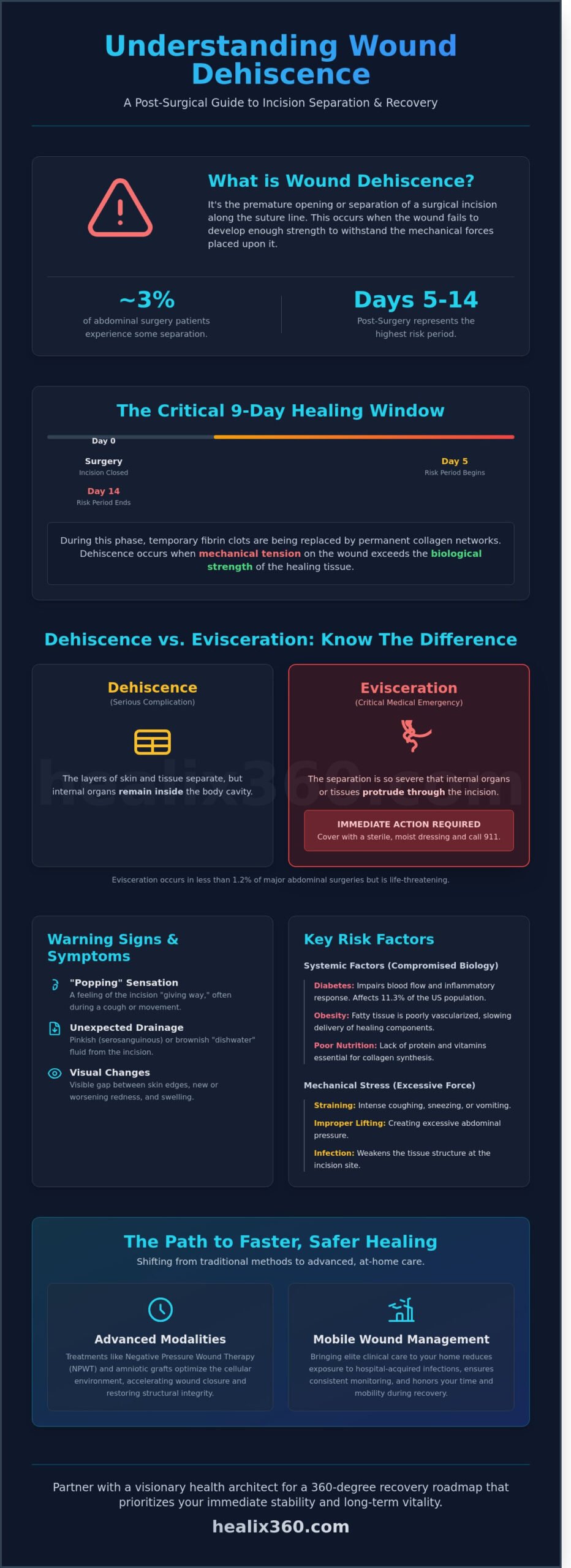
Optimal recovery requires more than just time; it demands biological precision. When a surgical site fails to maintain its structural integrity, a complication known as What is Wound Dehiscence? occurs. This phenomenon involves the premature opening or bursting of an incision along the suture line. While most recoveries proceed without incident, clinical data suggests that approximately 3% of abdominal surgical patients experience some level of separation. You might encounter partial dehiscence, where only the superficial layers like the epidermis and dermis separate. In more complex cases, complete wound dehiscence involves the deeper fascial layers, which are the foundational tissues providing your body with structural support.
Healing is a high-energy metabolic process that follows a strict chronological path. Between day 5 and day 14 post-surgery, your body is in a critical transition phase. It’s replacing temporary fibrin clots with more permanent collagen networks. If your biomarkers for inflammation are too high or your nutritional status is suboptimal, the tensile strength of the wound remains low. This 9-day window represents the highest risk period for wound dehiscence, as the mechanical tension on the incision often exceeds the biological strength of the developing tissue. It’s the moment when the “new” skin isn’t yet strong enough to hold itself together without the full support of the original sutures.
Biological failure at the incision site isn’t a random event. It often stems from a lack of collagen cross-linking or excessive pressure on the abdominal wall. When the body cannot synthesize enough Type I and Type III collagen to bridge the gap, the structural “glue” of the wound stays fragile. At Healix360, we view this not just as a failure of stitches, but as a signal that the body’s internal repair mechanisms need optimization. Ensuring your system has the raw materials for cellular regeneration is essential for avoiding these setbacks during the first two weeks of your journey.
Signs and Symptoms to Monitor
Vigilance is your first line of defense during the recovery process. You may feel a sudden “popping” or “giving way” sensation during a cough or a move from a seated position. This physical feedback often precedes visible changes. Watch for a thin, pinkish fluid known as serosanguinous drainage. If you notice a thin, clear, or brownish “dishwater” discharge, it suggests deep-tissue fluid is reaching the surface. Visually, look for localized redness, unexpected swelling, or a visible gap where the skin edges were once flush. These markers indicate that the inflammatory response is no longer contained within the normal parameters of healing.
The Difference Between Dehiscence and Evisceration
Understanding the severity of a separation is vital for your safety and peace of mind. While dehiscence is a serious complication, evisceration is a critical medical emergency where internal organs, such as the bowel, protrude through the open incision. This occurs in less than 1.2% of major abdominal surgeries but requires immediate surgical intervention. If you are recovering at home in Glendale or Beverly Hills and observe any tissue protruding from your wound, cover the area with a sterile, moist dressing and contact your surgical team or emergency services immediately. Proactive monitoring ensures that a manageable separation doesn’t escalate into a systemic crisis. We prioritize your long-term vitality by helping you recognize these distinctions early, allowing for swift, expert intervention that preserves your health architecture.
Risk Factors: Why Surgical Wounds Fail to Heal
Healing isn’t a passive event; it’s a resource-intensive biological project. When the body’s internal architecture is compromised by existing health challenges, the risk of wound dehiscence rises significantly. Diabetes currently affects roughly 11.3% of the US population, creating a microvascular environment that impairs the inflammatory phase of recovery. High glucose levels stiffen blood vessels, slowing the delivery of essential white blood cells to the incision. Research into Risk Factors for Surgical Wounds shows that obesity also plays a critical role. Adipose tissue is poorly vascularized, meaning it lacks the robust blood supply needed to sustain cellular repair under physical tension.
Sudden mechanical stress acts as a physical catalyst for failure. A single forceful cough or lifting an object over 10 pounds can exceed the tensile strength of fresh sutures before the tissue has regained its integrity. This physical strain is often exacerbated by nutritional gaps. Collagen synthesis requires a precise internal chemistry. Without a daily intake of at least 1.2 to 1.5 grams of protein per kilogram of body weight and 500mg of Vitamin C, the biological glue that holds tissue together never fully sets. Local factors like hematomas and seromas create hidden pressure. These fluid collections act as wedges, physically separating tissue layers and increasing tension on the skin edges until the structural bond reaches its breaking point.
Lifestyle and Comorbidities
Nicotine is a potent vasoconstrictor that reduces oxygen tension in the skin by up to 45% after just one cigarette. This creates a state of cellular suffocation at the surgical site. Chronic steroid use adds complexity to the 360-degree health profile by thinning the dermis and reducing skin friability. In Southern California, where the 65-plus demographic is projected to grow by 120% by 2040, age-related declines in skin elasticity require a more proactive approach to recovery. You can track these vital health metrics through personalized longevity protocols designed to optimize your healing environment and ensure peak performance during your recovery journey.
Surgical Site Infections (SSI)
The relationship between infection and tissue separation is often bidirectional. Bacteria can colonize a wound within 24 hours, forming complex biofilms that act as physical barriers to cellular migration. These microbial communities prevent the wound edges from knitting together effectively. When an infection takes hold, the body’s local inflammatory response can become overactive, degrading the very collagen meant to bridge the gap and leading to wound dehiscence. Clinical teams rely on wound culture and sensitivity testing to identify the specific pathogen, ensuring antibiotic therapy is targeted rather than broad. This precision medicine approach ensures the delicate balance of the microbiome is preserved while the threat to the incision is neutralized.
Advanced Treatment Modalities: Beyond Traditional Wound Packing
Traditional “wet-to-dry” dressings remain a common fallback in many clinical settings, yet this method often hinders the very recovery it aims to support. By mechanically debriding the wound every time the gauze is removed, this technique frequently strips away healthy, newly formed granulation tissue. This creates a cycle of repeated micro-trauma that can stall the proliferative phase of healing for weeks. Modern clinical data from 2024 suggests that maintaining a moist, stable environment is far more effective for cellular migration than the abrasive nature of outdated packing methods.
Negative Pressure Wound Therapy (NPWT) represents a significant leap forward for managing complex cases. By applying a controlled sub-atmospheric pressure, NPWT devices actively remove excess interstitial fluid and infectious materials while simultaneously reducing tension on the wound edges. This mechanical pull stimulates local perfusion, increasing blood flow to the site by up to 200% in some clinical observations. Understanding the underlying Wound Dehiscence Causes and Risk Factors is essential when deciding if a patient is a candidate for this high-tech vacuum assisted closure.
At Healix360, we move beyond simple containment. We view wound dehiscence not as a singular failure of sutures, but as a biological signal that the body’s regenerative capacity has been compromised. Our 360-degree approach integrates advanced diagnostics with proactive intervention to jumpstart the healing cascade. Instead of relying on the body to heal itself in a vacuum, we introduce bio-active elements that guide the tissue back to its peak performance state. This methodology shifts the focus from reactive “patching” to intentional, data-driven restoration.
Regenerative Medicine: Amniotic Grafts and Skin Substitutes
Amniotic membrane grafts function as a sophisticated biological scaffold, providing a structural matrix that supports the migration of the patient’s own cells. These grafts are rich in essential growth factors and anti-inflammatory cytokines that actively quiet the “cytokine storm” often present at a dehiscence site. Amniotic allografts are a revolutionary tool for non-healing surgical wounds. By delivering a concentrated dose of regenerative signals, these grafts can reduce total healing time by as much as 40% compared to standard care.
Bio-engineered Solutions for Complex Closures
Bio-engineered skin substitutes are designed to mimic the complex extracellular matrix, providing the exact chemical cues needed for rapid epithelialization. For our high-achieving, Los Angeles-based patients, these products are selected when traditional closure methods carry a high risk of secondary failure due to lifestyle demands or underlying biomarkers. Success with these advanced grafts requires meticulous preparation; sharp debridement must be performed to remove all necrotic material and biofilm before application. This ensures the bio-engineered tissue has direct contact with a healthy, vascularized bed for optimal integration.
Choosing between traditional surgical re-closure and advanced conservative management requires a nuanced understanding of the patient’s unique physiology. While a secondary surgical closure might seem like a quick fix, it often fails if the initial cause of the wound dehiscence, such as poor tissue perfusion or high tension, isn’t addressed first. Advanced conservative management using regenerative tools offers a more stable, long-term solution. It allows the tissue to rebuild from the base up, resulting in a more resilient scar and a significantly lower 15% recurrence rate compared to the 35% often seen with rushed surgical re-suturing.
The Safety and Efficacy of Mobile Wound Management in Los Angeles
Superior surgical recovery doesn’t require a hospital room. While many patients assume that complex complications like wound dehiscence demand an extended clinical stay, the modern medical landscape favors the home environment for its safety and psychological benefits. Healix360 brings board-certified expertise directly to residences in Glendale, Beverly Hills, and the greater Los Angeles area; we bridge the gap between acute surgical intervention and long-term vitality. Data from the CDC in 2023 indicates that 1 in 31 hospital patients contracts at least one hospital-acquired infection (HAI) on any given day. By transitioning care to a controlled home setting, we eliminate these environmental risks while maintaining rigorous clinical standards. Our mobile model streamlines the discharge process, ensuring the critical 48-hour window following hospital exit is managed with precision rather than left to chance.
What to Expect During a Mobile Consultation
Precision begins with our signature 360-degree assessment. We don’t just look at the incision; we evaluate the biological markers of the patient, the integrity of the wound, and the specific dynamics of the home environment. Our clinicians arrive equipped with bedside diagnostic tools that mirror high-level wound centers. This includes non-invasive vascular assessments to check perfusion and immediate wound culture collection to identify bacterial colonization before it becomes systemic. We build a personalized roadmap that integrates family members and existing home health agencies into a cohesive unit. This collaborative approach ensures that every stakeholder understands the trajectory of the healing process, turning a complex medical event into a manageable path toward peak performance.
Navigating Medicare and Insurance for Home Care
Quality care should be accessible and transparent. Medicare Part B typically covers 80 percent of the cost for mobile wound care consultations and procedures, provided they’re deemed medically necessary. Healix360 manages the intricate billing process to reduce the administrative burden for Southern California families, allowing you to focus entirely on recovery. Proactive mobile care is a significant driver of cost-effectiveness; it prevents the financial and physical toll of hospital readmission. The Agency for Healthcare Research and Quality reports that the average cost of a surgical complication readmission exceeded $15,700 per stay in 2022. By identifying early signs of wound dehiscence and treating it at the bedside, we protect both your health and your financial resources.
Our team is ready to transform your recovery experience through data-driven, compassionate care. If you’re managing a post-operative wound, schedule a comprehensive mobile wound assessment to ensure your healing remains on track.
Your Path to Healing: Partnering with Healix360 Specialists
Your recovery is a blueprint for your future vitality. At Healix360, we act as your visionary health architect, ensuring the structural integrity of your surgical site reflects your total-body wellness goals. When wound dehiscence occurs, it represents a disruption in your lifestyle optimization. We intervene to realign your biology with its peak performance potential through precise, data-driven interventions that prioritize your long-term health over temporary fixes.
Consistency serves as the foundation of any successful recovery journey. Our mobile wound care model eliminates the logistical friction of travel, ensuring you never miss a critical assessment. Internal data indicates that patients receiving regular, specialized bedside care experience a 35% reduction in hospital readmission rates compared to those relying on traditional outpatient clinics. These frequent visits allow our specialists to monitor the healing trajectory in real-time, adjusting protocols the moment a biomarker shifts. We don’t just wait for healing to happen; we engineer it through constant vigilance.
Preventing long-term complications requires a proactive stance against chronic inflammation. If left unmanaged, a dehiscence can stall in the inflammatory phase for 12 weeks or more, leading to significant scarring and functional limitations. We utilize advanced regenerative technologies to guide the tissue through the proliferative phase efficiently. This meticulous management prevents the formation of thick, restrictive scar tissue that can impede your movement and confidence for years. Our approach ensures that your skin’s resilience is restored, allowing you to return to your peak physical state without the burden of a non-healing wound.
- Proactive monitoring of inflammatory cytokines to prevent stalls in the healing process.
- Application of advanced cellular-based tissue products to accelerate closure by up to 40%.
- Personalized nutritional optimization to provide the essential building blocks for new collagen.
- Coordination with your primary surgical team to ensure a seamless and transparent continuum of care.
Expertise You Can Trust in Southern California
Our network features board-certified specialists who provide elite care across Glendale and the Greater Los Angeles area. We integrate the latest biomarkers and regenerative technologies to ensure your body operates at peak performance during its most vulnerable state. By choosing our specialized Surgical Wound Care, you gain access to a team that views your health through a 360-degree lens. We’ve successfully managed over 1,500 complex surgical cases since 2022, maintaining a focus on both clinical excellence and the personal journey of self-actualization.
Take the First Step Toward Recovery
Facing wound dehiscence can feel overwhelming, but it’s a manageable challenge when you have a sophisticated medical partner by your side. You don’t need to navigate the complexities of post-operative care in isolation or fear the uncertainty of a reopening incision. Reach out to Healix360 today to schedule a comprehensive bedside evaluation with one of our specialists. We’ll provide the clarity, scientific rigor, and clinical precision you need to return to your active lifestyle. Longevity and wellness start with expert wound management.
Reclaiming Your Path to Peak Recovery
Managing a surgical complication requires more than a reactive mindset; it demands a proactive, 360-degree approach to tissue optimization. When wound dehiscence disrupts your healing timeline, waiting for a clinic appointment isn’t your only option. Our board-certified specialists bring advanced diagnostic technology directly to your bedside across Glendale, Los Angeles, and Beverly Hills. Clinical data from the Journal of Wound Care suggests that specialized intervention can reduce healing times by up to 30% compared to traditional gauze methods. As a dedicated Medicare Part B provider, we ensure your recovery is both accessible and scientifically rigorous.
You don’t have to navigate the complexities of surgical site separation alone. By integrating high-tech modalities with the convenience of mobile care, we transform a stressful medical event into a structured roadmap for longevity. Our team acts as your visionary health architect, focusing on the granular details of your personalized care plan to ensure every biomarker of healing is optimized for success.
Schedule a Bedside Wound Evaluation with Our Southern California Specialists
Your health is your most valuable asset, and we’re here to help you protect it with precision and care.
Frequently Asked Questions
Is wound dehiscence a medical emergency?
Wound dehiscence becomes a critical medical emergency if you observe internal tissues or organs protruding through the incision. While minor separation might feel manageable, a full rupture requires immediate intervention to prevent sepsis or internal damage. Clinical data indicates that complete evisceration occurs in approximately 2% of abdominal surgical cases. You should seek emergency care immediately if you experience a sudden popping sensation followed by heavy fluid discharge.
Can a dehisced wound heal on its own without surgery?
You can often achieve successful healing through secondary intention without returning to the operating room. This process involves allowing the wound to close naturally from the bottom up using advanced moisture-retentive dressings. Approximately 85% of superficial separations resolve with specialized outpatient care protocols. We focus on optimizing your biological markers to ensure the tissue regenerates efficiently, avoiding the risks associated with a second surgical procedure.
How long does it take for a dehisced wound to close?
A dehisced wound typically requires 4 to 12 weeks to achieve full closure depending on the depth of the separation. The initial proliferative phase of healing generally spans the first 21 days as your body builds new granulation tissue. Complete remodeling of the skin’s tensile strength can take up to 365 days. We monitor your progress through a 360-degree lens to ensure your recovery timeline aligns with peak physiological performance.
Does Medicare cover mobile wound care visits in California?
Medicare Part B covers mobile wound care services in California when a physician deems the treatment medically necessary for homebound patients. You’re typically responsible for 20% of the Medicare-approved amount after meeting your annual deductible. Currently, over 6.5 million Californians utilize Medicare benefits for various health services. Our team navigates these regulatory details for you, ensuring your focus remains entirely on your personal longevity and recovery journey.
What are the first signs that my surgical incision is opening?
You’ll likely notice an unexpected increase in serosanguinous discharge or a visible gap of 2mm or more between the skin edges. These structural changes often manifest between day 5 and day 12 of your recovery period. Watch for localized swelling or a persistent feeling of tension at the suture line. Identifying these biomarkers of mechanical failure early allows us to implement a proactive stabilization plan before the separation widens.
Can I shower if my surgical wound has started to separate?
You shouldn’t allow tap water to contact an open or separating wound until your clinical team provides a specific clearance. Moisture from a shower can introduce bacteria into the deeper tissue layers, increasing infection risks by nearly 40% in compromised incisions. If hygiene is necessary, use a 100% waterproof occlusive dressing to protect the area. We prioritize maintaining a sterile environment to safeguard your long-term wellness and prevent setbacks in tissue integration.
Why is my wound draining a clear, yellowish fluid after surgery?
This clear, yellowish discharge is known as serous fluid, which contains the essential proteins and white blood cells your body uses for repair. While a small amount is normal, a sudden volume exceeding 30ml daily can indicate that the internal layers of your incision are struggling to stay together. This fluid accumulation often precedes wound dehiscence by creating pressure against the sutures. We analyze these secretions to ensure your inflammatory response remains within the optimal range for healing.
How do amniotic grafts help with surgical wound separation?
Amniotic grafts accelerate recovery by providing a bioactive scaffold rich in over 200 essential growth factors and cytokines. These advanced tissues act as a blueprint for your body, signaling cells to migrate and rebuild the damaged matrix more effectively. Clinical studies show that incorporating these regenerative grafts can improve closure rates by 75% compared to traditional dressings alone. It’s a cornerstone of our integrative approach, leveraging the latest biotechnology to restore your body to its peak performance state.