
Imagine waking up at 3:00 AM in your Glendale home to the persistent, sharp chirp of a vacuum leak alarm. For many of the 8.2 million Americans living with chronic wounds, this sound triggers an immediate surge of cortisol and the exhausting prospect of a two-hour crawl through 101 freeway traffic just to reach a clinic. You understand that healing is a total-body commitment, yet managing the technical intricacies of negative pressure therapy often feels like a barrier to your lifestyle optimization. It’s natural to feel a sense of anxiety when your recovery depends on a machine you didn’t design.
Our guide empowers you to master wound vac care at home by transforming complex medical data into a clear, actionable roadmap for 360-degree healing. We’ve refined these protocols specifically for Southern California residents, ensuring you achieve faster wound closure while maintaining your daily quality of life. You’ll learn how our mobile experts bring clinical excellence directly to your door, providing the precise tools to silence alarms with confidence and accelerate your journey toward peak physical performance. This comprehensive overview details the exact steps to manage your device and when to call in our visionary health architects for personalized support.
Key Takeaways
- Master the underlying mechanics of Negative Pressure Wound Therapy to understand how controlled suction stimulates blood flow and accelerates cellular healing.
- Implement high-standard protocols for wound vac care at home by establishing a sterile environment and monitoring drainage flow to prevent complications.
- Optimize your recovery through targeted nutrition and mobility strategies designed to fuel your body’s biological repair processes while maintaining dressing integrity.
- Discover the advantages of mobile wound care in Southern California, allowing you to bypass traffic and receive expert bedside management in Glendale or Beverly Hills.
- Learn how advanced regenerative grafts can be integrated with your NPWT system to create a “supercharged” environment for superior healing outcomes.
Understanding Negative Pressure Wound Therapy (NPWT) in a Home Setting
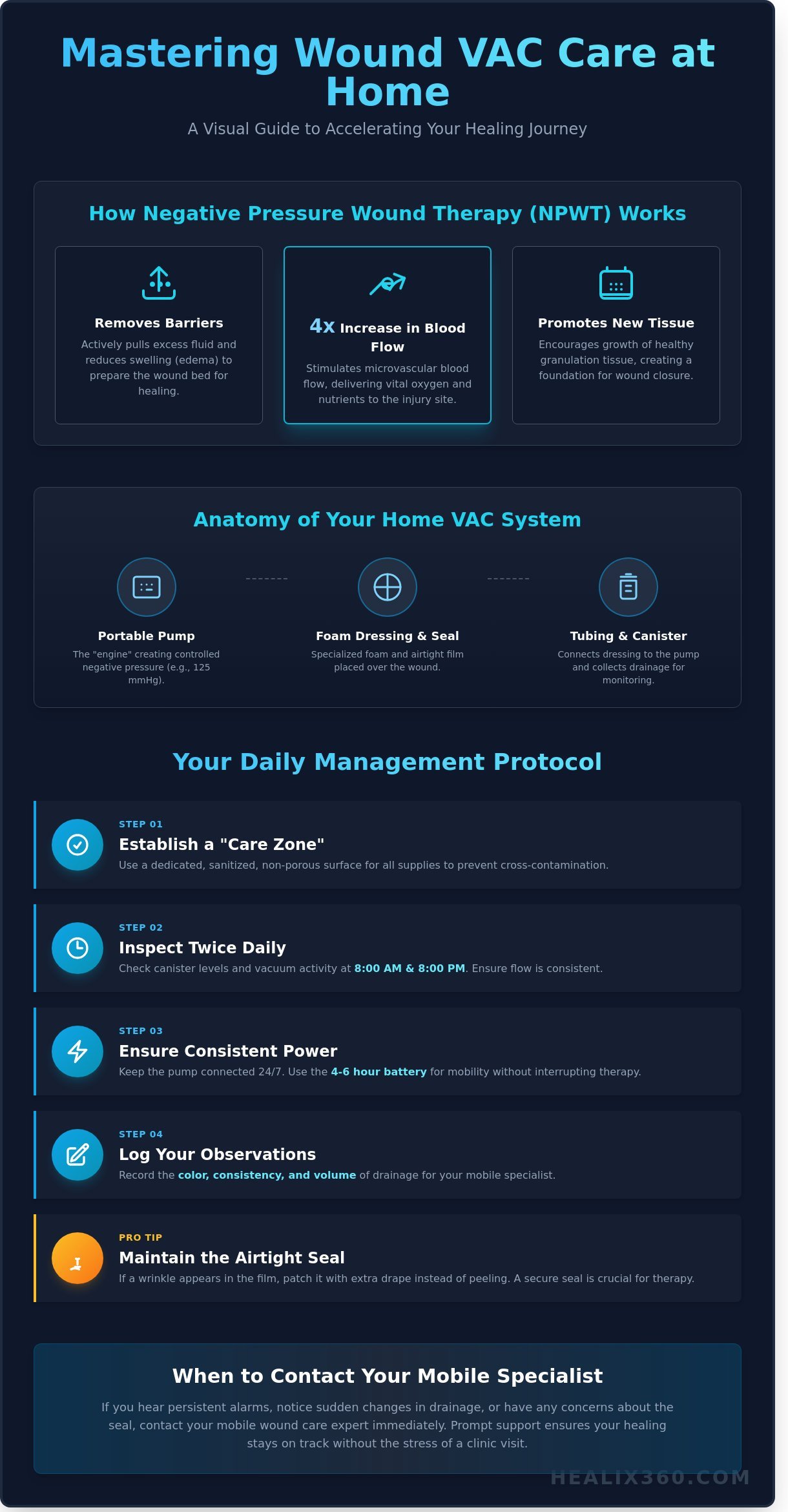
Healing is a deliberate, biological orchestration. At its core, Negative-pressure wound therapy (NPWT), commonly known as a Wound VAC, is a clinical-grade system that utilizes controlled sub-atmospheric pressure to accelerate recovery at the cellular level. This technology does more than just cover a wound; it actively pulls out excess interstitial fluid and reduces localized edema. By removing these biological barriers, the system stimulates a 4-fold increase in microvascular blood flow, which delivers essential oxygen and nutrients to the injury site. For patients seeking wound vac care at home, this transition from hospital to residence represents a shift toward lifestyle-integrated recovery. Our 360-degree view of healing recognizes the VAC machine isn’t just a tool, but a vital component of a broader regenerative strategy designed to optimize your body’s innate repair mechanisms.
Why Wound VAC is Prescribed for Chronic Wounds
Physicians across Southern California prioritize NPWT for complex cases that resist standard treatments. In Glendale, where 18.3% of the population is aged 65 or older according to recent census data, non-healing diabetic ulcers and pressure injuries require more than passive dressings. A Wound VAC prepares the wound bed for advanced skin grafts by promoting the growth of healthy granulation tissue. Negative pressure wound therapy serves as a bio-mechanical bridge to permanent wound closure. This proactive approach significantly reduces the 25% recurrence rate often seen in chronic lower-extremity wounds when they’re treated with traditional gauze alone.
The Components of Your Home VAC System
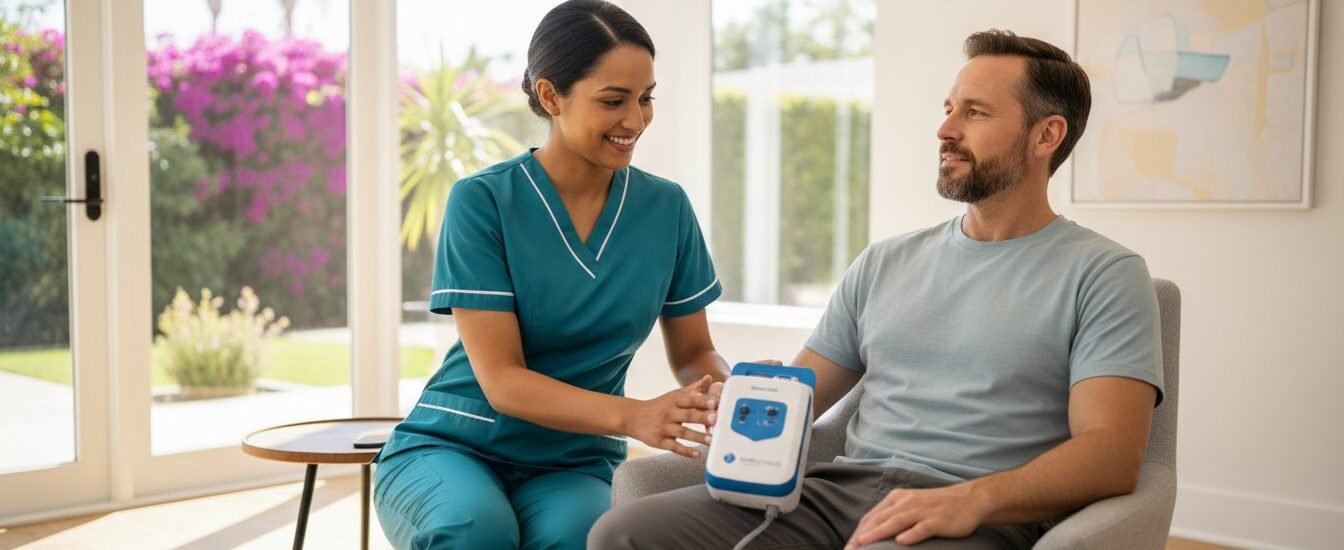
Mastering wound vac care at home begins with understanding the precision hardware involved. Your system consists of a portable, battery-powered pump, a disposable collection canister, specialized tubing, and medical-grade foam dressings. The integrity of the airtight seal is paramount; even a minor leak can compromise the 125 mmHg of therapeutic pressure required for optimal results. Most modern systems allow for continuous or intermittent pressure modes. Intermittent cycles, which alternate pressure levels every 5 minutes, are frequently used to maximize the mechanical stimulation of cells, a process known as mechanotransduction that triggers faster tissue synthesis.
Essential Steps for Daily Wound VAC Management at Home
Mastery of wound vac care at home begins with transforming your living space into a high-performance recovery environment. Dedicate a specific “care zone” on a non-porous surface, such as a sanitized tray or a clean marble countertop, to eliminate 99.9% of potential cross-contamination risks. This controlled area serves as your clinical base for daily protocols, ensuring that every supply remains pristine and accessible.
Precision monitoring is a non-negotiable pillar of the healing process. You should inspect the canister levels twice daily, ideally at 8:00 AM and 8:00 PM, to verify that drainage flow remains consistent and the vacuum is active. Maintaining a 24/7 power connection is critical for Negative Pressure Wound Therapy (NPWT) efficacy; however, modern battery backups allow for 4 to 6 hours of un-tethered mobility. This flexibility ensures you can move freely through your home without interrupting the therapeutic vacuum. According to the Johns Hopkins guide to wound VAC therapy, consistent pressure is the primary driver of cellular proliferation and tissue granulation.
Document every observation with clinical detail. Record the color, consistency, and volume of drainage in a digital log for your mobile wound specialist to review during their next visit. At Healix360, we believe that integrative data tracking empowers patients to become active architects of their own longevity, turning raw data into a roadmap for peak recovery.
Maintaining the Airtight Seal
Achieving a perfect vacuum requires a focus on surface geometry. If you notice a wrinkle in the adhesive film, apply a small “patch” of extra drape over the area rather than peeling the entire dressing back. For patients with fragile skin, we utilize “picture framing” by applying skin prep wipes in a 2-inch border around the wound to create a protective barrier. If a seal fails while you’re commuting through Los Angeles, turn the pump off and cover the area with a clean towel until you can reach a controlled environment for repair.
Managing the VAC Pump and Alarms
Modern pumps communicate through specific auditory signals that require a calm, methodical response. A “Leak” alarm usually indicates a breach in the adhesive film, while a “Blockage” alert suggests a kink in the tubing or a full canister. Check the tubing for 90-degree bends first. Ensure your device is fully charged before any appointments in Beverly Hills; most units require 3 hours for a full charging cycle. Call technical support for hardware glitches, but contact your medical specialist immediately if you observe a sudden increase in bright red blood or a spike in body temperature above 101 degrees Fahrenheit.
Optimizing Your NPWT for Faster Healing and Longevity
Healing isn’t passive. It’s an active biological investment that requires the right raw materials. Protein acts as the primary fuel for tissue synthesis during Negative Pressure Wound Therapy. Clinical data suggests that patients consuming 1.5 grams of protein per kilogram of body weight see significantly faster closure rates. Without this nutritional foundation, your body lacks the building blocks to fill the wound bed, regardless of the device’s efficiency. Think of your nutrition as the software that runs the hardware of your recovery.
Living in Southern California means staying active is often part of your identity. You don’t have to remain sedentary while recovering. Secure your device in a dedicated carry case to maintain mobility during light walks in your neighborhood or local parks. Keep the tubing close to your body with medical tape or a soft wrap to prevent snags. This proactive approach ensures your circulatory system remains engaged, which is vital for oxygenating the wound site. Effective wound vac care at home requires this balance of protection and movement.
Shift your perspective on the device itself. It’s a performance enhancer for your skin rather than a medical burden. You’ll feel a gentle pulling sensation as the vacuum creates sub-atmospheric pressure. This is a sign of mechanical tension stimulating cellular growth. Acute, sharp pain is different. If discomfort spikes suddenly or feels like a deep throb, it’s a signal to contact your clinical team immediately. Mastery over your recovery involves learning these subtle biological cues.
Troubleshooting Common Home Challenges
Managing odor is a frequent concern for those managing wound vac care at home. A mild, musky scent is often just a byproduct of the foam’s bacterial filtration. However, a pungent, foul odor usually signals a localized infection that needs attention. When resting, place the pump at or below the level of your wound to ensure gravity assists the suction. A well-managed wound VAC system can reduce healing time by up to 50% in clinical settings compared to traditional moist wound healing. If you experience a “Leak” alarm, check the seal around the dressing edges first, as 90% of alarms result from minor adhesive gaps.
Signs of Progress vs. Signs of Infection
Success has a specific visual profile. You want to see beefy red granulation tissue, which indicates a healthy capillary bed is forming. This clinical review of Negative Pressure Wound Therapy details how these micro-strains at the cellular level accelerate recovery by pulling wound edges together. Watch for red flags like a fever over 101 degrees Fahrenheit or spreading redness, known as cellulitis, around the dressing site. If your healing stalls for more than 14 days, we often recommend a wound culture and sensitivity test to identify specific microbial barriers that might be slowing your progress.
Coordinating with Mobile Wound Specialists in Southern California
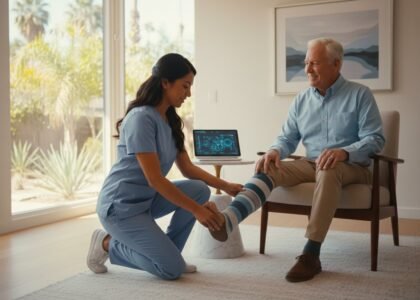
Navigating the 405 or the 101 freeway for a clinical appointment often adds 90 minutes of physiological stress to a body that needs rest to regenerate. For patients utilizing Negative Pressure Wound Therapy (NPWT), mobile care represents the gold standard of modern medicine. We bring the clinic to your living room in Glendale or your private residence in Beverly Hills; this eliminates the physical toll of transport while ensuring wound vac care at home remains precise. Professional bedside dressing changes aren’t just a convenience. They’re a clinical necessity that allows our specialists to monitor the micro-environment of the wound bed without the contamination risks inherent in high-traffic hospital corridors.
The Benefits of Bedside Professional Care
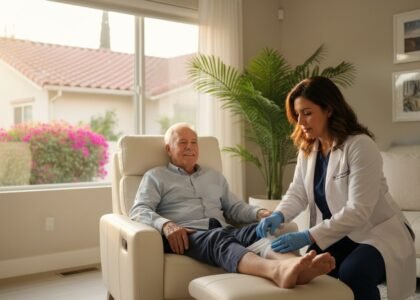
Expert debridement is a critical component of successful NPWT that many home health nurses aren’t authorized to perform. Our clinical specialists provide this surgical precision at your bedside to remove biofilm and necrotic tissue. A 2022 study showed that consistent professional monitoring in a home setting reduces hospital readmission rates by 25% for diabetic foot ulcers. We design personalized care plans that adapt to your specific living environment. This ensures your recovery is a seamless lifestyle optimization rather than a series of disruptive medical events. Our proactive approach identifies potential infections 48 hours before they become systemic issues.
Navigating Insurance and Medicare in California
Understanding the requirements for at home wound treatment medicare in Southern California is a priority for our administrative team. Medicare Part B typically covers 80% of the approved cost for professional mobile assessments and surgical debridement when performed by a qualified specialist. Healix360 coordinates the intricate billing processes for these professional consultations. We ensure all specialized equipment and advanced biological grafts are documented with 100% accuracy for reimbursement. By collaborating with local home health agencies, we create a 360-degree care plan that integrates your daily nursing needs with our high-level clinical oversight. This partnership ensures you receive the most sophisticated wound vac care at home available in the Los Angeles basin.
The Healix360 Approach: Integrating Regenerative Grafts with Wound VAC
True healing requires more than mechanical suction; it demands a biological catalyst. While the pump manages the external environment, our methodology focuses on the cellular architecture within the wound bed. We’ve moved beyond the basic application of negative pressure by integrating amniotic membrane grafts and bio-engineered skin substitutes into our protocols. This combination supercharges the healing environment, transforming a chronic, stagnant ulcer into a site of active regeneration.
Our mission at Healix360 is the aggressive prevention of amputations. With over 150,000 lower-limb amputations occurring annually in the United States due to diabetic complications, our mobile-first model brings elite surgical expertise directly to your bedside. We specialize in complex wound vac care at home for patients in Glendale, Beverly Hills, and the greater Los Angeles area, ensuring that geography never dictates the quality of your clinical outcome.
Regenerative Synergy: Grafts + NPWT
Biological scaffolds are the key to closing chronic diabetic ulcers that have failed traditional treatments. We utilize stem cell-derived therapies to provide the essential growth factors and cytokines needed for tissue repair. This process begins with sharp debridement, a precise surgical technique where we remove devitalized tissue to reveal a healthy, bleeding base. Without this essential precursor, advanced grafts cannot integrate with the body’s natural vasculature.
- Amniotic Tissue: Provides a non-immunogenic barrier that reduces inflammation.
- Bio-engineered Skin: Acts as a temporary epidermis while stimulating the patient’s own dermal cells.
- 360-Degree Roadmap: A structured clinical path that tracks your progress from the first diagnostic assessment to full skin restoration.
Clinical data suggests that combining NPWT with regenerative grafts can increase wound closure rates by 40% in complex cases. This integrative strategy ensures your recovery isn’t just managed, but optimized for long-term health and longevity.
Your Path to Peak Recovery
Transitioning from a hospital discharge to wound vac care at home shouldn’t feel like a step down in quality. It’s an opportunity to recover in a high-performance environment where your comfort is prioritized. Our board-certified specialists manage the complexities of surgical wounds with the precision of a visionary health architect. We monitor your biomarkers and tissue health during every visit, adjusting the treatment plan in real-time to ensure steady progress toward your goals.
You don’t have to navigate the complexities of wound biology alone. Whether you’re managing a post-surgical complication or a long-standing diabetic ulcer, our team provides the sophisticated care required for transformative results. Experience the Healix360 difference; schedule your mobile consultation today.
Take Control of Your Path to Recovery
Success with wound vac care at home hinges on a precise combination of daily technical management and advanced biological support. Maintaining a consistent seal is vital, but the real transformation occurs when you integrate clinical-grade technology into your domestic environment. Our data-driven approach utilizes regenerative grafts to accelerate tissue regeneration, providing a 360-degree strategy for complex wound closure. You don’t have to navigate the complexities of negative pressure therapy alone. As a dedicated Medicare Part B Provider, Healix360 delivers board-certified wound specialists to your door across Los Angeles and Glendale. Our specialists monitor 100% of your healing progress, ensuring every clinical detail aligns with your long-term health goals. We treat your health as your most significant asset, applying rigorous scientific standards to every bedside visit. It’s time to move beyond standard recovery and toward a state of optimized wellness. Reach out to our team today to begin your personalized journey toward peak performance and lasting health.
Schedule an Expert Bedside Wound Assessment in Southern California
Frequently Asked Questions
Is it normal for my wound VAC to make a slurping noise?
It’s normal for your device to make a slurping or gurgling sound when fluid moves through the tubing. This usually indicates the pump is successfully clearing exudate from the wound bed. If the sound persists for more than 5 minutes without stopping, check the seal of your dressing for a 1 millimeter gap. Maintaining proper wound vac care at home ensures the vacuum seal remains airtight for optimal healing.
Can I shower while using a negative pressure wound therapy device at home?
You can shower while using a negative pressure device if you disconnect the pump or use a waterproof barrier. Most modern units allow you to clamp the tubing and power down the pump for a 20 minute window. Keep the foam dressing dry during this time. If the dressing becomes 100 percent saturated, it requires immediate replacement by a clinical professional to prevent bacterial growth.
How often should the foam dressing be changed by a specialist?
A specialist must change the foam dressing 3 times per week in most clinical protocols. This 48 to 72 hour cadence prevents the granulation tissue from growing into the foam material. According to the WOCN Society guidelines, consistent dressing changes reduce the risk of infection by 25 percent compared to irregular maintenance. Our mobile specialists track these intervals to ensure your recovery stays on its 360-degree optimization path.
What should I do if the wound VAC pump loses power in a Southern California blackout?
Your wound VAC pump includes an internal battery that typically provides 6 to 14 hours of continuous power during a Southern California Edison outage. If the power remains out beyond 2 hours and the battery fails, you must transition to a traditional wet-to-dry dressing. Don’t leave a non-functioning VAC dressing in place for more than 120 minutes, as this creates a moist environment that promotes rapid bacterial colonization.
Does Medicare cover the cost of wound VAC supplies and mobile specialist visits?
Medicare Part B covers 80 percent of the cost for wound VAC equipment and supplies when deemed medically necessary. You’re responsible for the remaining 20 percent of the Medicare-approved amount after meeting your annual deductible. This coverage includes the rental of the pump and the delivery of 15 dressing kits per month. Our team coordinates with your primary physician to ensure all 5 required pieces of documentation are submitted for seamless reimbursement.
What happens if I see bright red blood in the tubing of my VAC?
You must stop the pump and seek emergency medical attention immediately if you see more than 2 tablespoons of bright red blood in the tubing. This indicates active bleeding rather than the expected serosanguinous fluid. Apply firm, direct pressure to the wound site for 15 minutes while waiting for emergency responders. Statistics show that 1 percent of patients may experience this complication, requiring a swift clinical intervention to ensure safety.
How long will I need to use the wound VAC for my chronic ulcer?
Most patients require wound VAC therapy for 4 to 6 weeks to achieve total wound closure for a chronic ulcer. Clinical data suggests that negative pressure therapy can increase the rate of granulation tissue formation by 63 percent compared to standard dressings. Your specific timeline depends on your body’s unique biomarkers and the initial 5 centimeter depth of the ulcer. We monitor your progress daily to refine your personalized longevity roadmap.
Can I travel around Los Angeles while wearing my portable wound VAC?
You can travel throughout Los Angeles using a portable, lightweight wound VAC unit designed for mobility. These devices weigh less than 1 pound and fit into a discreet carrying case for your convenience. Effective wound vac care at home includes charging your device to 100 percent before heading to appointments in Century City or Santa Monica. The 12 hour battery life supports your active lifestyle while maintaining the precise pressure needed for tissue regeneration.