

What if the persistent heaviness you feel after a long day in West LA isn’t just simple fatigue, but a critical biomarker signaling a need for vascular optimization? You’re likely familiar with the quiet anxiety that arises when you notice your skin becoming tight and shiny, or when the discomfort of edema in legs makes your favorite footwear feel restrictive. It’s a common frustration for many Southern Californians, where the sedentary nature of a 45 minute commute often exacerbates circulatory challenges. We understand that your health is your most valuable asset; maintaining peak performance requires a proactive approach to fluid management.
In this guide, you’ll discover the clinical drivers of lower limb swelling and learn how to reduce the 2024 projected risk of chronic venous ulcers through precision care. We’ll provide a 360-degree view of integrative lifestyle adjustments and clarify exactly when to bypass the stress of traffic by engaging a mobile specialist. By the end of this article, you’ll have a clear, actionable roadmap to restore your vitality and ensure your vascular health supports a lifetime of movement and longevity.
Key Takeaways
- Interpret persistent swelling as a vital biomarker, utilizing it as an early warning system to optimize your systemic vascular health and longevity.
- Decode the biological mechanisms behind edema in legs, specifically how capillary filtration pressure shifts impact your 360-degree circulatory performance.
- Master proactive at-home strategies, such as gravity-assisted drainage, to maintain tissue integrity and ensure peak vascular vitality.
- Identify the critical clinical thresholds where stagnant fluid threatens skin health, allowing you to proactively prevent the transition to chronic wounds.
- Access elite, bedside medical assessments that bring visionary health architecture and personalized care plans directly to your Southern California home.
Understanding Edema in Legs: A Biomarker for Vascular Health
Your body possesses an intricate internal signaling system that often communicates through the lower extremities. Edema represents the abnormal accumulation of interstitial fluid within your tissues, signaling that your vascular or lymphatic filtration requires immediate optimization. While 15% of the adult population may experience transient swelling, persistent edema in legs acts as a critical biomarker for systemic health. It’s a proactive warning that your circulatory efficiency is dipping below peak performance levels.
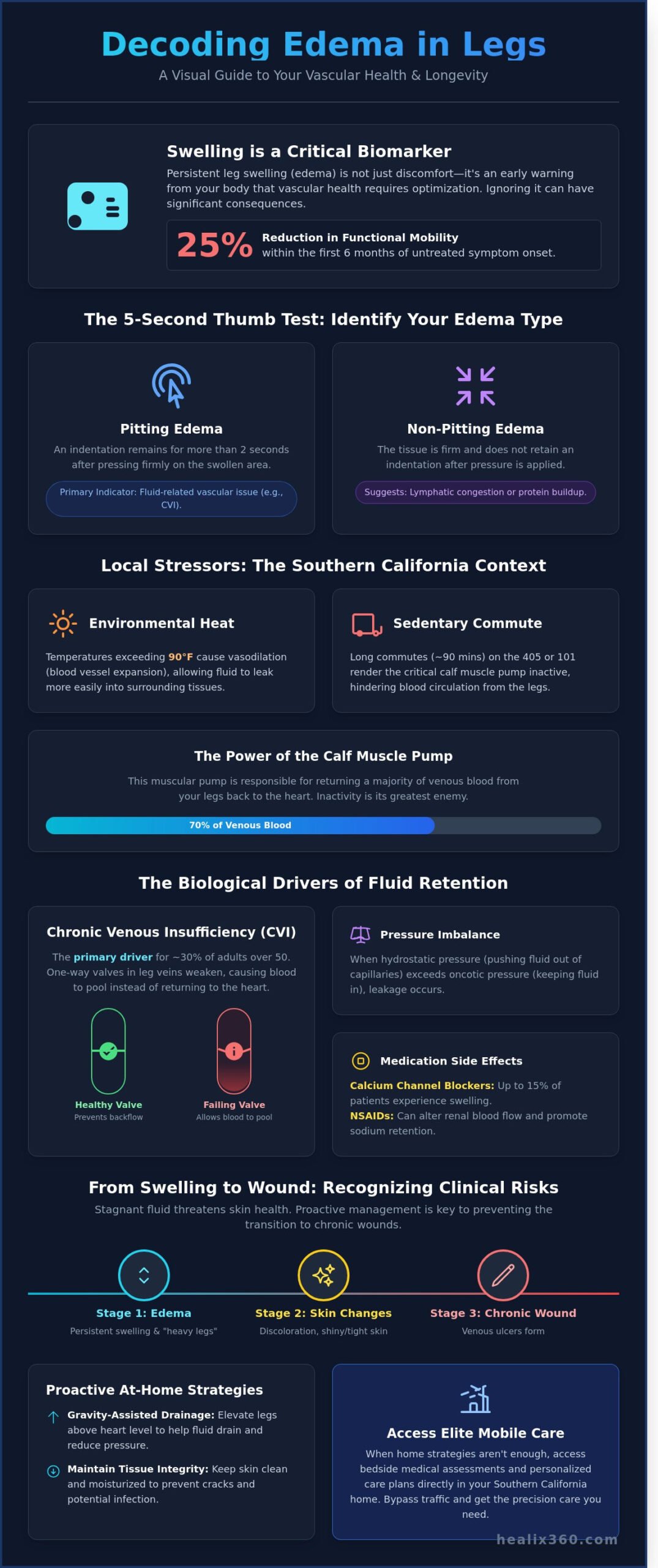
Ignoring these signs carries a heavy cost. Clinical data suggests that untreated swelling can lead to a 25% reduction in functional mobility within the first six months of symptom onset. For active individuals, this physical decline triggers a profound psychological impact. Losing the ability to navigate the hills of Silver Lake or walk the Santa Monica coastline isn’t just a medical setback; it’s a direct threat to your lifestyle and personal identity. We view these symptoms not as inevitable signs of aging, but as data points for a targeted health intervention.
Pitting vs. Non-Pitting Edema: Identifying the Signs
Distinguishing between different types of swelling is the first step in your diagnostic roadmap. You can perform a simple assessment by pressing your thumb firmly into the swollen area for five seconds. Pitting edema is a primary indicator of fluid-related vascular issues. If a visible indentation remains for more than two seconds after you release the pressure, your venous system is likely overwhelmed by fluid volume. Non-pitting edema suggests a different physiological path. This firm swelling often indicates lymphatic congestion or a buildup of proteins that trap fluid within the tissue matrix, requiring a more specialized approach to restoration.
The Southern California Context: Heat and Sedentary Stress
Our local environment introduces specific stressors that exacerbate edema in legs. During Los Angeles heatwaves, where temperatures frequently exceed 90 degrees Fahrenheit, the body undergoes significant vasodilation to cool itself. This expansion of blood vessels allows fluid to migrate more easily into the surrounding tissue. Residents in areas like Beverly Hills or Glendale often face the “commuter’s paradox.” Spending 90 minutes daily idling on the 405 or 101 freeways renders the calf muscle pump inactive. This pump is responsible for circulating 70% of your venous blood back to the heart. When sedentary stress meets environmental heat, your vascular system requires a more intentional strategy to maintain equilibrium.
The Biological Mechanisms of Fluid Retention
Your body maintains a delicate equilibrium through the 360-degree interplay of the circulatory and lymphatic systems. When hydrostatic pressure within the capillaries exceeds the oncotic pressure of the surrounding tissue, fluid is forced out of the microvasculature. This shift results in edema in legs, a condition where the interstitial space becomes saturated with plasma-like fluid. The kidneys act as the primary filters, managing sodium and water balance to ensure long-term cellular longevity. If these filters retain excess sodium, the body holds onto water to maintain osmotic balance, increasing the total volume of fluid the heart must circulate.
Certain pharmaceutical interventions can disrupt this delicate balance. Calcium channel blockers, often prescribed for hypertension, may cause peripheral vasodilation and subsequent leakage. Clinical data suggests that up to 15% of patients taking high-dose amlodipine experience lower extremity swelling as a side effect. Non-steroidal anti-inflammatory drugs (NSAIDs) also contribute by altering renal blood flow and promoting sodium retention, which can exacerbate existing swelling.
Chronic Venous Insufficiency (CVI)
In the active, sun-drenched climate of Southern California, gravity is a constant adversary for your vascular health. Chronic Venous Insufficiency occurs when the one-way valves in your leg veins lose their structural integrity. Instead of flowing upward toward the heart, blood pools in the lower extremities. This progression often begins with a sensation of “heavy legs” before advancing to visible varicose veins or skin discoloration. CVI remains the primary driver of persistent edema in legs for roughly 30% of adults over age 50.
Systemic Triggers: Heart, Liver, and Kidney Function
When foot, leg, and ankle swelling occurs in both limbs simultaneously, it often signals a systemic challenge. Congestive heart failure reduces the heart’s pumping efficiency, causing a backup of pressure in the venous system. Similarly, liver cirrhosis or kidney disease can lower albumin levels, the protein responsible for keeping fluid inside your blood vessels. Recognizing these patterns is the first step toward a personalized longevity strategy that addresses the root cause rather than just the symptoms.
Proactive Management and At-Home Optimization
Effective vascular health requires a roadmap that integrates seamlessly into your daily routine. You’re the architect of your own recovery. By utilizing gravity, you can facilitate fluid drainage through consistent elevation. Aim for 30-minute intervals, three times a day, with your legs positioned above the level of your heart. This simple mechanical shift reduces the hydrostatic pressure that often leads to edema in legs. Movement serves as the engine for this process. A high-performance lifestyle isn’t just about intensity; it’s about consistent calf muscle activation that pumps blood back toward the heart. Even simple ankle flexions performed ten times every hour can significantly improve venous return.
Precision tracking turns vague observations into actionable data. You should monitor specific biomarkers like daily weight and limb circumference to identify trends before they become clinical issues. Understanding the underlying causes of leg edema allows you to interpret these metrics with clarity. Use a flexible measuring tape to check the narrowest part of your ankle and the widest part of your calf every morning. A 1-centimeter increase or a sudden 2-pound weight gain over 24 hours serves as an early warning signal for fluid retention.
The Science of Compression Therapy
Graduated compression provides the external scaffolding your veins need to maintain valve efficiency. These garments apply the highest pressure at the ankle, tapering off as they move up the leg. For mild maintenance, 15 to 20 mmHg is often sufficient. If you’re managing chronic venous insufficiency, 20 to 30 mmHg or 30 to 40 mmHg medical-grade prescriptions are standard. In the warm Southern California climate, choose breathable microfiber or silver-infused fabrics to prevent skin irritation. Applying your stockings first thing in the morning, before any edema in legs begins to settle, ensures maximum efficacy throughout the day.
Nutritional Strategies for Fluid Balance
Sodium intake acts as a chemical magnet for water, directly exacerbating swelling. To counter this, focus on potassium-rich foods like avocados and spinach which help the kidneys flush excess salt. Hydration is equally vital. Drinking 64 to 80 ounces of water daily prevents the body from entering a storage state where it holds onto fluid due to perceived dehydration. A low-sodium diet is the cornerstone of non-pharmacological edema management. By limiting daily intake to under 2,000mg, you create a biological environment optimized for fluid equilibrium and long-term vascular health.
When Swelling Becomes a Wound: Recognizing Clinical Risks
Edema isn’t a benign side effect of a long day; it’s a progressive clinical state that signals structural failure. Chronic edema in legs causes protein-rich fluid to pool in the interstitial tissue, creating a stagnant, toxic environment. This fluid buildup restricts oxygen delivery and traps metabolic waste, effectively suffocating healthy cells. Clinical data indicates that untreated venous hypertension leads to skin breakdown in 20% of patients within five years. In Glendale, early intervention is the only way to halt the 15% annual loss in functional mobility often seen in those who ignore early symptoms. Dismissing swelling as a natural part of aging is a dangerous misconception that overlooks the underlying biological decay.
Left unmanaged, persistent edema in legs transforms from a circulatory issue into a dermatological crisis. Our 360-degree diagnostic approach focuses on identifying these risks before they compromise your longevity. By measuring specific biomarkers and tissue tension, we move beyond surface-level observations to provide a roadmap for peak physical performance.
Venous Ulcers and Stasis Dermatitis
Stasis dermatitis represents the first stage of skin failure. You’ll notice your skin becoming thickened, itchy, or stained a deep rust color due to iron deposits from leaking red blood cells. When internal pressure reaches a critical threshold of 40 mmHg, the skin loses its integrity and begins to weep. These wounds are complex biological failures. They require integrative regenerative medicine to restore the cellular architecture; basic bandages are insufficient because they don’t address the underlying pressure or the lack of growth factors in the wound bed.
Infection Alerts: Cellulitis and Gangrene
Vigilance is your best defense against systemic complications. Watch for red flags such as a fever over 100.4°F or redness that spreads more than 1 centimeter in a single hour. Edematous limbs have compromised barriers, making them highly susceptible to cellulitis. Approximately 1 in 4 patients with chronic ulcers faces a high risk of infection that can quickly escalate. Rapid access to mobile wound care services prevents these localized issues from turning into life-threatening sepsis or requiring surgical amputation.
- Sudden Warmth: A localized heat signature often precedes visible redness.
- Skin Induration: Tissue that feels “woody” or hard to the touch indicates deep-seated inflammation.
- Odor or Exudate: Any change in wound drainage requires immediate clinical assessment.
Elite Mobile Wound Care Solutions in Southern California
Healix360 operates as a visionary health architect for patients managing complex edema in legs. We’ve redesigned the recovery experience by bringing a high-end clinical environment directly to your bedside in Beverly Hills or Los Angeles. Our approach eliminates the logistical hurdles of traditional healthcare. We coordinate directly with Medicare Part B to ensure your transition to advanced medical care is seamless and cost-effective. By 2024, nearly 15% of the senior population in Southern California faces mobility challenges. We solve this by delivering regenerative therapy to your living room, moving beyond the limitations of the traditional brick-and-mortar clinic.
Advanced Regenerative Treatments for Edema-Related Wounds
Healing chronic ulcers requires more than basic dressings. We utilize Amniotic Membrane Grafts and bio-engineered skin substitutes to stimulate cellular repair at the wound site. These advanced grafts provide a biological scaffold that can accelerate closure rates by 40% compared to standard care alone. For wounds with heavy drainage, we deploy Negative Pressure Wound Therapy (NPWT) systems. These portable devices manage exudate while promoting localized blood flow. Every treatment plan is a personalized roadmap. We address the visible ulcer while simultaneously managing the fluid dynamics of the underlying edema in legs.
The Healix360 Advantage: Expert Care Without the Commute
Our network includes board-certified specialists who serve Glendale and the Greater Los Angeles area with clinical precision. You don’t have to navigate the 405 or the 101 to receive elite vascular support. This mobile model reduces patient stress levels, which clinical studies link to faster recovery times and better physiological outcomes. We treat your health as your most valuable asset. Our team provides the 360-degree view necessary to maintain long-term vitality and peak performance.
- Expertise: Access to vascular and wound care specialists without leaving your home.
- Technology: In-home application of NPWT and regenerative grafts.
- Convenience: Coordination with Medicare Part B for streamlined billing.
Your journey toward vascular optimization starts with a single, decisive step. We provide the tools and the expertise to transform your recovery into a lifestyle of wellness. Optimize your vascular health with a professional in-home assessment from Healix360.
Prioritize Your Path to Vascular Longevity
Vascular health serves as a fundamental pillar for long-term vitality and peak performance. Understanding that edema in legs acts as a sophisticated biomarker allows you to transition from reactive treatment to proactive optimization. By monitoring fluid retention and implementing at-home management strategies, you protect your mobility and overall circulatory efficiency. When swelling progresses toward clinical risks, access to elite medical intervention becomes essential for maintaining your quality of life. Our board-certified specialists bring the clinic directly to your door, utilizing regenerative breakthroughs like amniotic membrane grafts to restore tissue integrity. As a dedicated Medicare Part B provider, we deliver advanced wound care for residents in Glendale, Los Angeles, and Beverly Hills. We believe your health is your most valuable asset; it deserves a 360-degree approach rooted in scientific rigor. You’ve the power to redefine your wellness trajectory through precise, integrative care. Experience elite, mobile wound care in Southern California with Healix360 and secure the expert partnership your longevity requires. Your journey toward transformative results begins with a single, decisive step toward better health.
Frequently Asked Questions
Is edema in the legs always a sign of heart failure?
No, edema in the legs isn’t exclusively a symptom of heart failure. While cardiac issues are a primary concern, roughly 15% of adults over age 50 experience swelling due to chronic venous insufficiency. Other triggers include renal dysfunction or specific medications like calcium channel blockers. We view this symptom as a vital biomarker that requires a 360-degree diagnostic approach to identify the precise underlying cause.
Can I treat leg edema at home without a doctor?
You can manage the discomfort of leg edema at home, but you shouldn’t attempt to treat it without a professional clinical roadmap. Effective home management involves elevating your limbs above your heart for 30 minutes, three times each day. However, since 20% of swelling cases involve complex systemic pathologies, it’s essential to partner with a specialist who can optimize your long-term vascular health.
How much salt is too much if I have leg swelling?
You should limit your sodium intake to less than 2,300 milligrams per day to prevent fluid retention. For those actively managing edema in legs, the American Heart Association often suggests a more rigorous limit of 1,500 milligrams. Reducing your salt intake by just 1,000 milligrams daily can lead to a measurable decrease in tissue pressure and overall limb heaviness within 72 hours.
Does Medicare cover mobile wound care visits in Los Angeles?
Medicare Part B covers 80% of the cost for mobile wound care visits in Los Angeles when the service is medically necessary. If you’re homebound, these specialized clinical teams bring advanced diagnostic tools directly to your residence. You’ll typically be responsible for the remaining 20% of the Medicare-approved amount; however, secondary insurance plans often bridge this financial gap for our clients.
What is the difference between edema and lymphedema?
Edema is a broad term for fluid accumulation, whereas lymphedema specifically involves a compromised lymphatic system. Statistics show that 70% of bilateral edema in legs stems from venous insufficiency or systemic organ issues. Lymphedema is distinct because it often affects only one limb and requires a specialized integrative therapy plan to manage the high-protein fluid that collects in the tissues.
When should I be worried about a “pitting” mark on my leg?
You should seek a professional consultation if a thumbprint indentation persists for more than 5 seconds after pressure is released. This pitting is categorized by depth and duration, with Grade 4 pitting lasting over 2 minutes. Persistent indentations serve as a critical data point; they suggest that your body’s fluid management systems aren’t functioning at their peak performance levels.
How long does it take for compression therapy to show results?
Most patients observe a noticeable reduction in swelling within 2 to 4 days of starting a consistent compression protocol. Achieving transformative results requires patience, as peak limb stabilization typically occurs after 6 weeks of daily wear. Clinical data indicates that 90% of individuals using 20-30 mmHg gradient stockings experience a significant improvement in skin integrity and a reduction in ulcer risk.
Can heat in Southern California make my leg swelling worse?
Southern California’s climate can definitely exacerbate swelling, especially when temperatures climb above 85 degrees Fahrenheit. Heat causes your blood vessels to dilate, which allows more fluid to leak into the surrounding calf and ankle tissues. During local heatwaves, Los Angeles vascular specialists report a 25% increase in patient symptoms, making proactive hydration and cooling strategies essential for your longevity plan.