
Burn Wound Care: Stages, Treatment, and Mobile Regenerative Therapy
Burn injuries demand precise care and timely decisions. This guide walks through burn classifications, the stages of healing, and modern treatment options — including mobile regenerative therapies delivered at home. You’ll learn how burns progress, what to expect during recovery, and how mobile teams like Healix360 can bring specialist care to patients who need it most.
Research and clinical practice continue to advance, improving outcomes and expanding the tools available to clinicians and patients.
Advancements in Burn Wound Healing & Treatment
Burns remain a common and resource-intensive critical care issue. Specialized centers prioritize stabilizing patients, preventing infection, and restoring function. Over recent decades, research has driven improvements in initial stabilization and survival—particularly for younger patients and those with moderate burns—while also highlighting ongoing challenges for intensive care teams. Burn wounds can be complex, sometimes requiring late-stage interventions or long-term rehabilitation. Continued research is expanding options that support recovery and functional outcomes for burn patients.
Burn wound healing and treatment: review and advancements, MP Rowan, 2015
Degrees and Types of Burn Wounds
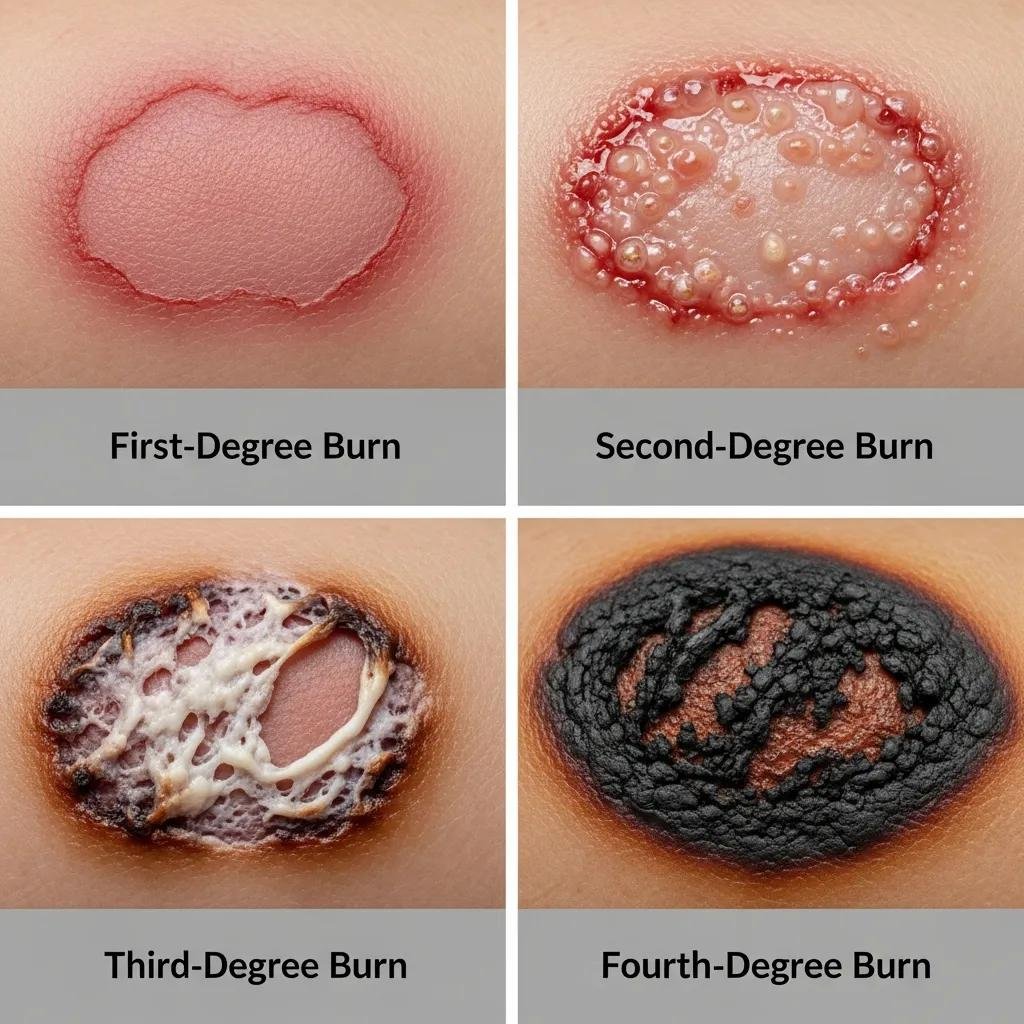
Burns are categorized by how deep the injury reaches and how much tissue is affected. The degree of a burn guides treatment choices and sets expectations for healing and scarring.
How burn wounds are classified by depth and severity
Clinically, burns fall into four main degrees:
- First-degree burns: Damage limited to the epidermis. Skin is red and tender; healing usually occurs within days without scarring.
- Second-degree burns: Involve the epidermis and part of the dermis. Blisters, swelling, and increased pain are common. Healing can take weeks and may leave scars.
- Third-degree burns: Extend through the full dermis and into deeper layers. Skin may appear white, charred, or leathery. These often need surgical care such as grafting and carry a high risk of scarring.
- Fourth-degree burns: Penetrate beyond skin into fat, muscle, or bone. These severe injuries usually require extensive surgical management and can cause loss of function.
Correct assessment of burn depth is essential to choose the right care pathway.
Common causes of thermal injury
Burns arise from several sources, including:
- Flames: Direct exposure to fire can produce deep, extensive burns.
- Scalds: Hot liquids often cause partial-thickness burns, especially in children.
- Contact burns: Touching heated surfaces or metals typically causes superficial to partial-thickness injuries.
- Electrical burns: These may produce deep tissue damage that’s not obvious at the skin surface.
Knowing the cause helps clinicians predict injury depth and plan prevention or treatment strategies.
Key stages of burn wound healing
Burn healing follows a predictable sequence of phases. Recognizing each phase helps guide wound care and interventions to reduce complications.
The inflammatory phase: first response (about 3–5 days)
The inflammatory phase is the body’s immediate reaction to injury. Typical signs include:
- Redness and swelling: Blood flow increases to support repair.
- Pain: Nerve endings are activated at the injury site.
- Clot formation: Early hemostasis and a protective barrier form to limit contamination.
Proper infection control and supportive care during this stage set the foundation for healing.
The proliferative phase: rebuilding tissue (roughly days 4–21)
After inflammation subsides, the wound focuses on rebuilding. Key processes include:
- Collagen deposition: Fibroblasts lay down collagen to restore structure.
- Angiogenesis: New blood vessels form to nourish the tissue.
- Wound contraction: Myofibroblasts draw the wound edges together.
Active wound management during this phase can improve closure and reduce scarring.
Remodeling and maturation: longer-term recovery
The remodeling phase refines repair and can last many months to years, depending on the injury.
What to expect during remodeling
During maturation you may notice:
- Color shifts: Scars typically fade from red or pink to a paler tone.
- Texture changes: Scars often become flatter and more flexible over time.
- Timeframe: Remodeling can continue for several months and, in some cases, up to two years.
Routine monitoring helps clinicians adjust therapies for the best functional and cosmetic results.
How mobile care supports long-term scar management
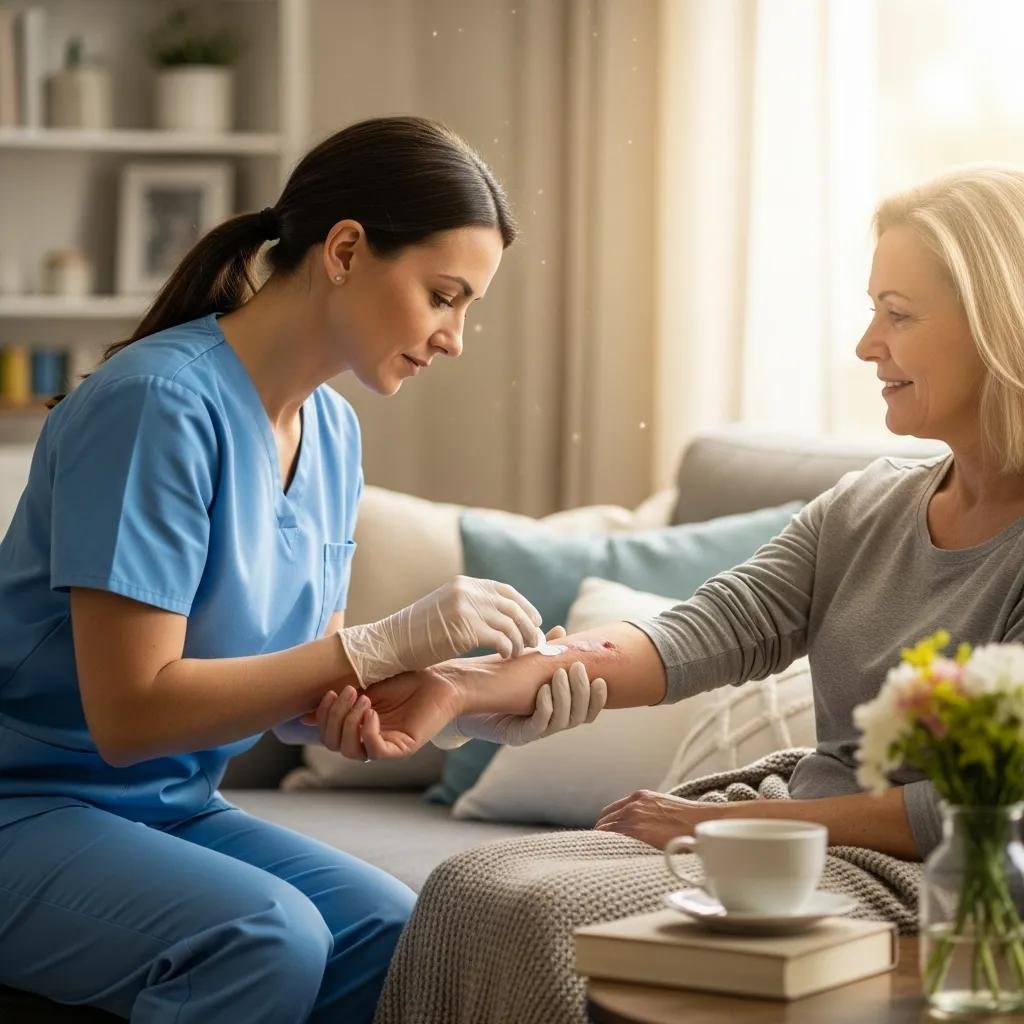
Home-based wound care teams offer several advantages for scar management:
- Convenience: Treatment in the home reduces travel and stress for patients and families.
- Individualized plans: Therapies are tailored to the wound, healing stage, and patient needs.
- Continuity of care: Regular follow-ups allow early detection and treatment of complications.
Mobile platforms and apps further extend access, enabling remote assessment and timely clinical guidance.
Mobile Health for Outpatient Burn Care
Access to care for pediatric burns remains a significant public health concern. Telemedicine can bridge access gaps, but many models are costly or inefficient. The TeleBurn app is an example of a smartphone-based approach that supports outpatient management of partial-thickness burns by enabling image and text exchange, video visits, and instructional content—bringing expert input into the patient’s home.
Expert outpatient burn care in the home through mobile health technology, 2018
Advanced mobile burn wound treatment options
Modern burn care combines time-tested techniques with newer regenerative technologies to speed healing and preserve function.
Debridement in mobile settings
Removing dead or infected tissue is a cornerstone of burn care. In mobile practice, teams may use:
- Mechanical debridement: Gentle cleansing and specialized instruments to remove necrotic tissue.
- Enzymatic agents: Topical products that break down devitalized tissue selectively.
- Autolytic methods: Dressings that support the body’s own processes to soften and clear slough.
Appropriate debridement reduces infection risk and prepares the wound bed for repair.
Biologic dressings and skin substitutes
Advanced dressings and engineered skin products support healing by protecting the wound and providing a scaffold for new tissue:
- Biologic dressings: Derived from human or animal tissues to protect and promote repair.
- Skin substitutes: Manufactured scaffolds—sometimes with living cells—that mimic skin structure and encourage regeneration.
These options can shorten healing time and improve outcomes in complex injuries.
Regenerative skin substitutes are changing how clinicians approach large or difficult-to-close wounds.
Regenerative Skin Substitutes for Burn Wound Healing
Tissue engineering for skin has evolved from single-cell or scaffold approaches to combined cell-and-scaffold products for acute and chronic wounds. Skin substitutes fall into categories such as acellular dermal scaffolds, temporary products containing donor cells, and permanent constructs with a patient’s own cells. Using acellular dermal matrices together with permanent autologous-engineered skin has enabled definitive closure in very large burns.
Tissue engineering of skin and regenerative medicine for wound care, 2018
Regenerative therapies that enhance burn healing
Regenerative approaches aim to accelerate repair, reduce inflammation, and improve the quality of the healed skin.
Stem cell therapy and amniotic tissue patches
These therapies offer clinical benefits that include:
- Stem cell therapy: Supports tissue regeneration and may limit scar formation by modulating repair pathways.
- Amniotic tissue patches: Provide growth factors and anti-inflammatory signals that support healing and reduce local inflammation.
Both approaches are part of a growing toolkit for difficult or slow-healing wounds.
Negative pressure wound therapy (NPWT) in mobile care
NPWT uses controlled suction to optimize the wound environment. Key advantages:
- Improved perfusion: Suction stimulates blood flow to the wound bed.
- Edema control: Reduces swelling that can delay healing.
- Supports closure: Mechanical forces help approximate wound edges and encourage granulation.
NPWT is compatible with home-based care and can be managed safely by trained mobile teams.
Why choose Healix360 for mobile burn wound care and support?
Healix360 delivers specialist, patient-centered wound care where it’s most convenient—at home. Our teams combine clinical expertise with regenerative tools to support faster, safer recoveries.
Benefits of receiving mobile burn wound care at home
Home-based care offers practical and clinical advantages:
- Comfort and convenience: Treatment occurs in a familiar environment, easing stress for patients and families.
- Focused, personalized attention: Clinicians tailor care to the wound, healing stage, and patient circumstances.
- Lower exposure risk: Avoiding repeated hospital visits reduces risk of healthcare-associated infections.
Taken together, these factors often improve adherence and overall recovery.
How Healix360 personalizes care and supports caregivers
Our approach centers on clear communication and practical support:
- Customized care plans: We design treatment paths based on wound type, healing progress, and patient goals.
- Caregiver education: Families receive training and resources to assist safely at home.
- Ongoing follow-up: Regular check-ins let us adjust therapy quickly and address concerns as they arise.
This commitment to personalized care is a core part of our mobile model.
| Treatment Option | How it works | Benefits |
|---|---|---|
| Stem Cell Therapy | Uses a patient’s cells to encourage tissue regeneration | Can reduce scarring and support stronger tissue repair |
| Amniotic Tissue Patches | Provides a biologic scaffold rich in growth factors | Supports healing and reduces local inflammation |
| Negative Pressure Wound Therapy | Applies controlled suction to the wound bed | Boosts blood flow and reduces swelling to speed closure |
Burn wound care requires an accurate assessment of injury depth, thoughtful staging of treatment, and access to advanced therapies when indicated. Mobile care teams like Healix360 make it possible to receive specialist, evidence-informed treatment in the home—improving convenience and often enhancing recovery.
Frequently Asked Questions
What are the common complications associated with burn wounds?
Complications include infection, scarring, and contractures that can limit motion when joints are involved. Infections are a major concern because skin loss removes a key barrier to bacteria. Scars can affect appearance and function, and psychological effects—such as anxiety or depression—are common after significant injuries. Early, appropriate care lowers the risk of these outcomes.
How can I prevent burns in the home?
Simple precautions reduce household burns: keep hot liquids away from children, use oven mitts, check appliance cords and temperatures, install smoke detectors, and keep a fire extinguisher accessible. Regularly review safety steps with household members to keep everyone aware and prepared.
What should I do immediately after a burn occurs?
Cool the area with cool (not icy) running water for 10–20 minutes to limit tissue damage. Cover the burn with a clean, non-stick dressing. Avoid ice, and don’t apply ointments unless advised by a clinician. Seek urgent care for large, deep, or facial burns, or if the injury involves hands, feet, or joints.
How can nutrition support burn wound healing?
Nutrition is critical for repair. Adequate protein, vitamins (especially A and C), minerals like zinc, and good hydration support tissue rebuilding and immune function. A dietitian can create a plan tailored to the increased metabolic needs following a burn.
What role does physical therapy play in burn recovery?
Physical therapy prevents stiffness, preserves range of motion, and supports functional recovery—especially when burns cross joints. Early, guided exercise, stretching, and splinting reduce contracture risk and help patients regain strength and mobility.
Are there any psychological effects of burn injuries?
Yes. Burn survivors may experience post-traumatic stress, anxiety, or depression related to the injury, pain, or changes in appearance and function. Early mental health support, peer groups, and family involvement are important parts of comprehensive recovery.
Conclusion
Effective burn care blends accurate assessment, stage-appropriate treatment, and access to advanced therapies. Mobile regenerative services expand that access, delivering personalized care where patients are most comfortable—their homes. If you or a loved one needs specialized wound care, Healix360’s mobile teams offer clinical expertise and practical support to help you through recovery.