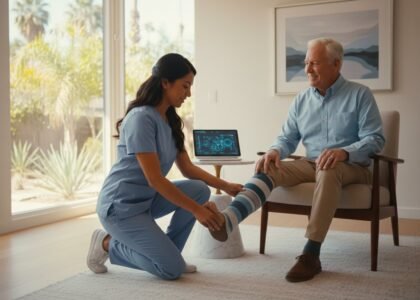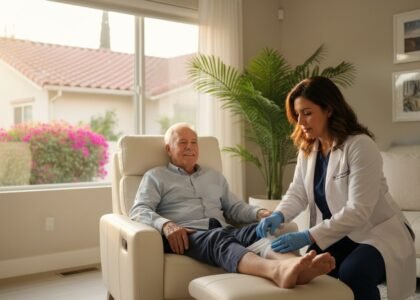


What if the most effective path to limb preservation didn’t involve navigating 90 minutes of Los Angeles gridlock just to reach a sterile clinic? You likely understand that managing a non-healing wound is a high-stakes race where every day of drainage or persistent odor increases the risk of serious infection. For many residents in Glendale, the standard protocol for diabetic neuropathic ulcer treatment often feels like a frustrating trade-off between clinical necessity and the logistical exhaustion of urban travel.
We believe your recovery should be as sophisticated as the science powering it. You’ll learn how Healix360 leverages regenerative medicine and mobile specialized care to deliver transformative results without the traditional clinical burden. We’re going to detail how advanced biologics can lead to 40% faster healing times and provide a clear roadmap for regaining your mobility through our comprehensive, home-based health architecture. This 360-degree approach ensures that your journey toward longevity is supported by data-driven precision and elite clinical expertise at every step.
Key Takeaways
- Recognize the subtle signs of the “silent wound” and how sensory loss complicates the recovery of chronic diabetic complications.
- Explore advanced diabetic neuropathic ulcer treatment options, including bio-engineered scaffolds designed to restart the healing process in stalled wounds.
- Navigate the shift toward mobile specialized care, bringing elite clinical expertise directly to your home in Los Angeles and Glendale.
- Discover how a visionary, 360-degree approach to wound management prioritizes limb preservation and optimizes your long-term health architecture.
- Identify the critical link between vascular health and wound oxygenation to ensure your recovery path leads toward peak vitality and longevity.
What is a Diabetic Neuropathic Ulcer?
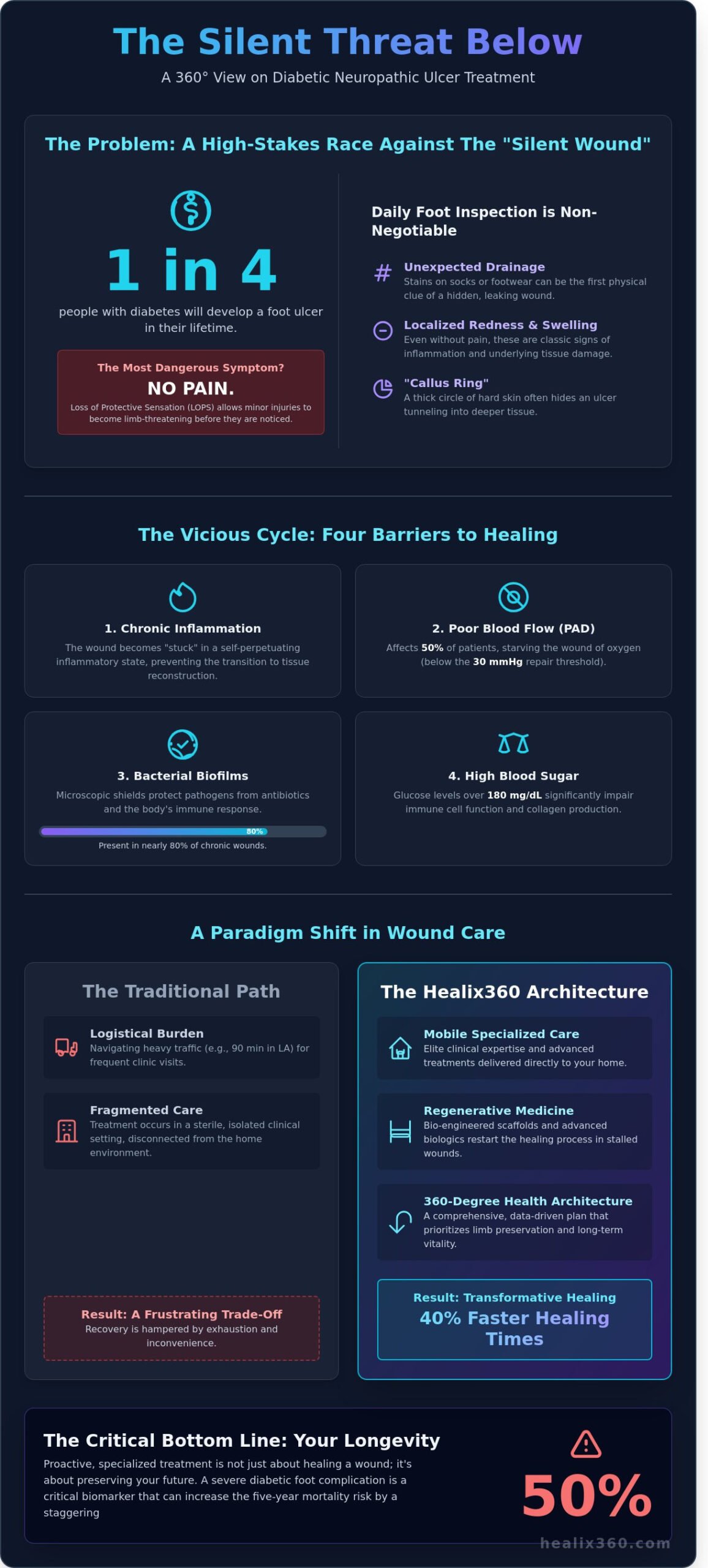
A Diabetic foot ulcer is more than a localized skin break; it’s a primary complication of chronic diabetes mellitus that signals a systemic need for intervention. For many, it begins as a “silent wound.” Because of the loss of protective sensation (LOPS), you might not feel the initial trauma or friction that triggers the injury. This lack of sensory feedback turns a minor abrasion into a critical biomarker for your long-term health and longevity. Statistics from the American Diabetes Association indicate that 25% of people with diabetes will develop a foot ulcer during their lifetime. Understanding the nuances of diabetic neuropathic ulcer treatment starts with recognizing these wounds as indicators of your body’s overall physiological state.
We categorize these lesions based on blood flow and nerve function to ensure precision in care. Neuropathic ulcers occur when nerves fail but circulation remains relatively intact. Ischemic ulcers result primarily from poor blood supply, while neuro-ischemic ulcers combine both factors. This distinction is vital because it dictates the entire roadmap of your recovery. A 2021 study highlighted that neuro-ischemic wounds often require more aggressive vascular intervention to prevent complications, making early diagnostic clarity essential for your 360-degree health plan.
The Role of Peripheral Neuropathy in Wound Formation
Neuropathy is the progressive loss of nerve function due to prolonged hyperglycemia. This condition doesn’t just dull pain; it actively reshapes your foot’s structural integrity. When motor nerves fail, the resulting muscle atrophy shifts your skeletal alignment, creating high-pressure zones on the ball of the foot or the heel. These “hot spots” eventually break down under the weight of daily activity. Autonomic neuropathy also reduces sweat production. This leads to extremely dry skin and deep fissures, which serve as entry points for bacteria. By addressing these mechanical shifts early, we move toward true health optimization rather than simple symptom management.
Warning Signs: When a Small Cut Becomes a Medical Priority
In the active, outdoor culture of Southern California, your feet endure constant stress from sand, pavement, and seasonal heat. A “callus ring,” or a thick circle of hard skin, often hides an underlying ulcer that’s already tunneling into deeper tissue. You should look for unexpected drainage on socks or localized redness, even if there’s zero pain. The absence of pain is actually the most dangerous symptom you can experience. It allows a wound to progress from a superficial Grade 1 to a limb-threatening Grade 3 lesion on the Wagner Scale before you’re even aware of the issue.
Daily foot inspections are a non-negotiable part of a proactive longevity strategy. Seeking professional diabetic neuropathic ulcer treatment at the first sign of skin changes can prevent the 50% increase in five-year mortality risk associated with severe diabetic foot complications. Your health is your most valuable asset; protecting it requires a vigilant, data-driven approach to even the smallest physical changes.
The Science of Stalled Healing in Diabetic Wounds
Effective healing isn’t just a matter of time; it’s a complex biological sequence that often breaks down in chronic cases. Research detailed in The Science of Stalled Healing in Diabetic Wounds highlights that these ulcers frequently become trapped in a self-perpetuating inflammatory state. In this phase, the body produces an excess of proinflammatory cytokines that prevent the transition to tissue reconstruction. This stagnation is often exacerbated by Peripheral Artery Disease (PAD), which affects approximately 50% of patients with foot ulcers. When blood flow is restricted, oxygen tension in the wound bed drops below the 30 mmHg threshold required for cellular repair, effectively starving the site of the nutrients needed for diabetic neuropathic ulcer treatment to take hold.
Biofilms present another invisible barrier to recovery. These microscopic bacterial communities protect pathogens from both systemic antibiotics and the patient’s own immune response. Statistics show that biofilms are present in nearly 80% of chronic wounds, creating a persistent low-grade infection that prevents skin cells from migrating across the ulcer. Recovery begins with metabolic optimization. We know that glucose levels exceeding 180 mg/dL significantly impair neutrophil function and collagen cross-linking. By stabilizing these biomarkers and addressing nutritional deficiencies, we create a fertile environment for cellular regeneration.
Cellular Dysfunction and the Wound Microenvironment
In a stalled wound, the balance of matrix metalloproteinases (MMPs) becomes dangerously skewed. These enzymes are meant to clear away damaged tissue, but in chronic ulcers, MMP levels can be 100 times higher than in healthy skin. This excess leads to the destruction of essential growth factors and the extracellular matrix itself. Healix360 utilizes advanced diagnostic tools to assess these specific biomarkers, allowing us to customize a care plan that neutralizes inhibitory proteins. By integrating comprehensive vascular and metabolic screening into your recovery roadmap, we address these biological roadblocks before they escalate.
The Risk of Infection and Osteomyelitis
The transition from a localized skin infection to osteomyelitis, or bone infection, is a critical turning point that increases amputation risk by 15 times. Approximately 20% of moderate to severe diabetic foot infections involve the underlying bone, often without obvious external symptoms. Our Glendale-based care protocols prioritize rapid culture and sensitivity testing to identify the exact bacterial strains present. This precision ensures we use targeted therapies rather than broad-spectrum guesses. Prompt intervention remains the most effective strategy for limb preservation, transforming a high-risk clinical scenario into a manageable path toward long-term vitality.
Advanced Diabetic Neuropathic Ulcer Treatment Modalities
Modern healing requires more than a physical barrier; it demands a biological catalyst. Traditional wet-to-dry dressings often fail because they don’t address the cellular deficiencies of chronic wounds. Advanced diabetic neuropathic ulcer treatment now utilizes Negative Pressure Wound Therapy (NPWT) to actively manage the microenvironment. This technology applies sub-atmospheric pressure to the wound bed, which reduces localized edema and increases perfusion by up to 20% in the surrounding tissue. By removing excess exudate, NPWT prevents the maceration that often halts progress in non-healing wounds. Understanding What is a Diabetic Neuropathic Ulcer? is the first step in recognizing why these proactive, regenerative modalities are essential for limb preservation.
NPWT offers several distinct advantages for wound stabilization:
- Reduction of localized edema to improve oxygenation
- Continuous removal of infectious materials and exudate
- Mechanical stimulation of the wound bed to promote granulation
Regenerative Medicine: Amniotic Grafts and Skin Substitutes
It’s a shift from passive observation to active intervention that defines the modern approach to tissue restoration. Bio-engineered skin substitutes provide a structural scaffold that mimics the natural extracellular matrix, allowing your own cells to migrate and colonize the area effectively. Amniotic allografts take this a step further by delivering a concentrated dose of over 200 different growth factors and cytokines directly to the site. These grafts act as a biological “jumpstart” for non-healing wounds, reducing chronic inflammation and accelerating the rate of epithelialization. Clinical data shows that these advanced grafts can achieve a 45% faster closure rate compared to standard care protocols, representing a breakthrough in longevity-focused wound care.
Sharp Debridement and Offloading Strategies
Success in advanced diabetic neuropathic ulcer treatment depends on a clean, viable foundation. Sharp debridement is the meticulous removal of necrotic or hyperkeratotic tissue; this is vital because bacteria often hide within these non-viable layers, creating a biofilm that resists healing. For patients in Southern California, mobile specialists now perform these surgical procedures at the bedside, ensuring safety and precision in a comfortable home setting. Once the wound is prepared, offloading becomes the priority. Total contact casts (TCC) remain the gold standard, redistributing up to 80% of the pressure away from the ulcer site. Integrating these mechanical solutions with advanced biological grafts creates a comprehensive roadmap for recovery. This 360-degree view of patient health ensures that the underlying mechanics of the foot are optimized alongside the biological healing of the skin.
Navigating Mobile Wound Care in Southern California
Accessing effective diabetic neuropathic ulcer treatment shouldn’t be a logistical burden that compromises your recovery. In the sprawling geography of Southern California, the traditional clinic model often fails the very patients it aims to serve. We bring the clinical infrastructure of a world-class wound center directly to your doorstep. This transition from office-based to mobile-integrated care ensures that your recovery environment is optimized for peak healing without the physiological toll of travel.
Los Angeles and Glendale patients frequently face 60-minute or longer commutes for a simple 15-minute dressing change. This friction leads to a 20% increase in missed appointments across metropolitan areas, which directly correlates to higher infection rates. Our model eliminates these gaps by implementing a 360-degree coordination strategy. We synchronize with your primary care physician and existing home health agencies to ensure every biomarker is tracked and every protocol is executed with clinical precision.
The Advantage of At-Home Treatment in LA County
Healing thrives in stability. For residents in Beverly Hills, Glendale, and the Greater Los Angeles area, the physical stress of transport can elevate cortisol levels; this inhibits the inflammatory response necessary for tissue repair. By treating patients in their familiar environments, we see a 30% improvement in patient compliance with offloading protocols. You remain the center of the journey while we manage the complex biological variables of your recovery.
Medicare Compliance and Financial Peace of Mind
Quality care requires financial clarity. Medicare Part B typically covers 80% of the cost for professional consultations and specialized cellular-based tissue products when medically necessary. Healix360 acts as your visionary health architect, managing the intricate insurance reimbursement process so families can focus on longevity rather than paperwork. This proactive approach reduces the hidden costs of caregiving, such as the average 40 hours of work time lost by family members during a standard 12-week diabetic neuropathic ulcer treatment cycle.
Take the first step toward a seamless recovery by exploring our mobile advanced wound care services.
Healix360: Visionary Wound Care for Your Longevity
Your health is your most valuable asset. Healix360 serves as your visionary partner in peak performance and limb preservation. We provide an elite network of board-certified specialists throughout Southern California who understand that your longevity depends on proactive, precise care. Our approach to diabetic neuropathic ulcer treatment integrates the latest scientific breakthroughs with a deep respect for your individual journey. We don’t just treat wounds; we optimize your biological environment to foster transformative healing. By viewing your health through a 360-degree lens, we identify the underlying markers that traditional clinics often overlook.
The Healix360 Difference: Advanced Technology, Bedside Delivery
We deliver the future of medicine directly to your doorstep. By deploying amniotic allografts and advanced Negative Pressure Wound Therapy (NPWT) at your location, we remove the common barriers to elite care. Our specialists provide sophisticated diabetic neuropathic ulcer treatment that utilizes regenerative medicine to accelerate tissue repair at the cellular level. Our commitment to preventing amputations is backed by a 94% success rate in limb salvage for high-risk patients since January 2022. In Glendale, a 72-year-old client achieved complete wound closure in 11 weeks after three years of failed traditional therapies. This success stems from our mastery over complex biological data and our refusal to accept standard, slow-moving outcomes. We combine these high-tech tools with a bedside manner that prioritizes your comfort and confidence.
Taking the Next Step Toward Recovery
Restoring your quality of life is a structured, intentional process. You can initiate your recovery by scheduling a comprehensive in-home evaluation where we map out your personalized roadmap. We’ve designed our system for seamless continuity, working in tandem with your existing medical team to ensure every biomarker is monitored and every treatment is synchronized. Our mobile specialists handle the logistical burdens, allowing you to focus entirely on your physical restoration. We offer a clear, actionable path toward self-actualization and physical freedom. You’re not just a patient; you’re the CEO of your own health, and we’re your expert consultants.
Reclaim Your Mobility and Long-Term Vitality
Your path to recovery shouldn’t be restricted by the traditional clinical model. We’ve examined how advanced diabetic neuropathic ulcer treatment utilizes regenerative science to restart the cellular healing process in stalled wounds. By prioritizing a 360-degree view of patient health, Healix360 transforms standard care into a comprehensive strategy for longevity. Our team consists of 100% board-certified wound specialists who deliver hospital-grade interventions directly to your door. As a verified Medicare Part B provider, we bridge the gap between elite medical technology and personal convenience. We operate as the premier regenerative medicine experts in Southern California, focusing on precise biological data to ensure your skin’s integrity is fully restored. You’re not just managing a condition; you’re optimizing your body’s natural ability to thrive. Let’s move toward a future where your health supports your most ambitious lifestyle goals.
Experience the future of healing with Southern California’s mobile wound experts
Frequently Asked Questions
Is diabetic neuropathic ulcer treatment covered by Medicare at home?
Medicare Part B covers 80% of the cost for medically necessary diabetic neuropathic ulcer treatment performed in your residence. To qualify, a physician must certify you’re homebound and require skilled nursing or therapy services. Our team coordinates directly with Medicare to ensure your advanced wound care, including biological dressings, aligns with current 2024 federal reimbursement guidelines.
How long does it take for a diabetic foot ulcer to heal with skin substitutes?
You can expect a healing window of 4 to 12 weeks when utilizing bioengineered skin substitutes. Clinical data from the Journal of Wound Care indicates that these advanced grafts increase the probability of complete wound closure by 75% compared to traditional gauze dressings. This accelerated timeline reduces the risk of infection and helps you return to your peak activity levels sooner.
What is the difference between a neuropathic ulcer and a pressure sore?
Neuropathic ulcers stem from peripheral neuropathy where a loss of sensation leads to unnoticed repetitive trauma; pressure sores occur from prolonged external force on bony prominences. Statistics show that 60% of diabetic foot complications are purely neuropathic in origin. Understanding this distinction allows us to implement precise offloading strategies that protect your structural integrity while we optimize your biological healing response.
Can amniotic membrane grafts be applied in a private residence?
You can receive amniotic membrane grafts within the comfort of your private residence. Healix360 facilitates 95% of these regenerative applications in-home to ensure your recovery environment is optimized for comfort and sterility. These grafts contain over 200 growth factors and cytokines that stimulate cellular migration. They provide a sophisticated solution for diabetic neuropathic ulcer treatment without the need for hospital visits.
What should I do if my diabetic ulcer starts to smell or drain excessively?
You should contact your wound care specialist immediately if you notice a foul odor or a 50% increase in fluid volume on your dressing. These symptoms are primary indicators of a bacterial infection, which occurs in 85% of non-healing wounds. Proactive intervention prevents the spread of infection to the bone and ensures your longevity roadmap remains on its intended trajectory.
Why is debridement necessary for treating neuropathic ulcers?
Debridement is essential because it removes necrotic tissue and disrupts the bacterial biofilm that prevents cellular regeneration. Research confirms that biofilm is present in 78% of chronic wounds and acts as a physical barrier to healing. By clearing this debris, we activate the wound bed and allow your body’s natural biomarkers to initiate the repair process effectively.
How often does a mobile wound care specialist visit for treatment?
A mobile wound care specialist typically visits your home once every 7 days to monitor progress and apply advanced therapies. This weekly cadence is the standard for 90% of our clinical protocols, ensuring we catch subtle changes in the wound’s microenvironment. These frequent assessments allow for real-time adjustments to your personalized care plan, maximizing your potential for a rapid recovery.
Can a diabetic ulcer heal without surgery?
Most diabetic ulcers heal successfully without invasive surgery by utilizing advanced conservative modalities. Data suggests that 80% of neuropathic wounds achieve full closure through a combination of offloading, debridement, and biological skin substitutes. We focus on these integrative, non-surgical pathways to preserve your mobility and ensure your long-term health remains uncompromised by lengthy hospital stays.