
Mobile Wound Care Assessment: An At-Home Healing & Treatment Guide
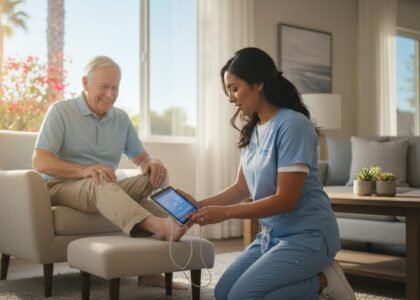
Mobile wound care assessment brings expert wound evaluation and treatment to a patient’s home or care setting. This guide walks through the techniques used in mobile assessments, why they matter for healing, and what patients and caregivers can expect. Chronic wounds need steady attention — mobile services make that consistent, specialist-level care more accessible and less disruptive to daily life. Below, we cover the core elements of an assessment, the tools clinicians use, common conditions we treat, and the benefits of receiving care at home.
What is a mobile wound care assessment and why it matters
A mobile wound care assessment is the clinical process of examining, documenting, and managing a wound outside the hospital — typically in a patient’s home or long‑term care facility. For people with chronic or complex wounds, this model speeds up interventions, reduces travel burden, and lets specialists tailor treatment within the patient’s real‑life environment. Using mobile wound care specialists means expert decision‑making without repeated, sometimes stressful clinic visits.
How mobile wound care improves chronic wound management
Mobile wound care improves outcomes by combining clinical expertise with convenience. Assessments account for the patient’s whole situation — mobility, home environment, comorbidities — so care plans are practical and achievable. That focused approach helps prevent delayed treatment, reduces unnecessary travel, and keeps healing on track with fewer interruptions.
Key components of a mobile wound assessment
- Initial consultation: We begin with a focused history and review of prior treatments to understand the wound and any medical risks.
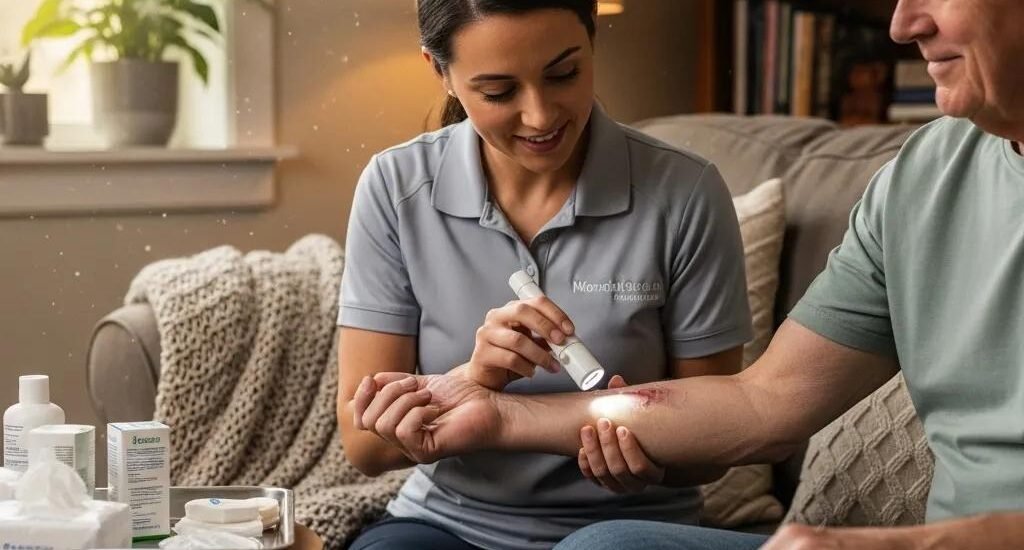
- On‑site evaluation: The clinician inspects the wound, records precise measurements and photos, and evaluates the surrounding tissue and circulatory status.
- Follow‑up plan: After the visit, a clear schedule and care plan are established — including dressing changes, therapies, and next review dates.
These steps ensure care is comprehensive, personalized, and easy for patients and caregivers to follow.
What to expect during a mobile wound care visit
Visits follow a consistent, patient‑centered process designed to make assessment efficient and comfortable while delivering clinical precision.
Scheduling and the initial consultation
Scheduling is straightforward: patients or caregivers can contact Healix360 to arrange a visit. During the initial call, we gather essential medical history, current medications, recent wound treatments, and any mobility or access considerations so the clinician arrives prepared.
During the on‑site wound evaluation
On site, the clinician performs a visual inspection, documents wound size, depth, and tissue type, and asks about symptoms such as pain or drainage. Vitals and circulation checks may be performed as indicated. This information directs immediate care decisions and the plan for follow‑up.
Advanced tools and techniques used in mobile assessments
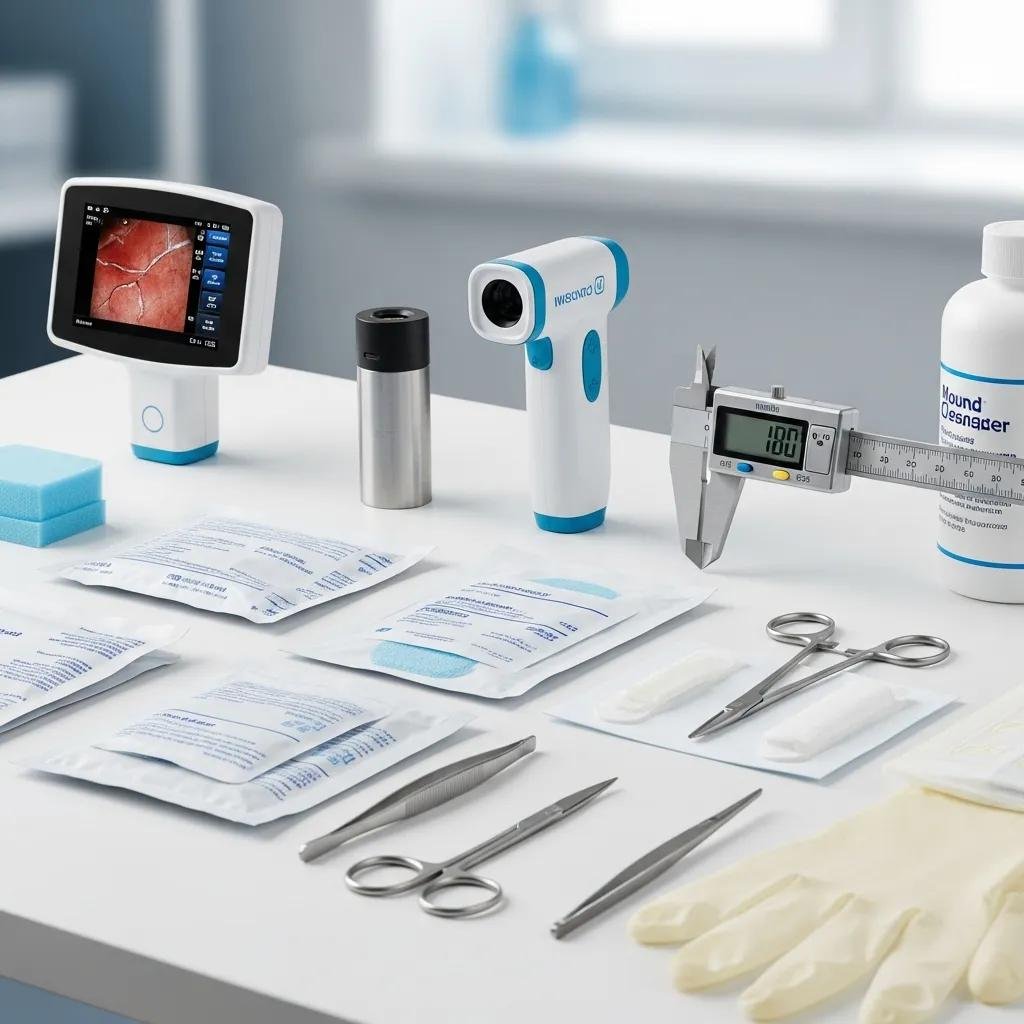
Mobile wound clinicians use several modern tools to improve accuracy and documentation, from digital imaging to standardized scoring systems and, increasingly, AI‑enabled decision support.
How digital imaging and measurements improve accuracy
High‑resolution photos and calibrated measurement tools let clinicians track wound change precisely over time. Clear images create a visual record that supports treatment decisions, remote consultations, and reliable progress notes.
Indeed, the widespread availability of mobile phones with good cameras has changed how clinicians capture wound images, supporting more consistent remote monitoring.
Mobile phones for remote wound monitoring & care
Assessing foot ulcer progress can be difficult when clinic visits are irregular. Busy clinics and limited staff may delay reviews, which can slow timely changes in care. Photographs have long helped clinicians monitor diabetic foot ulcers; recently, mobile phone cameras have made capturing and sharing these images much easier for patients and providers. Patients can send photos to support remote review and follow‑up.
The role of artificial intelligence technology in the care of diabetic foot ulcers: the past, the present, and the future, JM Pappachan, 2022
At the same time, the accuracy and reliability of diagnoses made from mobile phone images remains an active area of research.
Remote wound assessment: validity of mobile phone images
While mobile phone images show promise for telemedicine in diabetic foot ulcer care, questions remain about diagnostic accuracy. One study compared live assessments to assessments made from photos: fifty diabetic foot ulcers were photographed and evaluated remotely by observers who checked for specific clinical features and treatment decisions, testing the validity and reliability of image‑based reviews.
The validity and reliability of remote diabetic foot ulcer assessment using mobile phone images, JJ van Netten, 2017
Standardized scales and AI tools that support assessment
Clinicians often use validated scales such as the Pressure Ulcer Scale for Healing (PUSH) and the Bates‑Jensen Wound Assessment Tool (BWAT) to quantify wound status. When combined with emerging AI tools, these systems can help identify trends and predict healing, though app reliability varies and requires careful clinical oversight.
As AI becomes more common in wound assessment apps, robust evaluation frameworks are needed to confirm their safety and accuracy.
Mobile wound care apps: AI integration & future opportunities
The number of wound assessment apps has grown, and many now include AI features. However, evidence supporting their clinical reliability is limited. Researchers recommend systematic evaluation to identify current app limitations and to guide future development so these tools can be safely and effectively used in practice.
Mobile apps for wound assessment and monitoring: limitations, advancements and opportunities, MA Kabir, 2024
Which chronic wound conditions benefit most from mobile assessment?
Mobile wound assessments are well suited to a range of chronic wounds — especially those needing frequent monitoring and adjustments to care plans.
Assessing diabetic foot ulcers and pressure ulcers at home
Diabetic foot ulcers and pressure injuries require careful, repeated assessment. In the home setting clinicians focus on wound appearance, signs of infection, vascular status, offloading (for foot ulcers), and repositioning strategies (for pressure ulcers). Early detection of complications allows for faster treatment changes.
Why mobile care is effective for venous and arterial ulcers
Venous and arterial ulcers often need ongoing compression, dressing changes, and vascular assessment. Bringing that expertise to the patient reduces travel barriers and helps maintain consistent, effective therapies that support healing.
Benefits of regular at‑home wound assessment
Consistent home‑based assessment improves clinical oversight and supports earlier intervention — both of which contribute to better healing and fewer complications.
How mobile care improves healing and comfort
Timely, personalized interventions speed recovery and reduce hospital visits. Receiving care in familiar surroundings lowers anxiety for many patients and makes adherence to treatment plans simpler for caregivers.
How mobile assessment helps reduce infection risk
Regular monitoring lets clinicians spot early signs of infection and act quickly. We reinforce hygiene practices, teach wound care routines, and adjust treatments to reduce complications and protect overall health.
What happens after your mobile wound assessment: treatment and the healing plan

After an assessment, patients receive a clear, individualized care plan that outlines treatments, follow‑up timing, and signs that require urgent attention.
Regenerative and advanced treatments available in mobile settings
When appropriate, mobile clinicians can provide regenerative and advanced therapies such as biologic dressings, sharp or enzymatic debridement, and negative pressure wound therapy. These interventions are selected based on wound needs and delivered safely in the home when feasible.
Typical healing timelines and follow‑up plans
Healing time depends on wound type, size, infection status, blood flow, and underlying health. Your clinician will set realistic milestones and schedule follow‑ups to track progress and update the plan as needed.
| Treatment type | Description | Typical outcome |
|---|---|---|
| Biologic dressings | Advanced dressings that support tissue repair | Improved tissue regeneration and wound closure |
| Debridement | Removal of nonviable tissue to promote healing | Cleaner wound bed and faster progress |
| Regenerative therapies | Interventions that stimulate new tissue growth | Enhanced healing rates and quality of repair |
Mobile wound care expands access to specialized treatments and consistent monitoring, helping patients make informed choices about their care.
Frequently asked questions
What qualifications should I look for in a mobile wound care specialist?
Choose clinicians who are licensed (RNs, NPs, or physicians) with specialized wound care training and experience. Look for credentialing from recognized organizations, such as WOCNCB certification, and a track record managing chronic wounds and advanced therapies.
How often should I schedule mobile wound care assessments?
Visit frequency depends on wound severity and healing stage. Many chronic wounds need weekly or biweekly visits early on; as the wound improves, visits often move to monthly. Your clinician will recommend a schedule tailored to your wound and health status.
Are mobile wound care visits covered by insurance?
Coverage varies by insurer and plan. Many policies cover home wound care when it is medically necessary; verify benefits with your carrier. Some providers may offer payment options for patients without coverage.
What should I prepare before a mobile wound care visit?
Have your medical history, current medication list, and any recent wound records available. Ensure the wound area is accessible and a clean, well‑lit space is ready for the clinician. Prepare any questions you want to discuss.
Are there risks associated with mobile wound care assessments?
Mobile assessments are safe when performed by qualified clinicians who follow infection control standards. Potential risks include miscommunication or inadequate follow‑up if instructions aren’t clear — we mitigate this with written care plans and scheduled check‑ins.
How can I track healing progress after a mobile assessment?
Track progress with scheduled follow‑ups, photos, and a simple wound journal noting size, appearance, pain, or drainage. Many clinicians also use digital imaging to compare changes over time, which helps guide treatment decisions.
Conclusion
Mobile wound care assessment puts specialist expertise where patients live. With clear plans, modern tools, and tailored treatments, mobile care improves comfort, supports faster interventions, and helps prevent complications. If you or a loved one would benefit from expert at‑home wound care, explore our services to see how we can support your healing journey.