

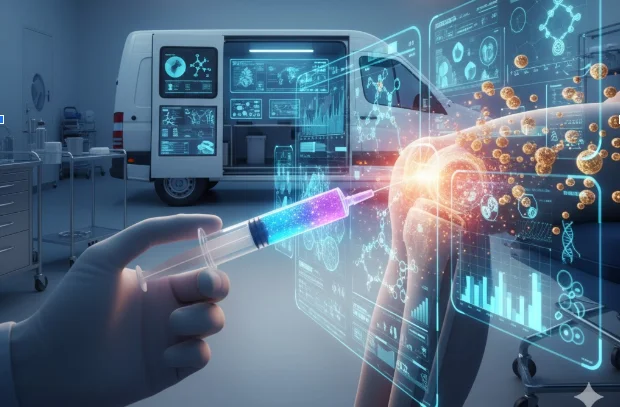
If you’ve been struggling with a wound that won’t heal, regenerative medicine therapy might be the answer you’ve been searching for. Unlike traditional wound care that simply protects and hopes for the best, regenerative approaches actively restart your body’s natural healing mechanisms that have somehow gotten stuck or stopped working entirely.
Chronic wounds are frustrating and frightening. They stay open for months despite your best efforts, threatening infection and other serious complications. The constant worry, the endless dressing changes, the impact on your daily life, it all takes a heavy toll both physically and emotionally.
But regenerative therapies offer genuine hope. These cutting-edge treatments use biological materials packed with growth factors, proteins, and cells that tell your body exactly what to do to heal. They work with your natural repair systems rather than just covering up the problem.
Understanding Regenerative Medicine
Regenerative medicine therapy represents a fundamental shift in how we approach healing. Traditional medicine treats symptoms. Regenerative medicine addresses root causes by providing the biological signals and building blocks your body needs to actually repair damaged tissue.
Think of it this way. When you get a cut, your body knows exactly what to do. It cleans the wound, forms new blood vessels, builds fresh tissue, and closes the gap. Dozens of growth factors and proteins orchestrate this complex process, each one sending specific instructions to different cell types.
But chronic wounds have lost these instructions. Growth factors are either missing or being destroyed faster than your body can make them. The cellular signals that normally drive healing get drowned out by inflammation and bacterial interference. The wound becomes stuck in a destructive cycle.
Regenerative therapies break this cycle by delivering concentrated doses of the growth factors and proteins your wound desperately needs. They essentially remind your body how to heal properly, jump-starting processes that have stalled out.
The science behind this is sophisticated but the concept is straightforward. Give the body what it’s missing, and healing can resume.
Types of Regenerative Therapies
Several different regenerative medicine therapy options exist, each with specific mechanisms and benefits. Understanding what’s available helps you have informed conversations with your healthcare providers about which might work best for your situation.
Amniotic membrane grafts use tissue from the innermost layer of the placenta. This material is incredibly rich in growth factors, with over 200 different proteins that promote healing. The membrane provides both biological signals and a physical scaffold that new cells can grow across.
These grafts work particularly well for diabetic foot ulcers and venous leg ulcers. They’re applied directly to the wound bed and gradually absorbed as your body builds new tissue. Most wounds need one to four applications spaced a few weeks apart.
Platelet-rich plasma therapy harnesses your own healing factors. Blood is drawn and processed to concentrate the platelets, which naturally contain growth factors. This concentrated plasma gets applied directly to your wound, delivering a powerful dose of healing signals.
PRP works well as a standalone treatment or combined with other regenerative therapies. Because it comes from your own blood, there’s no risk of rejection or allergic reaction. Many patients need several treatment sessions for optimal results.
Stem cell therapies use cells capable of developing into different tissue types. When applied to wounds, these cells release factors that reduce inflammation, promote blood vessel growth, and encourage tissue regeneration. They essentially recruit your body’s own repair mechanisms.
Bioengineered skin substitutes provide both structure and biological signals. These products contain collagen matrices, sometimes with added growth factors or cells. They give new tissue something to grow on while delivering substances that accelerate healing.
How Growth Factors Accelerate Healing
Growth factors are the key players in regenerative medicine therapy. These protein molecules bind to receptors on cell surfaces, triggering specific responses that drive tissue repair. Understanding what they do helps explain why regenerative treatments work so effectively.
Platelet-derived growth factor stimulates fibroblasts, the cells that make collagen and build connective tissue. It also attracts immune cells that clean wounds and promotes blood vessel formation. PDGF is one of the most important factors for overall wound healing.
Vascular endothelial growth factor specifically triggers new blood vessel growth. Chronic wounds often lack adequate blood supply, starving tissue of oxygen and nutrients. VEGF addresses this directly by stimulating angiogenesis, the formation of new capillaries.
Transforming growth factor regulates inflammation and promotes collagen synthesis. It helps transition wounds from inflammatory phases to tissue building phases. TGF-beta also influences scar formation and tissue remodeling.
Epidermal growth factor stimulates skin cells to multiply and migrate across wounds. It’s essential for epithelialization, the process of forming new skin over healing tissue. EGF accelerates wound closure by speeding up this critical phase.
Fibroblast growth factor supports multiple aspects of healing including cell proliferation, blood vessel growth, and tissue remodeling. It works synergistically with other growth factors to create optimal healing conditions.
The beauty of regenerative medicine therapy using biological materials like amniotic grafts is that they deliver all these factors together in natural ratios, mimicking what your body would produce if it could. This comprehensive approach addresses multiple healing problems simultaneously.
Who Benefits Most from Regenerative Treatments
While regenerative medicine therapy can help various wound types, certain patients and conditions respond particularly well to these advanced approaches. Knowing whether you’re a good candidate helps set realistic expectations.
Diabetic foot ulcers notoriously resist healing due to nerve damage, poor circulation, and impaired immune function.
Venous leg ulcers caused by chronic venous insufficiency benefit tremendously from regenerative approaches. These wounds struggle because damaged veins don’t return blood effectively from the legs. Growth factor therapies help overcome circulation problems by stimulating local tissue repair.
Pressure ulcers, especially deep wounds in bedridden or wheelchair-bound patients, respond well to regenerative treatments. The biological signals help fill in these difficult wounds and rebuild damaged tissue layers.
Surgical wounds that won’t close, whether from complications or underlying health issues, often improve dramatically with regenerative interventions. The added growth factors provide what the surgical site needs to finally heal properly.
Traumatic wounds with significant tissue loss benefit from the scaffolding and biological signals that regenerative materials provide. They support tissue regeneration in areas where your body alone might struggle to bridge the gap.
Patients with multiple chronic conditions that impair healing, like diabetes combined with heart disease or kidney problems, often see better results with regenerative therapies because these treatments work even when overall healing capacity is compromised.
The Treatment Process
Getting started with regenerative medicine therapy involves thorough evaluation. Your wound specialist examines the wound, checks circulation, evaluates infection status, and reviews your overall health. They need to understand why your wound isn’t healing to select the most appropriate regenerative approach.
Some preparatory work might be needed before applying regenerative treatments. Infections must be controlled, as bacteria interfere with growth factor function. Dead tissue gets removed through debridement, creating a clean wound bed where regenerative materials can work effectively.
The actual treatment application is straightforward and typically painless. For amniotic grafts, the specialist places the graft directly onto the prepared wound bed, ensuring good contact with healthy tissue. They then cover it with appropriate dressing to protect and maintain moisture.
With PRP therapy, blood is drawn just like a routine lab test. The blood goes into a centrifuge that spins it to separate and concentrate platelets. This process takes about 15 minutes. The resulting platelet-rich plasma is then applied to your wound and covered with dressing.
Stem cell applications vary by product type, but generally involve placing the cellular material on the wound and covering appropriately. Some products come in sheets, others in particles or flowable forms that can fill irregular wound shapes.
Most patients need multiple treatment sessions. Initial application starts the healing process, and follow-up treatments maintain momentum as new tissue forms. Typical protocols involve applications every one to two weeks, with the total number depending on wound size, depth, and response.
Between treatments, you’ll have standard wound care instructions. Keep the area clean and dry, change dressings as directed, watch for signs of infection or other problems, and follow any activity restrictions. Your treatment team provides clear guidance to maximize healing between sessions.

Combining with Traditional Care
Regenerative medicine therapy works best as part of comprehensive wound management, not as a standalone magic bullet. The most successful outcomes happen when regenerative treatments combine with attention to all factors affecting healing.
Blood sugar control is critical for diabetic patients. Even the most advanced regenerative therapies struggle against persistently high glucose levels. Optimal diabetes management maximizes the effectiveness of biological treatments.
Adequate circulation allows regenerative materials to work properly. Growth factors need blood flow to reach the wound, and new tissue needs oxygen and nutrients. If vascular problems are severe, procedures to improve circulation might be necessary before or alongside regenerative treatments.
Proper nutrition provides building blocks for new tissue. Your body uses regenerative growth factors as instructions, but it still needs protein, vitamins, and minerals as raw materials.
Pressure relief prevents continued damage to healing tissue. For pressure ulcers or diabetic foot wounds, proper offloading techniques protect the area while regenerative treatments work their magic underneath.
Infection control remains essential throughout treatment. Bacteria produce enzymes that destroy growth factors and prevent healing. Ongoing infection monitoring and prompt treatment when problems arise protect your investment in regenerative therapies.
Activity modifications support healing by reducing strain on wounds and improving overall health. The right balance of rest and movement, guided by your healthcare team, creates optimal conditions for regenerative treatments to succeed.
Expected Timeline and Results
Most patients want to know how quickly regenerative medicine therapy will work. While every wound is different, certain patterns emerge that help set realistic expectations.
Initial changes often appear within the first two weeks after treatment. The wound bed might start looking healthier with pink granulation tissue forming. Inflammation typically decreases. Drainage often reduces in volume.
By four to six weeks, measurable progress should be evident. The wound should be noticeably smaller, filling in from the bottom and closing from the edges. Pain usually improves as tissue heals and inflammation subsides.
Complete closure for moderate-sized chronic wounds typically happens within eight to twelve weeks with appropriate regenerative therapy. Larger or more complex wounds might take several months but should show steady progress throughout.
Some wounds respond dramatically to regenerative treatments, showing rapid improvement. Others progress more slowly but steadily. The key is consistent forward movement rather than the stagnation typical of failed conventional treatments.
Not every wound responds to every therapy. If progress stalls despite regenerative treatment, specialists investigate why and consider different regenerative approaches or combination strategies. The goal is finding what works for your specific situation.
Even after wounds close, the quality of healed tissue matters. Regenerative therapies often produce stronger, more durable tissue than conventional treatments. This reduces the risk of recurrence, which is particularly important for patients with ongoing risk factors like diabetes or venous disease.
Cost and Insurance Considerations
Advanced treatments naturally raise cost concerns. Regenerative medicine therapy involves sophisticated biological materials and specialized expertise, which translates to higher expenses than basic wound dressings.
However, cost perspective matters. Chronic wounds treated conventionally for months or years accumulate significant expenses through endless dressing changes, clinic visits, complications, and lost productivity. If regenerative therapy closes your wound in weeks instead, the total cost of care often ends up lower.
Medicare and most private insurance plans cover regenerative wound treatments when standard care has failed. Coverage typically requires documentation showing conventional approaches have been tried for at least four weeks without adequate improvement.
Prior authorization processes can be complex, requiring clinical notes, photographs, and justification for why advanced therapy is medically necessary. Quality wound care programs employ specialists who handle these insurance requirements, advocating for coverage approval.
Out-of-pocket costs vary by insurance plan. Some patients pay nothing beyond standard copays, while others have coinsurance that leaves them responsible for a percentage. Understanding your specific coverage before starting treatment prevents financial surprises.
Some programs offer payment plans or sliding scale fees for patients with financial hardship. Don’t let insurance uncertainty stop you from asking about regenerative options, solutions often exist to make treatment accessible.
Consider the broader economic impact too. Faster healing means returning to work sooner, avoiding expensive complications like hospitalization for infection, and preventing catastrophic outcomes like amputation that carry enormous costs both financial and personal.
Safety and Side Effects
A common question about regenerative medicine therapy involves safety. People naturally wonder about using biological materials, especially those derived from placental tissue. Understanding the rigorous safety standards helps address these concerns.
Amniotic tissue undergoes extensive screening and processing. Donors are tested thoroughly for infectious diseases. Tissue is processed in facilities meeting or exceeding FDA standards. The final products are sterile and safe for medical use.
Cell-based therapies using amniotic or other biological materials don’t contain live cells that could cause rejection. Processing removes cellular components that trigger immune responses, leaving only the structural matrix and growth factors your body recognizes as compatible.
PRP therapy uses your own blood, eliminating any risk of rejection or disease transmission. The process is similar to donating blood, with minimal discomfort and no significant safety concerns.
Side effects from regenerative treatments are rare and typically mild. Some patients experience temporary discomfort at the application site. Very few people have any adverse reactions at all.
Infection risk is minimal when treatments are applied with proper sterile technique. In fact, many regenerative materials have natural antimicrobial properties that actually reduce infection risk compared to standard dressings.
Allergic reactions are extremely uncommon because processed biological materials lack the components that typically trigger allergies. Thousands of patients have received these treatments safely.
The most important safety consideration is ensuring treatments are performed by properly trained, credentialed healthcare providers. Quality wound care programs employ specialists with specific expertise in regenerative therapies, maximizing both safety and effectiveness.
The Future of Wound Healing
Regenerative medicine therapy continues evolving rapidly. Researchers are developing even more sophisticated approaches that promise to further improve outcomes for chronic wounds that currently challenge our best efforts.
Gene therapy approaches might soon allow sustained delivery of growth factors through a single treatment. Rather than applying growth factors repeatedly, genetic instructions would cause local cells to produce healing factors continuously until the wound closes.
Enhanced cellular therapies using more potent stem cell preparations or cells modified to produce specific growth factors represent another frontier. These next-generation treatments might work even faster and more effectively than current options.
Personalized regenerative approaches based on individual wound characteristics and genetic factors could optimize treatment selection. Rather than using standard protocols, therapy might be customized based on which growth factors your specific wound needs most.
Combination products that integrate multiple regenerative technologies in single treatments are in development. Imagine grafts that deliver both cellular components and concentrated growth factors while providing antimicrobial protection, all in one application.
For now, current regenerative therapies already offer remarkable results for patients who’ve struggled with non-healing wounds. As technology advances, these success rates will only improve, bringing healing hope to even more people dealing with stubborn wounds that traditional medicine cannot effectively treat with regenerative medicine therapy that harnesses your body’s own powerful healing potential.
Frequently Asked Questions (FAQs)
1. How does regenerative medicine therapy differ from standard wound care?
Regenerative medicine therapy actively restarts stalled healing processes by delivering concentrated growth factors, proteins, and sometimes cells directly to wounds. Standard care protects wounds and removes barriers to healing, but doesn’t provide the biological signals that chronic wounds are missing.
Regenerative approaches address the root cause of why healing has stopped, not just the symptoms.
2. How many regenerative medicine therapy treatments will I need?
Most patients need between 1 and 4 treatments spaced 1 to 2 weeks apart, depending on wound size, type, and response to therapy. Small wounds may respond to a single application, while larger or more complex wounds typically require multiple sessions.
Your specialist monitors progress and adjusts the treatment schedule based on how quickly your wound is healing.
3. Is regenerative medicine therapy painful?
No, most patients experience minimal discomfort during regenerative treatment applications. The process feels similar to a standard dressing change. Some therapies like PRP involve a blood draw, which may cause brief discomfort, but the actual wound application is generally painless.
Any mild soreness afterward is typically much less than the chronic pain of an open, non-healing wound.
4. Does insurance cover regenerative medicine therapy for wounds?
Medicare and most major insurance plans cover regenerative therapies for chronic wounds when standard treatments have failed to produce adequate healing after several weeks. Coverage requires proper documentation and prior authorization.
Many wound care programs have specialists who handle insurance verification and authorization processes to help ensure your treatment is covered.
5. Can regenerative medicine therapy work if other treatments have failed?
Yes, regenerative therapies are specifically designed for wounds that haven’t responded to conventional treatments. Many patients who’ve struggled with open wounds for months or years experience significant improvement with regenerative approaches.
These therapies work by addressing the underlying biological problems that prevented healing, offering hope even when standard care has repeatedly failed.