
In-Home Mobile Wound Care: Lower Costs & Faster Recovery
At Healix360, we’ve seen mobile wound care change the game for people living with chronic wounds. Bringing expert care into the home lowers direct costs and removes practical barriers — fewer trips, less time in waiting rooms and earlier treatment that supports better healing. This piece walks through the financial benefits of mobile wound care, how Medicare can help cover necessary services, the promise and limits of regenerative therapies, and the ways home-based care eases the load on family caregivers.
Moving appropriate care into patients’ homes is part of a wider shift toward value-driven healthcare — better outcomes at lower total cost for patients and payers alike.
Optimizing Value in Home Health Care Delivery
Removing the albatross of fraud in home health care will enable the industry to focus its goals in reforming health care delivery to optimize value for patients and payers.
The future of home health care: a strategic framework for optimizing value, B Leff, 2016
How does mobile wound care save money compared with traditional clinic visits?

Mobile wound care reduces several common cost drivers. By treating patients where they live, we cut or eliminate transportation costs and reduce the time patients and caregivers spend away from home. That convenience usually translates into fewer missed visits, faster interventions and lower indirect costs for families.
Evidence shows that focused, specialist wound care — including mobile models — can improve outcomes while lowering overall costs compared with fragmented, usual care.
Specialist Wound Care Clinics: Cost-Effective & Improved Outcomes
Current provision of services for the care of chronic wounds in Australia is disjointed and costly. There is large variability in the way that services are provided, and little evidence regarding the cost-effectiveness of a specialist model of care for treatment and management. A decision-analytic model to evaluate the cost-effectiveness of a specialist wound care clinic as compared to usual care for chronic wounds is presented. We use retrospective and prospective data from a cohort of patients as well as information from administrative databases and published literature. Our results show specialist wound clinics are cost-effective for the management of chronic wounds. On average, specialist clinics were $3,947 cheaper than usual clinics and resulted in a quality adjusted life year gain of 0.04 per patient, per year.
Cost-effectiveness analysis of an innovative model of care for chronic wounds patients, D Brain, 2019
How does mobile care cut travel and time costs for patients?
We bring care to the home, which removes expenses like fuel, rideshare or public transit and the logistics of arranging transport. That also saves time — no long commutes or lengthy waits — so patients can keep appointments more easily and get consistent, planned care without disrupting their day.
How does faster healing reduce total healthcare spending?
Treating wounds promptly and consistently lowers the chance of complications that trigger extra clinic visits, hospital stays, or advanced procedures. Faster healing typically means fewer follow-ups, less use of high-cost interventions, and a smaller overall burden on the healthcare system and families.
Cost-effectiveness in wound care depends on many factors — wound type, setting, dressings and patient health — but effective, timely treatment is a consistent driver of savings and better outcomes.
Cost-Effectiveness in Chronic Wound Care: Defining Attributes & Savings
In wound care, defining attributes for the concept of cost-effectiveness encompassed treatments which were both effective and economical. Four antecedents were identified, including the type of wound, care setting, type of dressing and patient-related characteristics. The consequences of cost-effective wound care were patient prognosis, quality of life, the economic burden on the patient and healthcare system and cost-savings.
Cost-effectiveness of wound care: a concept analysis, KA Al-Gharibi, 2019
| Cost Factor | Traditional Treatment | Mobile Wound Care |
|---|---|---|
| Travel costs | High | Minimal or none |
| Time spent | Significant | Minimal |
| Follow-up visits | Frequent | Reduced |
How does Medicare Part B make in‑home wound care more affordable?
Medicare Part B can make mobile wound care accessible for eligible patients by covering medically necessary services and supplies. Understanding what Medicare pays for helps patients and caregivers plan care with lower out-of-pocket costs.
Which services and supplies does Medicare Part B cover for wound care?
Part B may cover items and services like wound dressings, debridement, and specialist visits when they’re medically necessary and provided by enrolled clinicians. That coverage reduces direct expenses for many patients and makes home-based treatment a practical option for ongoing care.
Who qualifies for Medicare coverage of mobile wound care?
Patients with Medicare Part B who have medically necessary wound care needs — for example, chronic wounds that require repeated treatment — are typically the ones who qualify. Exact eligibility depends on clinical criteria and provider enrollment, so we recommend checking details with Medicare or your care team.
What role do regenerative therapies play in cost‑effective mobile wound care?

Advanced regenerative options — like biologics and cell-based products — are becoming part of the wound-care toolbox. When used appropriately, they can speed tissue repair and lower long-term costs by avoiding complications, though their upfront price and insurance coverage vary.
How do stem cell and biologic therapies speed healing and affect costs?
Stem cell and biologic therapies can stimulate tissue repair and reduce healing time for some chronic wounds. Faster recovery may cut downstream costs, but these treatments can be expensive and aren’t always covered by insurance. Their cost-effectiveness depends on the patient’s condition and payer policies.
Why is investing in regenerative medicine valuable for long‑term wound management?
Regenerative approaches target underlying tissue repair rather than only managing symptoms. For patients with recurring or hard-to-heal wounds, these therapies can reduce future complications and the need for more invasive care — potentially saving money and improving quality of life over time.
How does mobile wound care prevent complications and reduce long‑term costs?
Home-based wound care focuses on early, consistent treatment and monitoring — both key to preventing infections, hospitalizations and amputations that drive up long-term costs.
What are the costs of untreated or poorly managed chronic wounds?
Poorly managed wounds can escalate to serious infections, prolonged hospital stays or amputations — outcomes that are costly for patients and the health system. Timely, skilled care reduces those risks and the associated financial burden.
How does early intervention with mobile care lower infection and amputation risk?
Mobile care enables prompt assessment and treatment at the first signs of trouble. Early debridement, dressing changes and infection control measures can stop a wound from worsening — lowering the chance of costly interventions like surgery or hospitalization.
How does mobile wound care ease financial and practical strain for caregivers?
By delivering professional wound care at home, mobile services reduce the time, travel and coordination caregivers must manage — helping families keep life on a steadier track while ensuring consistent clinical oversight.
How does home-based care reduce caregiver burden and related costs?
When clinicians come to the home, caregivers spend less time arranging rides, waiting at clinics or taking time off work. That frees caregivers to focus on emotional support and daily needs, while reducing indirect costs and stress.
What resources does Healix360 provide to help caregivers financially and logistically?
Healix360 provides educational materials, help scheduling visits and guidance on financial assistance programs. We work with families to simplify logistics and connect them with the support needed for effective, sustainable wound care.
Frequently Asked Questions
What types of wounds respond best to mobile wound care services?
Mobile wound care is well suited to chronic wounds that need ongoing, skilled management — for example, diabetic foot ulcers, pressure injuries and venous leg ulcers. These conditions benefit from regular, specialist attention that’s easier to deliver at home.
How do mobile wound care teams keep treatment safe and effective?
Our clinicians are trained in wound care best practices, follow sterile technique and use evidence-based protocols. We monitor wounds closely, document progress, and coordinate with primary care or specialists to make sure treatment is timely and safe.
Can mobile wound care support post‑surgical wounds?
Yes. Post-surgical sites often need frequent checks and dressing changes; mobile clinicians can provide those visits at home, reducing travel and ensuring wounds are monitored for proper healing and early signs of complications.
What should patients expect during a mobile wound care visit?
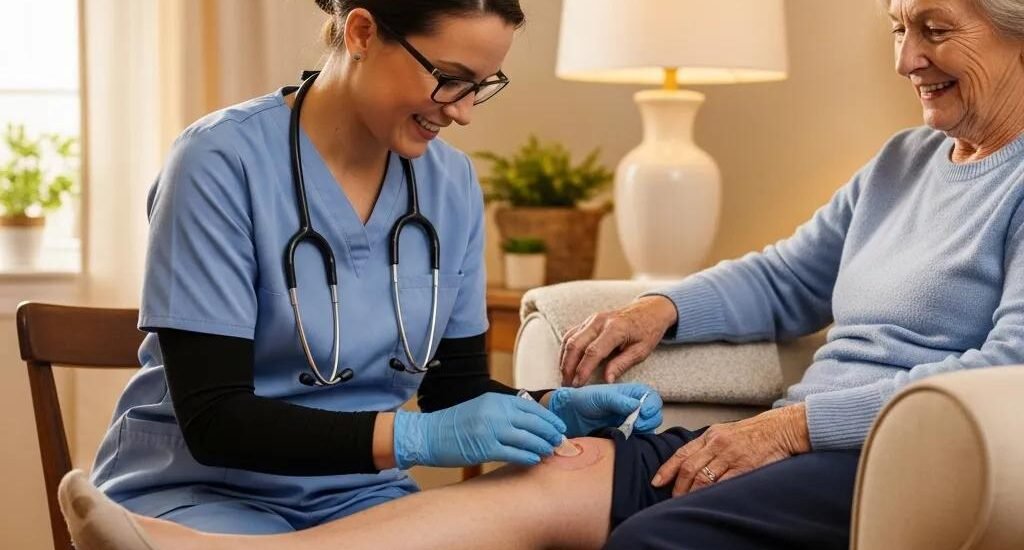
A visit includes a review of your medical history, a focused wound assessment, any necessary treatments (cleaning, debridement, dressing), and clear instructions so you and your caregiver know next steps. We aim to educate and empower patients while delivering expert care.
How can patients find reputable mobile wound care providers?
Look for licensed providers with certified wound-care clinicians, positive patient reviews, clear protocols and transparent billing. Ask about insurance acceptance, clinical oversight and what advanced treatments they offer. Referrals from your primary care team are also helpful.
Are mobile wound care services covered by insurance?
Many plans, including Medicare Part B, cover mobile wound care when it’s medically necessary and provided by an enrolled clinician. Coverage varies, so we recommend checking benefits in advance and working with your care team to verify coverage.
Conclusion
Mobile wound care offers a practical, patient-centered way to manage chronic wounds — lowering travel and time costs, improving access to timely treatment, and helping prevent costly complications. With Medicare support and thoughtful use of advanced therapies when appropriate, in‑home care can deliver better outcomes and real savings for patients and caregivers. If you or a loved one could benefit from in‑home wound care, explore our services to see how we can help.