

What if the most sophisticated clinical intervention for a non-healing butt wound didn’t require a grueling ambulance transfer to a crowded Los Angeles hospital? For families in Glendale and throughout Southern California, managing a stage 3 or stage 4 pressure injury often brings intense anxiety regarding infection risks and the logistics of transport. You’ve likely felt the weight of this responsibility while worrying if Medicare coverage will support the high-level care your loved one deserves at home. The CDC reports that roughly 3% of hospital patients acquire a new infection during their stay, which makes the safety of your own environment a significant clinical advantage.
At Healix360, we believe elite medical outcomes are best achieved where the patient feels most secure. We’ll help you identify wound severity and access professional, mobile interventions that proactively prevent complications like sepsis or amputation. This guide provides a clear roadmap for home-based recovery; we’ll detail how our team coordinates every aspect of the 360-degree healing process to ensure your peace of mind and your loved one’s long-term vitality.
Key Takeaways
- Gain the clinical insight needed to identify the progression of pressure injuries, moving from initial surface redness to complex tissue involvement.
- Understand why a butt wound is particularly high-risk in the Southern California climate and how anatomical factors like friction and shear impact your recovery timeline.
- Explore the transformative potential of regenerative treatments, such as amniotic membrane grafts, designed to optimize biological healing at the cellular level.
- Secure elite medical expertise through mobile bedside consultations that bring advanced wound care directly to your residence in Los Angeles or Glendale.
- Adopt a 360-degree lifestyle strategy focused on precision nutrition and proactive skin health to maintain long-term tissue longevity and prevent recurrence.
Identifying Buttock Wounds: From Minor Irritation to Deep Pressure Ulcers
Understanding a Pressure ulcer requires more than a surface-level glance; it’s a complex biological event that demands a 360-degree diagnostic approach. Identifying a butt wound early is the cornerstone of skin longevity and systemic health. These injuries, often termed decubitus ulcers, occur when prolonged external pressure disrupts microcirculation to the soft tissue. The National Pressure Injury Advisory Panel (NPIAP) reports that approximately 2.5 million people in the United States develop these injuries annually. We view these not merely as skin breaks but as critical signals that the body’s internal equilibrium requires immediate optimization.
The anatomy of the gluteal region makes it particularly susceptible to breakdown. The sacrum and coccyx are high-risk zones because the skin is remarkably thin over these bony prominences. When a patient remains seated or supine for extended periods, the weight of the body compresses the tissue against the bone. This mechanical stress restricts oxygen delivery. Our methodology emphasizes proactive assessment of these specific landmarks to prevent the silent progression of deep tissue damage. Precision in early detection can reduce recovery timelines by up to 50% compared to reactive treatments.
The 4 Stages of Pressure Injuries
Stage 1 represents non-blanchable erythema. It’s a critical warning sign for Los Angeles caregivers that the skin’s integrity is under threat. If the redness doesn’t turn white when pressed, the underlying microvasculature is already compromised. Stage 2 involves partial-thickness skin loss. You’ll see blisters or shallow craters that expose the dermis. It’s vital to act here to prevent bacterial colonization.
Stages 3 and 4 involve deep tissue destruction that penetrates the subcutaneous fat and eventually reaches the muscle or bone. These advanced stages require immediate Glendale specialist intervention to manage the high risk of sepsis or osteomyelitis. In Stage 4, bone exposure is often visible; this isn’t just a surface issue but a total-body health crisis. We utilize integrated diagnostic data to map the extent of this destruction, ensuring the treatment plan addresses the full depth of the injury.
Atypical Buttock Wounds: When It’s Not a Bedsore
Not every butt wound follows the classic pressure ulcer trajectory. It’s essential to distinguish between pressure-induced injuries, pilonidal cysts, and moisture-associated skin damage (MASD). A pilonidal cyst typically occurs near the tailbone and is often related to ingrown hairs or friction rather than pure pressure. MASD presents as diffuse inflammation rather than a localized ulcer. The role of incontinence in complicating butt wound healing in elderly patients is significant, as chemical irritation from urine can erode the acid mantle of the skin in as little as 2 hours.
Necrotic tissue is dead biological matter that acts as a barrier to new cell growth. When this dark, leathery eschar or yellow slough is present, the body’s natural healing biomarkers can’t reach the wound bed. Accurate identification of these tissue types is the first step in our transformative care model. We focus on clearing these obstacles to restore the skin’s peak performance and ensure long-term vitality.
Why Buttock Wounds Are High-Risk: The Southern California Context
The sacral region is a biological crossroads where physics and physiology collide. When a patient develops a butt wound, the combination of constant pressure and delicate tissue creates a high-stakes environment for infection. Data from 2023 indicates that approximately 28% of all pressure injuries in clinical settings manifest in the sacral area. This isn’t just a localized skin issue; it’s a direct threat to a patient’s longevity. A non-healing wound can trigger a cascade of systemic inflammation, potentially reducing a patient’s 12-month survival rate by 50% if the underlying cause isn’t addressed with precision.
Anatomical Challenges of the Sacral Region
Gravity is relentless. Patients in San Fernando Valley assisted living facilities often spend 12 to 14 hours a day in seated or semi-reclined positions. This concentrates the body’s entire weight onto the tailbone, a thin layer of skin over bone with minimal fat padding. Proximity to the bone makes the sacrum a primary site for osteomyelitis, a deep bone infection that requires weeks of intravenous antibiotics and can lead to permanent mobility loss. To mitigate this risk, Healix360 specialists perform home visits to analyze specific biomarkers of skin integrity, such as local temperature fluctuations and tissue oxygenation levels. Understanding these metrics is a core part of Preventing pressure ulcers before they escalate into surgical emergencies. Our diagnostic approach ensures that we aren’t just reacting to a wound, but managing the biological environment that allows it to persist.
The Moisture and Friction Factor
Southern California’s climate introduces unique environmental stressors that compromise skin health. In areas like the San Fernando Valley, where summer temperatures frequently exceed 95 degrees Fahrenheit, the skin’s microclimate becomes dangerously humid. This heat leads to diaphoresis, which causes skin maceration, a condition where the skin becomes soft, white, and fragile due to overhydration. Macerated skin is 5 times more likely to tear when subjected to “shear” forces, the sliding motion that occurs when a patient is repositioned in bed or shifts in a wheelchair. While many families reach for basic over-the-counter ointments, these products often trap moisture rather than managing it. They fail to account for the biological data, such as pH levels and bacterial load, that determine whether a butt wound will close or expand. We focus on optimizing this microclimate to ensure the skin remains a robust barrier against external pathogens.
For patients with diabetic neuropathy or limited mobility, the danger is often invisible. Neuropathy masks the pain that would normally signal a developing injury, allowing the wound to reach Stage 3 or 4 before it’s even noticed. These “silent” infections can lead to sepsis in as little as 48 to 72 hours, making proactive monitoring a pillar of a 360-degree health strategy. By integrating high-tech diagnostics with personalized care, we ensure that small skin changes don’t compromise your long-term vitality. You can access this level of integrated wound management through our specialized mobile clinical teams, who bring elite medical expertise directly to your home. Our goal is to transform a high-risk situation into a manageable roadmap for recovery, ensuring that every patient maintains their peak quality of life.
- Systemic Impact: Non-healing wounds increase the risk of septicemia and metabolic stress.
- Diagnostic Precision: We use advanced imaging to detect deep tissue injury before it breaks the surface.
- Longevity Focus: Managing skin integrity is essential for maintaining independence and overall health.

Beyond Basic Dressings: Advanced Regenerative Treatments for Healing
Traditional wound care often relies on a “clean and cover” philosophy. This reactive stance usually falls short when managing a complex butt wound that’s progressed beyond the superficial layers of the skin. While standard gauze and saline provide a basic barrier, they don’t actively stimulate the cellular environment required for closure. Modern regenerative medicine shifts the focus from simple protection to active biological acceleration. By utilizing bio-engineered skin substitutes, clinicians can now bypass the stagnant inflammatory phase that keeps chronic ulcers open for months at a time.
Research published in the 2008 report Pressure Ulcers: Prevention, Evaluation, and Management indicates that advanced interventions are necessary when standard protocols don’t show a 50% reduction in wound area within 28 days. At Healix360, we don’t wait for failure. We implement visionary strategies that treat the body as an integrated system, ensuring that every biomarker is aligned for peak recovery and tissue optimization.
Amniotic Membrane Grafts: A Visionary Solution
Amniotic allografts represent a breakthrough in tissue engineering. These grafts act as a biological scaffold, providing a structural matrix that invites native cells to migrate and proliferate across the wound bed. They’re naturally rich in over 200 different growth factors and cytokines. These elements actively suppress inflammation and provide a natural anti-microbial barrier that synthetic dressings can’t replicate. It’s a sophisticated method of using the body’s own blueprint for repair.
These advanced procedures are no longer confined to sterile hospital wings. Healix360 brings these sophisticated treatments directly to the patient’s bedside in Beverly Hills. This concierge approach eliminates the physical stress of travel while ensuring the wound environment is optimized for rapid regeneration. It’s a high-tech solution delivered with human-centric warmth, making high-level medical concepts feel attainable and immediate.
The Importance of Professional Debridement
Effective healing is impossible if the wound bed is choked by necrotic tissue or bacterial biofilm. While home cleaning is vital for daily hygiene, it can’t address the deep-seated barriers present in Stage 3 or 4 ulcers. This is where professional intervention becomes a necessity rather than an option. Sharp debridement involves the precise removal of non-viable tissue using specialized surgical instruments to clear the path for new growth.
Sharp debridement revitalizes the butt wound by exposing healthy, bleeding tissue that’s receptive to regenerative therapies. Healix360 integrates this surgical precision into a personalized care plan focused on long-term longevity. We don’t just treat the surface; we optimize the underlying biological terrain. This ensures that the new tissue is resilient and less prone to future breakdown, reflecting our commitment to a 360-degree view of patient health.
Stem cell therapy principles are now standard in our approach to non-healing wounds. By introducing signaling molecules that mimic the body’s natural repair signals, we can jumpstart the healing process in patients whose systemic recovery systems are compromised. Clinical data suggests that these advanced modalities can improve closure rates by up to 40% compared to traditional dressings alone. This methodical approach ensures that every detail of the patient’s health is managed with the goal of achieving transformative results.
Mobile Wound Care in Los Angeles: Expert Treatment Delivered to Your Door
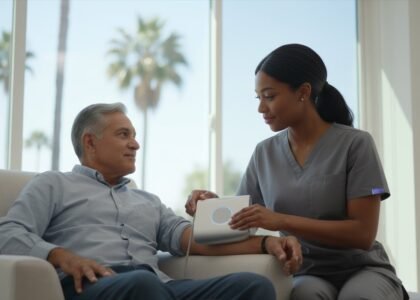
Navigating the gridlock of the 405 or the congested surface streets of Glendale while transporting a patient with a sensitive butt wound is a logistical burden that actively compromises the healing process. Physical stress and prolonged sitting during transport can exacerbate tissue damage. Healix360 eliminates this friction by transforming the patient’s residence into a high-tech clinical environment. We bring the expertise of a specialized wound center directly to the bedside, ensuring that recovery remains the primary focus without the exhaustion of travel.
Our mobile model relies on a sophisticated coordination of resources. We act as the central hub, collaborating closely with home health agencies and family caregivers to maintain a unified front against infection. This integration ensures that every dressing change and repositioning schedule aligns with the specialist’s precision orders. By removing the barriers of traditional office visits, we provide a level of oversight that is both proactive and deeply personal.
The Bedside Evaluation Process
Precision begins with our 360-degree diagnostic protocol. The journey starts with a 15-minute digital assessment where our team reviews medical history and current wound status through secure, HIPAA-compliant platforms. This initial data point allows us to arrive at the first in-home visit with a clear clinical roadmap already in place. Once bedside, our specialists utilize advanced diagnostic tools, such as infrared thermography and high-resolution digital imaging, to assess tissue viability beneath the surface.
Every consultation is documented with meticulous detail to remain fully Medicare-compliant. We prioritize structured data, capturing precise measurements and biomarker indicators that track healing trajectories over time. This rigorous documentation ensures seamless billing and provides a clear, evidence-based record for the entire care team. Our specialists don’t just treat the surface; they architect a comprehensive recovery plan based on the unique biological data of the individual.
Serving Glendale, Beverly Hills, and Greater LA
Accessing elite medical care shouldn’t require a journey through high-stress urban corridors. For residents in Beverly Hills, Glendale, and the broader Los Angeles basin, our network ensures a rapid response that bypasses the traditional 4-hour wait times found in hospital emergency rooms. We understand that for the elderly, every minute spent in a waiting room is a minute of potential skin breakdown or discomfort. Our mobile units are equipped to provide immediate, specialized intervention for non-healing wounds right where the patient is most comfortable.
Mobile wound care in Los Angeles reduces hospital readmission rates by providing consistent, specialized bedside monitoring. By maintaining this steady cadence of professional oversight, we identify potential complications like cellulitis or deep tissue injury before they escalate into systemic crises. This proactive stance is particularly vital for chronic butt wound management, where early detection of infection can be the difference between a routine recovery and a surgical intervention.
Financial clarity is a cornerstone of our partnership. Under current 2024 guidelines, Medicare Part B typically covers 80% of the allowable amount for mobile medical consultations, provided the patient meets the necessary criteria for home-based care. We work directly with insurance providers to facilitate reimbursement, allowing families to focus on the optimization of health rather than the complexities of medical billing. Our goal is to provide a premium, elite guide through the recovery process that feels both technologically advanced and humanly accessible.
Experience the future of personalized recovery with a team that values your time and your health. Schedule your comprehensive bedside consultation today to begin your journey toward total-body wellness.
Preventing Recurrence: A 360-Degree Strategy for Long-Term Skin Health
Healing a butt wound is a significant clinical milestone, yet it represents only the first phase of a broader journey toward lasting vitality. True recovery requires you to transition from an acute treatment mindset to one of lifestyle optimization. This shift ensures that the newly formed tissue, which is often 20% weaker than original skin, remains resilient against the daily stresses of pressure and friction. At Healix360, we view skin integrity as a reflection of your internal biological state and external environment. By adopting a proactive, data-driven strategy, you can transform your home into a sanctuary of health rather than a site of constant medical intervention.
Nutritional Biomarkers for Wound Healing
Your skin’s ability to resist breakdown depends heavily on your internal chemistry. Collagen synthesis is a resource-intensive process that demands specific micronutrients and high-quality proteins. Clinical research from the 2019 NPIAP guidelines suggests that individuals at risk of skin breakdown require between 1.2 and 1.5 grams of protein per kilogram of body weight daily. We work with specialists to monitor biomarkers like prealbumin and serum zinc levels, identifying the precise nutritional gaps that might hinder your progress. The Healix360 approach integrates these metrics into a personalized wellness roadmap, ensuring your body has the exact molecular building blocks needed for peak performance and tissue longevity.
Offloading and Pressure Management
Effective pressure management is the cornerstone of preventing a recurring butt wound. In Los Angeles homes, the choice between high-specification foam and alternating pressure air mattresses depends on your specific mobility profile. High-spec foam can redistribute weight effectively for those with some movement, while powered air surfaces are essential for those with limited mobility. We recommend mastering the “Rule of 30” for daily positioning. This technique involves tilting the body at a 30-degree angle relative to the mattress, which successfully redirects pressure away from the vulnerable sacrum and onto the fleshier parts of the buttocks. Consistency is your greatest tool; a structured two-hour turning schedule has been shown to reduce the incidence of new wounds by over 50% in high-risk populations.
Maintaining long-term skin health shouldn’t feel like a burden. It’s an opportunity to fine-tune your body’s resilience through expert guidance and advanced technology. Our team provides the clinical mastery and the actionable data you need to stay ahead of potential complications. We don’t just treat symptoms; we architect a lifestyle that prioritizes your comfort and independence. Take the next step in your health journey and secure your future well-being today.
Restore your quality of life with Healix360’s mobile specialists
Take Control of Your Recovery and Longevity
Restoring skin integrity requires a shift from reactive care to proactive optimization. We’ve detailed how a persistent butt wound demands a sophisticated approach that integrates amniotic and regenerative grafts to stimulate biological repair at the cellular level. By adopting a 360-degree strategy, you address the root causes of pressure injuries while fortifying your body against future recurrence. Our team functions as your visionary health architect, ensuring every detail of your recovery is managed with clinical precision.
Healix360 is a specialized Medicare Part B provider, delivering 100 percent mobile medical interventions directly to your private residence. We serve clients throughout Glendale, Beverly Hills, and the broader Los Angeles County area, bridging the gap between advanced laboratory data and your daily quality of life. You don’t have to settle for standard treatments when transformative science is available at your doorstep. Our specialists focus on achieving peak performance through integrative care plans tailored to your unique biological needs.
Your journey toward total-body wellness begins with a single, decisive step. Experience the future of healing with a mobile wound assessment in Southern California to see how our methodology can accelerate your results. We’re here to guide you toward a future defined by vitality and strength.
Frequently Asked Questions
Is a butt wound always a bedsore?
Not every butt wound is a pressure ulcer; many are moisture-associated skin damage or cysts. While bedsores result from prolonged pressure, conditions like Incontinence-Associated Dermatitis account for 27 percent of skin breakdowns in sedentary patients. We take a 360-degree view of your skin health to differentiate between circulatory issues and mechanical pressure. This diagnostic precision ensures your treatment plan targets the actual biological cause rather than just the symptoms.
How can I tell if a buttock wound is infected?
You can identify an infected wound by checking for thick yellow drainage, a persistent odor, or skin that feels warmer than 98.6 degrees Fahrenheit. If the redness extends more than 2 centimeters beyond the wound edge, it’s a clear sign of spreading bacteria. We monitor these biomarkers closely to prevent systemic complications. Our integrative approach uses these data points to optimize your recovery and restore your body’s natural peak performance.
Does Medicare cover at-home treatment for pressure ulcers in California?
Medicare Part B covers 80 percent of the costs for medically necessary at-home wound care in California. Under Local Coverage Determination L35125, patients qualify for mobile specialist visits if they’re considered homebound or have mobility limitations. This coverage includes advanced dressings and professional debridement sessions. We navigate these administrative details for you, ensuring your focus remains on longevity and holistic wellness rather than insurance paperwork.
How long does it take for a Stage 3 buttock wound to heal with advanced grafts?
A Stage 3 wound typically achieves 75 percent closure within 42 days when treated with advanced biological grafts. Traditional methods often take 12 weeks or longer to reach the same milestone. By utilizing these regenerative technologies, we accelerate your body’s cellular repair mechanisms. This transformative result reduces the window of vulnerability, moving you toward peak performance and long-term skin integrity much faster than standard protocols.
Can amniotic membrane grafts be applied at home in Glendale?
You can receive amniotic membrane grafts directly in your Glendale residence through our mobile clinical units. Our specialists apply these sterile, birth-tissue-derived scaffolds to jumpstart the healing of a stubborn butt wound. This high-tech intervention eliminates the stress of clinical transport while providing hospital-grade technology. We bring the laboratory to your bedside, optimizing your environment for rapid recovery and total-body longevity.
What is the fastest way to heal a bedsore on the buttocks?
The fastest healing occurs when you combine 100 percent pressure offloading with advanced biological dressings. Turning a patient every 120 minutes is the gold standard for restoring microcirculation to the affected tissue. We pair this mechanical relief with regenerative grafts that provide the necessary growth factors for tissue synthesis. This proactive strategy transforms a stagnant wound into a site of active cellular regeneration, ensuring your health journey stays on its optimal path.
Why won’t my loved one’s butt wound heal with regular bandages?
Regular bandages often fail because they don’t address the 60 percent of chronic wounds that require a specific moisture-balanced microenvironment. Standard gauze can actually damage new granulation tissue during removal, stalling the healing process for 24 to 48 hours. Our advanced care plans use intelligent dressings that manage exudate while delivering active healing agents. This visionary approach ensures every minute of the recovery process is optimized for tissue longevity and structural repair.
When should I call a mobile wound specialist instead of going to the ER?
Call a mobile specialist if the wound hasn’t decreased in size by 30 percent after 14 days of home care. You should choose mobile care over the ER to avoid the 4 hour average wait times and exposure to hospital-acquired infections. We provide a 360-degree assessment in your own home, offering a more thorough diagnostic process than a busy emergency room. This elite level of care keeps you comfortable while providing the scientific rigor required for complex recovery.