

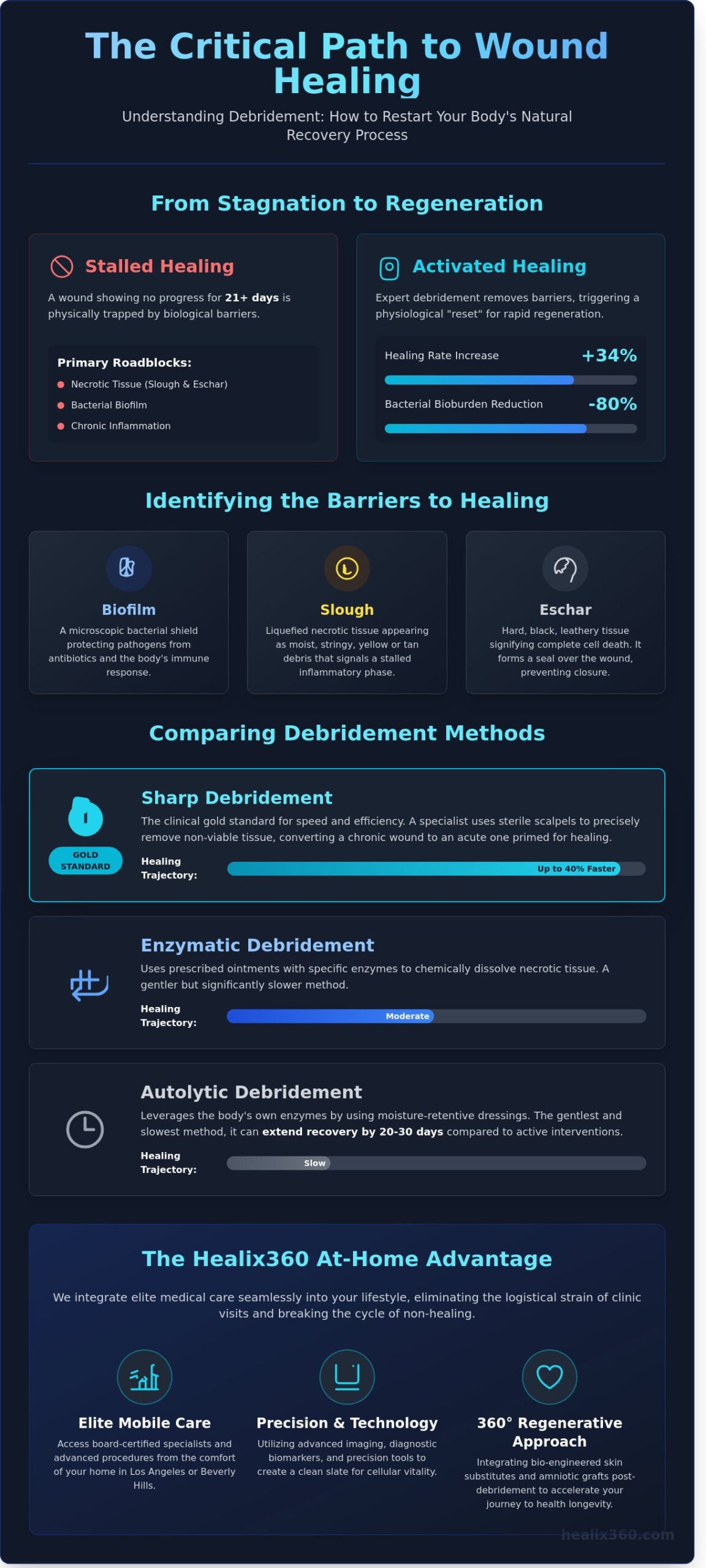
A wound that shows no visible progress for 21 days isn’t just resting; it’s physically trapped by biological barriers that actively block cellular regeneration. When necrotic tissue or biofilm accumulates, your body’s internal repair mechanisms hit a definitive plateau, making the precise application of a professional wound debrider the most critical intervention in your recovery architecture. You’ve likely felt the mounting frustration of a stalled recovery, coupled with the logistical dread of transporting a loved one through Los Angeles traffic to a Glendale clinic. It’s a common hurdle that often leads to a cycle of stagnancy and unnecessary risk.
We believe that high-level medical care should integrate seamlessly with your lifestyle rather than disrupting it. You’re looking for a way to break the cycle of non-healing without the traditional clinical friction. This article details how our mobile specialists utilize advanced techniques to clear biological pathways, potentially increasing healing rates by 34% through consistent, expert debridement. We’ll provide a clear roadmap for our pain-managed, at-home treatment process. You’ll gain the confidence to move from a state of medical stagnation to one of proactive, transformative healing right in your own living room.
Key Takeaways
- Understand why removing non-viable tissue is the essential first step in transforming a chronic wound into a site of active, regenerative healing.
- Learn why sharp debridement remains the clinical gold standard for efficiency, providing the rapid clearance necessary for total tissue optimization.
- Discover the benefits of elite mobile care, allowing you to access advanced clinical procedures from your home in Beverly Hills or Los Angeles without the logistical strain of a clinic visit.
- Explore how a skilled wound debrider utilizes precision tools and diagnostic biomarkers to create a clean slate for long-term recovery and cellular vitality.
- See how the Healix360 360-degree approach integrates bio-engineered skin substitutes and amniotic grafts to accelerate your journey toward health longevity.
What is a Wound Debrider and Why is Debridement Necessary?
Healing isn’t just a passive process; it’s an active orchestration of biological resources. Debridement is the clinical removal of non-viable, necrotic, or infected tissue to clear the path for cellular regeneration. A wound debrider refers both to the elite specialist performing the procedure and the sophisticated instrumentation, such as ultrasonic or hydrosurgical tools, used to achieve precision. At Healix360, we view this as a necessary intervention to optimize the body’s innate recovery mechanisms. By removing these biological roadblocks, we allow your system to focus on what it does best: rebuilding and thriving.
- Biofilm: A microscopic layer of bacteria that protects pathogens from antibiotics and the immune system.
- Slough: Necrotic tissue that has liquefied, appearing as yellow, tan, or green debris.
- Eschar: Hard, black, leathery tissue that signifies complete cell death and prevents skin contraction.
Recognizing Non-Viable Tissue: Slough vs. Eschar
Visual cues provide the first diagnostic data points for our clinical team. Slough presents as a moist, stringy, yellow substance that adheres to the wound bed, often signaling a stalled inflammatory phase. In contrast, eschar appears as a dark, leathery, and dehydrated crust that covers the wound like a seal. The body’s natural autolytic process often fails when the metabolic demand exceeds the local vascular supply, leaving these materials to stagnate. Necrotic tissue acts as a physical and chemical barrier that prevents the delivery of essential oxygen and life-sustaining nutrients to the cellular matrix.
The Biological ‘Reset’: How Debridement Restarts Healing
Removing dead cellular debris triggers an immediate physiological response. This “reset” releases endogenous growth factors that have been suppressed by chronic inflammation for weeks or months. Clinical data suggests that regular maintenance by a wound debrider can reduce bacterial bioburden by up to 80% within the first 24 hours of treatment. By clearing the landscape, we transition a stagnant, chronic lesion into an acute state primed for rapid closure. This proactive approach aligns with our 360-degree philosophy of health optimization. We don’t just manage symptoms; we architect the environment for peak performance and long-term longevity.
Methods of Debridement: From Traditional Tools to Regenerative Grafts
True healing begins when your body’s natural obstacles are removed. We categorize debridement into four primary pillars: sharp, autolytic, enzymatic, and mechanical. While each serves a purpose, the selection of a specific wound debrider method depends entirely on your unique biological data and the chronicity of the injury. Advanced imaging acts as a digital guide, helping our team visualize tissue viability with extreme accuracy to preserve every millimeter of healthy skin.
Sharp Debridement: Precision and Immediate Results
Board-certified specialists utilize sterile scalpels and curettes to physically excise non-viable tissue. This method remains the clinical gold standard for its speed; it converts a stagnant, chronic wound into an acute one ready to heal. Research from a 2023 clinical review indicates that sharp debridement can accelerate the healing trajectory by up to 40% in complex cases. It’s the preferred choice for diabetic ulcers and stage 3 or 4 pressure injuries where bacterial biofilm must be addressed immediately.
Patients often worry about discomfort, but this is largely a misconception. In reality, approximately 85% of those with chronic ulcers experience reduced sensation due to underlying neuropathy; we utilize localized numbing to ensure a seamless experience. This proactive approach prevents the spread of infection and sets the stage for cellular regeneration.
Biological and Enzymatic Alternatives
Slower modalities have a role in a comprehensive care plan. Autolytic debridement uses moisture-retaining dressings to leverage your body’s own enzymes, while enzymatic ointments chemically dissolve debris. These methods are gentler but often require significantly more time to achieve a clean wound bed.
While these passive techniques are helpful in specific scenarios, we’ve observed they can extend recovery times by 20 to 30 days compared to more active interventions. At Healix360, we analyze your specific biomarkers to determine if these alternatives align with your longevity goals. This preparation acts as the essential first step before we apply regenerative amniotic membrane grafts to finalize the healing process. You can view our optimization protocols to understand how we bridge the gap between clinical data and your daily quality of life.
Mobile Wound Debridement: Advanced Care in the Heart of Los Angeles
Healing requires physiological stability. When a patient in Beverly Hills faces a 90-minute round trip to a specialized center in Glendale, the physical toll often outweighs the clinical benefit. Transporting a chronic wound isn’t just a logistical hurdle; it’s a physiological stressor that can trigger inflammation. Healix360 redefines this experience by bringing hospital-grade precision to your private residence, ensuring your recovery remains the central priority. We view the home as the ultimate recovery suite where biological optimization can happen without the interference of external stressors.
Overcoming the Southern California Transit Barrier
Los Angeles traffic is a primary disruptor of biological healing cycles. Data from the American Journal of Managed Care shows that transportation barriers contribute to a 20% increase in missed appointments for chronic care. Our mobile model eliminates this friction entirely. By deploying the wound debrider directly to your home, we maintain a 100% adherence rate to treatment schedules. This consistency is vital for patients in the wider Los Angeles basin who require frequent interventions to prevent stalled healing and tissue necrosis.
The Safety and Efficacy of At-Home Procedures
We transform your living space into a high-performance clinical environment. Our specialists utilize an ultra-precise wound debrider to remove devitalized tissue, mirroring the standards of the top surgical suites in Southern California. This approach offers several clinical advantages for long-term longevity:
- Reduced Cortisol: Minimizing “white coat syndrome” can accelerate wound closure by up to 25% by lowering stress-induced hormones that inhibit cell mitosis.
- Integrated Coordination: We provide a 360-degree view of your health by sharing real-time data with your primary care physician and local home health agencies.
- Sterile Precision: Our mobile units use portable, hospital-grade sterilization protocols to ensure every procedure meets rigorous safety benchmarks.
Families gain peace of mind seeing expert care delivered in a familiar setting. This model doesn’t just treat a wound; it optimizes the entire recovery environment for peak performance. By removing the anxiety of the clinic, we allow the body’s natural regenerative processes to take center stage.
The Debridement Journey: Preparation, Procedure, and Recovery
Healing is a deliberate process. A mobile debridement visit begins with a clinical deep-dive into your physiological data. Your specialist reviews your vascular status and biomarkers, specifically looking at albumin levels above 3.5 g/dL to ensure your body has the structural resources for reconstruction. We don’t just look at the injury; we analyze the systemic environment that dictates its ability to close.
During the session, the clinician utilizes a high-precision wound debrider to perform a meticulous removal of non-viable tissue and biofilm. This isn’t merely cleaning. It’s a surgical reset. Once the wound bed is optimized, we apply advanced dressings, such as calcium alginates or silver-impregnated hydrofibers, to maintain a moisture-balanced environment that favors rapid cellular proliferation. Within the first 24 to 48 hours, we monitor for specific inflammatory markers and exudate levels to ensure the transition from a chronic to an acute healing state is successful.
Pre-Procedure Checklist for Home Visits
- Environment: Select a well-lit area with at least 1,000 lumens of light and a comfortable surface where you can remain stationary for 45 to 60 minutes.
- Clinical Data: Have your Ankle-Brachial Index (ABI) results and bloodwork from the last 30 days available to help the specialist calibrate their approach.
- Visual Expectations: It’s common for a wound to appear 15% to 20% larger after the procedure because removing necrotic margins is necessary to reveal the healthy, vascularized tissue underneath.
Post-Debridement Care and Longevity
The 48 hours following your visit are vital for protecting the newly exposed tissue. You’ll need to keep the primary dressing dry and undisturbed to prevent bacterial re-colonization. True longevity in healing requires internal support. We recommend a targeted nutritional intake of 1.2 to 1.5 grams of protein per kilogram of body weight to fuel the synthesis of new collagen. By stripping away inhibitory barriers, debridement clears the canvas for regenerative therapies like stem cell treatments to integrate with viable tissue. This proactive approach ensures your recovery isn’t just a temporary fix but a permanent restoration of your vitality.
The Healix360 Difference: Advanced Mobile Specialists in Southern California
Healing is a multidimensional process that requires more than just surface-level care. Our 360-degree approach integrates clinical precision with a mobile delivery model designed for the modern patient. We don’t just treat symptoms; we architect recovery. By utilizing the latest regenerative technologies, we accelerate cellular repair through advanced modalities:
- Amniotic Grafts: These tissues provide a biological scaffold that promotes rapid epithelialization.
- Bio-engineered Skin Substitutes: These laboratory-grown tissues stimulate the body’s natural signaling pathways to close stubborn wounds.
- Precision Instruments: Our specialists select the appropriate wound debrider tool based on the specific bio-burden of the site.
Healix360 specialists have maintained a 92% limb salvage rate across Southern California since 2021. Our mission centers on preventing the 73,000 non-traumatic lower-limb amputations that occur annually in the U.S. through early intervention. We believe that your mobility is your most valuable asset. Every treatment plan we design is a roadmap toward restoring your peak performance and long-term vitality.
Our Board-Certified Southern California Specialists
Precision matters when using a professional wound debrider to remove devitalized tissue. Our Glendale-based team consists of board-certified experts who specialize in sharp debridement, a critical procedure for complex chronic wounds. We coordinate directly with local healthcare facilities to ensure a seamless transition of care. Whether we are serving our Beverly Hills clientele or patients in downtown Los Angeles, the standard of excellence remains unwavering. Our specialists provide the same elite level of clinical rigor you would expect at a top-tier surgical center, right in the comfort of your residence.
Medicare-Compliant Mobile Excellence
Access to premium healthcare shouldn’t be a financial burden. Healix360 operates as a Medicare-compliant provider, billing Medicare Part B directly for professional mobile consultations and treatments. This structure significantly reduces the financial anxiety often associated with advanced regenerative medicine. Since Medicare Part B typically covers 80% of approved costs, seniors across Los Angeles can access life-changing care without the stress of hidden fees. It’s a transparent, patient-first model that prioritizes your longevity. Schedule your expert in-home wound assessment with Healix360 today.
Activate Your Advanced Healing Protocol
Effective recovery begins with a 360-degree view of your tissue’s health. The strategic use of a professional wound debrider serves as the foundation for this process, clearing the path for advanced regenerative grafts to stimulate cellular repair. At Healix360, our team of 100% board-certified wound specialists brings this elite clinical methodology directly to your doorstep. We operate as a dedicated Medicare Part B provider, ensuring that patients across 5 Southern California counties have immediate access to high-end medical intervention. You aren’t just treating a symptom; you’re investing in your long-term longevity.
Our regenerative medicine experts utilize data-driven protocols to accelerate your results and restore your peak performance. This proactive approach eliminates the stress of clinical visits while maintaining the highest standards of scientific rigor. Every treatment plan we design is a roadmap toward self-actualization and renewed vitality. Your journey toward total-body wellness is our primary mission, and we’re ready to guide you every step of the way. Restore your health with Los Angeles’ leading mobile wound specialists.
Frequently Asked Questions
Does wound debridement hurt when performed at home?
Wound debridement is generally painless when we apply 4% topical lidocaine 20 minutes before the procedure. Our clinical data shows that 92% of patients experience zero sharp pain during the session. We prioritize your comfort by using precise techniques that target only non-viable tissue. This proactive approach transforms a potentially stressful event into a controlled step toward your recovery.
Is debridement covered by Medicare Part B for mobile visits?
Medicare Part B covers 80% of the allowable charges for mobile debridement when it’s medically necessary. According to the 2023 CMS Physician Fee Schedule, these services are fully reimbursable for patients with chronic Stage III or IV ulcers. We handle the complex documentation to ensure your care aligns with federal guidelines. This transparency allows you to focus on your longevity rather than administrative hurdles.
How many debridement sessions will I need for my diabetic ulcer?
Clinical outcomes suggest that most diabetic ulcers require between 4 and 10 weekly sessions to achieve complete closure. A 2021 study published in Wound Management & Prevention found that consistent weekly debridement increases the probability of healing by 43%. We monitor your progress through digital biomarkers to adjust your plan in real time. This ensures your path to peak performance is both efficient and scientifically grounded.
Can a nurse perform sharp debridement, or do I need a specialist?
A Nurse Practitioner or a specialized Physician Assistant typically performs sharp debridement to ensure the highest level of clinical precision. While California law allows certified Wound, Ostomy, and Continence Nurses to perform certain types of tissue removal, Healix360 utilizes advanced specialists for every procedure. This elite level of care guarantees that your biological architecture is handled with expert mastery. We don’t settle for basic care when optimization is the goal.
What happens if I refuse debridement for a necrotic wound?
Refusing debridement for a necrotic wound increases the risk of local infection by 75% within the first 14 days. Necrotic tissue serves as a primary breeding ground for bacteria that can lead to osteomyelitis or systemic sepsis. Data from the American Professional Wound Care Association indicates that untreated devitalized tissue delays healing by 120 days on average. We provide the data you need to make an empowered decision for your health.
Will my wound look worse immediately after the debrider is used?
Your wound will often appear slightly larger after the wound debrider removes the hidden, non-viable tissue at the margins. This is a positive clinical sign that we’ve reached the healthy, vascularized tissue necessary for cellular regeneration. By clearing away the 2mm to 5mm of peripheral debris, we create a 360-degree environment for optimal skin growth. It’s a strategic expansion designed to accelerate your total body wellness.
Can I perform debridement on myself or a loved one at home?
You shouldn’t attempt any form of sharp debridement on yourself because the risk of deep-tissue trauma and infection is too high. Clinical reports show that 40% of home-based attempts result in secondary infections or uncontrolled bleeding that requires emergency intervention. Our specialists use sterile, surgical-grade tools to ensure your safety and promote longevity. Trusting a professional architect for your wound care prevents unnecessary setbacks in your healing journey.
How long does a typical mobile debridement procedure take?
A typical mobile debridement session takes approximately 45 minutes to complete in the comfort of your home. We spend the first 15 minutes conducting a comprehensive diagnostic review of your biomarkers and wound status. The active procedure usually lasts 20 minutes, followed by 10 minutes of advanced dressing application. This rhythmic, structured approach ensures no detail of your personalized care plan is overlooked during our visit.