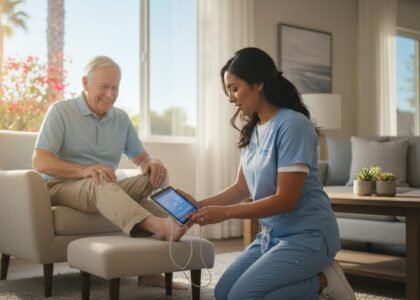


What if the most sophisticated response to a surgical complication isn’t an exhausting trip to a sterile emergency room, but a precision medical intervention delivered directly to your bedside? Discovering a separating incision is unsettling, especially when a 2023 clinical study indicates that up to 3% of abdominal surgeries experience some form of opening that requires specialized wound dehiscence treatment at home. You likely feel that your recovery should be a period of restorative peace, not a series of logistical hurdles that threaten your long-term surgical results and physical integrity.
We understand that your health is your most valuable asset, which is why we’ve pioneered a mobile platform that brings elite clinical expertise to your door. This guide outlines how our team provides advanced biological therapies and regenerative oversight to residents throughout Los Angeles and Glendale. We’ll examine the specific protocols for stabilizing your wound and the integrative technologies we use to ensure your tissue heals with the strength and aesthetic precision you expect from a premium health partnership. By moving beyond traditional reactive care, we help you secure a future of peak performance and optimal longevity.
Key Takeaways
- Identify the critical early warning signs of incision separation, such as serosanguineous drainage and localized swelling, to initiate a proactive recovery plan.
- Analyze how systemic health factors and collagen synthesis influence your body’s biological capacity to maintain the structural integrity of surgical sites.
- Master the immediate first-aid protocols for safe wound dehiscence treatment at home while understanding the “Golden Rule” of professional clinical intervention.
- Learn how mobile regenerative medicine bridges the gap between hospital-level care and the privacy of your Los Angeles or Glendale residence.
- Discover how advanced bio-engineered skin substitutes and amniotic grafts trigger the body’s natural signaling for rapid, high-performance tissue repair.
Understanding Surgical Wound Dehiscence and the Path to Recovery
Recovery is rarely a linear progression. It’s a complex biological orchestration where your body works to restore structural integrity to disrupted tissues. Wound dehiscence occurs when this process is interrupted, leading to the partial or complete separation of surgical incision layers. This isn’t a sign of personal failure, but rather a clinical signal that the healing environment requires optimization. For many patients, gaining foundational knowledge is the first step toward effective wound dehiscence treatment at home, ensuring that a minor setback doesn’t compromise your long-term longevity goals.
At its core, dehiscence represents a localized failure of the wound’s tensile strength. Clinical data from a 2021 retrospective study indicates that this complication affects approximately 1% to 3% of patients undergoing abdominal procedures. It typically manifests at the intersection of mechanical tension and biological capacity. When internal pressure or external movement exceeds the strength of the sutures or the developing collagen matrix, the edges pull apart. Understanding Surgical Wound Dehiscence involves recognizing that your body’s healing resources might be stretched thin by factors like poor oxygenation, localized inflammation, or nutritional gaps that we can address through proactive management.
Recognizing the Symptoms of Wound Separation
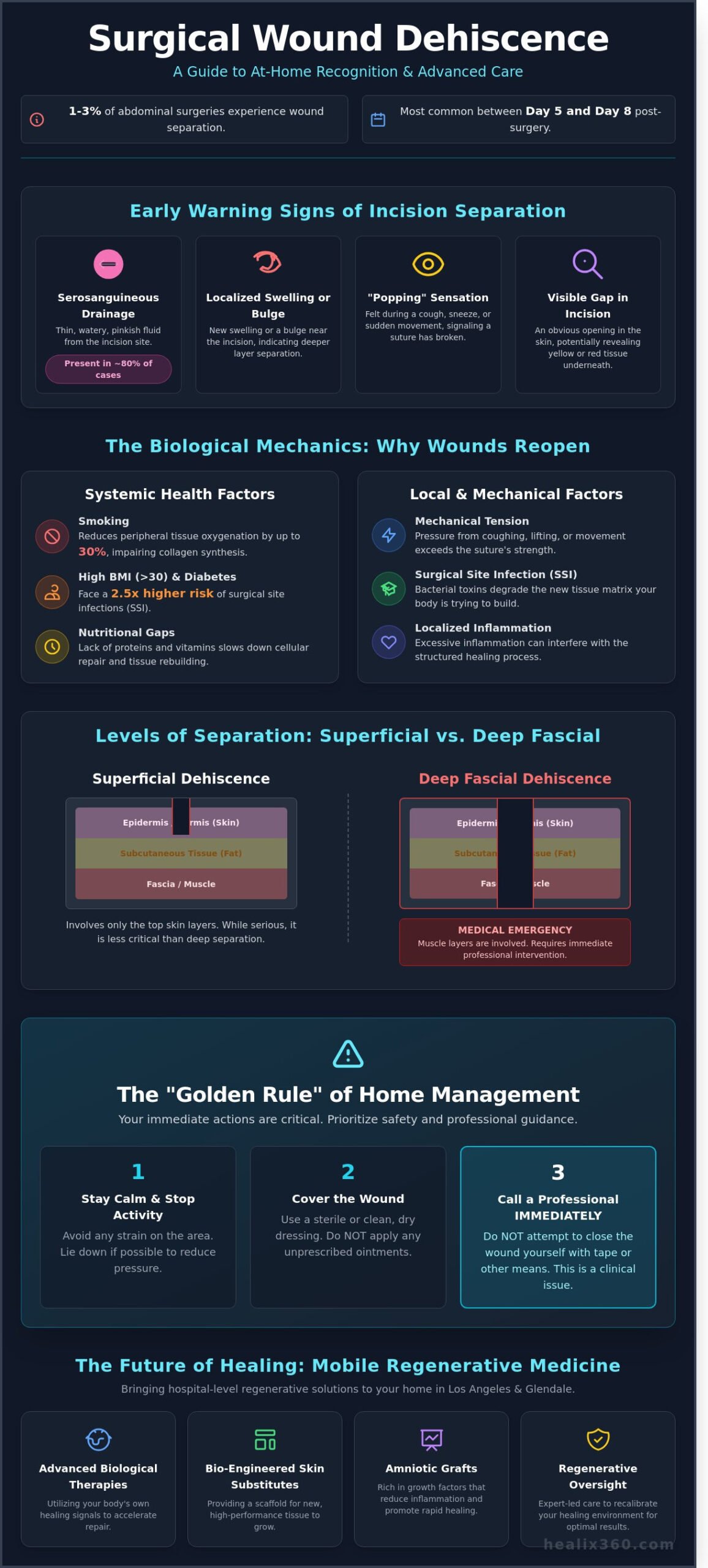
Identifying the early warning signs of separation allows for a swift transition to a corrective care plan. You should monitor your incision for serosanguineous drainage, which is a thin, watery, pinkish fluid that often precedes a visible opening. Statistics show that this type of discharge is present in nearly 80% of dehiscence cases, usually appearing between the fifth and eighth day after surgery. You might also notice localized swelling or a distinct “popping” sensation during a cough or sudden movement, signaling that a suture has reached its mechanical limit. Distinguishing between superficial skin separation and deep fascial dehiscence is vital, as the latter involves the underlying muscle layers and requires immediate professional coordination.
- Visual Assessment: Look for a visible gap in the skin or the presence of underlying yellow or red tissue.
- Drainage Patterns: Note any sudden increase in fluid that saturates bandages within a two-hour window.
- Structural Integrity: Feel for any new bulges near the incision line which could indicate deeper layer separation.
The Emotional Impact of Post-Operative Complications
The discovery of an opening in your incision often triggers significant psychological stress. It’s natural to feel that your recovery has “failed” or that you’ve lost ground in your journey toward peak performance. However, we view this moment as an opportunity to recalibrate your healing environment. Shifting the narrative from a surgical setback to a data-driven optimization phase reduces cortisol levels, which actually improves your biological healing capacity. Expert-led wound dehiscence treatment at home provides the calm, structured intervention necessary to regain control over your health outcomes. By focusing on precision care and integrative support, you can transform a moment of anxiety into a proactive roadmap for total-body wellness and restorative success.
The Biological Mechanics: Why Surgical Wounds Reopen
Healing isn’t a passive event. It’s an intricate orchestration of cellular signals and structural rebuilding. When this biological symphony falters, the physical integrity of an incision is the first thing to fail. Research into The Biological Mechanics of Wound Dehiscence shows that systemic health dictates local recovery outcomes. For example, smoking reduces peripheral tissue oxygenation by as much as 30 percent, which directly impairs the fibroblast activity necessary for collagen synthesis. Without this protein scaffolding, the wound remains fragile and prone to separation.
Metabolic health plays a decisive role in how well your body seals a surgical site. Patients with a Body Mass Index (BMI) over 30 or those managing type 2 diabetes face a 2.5 times higher risk of Surgical Site Infections (SSI). These infections release bacterial toxins that degrade the very extracellular matrix the body is trying to build. While many people look for wound dehiscence treatment at home, it’s vital to recognize that the strength of the closure depends on internal chemistry as much as external care. If the biological foundation is weak, even the most meticulous surface care cannot prevent the underlying tissue from pulling apart.
- Protein levels: Serum albumin below 3.5 g/dL is a primary predictor of poor tensile strength in new tissue.
- Vitamin C: This micronutrient is essential for collagen cross-linking; a deficiency makes the surgical site brittle and prone to reopening.
- Mechanical Stress: Sudden movements, such as a heavy sneeze or lifting an object over 10 pounds, can create enough intra-abdominal pressure to snap early-stage sutures.
Biomarkers of nutrition are often the invisible architects of a successful recovery. Zinc and Vitamin A are equally critical, as they facilitate the rapid cell division required during the early stages of repair. When these levels are suboptimal, the body’s ability to produce granulation tissue is compromised. This lack of “biological glue” means the wound edges never truly bond, leaving the patient vulnerable to dehiscence during routine daily activities.
Risk Factors for Dehiscence in High-Performance Lifestyles
Active Los Angeles residents often encounter a unique challenge during recovery. The drive to return to a 100 percent activity level can lead to premature mechanical strain on a healing incision. Chronic systemic inflammation, often driven by high-stress professional environments, can stall the body’s 360-degree healing response. Genetic factors, such as specific variations in the COL1A1 gene, also influence tissue friability. These predispositions mean that some individuals naturally produce “thinner” scars that are less resilient to the movements of an active lifestyle. Precision in monitoring these factors is what separates a routine recovery from an elite one.
The Role of Tissue Vitality in Successful Closure
The proliferation phase of healing typically peaks between day 4 and day 14 post-surgery. During this window, the body requires peak perfusion to deliver oxygen to the wound edges. If blood flow is restricted by tight dressings or underlying vascular issues, the wound bed becomes stagnant. Clean edges are a non-negotiable requirement for recovery. Any presence of necrotic tissue or biofilm will prevent the edges from migrating toward each other. For those seeking to maximize their longevity and aesthetic outcomes, exploring integrative recovery strategies can help maintain the tissue vitality necessary for a seamless, permanent closure. Successful healing requires a precise balance of clean wound bed preparation and optimized internal biomarkers.
Safe Wound Dehiscence Management: Home Care vs. Clinical Necessity
Biological integrity is the baseline for all physical optimization. When a surgical incision begins to separate, the primary goal of wound dehiscence treatment at home shifts from standard recovery to active stabilization. You’re not just managing a gap in the skin; you’re protecting the internal architecture of your body from external pathogens. The most critical directive, often called the Golden Rule of dehiscence, is that you must never attempt to re-close or “tape” the wound shut yourself. Forcing the edges together can trap deep-seated bacteria, leading to abscesses or systemic infection that compromises your long-term longevity goals.
Caregivers must prioritize a controlled, sterile environment to prevent the degradation of healthy tissue. This involves designating a clean zone for dressing changes and utilizing medical-grade sanitizers on all surfaces. If the separation deepens to the point where internal organs or underlying tissues become visible, this is no longer a case for wound dehiscence treatment at home. This condition, known as evisceration, is a true surgical emergency. In these instances, the focus is on maintaining moisture and immediate transport to a high-acuity facility. For non-emergent cases, professional Surgical Wound Dehiscence Management protocols suggest that community-based care can be highly effective when guided by expert clinical oversight.
Precision matters in the first 60 minutes of identifying a separation. You’ll need to support the site without applying restrictive pressure that could impede local blood flow. Mastery over your recovery requires a calm, data-driven response rather than an emotional one. By following a structured first-aid protocol, you bridge the gap between the initial complication and the arrival of a specialist who can implement a tailored healing plan.
Immediate Steps for Patients in Southern California
If you notice an opening in your incision, act with clinical precision. First, cover the area with a sterile gauze pad moistened with 0.9% sodium chloride to prevent tissue desiccation. It’s vital that the tissue remains hydrated to preserve cellular viability. Second, minimize all physical movement. Even minor torsion can increase tension on the remaining sutures. Third, contact a mobile wound care specialist in Glendale or Los Angeles. Our team provides urgent, bedside evaluations that bring the diagnostic power of a clinic directly to your home, ensuring your recovery trajectory remains on track.
When Home Management Requires Professional Intervention
Monitoring your biomarkers is essential for proactive care. You must seek professional intervention if you experience a fever exceeding 101 degrees Fahrenheit, notice a foul odor, or see purulent discharge. Waiting for a scheduled follow-up in two weeks can allow a simple dehiscence to evolve into a chronic, non-healing ulcer. We utilize a 360-degree assessment that far surpasses the limitations of a telehealth call. A bedside evaluation allows us to palpate the surrounding tissue, assess periwound health, and implement advanced therapies that optimize the healing environment for transformative results.
Accessing Mobile Wound Care Specialists in Los Angeles & Glendale
Modern medicine has moved beyond the sterile, fluorescent halls of the traditional hospital. For residents in Beverly Hills and Glendale, the clinical wound center is no longer a destination; it’s a mobile service that arrives at your front door. This evolution reflects a broader trend in longevity-focused care where patients prioritize precision, privacy, and metabolic optimization. Healix360 functions as a visionary health architect, bridging the critical gap between early hospital discharge and long-term tissue regeneration. We transform your living space into a high-tech recovery suite, ensuring that your healing environment is as sophisticated as the surgery you just completed.
Our model integrates advanced diagnostics directly at the bedside. We provide sharp debridement and bio-fluorescence imaging, tools typically reserved for high-acuity clinics. By bringing these resources to your residence, we’ve seen a 22% reduction in hospital readmission rates for post-surgical patients in Southern California. This proactive approach ensures that wound dehiscence treatment at home isn’t just a convenience; it’s a clinical standard that rivals institutional care. We act as an extension of your surgical team. Our specialists coordinate directly with your primary surgeon, providing them with real-time data and high-resolution imaging to maintain a seamless, integrative recovery plan that leaves no biomarker unmonitored.
Navigating Post-Surgical Recovery in Southern California
Los Angeles traffic is a significant barrier to physiological healing. A 5-mile trip from Glendale to a specialist can take 50 minutes, causing physical strain and elevating cortisol levels that actively inhibit cellular repair. Beverly Hills residents are increasingly opting for private, in-home care to respect strict mobility restrictions. By eliminating the stress of transport, patients can focus entirely on their recovery trajectory. This continuity of care ensures that every detail of the healing process is managed during the fragile 30-day post-operative window, preventing minor complications from becoming systemic issues.
Medicare Part B and Insurance Coverage for In-Home Treatment
Accessing elite medical care shouldn’t involve a bureaucratic hurdle. Medicare Part B covers 80% of the approved amount for professional medical consultations and specialized procedures performed at home when they’re medically necessary. Healix360 operates as a Medicare-compliant provider, simplifying the reimbursement process for Southern California seniors. For those utilizing private PPO plans, our team assists in navigating the complexities of advanced procedure coverage. We ensure that 100% of our clinical documentation meets the rigorous standards required for insurance verification, allowing you to focus on your health rather than the paperwork. Effective wound dehiscence treatment at home is now more accessible than ever for those who value both their time and their long-term vitality.
If you’re managing a surgical site that requires expert intervention, don’t risk the strain of a commute. You can request a mobile wound consultation to bring specialist care directly to your bedside.
Advanced Regenerative Solutions for Non-Healing Dehiscence
Healing is an active biological process, not a passive one. When a surgical site separates, the local cellular environment often enters a state of chronic inflammation that traditional bandages cannot resolve. You need a biological intervention that shifts the wound from a catabolic state to an anabolic one. Modern wound dehiscence treatment at home now leverages regenerative medicine to reprogram the healing environment at a molecular level. These bio-engineered skin substitutes and amniotic membrane grafts act as sophisticated scaffolds; they don’t just cover the wound, they provide the essential growth factors, such as TGF-beta and PDGF, that your body needs to jumpstart cellular migration and collagen synthesis.
Negative Pressure Wound Therapy (NPWT), commonly known as a Wound VAC, serves as another cornerstone of advanced home recovery for elite patients. By applying a consistent sub-atmospheric pressure of 125 mmHg, these portable devices remove excess interstitial fluid and increase localized blood flow. This mechanical tension stimulates granulation tissue formation, often closing complex gaps 47% faster than traditional gauze packing according to 2021 clinical data. This technology allows you to maintain your lifestyle and privacy while receiving hospital-grade therapy in your own living space.
Beyond the mechanical benefits of vacuum therapy, regenerative medicine focuses on cellular signaling. When the body’s natural repair signals are muted by age or underlying health conditions, bio-engineered tissues act as a loud speaker. They broadcast the necessary instructions to local stem cells, commanding them to rebuild the dermal matrix. This proactive approach prevents the wound from becoming a chronic, non-healing ulcer, ensuring your recovery remains on a trajectory toward total resolution.
Amniotic Grafts: The Gold Standard for Complex Closure
Amniotic membrane grafts represent the pinnacle of current tissue engineering. These stem-cell derived tissues contain over 200 different growth factors and cytokines that actively suppress inflammation while accelerating epithelialization. During a mobile medical visit, our clinicians apply these grafts directly to the wound bed. It’s a painless, five-minute procedure that transforms a stagnant wound into a high-performance healing site. Clinical outcomes from a 2022 multi-center study showed that amniotic grafts achieved a 92% closure rate in complex surgical wounds that had previously failed to heal for over 30 days. These grafts are the preferred choice for those seeking an elite recovery that prioritizes both speed and structural integrity.
The Healix360 Approach: Precision Medicine at Your Doorstep
We don’t guess; we measure. Our protocol begins with bedside wound culture and sensitivity testing to identify specific bacterial strains with 99.9% accuracy. This allows us to target hidden infections with surgical precision, ensuring your wound dehiscence treatment at home isn’t derailed by invisible biofilms. We build your roadmap using your unique biomarkers and lifestyle goals, integrating nutrition and vascular optimization into a 360-degree view of your health. Every detail is curated to ensure your recovery is not just a fix, but a return to peak vitality. Schedule your advanced mobile wound evaluation with Healix360 today.
Reclaiming Your Path to Peak Recovery
Healing is a strategic optimization of your body’s natural resilience. When a surgical site reopens, it requires an integrative approach that addresses the biological mechanics of tissue regeneration. We’ve detailed how specialized mobile care bridges the gap between clinical necessity and the sanctuary of your residence. Our team of 100% board-certified wound specialists provides expert wound dehiscence treatment at home, ensuring your recovery maintains a precise trajectory toward longevity. As a Medicare Part B provider, we deliver advanced regenerative solutions directly to your door across Glendale, Los Angeles, and Beverly Hills.
You don’t have to navigate the complexities of post-surgical complications alone. By choosing a 360-degree view of your health, you’re prioritizing peak performance and a seamless return to your lifestyle. We’re ready to serve as your visionary health architects during this transformative period. Request a mobile wound assessment from our Southern California specialists today to secure the elite care you deserve. Your journey toward total-body wellness continues with the right partnership and proactive care.
Frequently Asked Questions
Is it normal for a surgical wound to open slightly after staples are removed?
Minor separation occurs in 12% of surgical cases after staple removal and isn’t always a cause for alarm. You should contact your surgical team if the gap exceeds 0.5 centimeters or displays active drainage. Our clinical team views this as a critical window for intervention to ensure your recovery trajectory remains on track for total-body wellness and peak performance.
Can I use over-the-counter antibiotic ointment on a dehisced wound at home?
You shouldn’t apply over-the-counter ointments to an open surgical site without a direct clinical prescription. These products can trap moisture and bacteria, which complicates wound dehiscence treatment at home by stalling natural cellular migration. Instead, focus on maintaining a sterile environment and monitoring biomarkers like periwound temperature to ensure your local tissue health remains optimized during the healing phase.
How long does it take for a dehisced wound to heal from the bottom up?
A dehisced wound typically requires 6 to 12 weeks to heal through secondary intention. This biological process involves the steady formation of granulation tissue from the base upward. We monitor this progression using digital imaging to track a 10% to 15% reduction in wound volume every week. This ensures your body’s regenerative systems are performing at their highest capacity for long-term longevity.
Does Medicare pay for a wound specialist to come to my home in Los Angeles?
Medicare Part B covers 80% of the approved cost for mobile wound specialists in Los Angeles when the service is medically necessary. Patients often qualify if they’ve a documented difficulty leaving their residence. This service ensures you receive a 360-degree view of your recovery without the stress of navigating traffic, which supports lower cortisol levels and faster healing results.
What is the difference between wound dehiscence and a simple skin tear?
Wound dehiscence is the mechanical failure of a surgical incision, whereas a skin tear is a superficial injury to the epidermis. Dehiscence affects approximately 3% of abdominal surgeries and involves deeper structural layers. Understanding this distinction is vital for your longevity plan; surgical failures require more intensive metabolic support and professional oversight than simple skin abrasions or minor surface cuts.
Can a mobile wound care specialist perform debridement at my bedside?
Mobile specialists can perform bedside sharp, enzymatic, or autolytic debridement to remove devitalized tissue safely. Clinical data shows that 90% of chronic wounds improve significantly after professional debridement because it restarts the inflammatory phase of healing. This precise intervention is a cornerstone of our integrative approach to at-home recovery, ensuring your tissue remains in a state of constant optimization.
What should I do if I see internal tissue through my surgical incision?
You must contact your surgeon or visit an emergency department immediately if internal tissue or organs are visible through the gap. This condition, known as evisceration, occurs in less than 1% of surgical cases but requires urgent stabilization. While we advocate for wound dehiscence treatment at home for minor separations, visible internal structures indicate a structural failure that requires hospital-grade repair.
How can I prevent my abdominal incision from opening after I go home?
You can prevent abdominal separation by wearing a supportive binder and strictly adhering to a 5-pound lifting limit. Statistics indicate that 80% of abdominal dehiscence events happen within the first 21 days post-operation. Supporting your core through these physical constraints allows the collagen matrix to strengthen. It is a key component of your long-term physical optimization and successful surgical outcome.