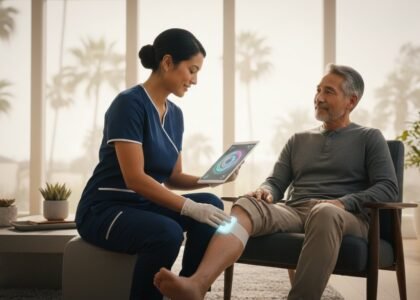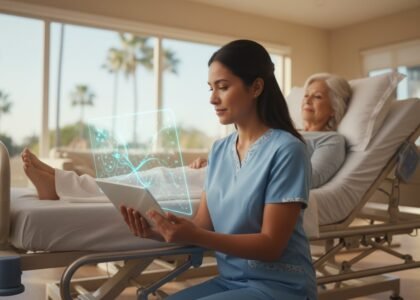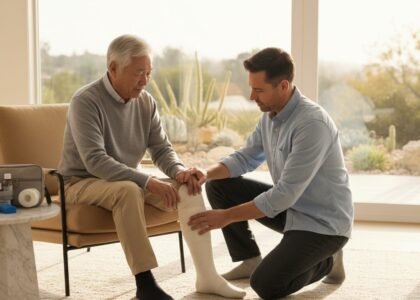

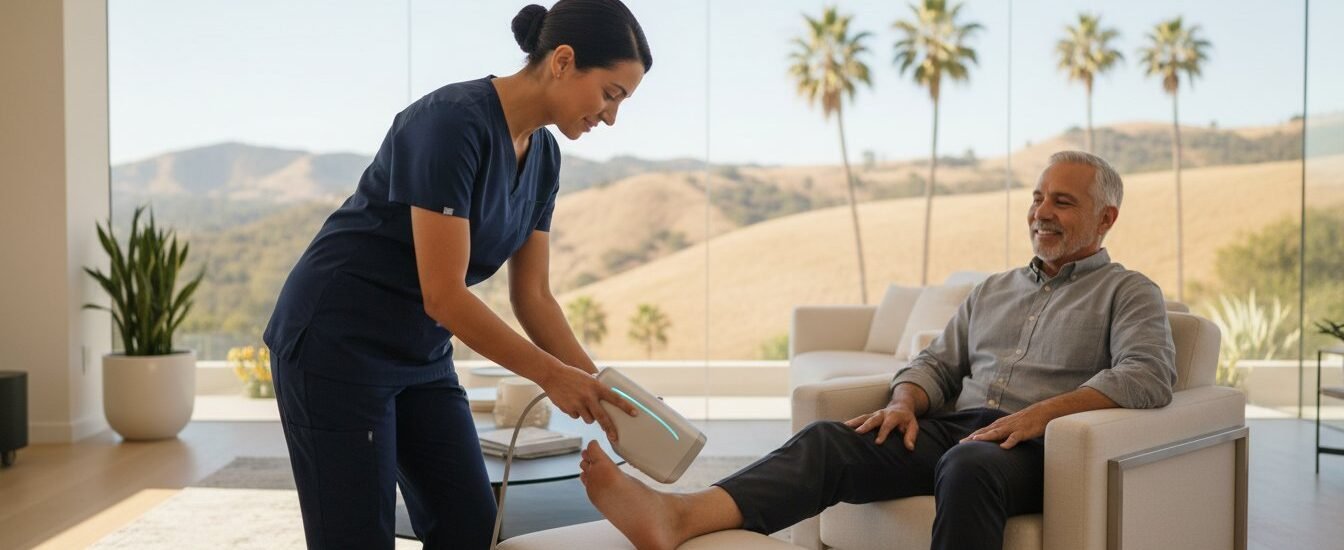
The most advanced surgical-grade wound care no longer happens within the walls of a hospital. Finding a reliable wound doctor in Southern California has traditionally meant enduring a 90-minute crawl along the 405 just to receive a brief consultation. You’ve likely felt the frustration of a fragmented system where your recovery feels secondary to hospital logistics. It’s a common struggle to balance the urgent need for healing with the reality of a healthcare model that hasn’t evolved to meet your lifestyle or your need for specialized attention.
This guide empowers you to bypass the clinical bottleneck and reclaim your vitality. You’ll discover how to identify elite specialists who bring regenerative technology, such as amniotic tissue grafts, directly to your bedside. We’ll show you how to secure a 360-degree recovery plan designed for the 2026 landscape, where your home becomes the center of a sophisticated medical ecosystem. By focusing on personalized optimization, these modern providers can accelerate healing times by 40% compared to traditional outpatient clinics. We’ll outline the essential markers of a provider who prioritizes both clinical excellence and your long-term longevity.
Key Takeaways
- Identify the essential credentials and regenerative expertise required to secure elite-level wound management in today’s evolving medical landscape.
- Navigate the logistical challenges of Los Angeles and Orange County by finding a reliable wound doctor in Southern California who brings advanced clinical care directly to your doorstep.
- Evaluate the transformative impact of cutting-edge modalities like amniotic membrane grafts and NPWT on your personal recovery and long-term tissue optimization.
- Utilize our comprehensive clinical checklist to distinguish between traditional clinic models and the superior precision of a mobile, visionary health architect approach.
The Landscape of Specialized Wound Care in Southern California
Finding a reliable wound doctor in Southern California requires looking beyond basic clinical credentials. In the 2026 medical environment, reliability is defined by a provider’s ability to integrate real-time biomarkers with advanced regenerative therapies. You need a partner who views your recovery through a lens of longevity, ensuring that a closed wound stays closed. While over 420 specialized wound care facilities now dot the map from Glendale to Irvine, the quality of outcomes remains highly variable. True expertise isn’t just about presence; it’s about a 360-degree view of your biological health that anticipates complications before they manifest. This approach treats the wound as a symptom of a larger systemic imbalance, focusing on vascular optimization and nutritional biomarkers to secure peak performance for your body’s natural repair mechanisms.
Why General Practitioners May Not Be Enough
Primary care physicians serve as vital health anchors, yet chronic wounds demand a different level of precision. Complex conditions like diabetic foot ulcers or stage 4 pressure injuries often stall because they disrupt the wound healing process at a cellular level. Standard bandages and ointments can’t address the underlying ischemia or biofilm issues that prevent tissue regeneration. Specialized wound doctors utilize tissue-based products and placental-derived grafts to jumpstart cellular activity. Without these advanced interventions, a wound can remain in a stagnant state for months, increasing the risk of systemic infection by 40%.
The Southern California Access Challenge
The vast geography of the Southland creates a unique paradox for patients. In areas like Los Angeles and Orange County, the density of clinics is high, yet traffic patterns and transit times often lead to a 15% missed appointment rate for elderly patients. These delays aren’t just inconvenient; they’re dangerous. Every missed debridement or graft application allows bacteria to recolonize the site. The healing gap is the measurable loss of regenerative momentum caused by inconsistent access to specialized care within a patient’s local micro-region. When you’re finding a reliable wound doctor in Southern California, proximity must be balanced with a provider’s ability to offer streamlined, proactive scheduling that respects your time and your health goals.
Defining Reliability: What to Look for in a Specialist
Finding a reliable wound doctor in Southern California requires looking beyond basic medical licenses. You need a partner who views health through a 360-degree lens of longevity and biological optimization. Start by verifying board certification in wound management or surgical specialties like podiatry or vascular surgery. This ensures the practitioner has mastered the specific mechanics of tissue repair. When you research how to evaluate a potential doctor, focus on their ability to explain complex biological data in a way that aligns with your personal health goals. Reliability is found at the intersection of clinical excellence and administrative transparency.
The Role of Regenerative Medicine
In 2026, the standard of care has evolved from passive dressings to active cellular intervention. Leading specialists prioritize the use of skin substitutes to accelerate the body’s innate healing mechanisms. Amniotic allografts represent the gold standard for non-healing diabetic ulcers because they provide a scaffold of growth factors and cytokines. This shift moves the needle from simply managing a wound to optimizing the body’s cellular response. Clinical data suggests these advanced grafts can reduce healing times by 40% compared to traditional protocols, turning a chronic condition into a manageable path toward peak performance.
Clinical Authority and Credentialing
Precision dictates the pace of recovery. A reliable specialist demonstrates mastery over complex surgical debridement, a process that removes necrotic tissue to reveal healthy, viable margins. You should look for a doctor who maintains a robust multidisciplinary network of vascular, podiatry, and internal medicine experts. Bedside assessments often provide a more accurate clinical picture than traditional office visits. By evaluating a patient in their own environment, the physician can identify environmental triggers or lifestyle barriers that might hinder recovery. This level of scrutiny ensures that no detail of your health is overlooked.
Reliability also involves seamless logistical coordination. Your specialist should have a proven track record with Medicare Part B and private insurance to ensure your focus remains on recovery rather than paperwork. A data-driven approach identifies potential complications, such as infection or ischemia, before they manifest as crises. This proactive stance is the hallmark of a visionary health architect. When you’re committed to finding a reliable wound doctor in Southern California, prioritize those who treat your recovery as a high-stakes engineering project. If you’re ready to experience this level of precision, you can explore personalized care plans designed to restore your vitality and long-term wellness.
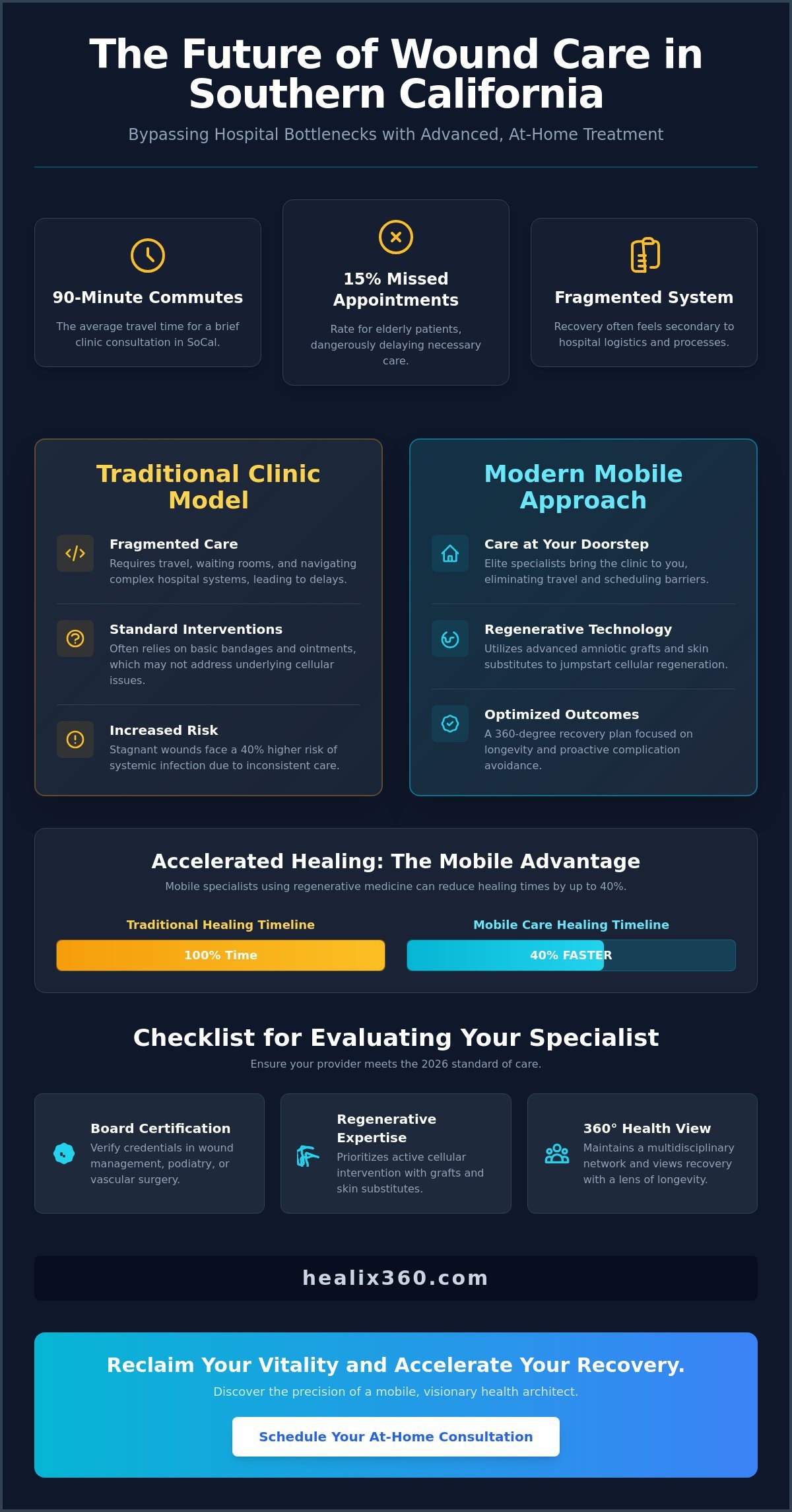
Hospital vs. Mobile Care: Navigating the SoCal Health Barrier
Southern California’s geography presents a unique challenge for patients requiring consistent wound management. Traditional clinic models require patients to endure the psychological and physical toll of Los Angeles traffic, which often turns a routine visit into a grueling four-hour ordeal. When you’re finding a reliable wound doctor in Southern California, the choice between a stationary facility and a mobile specialist model becomes a pivotal decision for your recovery trajectory. We view healthcare as a concierge experience where the clinical environment adapts to the patient, not the other way around.
The Logistical Advantage of Bedside Treatment
Efficiency is the cornerstone of effective healing. For a patient with limited mobility, a 15-minute debridement procedure shouldn’t necessitate a two-hour commute each way. This logistical friction often leads to missed appointments; mobile care eliminates these barriers entirely. By bringing the clinic to the bedside, providers see a 40% increase in patient compliance with treatment protocols compared to traditional office-based visits. This model also allows specialists to evaluate the patient’s natural environment, identifying home-based triggers such as improper seating or nutritional gaps that might impede tissue regeneration. It’s a 360-degree approach that integrates seamlessly into your lifestyle.
Safety and Infection Control
A common misconception suggests that home-based care lacks the technological sophistication of a hospital. In reality, modern mobile units utilize the same advanced modalities found in top-tier surgical centers. Staying home significantly reduces your exposure to hospital-acquired infections (HAIs), which affect approximately 633,000 patients in U.S. acute care hospitals annually according to CDC data. Our specialists utilize sterile, single-use procedural kits that meet the highest wound care specialist certifications, ensuring hospital-grade safety within your residence. This personalized, one-on-one attention fosters a controlled environment where the risk of cross-contamination is virtually zero.
Finding a reliable wound doctor in Southern California who prioritizes this level of individual safety is essential for those with compromised immune systems. Collaboration with home health agencies ensures your recovery remains on track between specialist visits. This integrated network provides continuous monitoring of biomarkers and healing progress, creating a proactive safety net. We don’t just treat a wound; we optimize your entire biological environment for longevity and peak performance, ensuring that every diagnostic detail is addressed with surgical precision.
A Checklist for Evaluating Southern California Wound Specialists
Excellence in clinical outcomes isn’t accidental; it’s the result of rigorous vetting and data-driven selection. Finding a reliable wound doctor in Southern California means looking beyond basic certifications to find a visionary health architect who understands the intersection of biology and lifestyle optimization. Southern California’s 4,800 square miles of urban sprawl make accessibility a primary biomarker for recovery success. Use this checklist to ensure your chosen specialist meets the 2026 benchmark for clinical excellence.
- Mobile Bedside Capability: Does the provider offer full-service mobile visits across Los Angeles and Orange County? Eliminating the stress of transport is essential for maintaining a stable healing environment.
- Advanced Modalities: Verify the use of Negative Pressure Wound Therapy (NPWT) and ultrasonic debridement. These tools are non-negotiable for accelerating tissue regeneration in complex cases.
- Surgical Integration: The specialist must coordinate directly with surgical wound care teams to manage post-operative recovery and prevent dehiscence.
- Medicare Credentialing: Ensure they’re a fully credentialed Medicare provider for professional consultations. This guarantees that your care meets federal quality reporting and safety standards.
- Defined Roadmap: Demand a time-bound plan. A reliable specialist provides a clear 30, 60, or 90-day trajectory for complete wound closure rather than open-ended treatment cycles.
Questions to Ask During Your First Consultation
Your initial meeting is a diagnostic for the provider’s competence. Ask about their specific success rate with chronic bed sores ulcer treatment. Inquire if they utilize regenerative grafts, such as placental-derived biological scaffolds, or if they rely solely on traditional dressings. Finally, ask how they maintain a 360-degree view of your health by communicating with your primary care physician and family through integrated digital portals. This transparency is vital for finding a reliable wound doctor in Southern California who values personal partnership.
Red Flags to Avoid
Avoid providers who suggest a “wait and see” approach for any wound that hasn’t shown 50% closure within 30 days. This passivity often leads to chronic infection and systemic decline. Lack of transparency regarding Medicare reimbursement is another warning sign. If a provider can’t provide a clear breakdown of coverage, they likely lack the administrative infrastructure to support high-level care. Watch for inconsistent follow-up schedules. Healing requires a steady, rhythmic cadence of intervention; any gap longer than 7 days can lead to significant wound regression and lost progress.
Healix360: Elevating the Standard of Care in Southern California
Healix360 operates as a visionary health architect for patients who demand more than traditional clinical outcomes. Our 360-degree approach views the body as an interconnected system where a non-healing wound is often a signal of deeper physiological imbalances. By addressing these systemic factors, we transform the recovery process from simple maintenance into a comprehensive strategy for total-body optimization. Finding a reliable wound doctor in Southern California requires looking beyond basic bandages to find a partner who understands the intricate relationship between tissue repair and long-term vitality.
We specialize in high-stakes cases, offering diabetic ulcer treatment that integrates the latest breakthroughs in regenerative medicine. Our protocols utilize advanced cellular therapies to stimulate the body’s innate healing mechanisms, often achieving closure in wounds that have remained stagnant for months. This methodology ensures that every patient receives a customized roadmap designed to restore mobility and prevent future complications. We invite you to experience a higher level of medical partnership where data-driven science meets personalized attention.
Our Commitment to Longevity and Vitality
We view efficient wound resolution as a critical pillar of your overall longevity strategy. Chronic inflammation from an open wound drains the body’s metabolic resources; resolving these issues is essential for maintaining peak performance as you age. Our team employs bio-engineered skin substitutes to restore peak skin performance, using scaffold technologies that mimic the natural extracellular matrix to accelerate tissue growth. The Healix360 promise combines this elite medical expertise with human-centric warmth, ensuring you feel empowered rather than overwhelmed by your diagnosis. We believe that healing a wound is the first step toward reclaiming your active lifestyle.
How to Get Started with a Mobile Evaluation
Accessing elite care shouldn’t be a logistical burden. We’ve streamlined the process of finding a reliable wound doctor in Southern California by bringing the clinic directly to your door. Our mobile teams provide comprehensive bedside assessments in Glendale, Los Angeles, and surrounding communities, utilizing portable diagnostic tools to evaluate blood flow and tissue oxygenation on-site. This eliminates the stress of transportation and wait times, allowing for a more thorough evaluation in the comfort of your own environment.
Our administrative team manages the complexities of the healthcare system for you. We handle all insurance verifications and Medicare Part B paperwork, allowing you to focus entirely on your recovery. This white-glove service removes the friction often associated with specialized medical care. Take the first step toward transformative healing today by scheduling your initial consultation with our mobile team.
Secure Your Path to Advanced Recovery
Healing is a complex biological process that requires more than just basic care; it demands a 360-degree approach to tissue regeneration. You’ve learned that finding a reliable wound doctor in Southern California means looking for specialists who prioritize both clinical precision and patient mobility. By choosing mobile care, you bypass the logistical barriers of the traditional hospital system, ensuring that your recovery remains consistent and stress-free.
Healix360 operates as a dedicated Medicare Part B Provider, bringing elite medical interventions directly to your door. Our team specializes in the application of regenerative medicine and amniotic grafts, technologies that accelerate cellular repair and optimize long-term outcomes. We serve the Greater Los Angeles and Glendale areas with a commitment to proactive wellness and scientific rigor. You don’t have to navigate the complexities of chronic wound management alone. Our visionary health architects are ready to design a personalized roadmap for your recovery, ensuring you return to your peak performance as quickly as possible.
Your journey toward total-body health starts with a single, decisive step toward better care.
Frequently Asked Questions
Is mobile wound care in Southern California covered by Medicare?
Medicare Part B covers 80% of the allowable costs for mobile wound care when a physician certifies the service is medically necessary. This coverage includes clinical assessments and advanced dressings provided during home visits. You’re responsible for the remaining 20% after meeting your annual deductible, which is $240 in 2024. Our team coordinates directly with Medicare to ensure your treatment plan aligns with their established 90-day certification periods.
Can a mobile wound doctor perform debridement at my home?
Mobile wound specialists perform sharp, enzymatic, and autolytic debridement directly at your bedside using sterile, portable instrumentation. This procedure is essential for removing necrotic tissue that stalls the healing process in 70% of chronic wounds. By eliminating the need for hospital transfers, we optimize the wound bed immediately. This approach accelerates the transition to the proliferative phase of healing without the stress of traditional clinical travel.
How do I know if my wound requires a specialist instead of a regular doctor?
You should transition to a specialist if a wound fails to reduce in size by 50% within four weeks of standard care. Primary care providers often lack the specialized biomarkers and advanced graft technologies required for complex cases. Finding a reliable wound doctor in Southern California ensures you receive targeted therapy for underlying vascular issues. Early intervention by a specialist reduces the risk of amputation by 85% in high-risk populations.
What is the fastest way to heal a chronic diabetic ulcer?
Rapid healing of diabetic ulcers requires a 360-degree approach focusing on pressure offloading and glycemic control below a 7.0 A1c level. Utilizing cellular and tissue-based products can increase closure rates by 40% compared to traditional gauze. We monitor your microcirculation using non-invasive diagnostic tools to ensure tissues receive adequate oxygen. This integrative strategy transforms the cellular environment, moving the ulcer from a chronic state to complete resolution and peak performance.
What areas of Southern California do mobile wound specialists typically serve?
Mobile wound specialists provide coverage across the 34,000 square miles of the Southern California region, including Los Angeles, Orange, and Riverside counties. Finding a reliable wound doctor in Southern California often involves selecting a provider with a localized fleet for rapid response. Most elite services guarantee a clinician will arrive at your residence within 48 hours of your initial consultation request. This ensures that your journey toward longevity isn’t delayed by traffic or scheduling barriers.
What happens if a wound doesn’t heal within 30 days?
Wounds that don’t reach significant closure within 30 days are classified as chronic and require an immediate diagnostic pivot. At this stage, the risk of localized infection or bone involvement increases by 25%. We perform deep tissue cultures and vascular studies to identify hidden barriers to recovery. This data-driven intervention prevents the wound from becoming a long-term threat to your mobility and overall health architecture.
Can mobile wound specialists help with edema in legs and venous ulcers?
Mobile specialists utilize multi-layer compression wraps and mechanical pumps to manage edema in legs and associated venous ulcers. Effective treatment reduces fluid volume by 30% within the first two weeks of therapy. By addressing the underlying venous insufficiency, we prevent the recurrence of ulcers in 90% of patients. This proactive care model focuses on restoring vascular health and enhancing your daily quality of life through scientific rigor.
Is a referral always necessary to see a wound specialist in California?
A referral depends on your specific insurance architecture; PPO members often bypass this step for direct access to specialists. However, HMO patients typically need a formal authorization from their primary care physician to ensure coverage. California law allows for direct access in some clinical scenarios, but specialized wound interventions usually require a coordinated medical order. We assist in navigating these administrative requirements to streamline your path to transformative results.