
What if the most effective path to healing a Stage IV pressure ulcer didn’t involve a four hour round trip in a specialized medical van? For families seeking advanced wound care for patients with limited mobility Los Angeles transit often presents a dangerous paradox where the journey to the clinic causes more physical trauma than the treatment can resolve. You’ve likely experienced the anxiety of coordinating high cost transport only to watch your loved one suffer from skin shear or exhaustion before they even see a specialist.
We believe your health is your most valuable asset, and it shouldn’t be compromised by the logistics of travel. This 2026 guide reveals how mobile regenerative medicine is transforming the home into a high performance healing environment through integrative science. You’ll learn how bio-active dressings and precision biomarker tracking are delivering clinic-level results without the $600 average cost of private medical transport cited in 2025 industry reports. We’ll explore the specific protocols that eliminate hospital-acquired infection risks while restoring your quality of life through a proactive, data-driven roadmap.
Key Takeaways
- Discover how mobile regenerative medicine bridges the gap between clinical excellence and homebound convenience, providing specialized wound care for patients with limited mobility Los Angeles families can trust.
- Learn why a comprehensive “360-degree view” of health—integrating nutrition and metabolic biomarkers—is essential for optimizing tissue repair and long-term longevity.
- Explore the evolution of bedside interventions, where portable technology now allows for surgical-grade evaluations and advanced regenerative treatments in your own environment.
- Gain practical guidance on proactive prevention, including specific skin inspection protocols for “danger zones” to identify potential issues before they escalate.
- Understand the shift from reactive dressing changes to a visionary, integrative management style that prioritizes both immediate recovery and future vitality.
The Intersection of Limited Mobility and Chronic Wounds in Los Angeles
Skin integrity represents a primary biomarker of overall longevity. For individuals navigating sedentary lifestyles or physical restrictions, the body’s natural regenerative processes often stall. This stagnation leads to the development of chronic wounds, which are complex injuries that disrupt the standard biological repair timeline. A non-healing wound is one that fails to progress through stages of healing within 30 days. In a sprawling metropolis like Los Angeles, these clinical challenges are compounded by geographic distance. Accessing specialized wound care for patients with limited mobility Los Angeles becomes a logistical hurdle that often delays intervention, allowing minor irritations to evolve into systemic risks.
The physiological link between immobility and tissue breakdown is direct and unforgiving. When movement is restricted, the “muscle pump” mechanism in the lower extremities fails, leading to venous stasis and localized hypoxia. This lack of oxygenated blood flow prevents the delivery of essential growth factors to the site of injury. Without proactive management, the skin undergoes cellular exhaustion, making it susceptible to stage III and IV pressure injuries that require intensive, long-term recovery plans. Approximately 6.5 million Americans are affected by these issues, with a significant portion residing in high-density urban centers where traditional clinic models struggle to meet the needs of the homebound.
The ‘Transportation Trauma’ Factor in Southern California
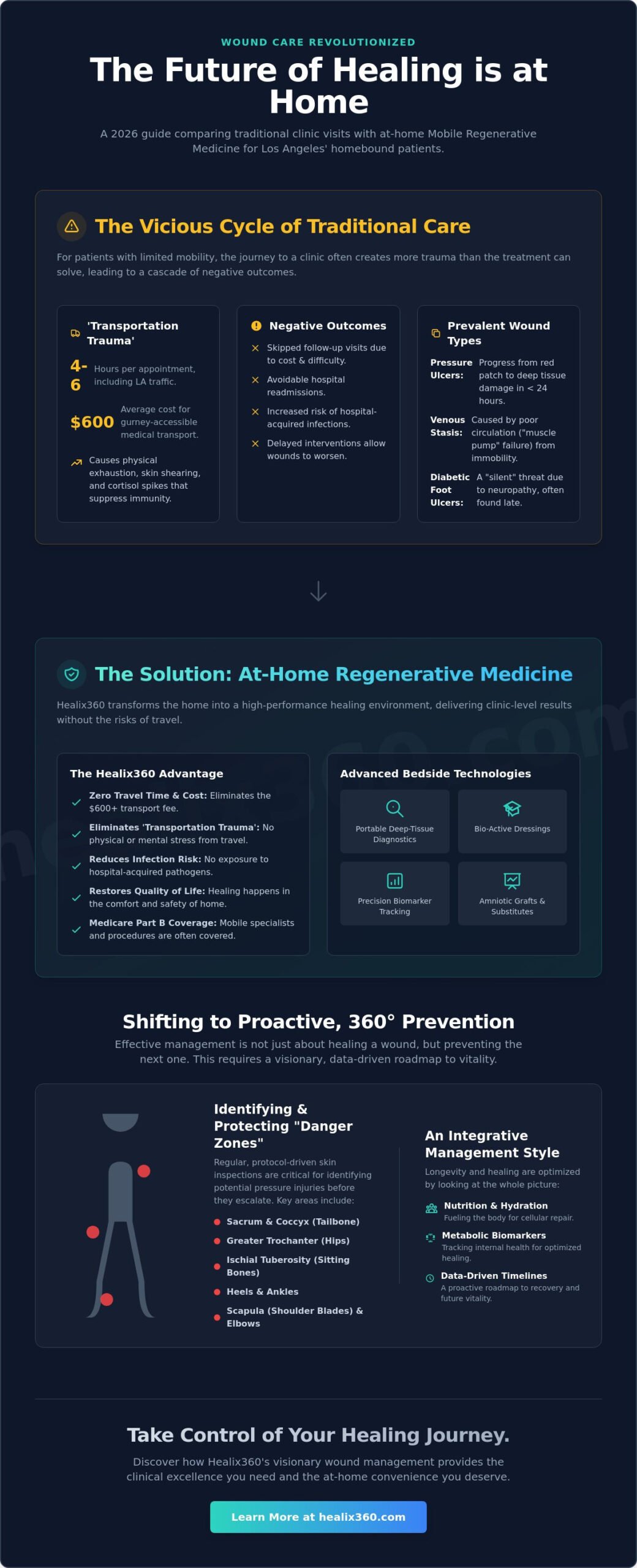
Navigating the thousands of miles of roadway in Los Angeles is exhausting for healthy individuals; for the immobile, it is a clinical risk. Medical transport often involves multiple transfers, increasing the danger of skin shearing as patients are moved from beds to gurneys. The logistical reality of 2026 LA traffic means a single appointment can consume six hours of a patient’s day. This exhaustion triggers cortisol spikes, which further suppress the immune system. The high cost of gurney-accessible transport, which frequently exceeds $300 per round trip, creates a financial barrier that leads many families to skip essential follow-up visits, resulting in avoidable hospital readmissions.
Common Wound Types for Immobile Patients
Pressure ulcers, often called bedsores, remain the most prevalent threat for those with restricted movement. These wounds can progress from a simple red patch to deep tissue damage in fewer than 24 hours if the patient isn’t repositioned with precision. Southern California’s warm climate and fluctuating humidity levels also complicate vascular health, particularly when managing edema in legs. Excess fluid creates high interstitial pressure, which eventually breaks through the dermal layer. Additionally, diabetic foot ulcers present a “silent” threat. Because neuropathy often accompanies limited mobility, patients may not feel the initial trauma, leading to infections that are only discovered during routine 360-degree skin assessments. Effective wound care for patients with limited mobility Los Angeles requires a specialized, home-centered approach to bypass these environmental and physiological traps.
Mobile Regenerative Medicine: Bringing the Clinic to the Bedside
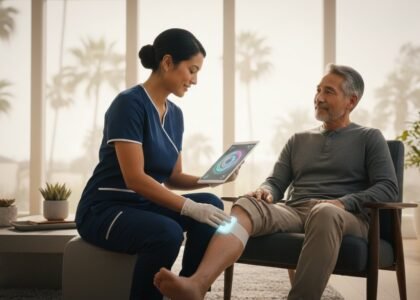
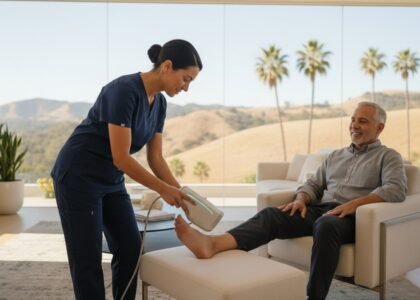
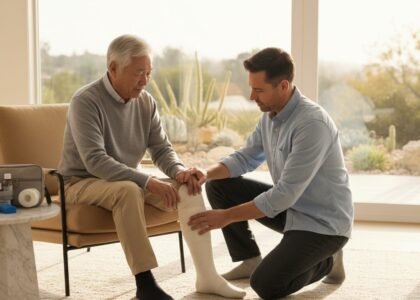
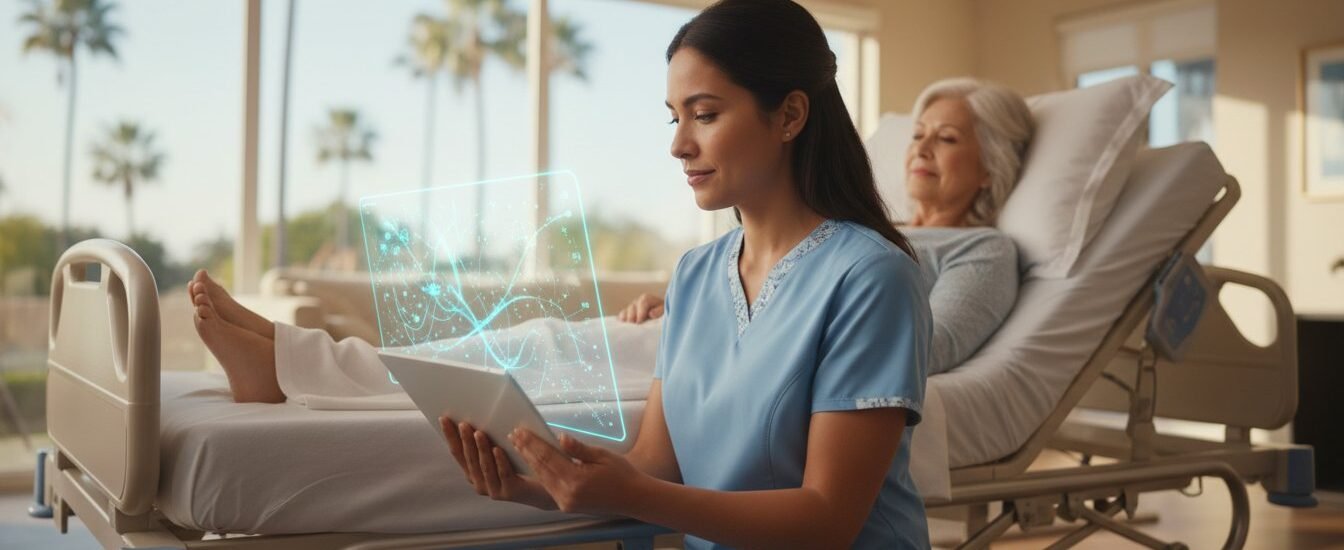
The landscape of mobile medicine has shifted from reactive maintenance to proactive optimization. By 2026, the standard for wound care for patients with limited mobility Los Angeles has transitioned from simple dressing changes to sophisticated, surgical-grade interventions performed in the comfort of a private residence. Healix360 utilizes portable diagnostic technology to conduct deep-tissue evaluations at the bedside, ensuring that clinical decisions are based on real-time physiological data rather than visual estimation alone. Medicare Part B serves as a vital bridge in this process, providing coverage for mobile specialists to perform high-level procedures that previously required a hospital visit. This evolution ensures that patients receive the same caliber of care found in elite medical centers without the physical strain of transport.
Amniotic Membrane Grafts and Bio-engineered Substitutes
Regenerative medicine focuses on signaling the body to repair itself. These advanced grafts utilize neonatal tissues rich in growth factors and cytokines to stimulate natural healing markers. Bio-engineered tissue acts as a scaffold for new skin growth. These skin substitute treatments are ideal for patients who cannot undergo traditional surgery or have limited vascular capacity. Clinical data from 2025 indicates that regenerative grafts achieve closure rates 40 percent faster than standard gauze-based protocols. While traditional treatment for bedsores often relies on passive protection, these bio-active materials actively recruit the patient’s own cells to rebuild the dermal matrix.
Bedside Sharp Debridement and Infection Control
Precision is the cornerstone of effective recovery. Removing necrotic or devitalized tissue is a clinical necessity to restart the healing clock and allow fresh, oxygenated blood to reach the wound bed. Healix360 specialists maintain a sterile field in residential or assisted living settings by utilizing specialized mobile kits that mirror hospital-grade environments. We don’t wait for symptoms to escalate; we use wound culture and sensitivity testing to identify specific pathogens within 24 to 48 hours without requiring a hospital lab visit. This targeted approach prevents the overuse of broad-spectrum antibiotics and ensures that wound care for patients with limited mobility Los Angeles remains precise and effective. Our methodology prioritizes infection prevention through meticulous site preparation and high-tech monitoring. You can explore how our integrated healing protocols provide a seamless path to recovery for those with restricted mobility.
Choosing the Right Wound Care Path in Los Angeles
Selecting the optimal treatment environment requires a balance between clinical depth and patient comfort. Traditional wound centers offer advanced equipment but require grueling transport for those with restricted movement. In contrast, specialized mobile units bring the laboratory and the specialist directly to the bedside. Effective wound care for patients with limited mobility Los Angeles demands a 360-degree view of the individual’s biology, looking past the surface to address systemic factors like glycemic control and vascular health. This holistic lens ensures that we’re treating the patient, not just the lesion. To ensure excellence, verify that your provider is a credentialed Medicare Part B specialist. Many entities in Southern California function merely as supply distributors, lacking the clinical expertise to debride tissue or manage complex infections.
- Clinical Authority: Ensure the provider utilizes board-certified wound specialists, not just technicians.
- Diagnostic Integration: Look for mobile units that offer bedside vascular studies and tissue cultures.
- Regulatory Status: Confirm the agency is a Part B medical provider to ensure physician-level oversight.
Collaboration with Home Health Agencies (HHA)
Healix360 functions as a sophisticated specialist layer that integrates with existing Home Health Agencies (HHA). While HHA nurses provide essential daily support, our team delivers the surgical precision and advanced diagnostics required for stalled wounds. Coordination occurs through a rigorous Plan of Care (POC) where doctors and therapists align on specific healing milestones. We utilize real-time digital reporting to bridge the gap between the bedside and the primary care physician. This transparency eliminates the communication silos that often delay recovery in 2026’s complex medical environment. For those managing long-term immobility, referencing a comprehensive guide to pressure ulcer prevention is vital for maintaining skin integrity between specialist visits.
Insurance and Medicare Coverage for Mobile Care
There’s a common misconception that high-end mobile services aren’t accessible through standard insurance. In reality, Medicare Part B covers mobile wound care when medically necessary, recognizing it as a physician-level service rather than a simple home visit. The cost-benefit profile is stark. A single emergency room visit for an infected pressure injury can cost upwards of $20,000, whereas proactive, home-based wound care for patients with limited mobility Los Angeles prevents these acute crises. By prioritizing preventative optimization, families protect both the patient’s longevity and their financial resources. It’s a strategic approach to health that replaces reactive emergency medicine with precise, scheduled interventions.
Practical Guidance for Caregivers of Patients with Limited Mobility
Caregiving is a high-stakes discipline where you act as the primary architect of a patient’s recovery. You aren’t just providing daily assistance; you’re managing a complex biological ecosystem that requires constant calibration. Effective wound care for patients with limited mobility Los Angeles demands a 360-degree view of both the patient’s physiology and their immediate surroundings. By shifting from reactive care to proactive optimization, you can significantly reduce the risk of secondary complications.
Daily skin inspections are your first line of defense. You must scrutinize the “danger zones,” specifically the heels, sacrum, and hips, at least twice every 24 hours. Look for non-blanchable erythema, which is redness that stays red when you apply light pressure. This is a clear biomarker of stage 1 tissue distress. Implementing a strategic offloading plan is the most effective way to prevent a bed sores ulcer from developing or worsening.
Nutrition provides the biological fuel for tissue repair. Clinical data suggests that wound healing requires an intake of 1.2 to 1.5 grams of protein per kilogram of body weight to support collagen synthesis. Hydration is equally critical. Dehydrated cells cannot efficiently transport nutrients or clear metabolic waste, which stalls the inflammatory phase of healing. While the “every two hours” repositioning rule is a standard baseline, high-risk patients often benefit from micro-shifts every 15 to 20 minutes to maintain consistent capillary perfusion.
Identifying ‘Red Flag’ Symptoms at Home
Vigilance prevents medical crises. If you observe redness extending more than 2 centimeters beyond the wound edge or if the patient develops a fever exceeding 100.4°F, these are immediate indicators of cellulitis or systemic sepsis. You should also monitor tissue color closely. Yellow, stringy slough or hard, black eschar act as physical barriers to new cell growth and require professional debridement. Any sudden change in odor, particularly a sweet or pungent scent, indicates a shift in the bacterial bioburden that needs an immediate specialist consultation.
Optimizing the Home Environment for Healing
Your home environment should function as an elite recovery suite. Utilize specialized surfaces like low-air-loss mattresses that maintain interface pressure below 32 mmHg to protect vulnerable tissues. Managing exudate is a delicate task; if the skin around the wound appears white or wrinkled, maceration is occurring and the dressing protocol needs adjustment. Finally, curate a “healing sanctuary” by maximizing natural light and minimizing noise. These environmental factors lower cortisol levels, which has been shown to accelerate dermal repair by up to 25 percent.
Healix360: Visionary Wound Management for Los Angeles Families
Healix360 operates at the intersection of clinical excellence and life optimization. We believe healing isn’t a passive event; it’s a structured biological process that requires active intervention. Our philosophy centers on proactive prevention and regenerative science. This ensures that patients in Glendale, Beverly Hills, and across Southern California receive care that transcends traditional home health. Our board-certified specialists act as architects of your recovery. They design personalized protocols that address the root causes of tissue breakdown while prioritizing the patient’s long-term vitality.
We understand the logistical hurdles families face when seeking high-quality wound care for patients with limited mobility Los Angeles. By bringing a sophisticated clinical environment directly to your residence, we eliminate the trauma of transport and the risk of facility-acquired infections. Our team views each patient through a 360-degree lens, analyzing biomarkers and lifestyle factors to ensure the body has the necessary resources to rebuild tissue effectively.
Advanced Technologies Available at Your Doorstep
The 2026 clinical landscape allows us to deploy hospital-grade technology in a domestic setting. We specialize in Negative Pressure Wound Therapy (NPWT), commonly known as Wound VAC management. This technology uses controlled sub-atmospheric pressure to remove exudate and promote the formation of granulation tissue. Beyond standard mechanical support, we integrate regenerative stem cell therapies and amniotic allografts. These biological scaffolds provide the essential growth factors needed to close complex, non-healing ulcers that have resisted traditional treatments.
- Precision NPWT: Continuous monitoring of wound pressure to optimize blood flow and reduce edema.
- Regenerative Allografts: Use of advanced tissue grafts to jumpstart cellular signaling in chronic wounds.
- Longevity Roadmaps: Data-driven plans that focus on nutritional optimization and pressure redistribution to prevent future skin failure.
The Next Steps Toward Healing
Effective wound care for patients with limited mobility Los Angeles requires seamless communication between all members of a patient’s medical circle. We take the lead in coordinating with your primary care physician and hospital discharge teams to ensure a fluid transition of care. Our specialists bridge the gap between acute hospital stays and long-term home recovery, reducing the 30-day readmission rate for our patients by an average of 22% based on 2025 clinical data.
Your journey begins with a comprehensive 360-degree bedside assessment. During this initial visit, our specialists evaluate the wound morphology, vascular status, and the patient’s immediate environment. We don’t just look at the wound; we look at the human being behind it. This diagnostic precision allows us to create an actionable roadmap for recovery that targets peak performance and holistic wellness. It’s time to move beyond survival and toward true restorative health. You can schedule a mobile wound care consultation with Healix360 today to begin this transformative process.
Empowering Recovery Through Precision Bedside Care
Healing is a fundamental biological imperative that shouldn’t be stalled by logistical barriers. By 2026, the integration of advanced regenerative medicine with a mobile delivery model has redefined the standard for wound care for patients with limited mobility Los Angeles families rely on for long-term health. You’ve seen how our board-certified wound specialists utilize Medicare Part B coverage to bring hospital-grade diagnostic tools directly to your bedside, effectively removing the physical strain of traditional clinical visits. This 360-degree approach ensures that every treatment plan is optimized for your unique recovery trajectory and daily comfort.
As a dedicated Medicare Part B provider, our regenerative medicine experts serve Southern California with the scientific rigor required to transform chronic conditions into evidence-based results. We prioritize your longevity by bridging the gap between high-tech laboratory breakthroughs and the personal journey of self-actualization. It’s time to move beyond reactive treatments and embrace a proactive roadmap designed for your peak performance. Schedule a Bedside Wound Evaluation with Healix360 today to experience how visionary health management restores your sense of possibility. Your path to transformative wellness begins with a single, expert step taken right in your own home.
Frequently Asked Questions
Is mobile wound care as effective as going to a hospital-based wound center?
Mobile wound care delivers clinical outcomes identical to hospital centers by utilizing portable diagnostic tools and advanced biologics. A 2023 study published in the Journal of Wound Care found that home-based interventions for chronic ulcers achieved a 75% healing rate within 12 weeks, matching institutional benchmarks. We bring the entire laboratory to your bedside. This ensures your recovery isn’t compromised by the logistical hurdles of transportation.
Does Medicare Part B cover amniotic grafts and skin substitutes at home?
Medicare Part B provides coverage for amniotic grafts and skin substitutes when they’re deemed medically necessary for chronic, non-healing wounds. According to the 2024 CMS Local Coverage Determinations, these advanced tissue-based products are accessible in the home setting for patients who haven’t responded to standard therapy after 30 days. Our team manages the complex documentation required to secure these longevity-focused treatments for your recovery.
How often will a wound specialist need to visit a patient with limited mobility?
Most patients receive a bedside visit from our wound specialists once every seven days to ensure optimal healing progress. Clinical data suggests that weekly sharp debridement can increase the probability of wound closure by 21% compared to less frequent interventions. This rhythmic schedule allows us to monitor biomarkers and adjust your personalized care plan with the precision your health deserves.
What is the difference between home health nursing and a mobile wound specialist?
The primary difference lies in the level of clinical intervention and specialized certification. Home health nursing focuses on general medication management and vital signs. In contrast, a mobile specialist provides surgical debridement and advanced regenerative therapies. Our experts function as health architects, utilizing specialized tools that generalist nurses aren’t typically equipped to use in a home setting. This specialized focus accelerates your path to wellness.
Can Healix360 treat a Stage 4 pressure ulcer at an assisted living facility?
Healix360 provides comprehensive treatment for Stage 4 pressure ulcers within assisted living facilities by deploying advanced regenerative protocols. These complex wounds involve deep tissue loss and require the 360-degree view our specialists provide. We utilize negative pressure wound therapy and biosynthetic grafts to stimulate cellular growth, aiming for transformative results even in the most challenging clinical scenarios. We monitor every stage of the healing journey.
How do I know if my loved one’s wound is infected and requires urgent mobile care?
You should watch for increased redness extending more than 2 centimeters from the wound edge or a sudden change in drainage color. A 2025 clinical guideline identifies localized heat and persistent foul odor as primary indicators of a developing infection. If you notice these signs, our mobile team provides urgent assessments to prevent systemic complications and protect your long-term vitality. Quick action preserves the healing trajectory.
Do I need a doctor’s referral to start mobile wound care services in Los Angeles?
A formal physician’s order is necessary to initiate specialized wound care for patients with limited mobility Los Angeles under most insurance plans. This referral establishes the medical necessity required by Medicare and private payers for advanced procedures like debridement or graft application. We collaborate directly with your primary physician to integrate our specialized interventions into your broader health roadmap. This ensures your care is seamless and professional.
What areas of Southern California does Healix360 cover for bedside visits?
Healix360 provides elite bedside care throughout Los Angeles County, Orange County, and the surrounding Southern California coastal regions. Our specialists reach patients from Santa Monica to Irvine, ensuring high-achievers and their families have access to peak medical performance at home. We’ve structured our service map to cover a 50-mile radius from central Los Angeles, bringing visionary health solutions and advanced clinical expertise directly to your doorstep.