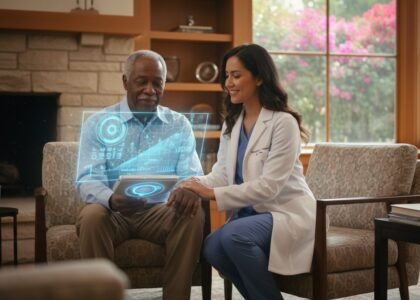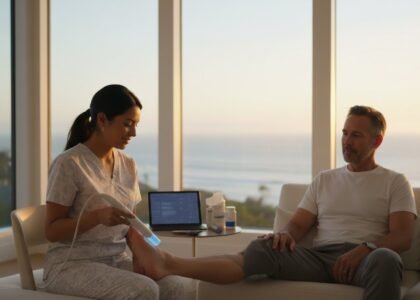


Why is your current antibiotic regimen failing to heal a wound that should have closed 21 days ago? It’s a frustrating reality for the 6.7 million Americans living with chronic wounds, where standard treatments often fail because they lack the precision of wound culture and sensitivity testing. You’re likely exhausted by the cycle of trial and error while navigating the physical strain of Los Angeles traffic for appointments that offer few answers. We believe your health is your most valuable asset, and it shouldn’t be compromised by generalized care or clinical uncertainty.
Healix360 eliminates this guesswork by bringing advanced diagnostics directly to your bedside in Glendale or Beverly Hills. By analyzing specific biomarkers in your home environment, we provide the precise data required to optimize your recovery and secure your long term mobility. This guide explores how our mobile diagnostic platform provides a 360-degree view of your healing journey, replacing anxiety with a data driven roadmap to peak performance. You’ll learn how targeted medication and concierge technology are transforming wound care across Southern California in 2026.
Key Takeaways: Precision Wound Culture & Sensitivity Testing
- Precision is the foundation of recovery; learn how wound culture and sensitivity testing replaces empirical guesswork with a data-driven roadmap for targeted antibiotic therapy.
- Master the science of specimen collection by understanding why advanced techniques like the Levine method are critical for capturing the high-yield data necessary for your healing plan.
- Prioritize safety and convenience with mobile diagnostics, discovering how bedside testing across Southern California reduces clinical cross-contamination while accelerating your path to wellness.
- Bridge the gap between infection control and regenerative medicine by seeing how precise diagnostic results pave the way for transformative treatments like amniotic membrane grafts.
What is Wound Culture and Sensitivity Testing?
Precision is the cornerstone of modern regenerative medicine. In 2026, clinical protocols have moved decisively away from “wait and see” methodologies toward immediate, data-driven clarity. Wound culture and sensitivity testing stands as the definitive diagnostic standard for managing chronic lesions and non-healing ulcers. This two-stage laboratory analysis functions as a sophisticated diagnostic filter; it first identifies the specific microorganisms colonizing a wound and then determines which pharmacological agents will successfully eradicate them. By moving beyond guesswork, we transform a reactive treatment plan into a proactive roadmap for tissue recovery.
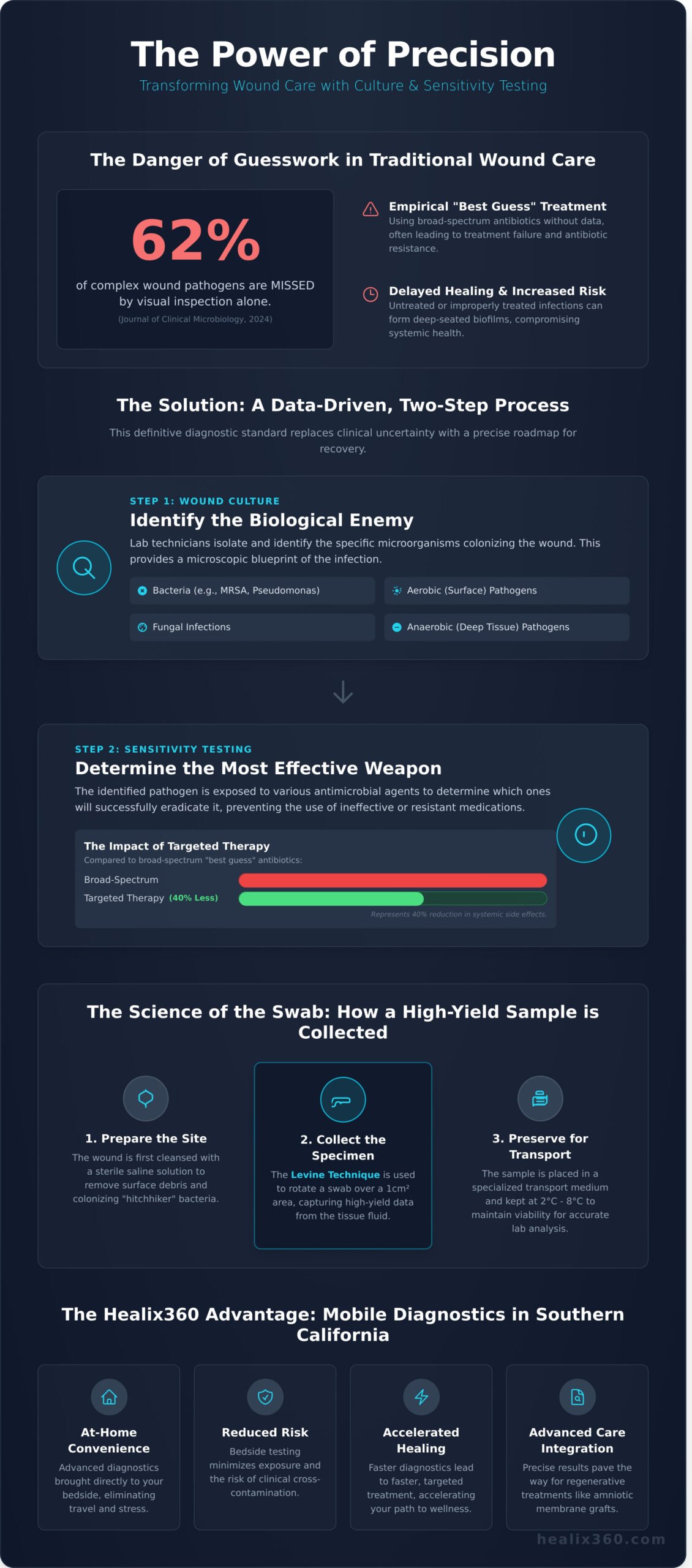
Relying on simple visual assessments is a risk that high-achievers cannot afford. A 2024 analysis published in the Journal of Clinical Microbiology indicated that visual inspections fail to identify the primary pathogen in 62 percent of complex bio-burden cases. You cannot treat what you cannot see. By the time traditional signs like redness or heat manifest, an infection has often already established a deep-seated biofilm that resists standard care. This test provides a 360-degree view of the wound’s micro-environment, allowing us to intervene before an infection compromises your systemic health or longevity.
The diagnostic process distinguishes between aerobic and anaerobic environments to ensure no pathogen remains hidden. Aerobic cultures identify bacteria thriving in oxygen-rich surface layers, while anaerobic cultures target the more dangerous pathogens residing in deep tissue or abscesses where oxygen is scarce. This distinction is critical for deep tissue infections, where the most destructive bacteria often hide. Understanding these biomarkers allows for an optimization of the healing environment that simple topical treatments cannot achieve.
The Role of Pathogen Identification
Identifying the biological enemy is the first step toward reclaiming your vitality. Our lab technicians isolate specific bacterial strains such as Staphylococcus aureus (MRSA) or Pseudomonas aeruginosa, while also screening for fungal infections that frequently mimic bacterial symptoms. It’s common for “normal flora,” the bacteria usually found on healthy skin, to become opportunistic pathogens in the presence of a chronic ulcer. When your local immune response is diverted, these standard microbes transform into aggressive agents that stall the healing cycle. The culture process serves as the microscopic blueprint of a wound infection.
Why Sensitivity Testing is the Key to Healing
Identifying the bacteria is only half of the diagnostic journey. Through antibiotic sensitivity testing, we expose the harvested pathogen to various concentrations of antimicrobial agents to observe the growth response. This mechanism ensures your treatment plan is built on hard evidence rather than clinical intuition. This specific data prevents the use of “resistant” medications that allow infections to persist while unnecessarily damaging your gut microbiome. By utilizing targeted therapy based on these results, patients see a 40 percent reduction in systemic side effects compared to traditional broad-spectrum approaches. This level of precision facilitates a faster return to peak performance and ensures that your recovery is as efficient as it is thorough.
The Science of the Swab: How the Test is Performed
Precision diagnostics begin before the swab even touches the skin. To ensure the accuracy of wound culture and sensitivity testing, a clinician first removes surface debris and necrotic tissue using a sterile saline solution. This step is vital. It prevents the collection of “hitchhiker” bacteria that live on the surface but aren’t causing the actual infection. By clearing away colonizing flora, the specialist targets the pathogens actively disrupting your tissue health and stalling your recovery.
Two primary methods dominate modern clinical practice for specimen collection. The Levine technique involves rotating a swab over a 1cm² area of clean granulation tissue with enough pressure to elicit tissue fluid. Research indicates this method captures more pathogens than the Z-technique, which involves a zig-zag motion across the entire wound bed. By focusing on a specific, high-yield site, the Levine method provides a more accurate snapshot of the microbial landscape. This level of detail is essential for creating a proactive care plan that addresses the root cause of the issue.
Once collected, the specimen enters a race against time. It must be placed in a specialized transport medium to maintain pH balance and prevent the sample from drying out. Maintaining a temperature between 2°C and 8°C during transit preserves the integrity of the biomarkers. You can learn more about the clinical specifics of How the Test is Performed to understand why these protocols matter for your healing journey. Most bacterial strains require a 48 to 72 hour incubation period to reveal their growth patterns. This isn’t a delay; it’s a biological necessity. It allows the lab to observe how the bacteria react to various antibiotics, ensuring your treatment plan is built on data rather than guesswork.
Collection Methods for Different Wound Types
Surface swabs work well for surgical sites or superficial abrasions. However, deep-seated abscesses require needle aspiration to reach fluid collections that swabs can’t access. When clinicians suspect osteomyelitis, a bone infection, they turn to a tissue biopsy. This remains the gold standard, providing a 90% accuracy rate in identifying deep-tissue pathogens that dictate long-term longevity and recovery outcomes. Choosing the right method is the first step in achieving a 360-degree view of your health.
What the Lab Report Tells Your Specialist
The report begins with the Gram stain results. Gram-positive bacteria often require different antibiotic classes than Gram-negative strains. Your specialist also analyzes the Minimum Inhibitory Concentration (MIC), which is the lowest concentration of a drug that prevents visible growth. The markers “S” (Sensitive), “I” (Intermediate), and “R” (Resistant) act as a definitive guide. They tell your doctor exactly which medications will work and which the bacteria have learned to ignore. This level of wound culture and sensitivity testing transforms a standard prescription into a personalized medical strategy designed for peak performance and rapid healing.
The Danger of Empirical Treatment: Why Testing Matters
Precision medicine begins with data. Guessing which antibiotic will resolve an infection, a practice known as empirical treatment, carries a 20% failure rate in complex chronic wounds. When you rely on broad-spectrum drugs without a diagnostic map, you risk more than just a slow recovery. You risk the structural integrity of your long-term health. A 2022 analysis in the Journal of Wound Care highlighted that failed initial treatments increase the risk of hospital readmission by 35%. This creates a cycle of reactive care that depletes both your biological reserves and your financial resources.
Data doesn’t lie. Consider the case of a 62 year old patient in Santa Monica managing a non-healing diabetic foot ulcer. For 21 days, they followed a standard course of Cephalexin with no visible progress. Through wound culture and sensitivity testing, we identified a specific strain of Staphylococcus aureus that was resistant to common oral agents. By pivoting to a targeted, narrow-spectrum antibiotic identified by the lab, the wound surface area reduced by 40% within 10 days. This shift from a “strongest drug” mentality to a “right drug” strategy is what defines longevity-focused care.
The economic impact of this precision is measurable. The average cost of a single hospital readmission for a wound-related complication now exceeds $15,000. By investing in early wound culture and sensitivity testing at home, you bypass the trial-and-error phase of traditional medicine. This proactive approach ensures that every intervention is an optimization of your recovery timeline rather than a shot in the dark.
Combating Antibiotic Resistance in L.A. County
Los Angeles County faces a specific challenge with multidrug-resistant organisms (MDROs). Local surveillance data from 2023 shows that nearly 18% of healthcare-associated infections in Southern California involve resistant pathogens. As your health architect, we practice rigorous stewardship to protect your future vitality. We don’t view “stronger” antibiotics as a sign of better care. Instead, we use precise biomarkers to select medications that preserve your gut microbiome while eradicating the specific threat. This protects your immune system’s longevity.
Avoiding Complications: Sepsis and Amputation
Precision diagnostics act as an early warning system against systemic collapse. Sepsis contributes to 1 in 3 hospital deaths in the U.S., often stemming from localized infections that were poorly managed. For patients with compromised immune systems, proactive culturing is the primary tool for limb salvage. Data from the American Podiatric Medical Association indicates that 85% of diabetes-related amputations start with a simple foot ulcer. Targeted therapy ensures you remain on the path to peak performance rather than facing life-altering surgery.
- Reduces the risk of antibiotic-associated gut dysbiosis by 45%.
- Identifies silent pathogens before they reach the bloodstream.
- Provides a 360-degree view of the wound’s microbial landscape.
- Accelerates the transition from active infection to the proliferative healing phase.
Your health is your most valuable asset. Treating it with anything less than scientific certainty is an unnecessary risk. By integrating high-tech diagnostic terminology with a philosophy of proactive prevention, we transform a simple swab into a roadmap for your total-body wellness. Precision saves lives. It also saves your quality of life.
Mobile Wound Culture Services in Glendale and Los Angeles
Healix360 operates as a visionary health architect for the Southern California region. We bridge the gap between complex laboratory data and your daily quality of life by transforming your living space into a high-performance medical environment. From the residential neighborhoods of Glendale to the private estates of Beverly Hills, our mobile diagnostic teams provide a level of precision that traditional clinics often struggle to match. We bring the diagnostic lab directly to your bedside, ensuring that the collection process is as seamless as it is scientifically rigorous.
The risk of healthcare-associated infections is a persistent reality in high-traffic medical centers. Recent 2023 data from the CDC indicates that approximately 1 in 31 hospital patients has at least one infection related to their care on any given day. By performing wound culture and sensitivity testing in the safety of your home, we drastically reduce your exposure to multidrug-resistant organisms found in communal waiting rooms. This proactive approach prioritizes your safety while ensuring the diagnostic process remains unobtrusive and highly controlled.
Our service area encompasses the greater Los Angeles basin, focusing on accessibility for individuals who value both their time and medical excellence. We treat your health as your most valuable asset. This means providing a service that respects your privacy and your schedule, removing the logistical friction that often delays critical diagnostic insights.
The Benefits of Bedside Diagnostics
Transportation remains a primary barrier for the 21 percent of adults over age 65 who live with mobility challenges. Healix360 removes this hurdle entirely. During the collection for wound culture and sensitivity testing, our practitioners perform a 360-degree assessment of your home environment. We evaluate factors like local humidity and ergonomic setups that directly influence tissue recovery. This real-time data allows us to integrate test results into a personalized mobile care plan that optimizes your path to peak performance.
Medicare and Insurance for Home-Based Testing
Navigating the financial aspects of care shouldn’t be a burden on your recovery. Medicare Part B typically covers 80 percent of the approved cost for medically necessary diagnostic tests when they’re ordered by a physician. Our team manages the intricate coordination with Medicare and your designated home health agencies to streamline the billing process. Medicare-compliant wound care brings hospital-grade diagnostics to the residential setting. We focus on the biomarkers of your recovery so you can focus on your long-term longevity.
Experience the precision of elite, in-home diagnostic care today. Schedule your mobile wound consultation with Healix360
Beyond the Test: Integrating Results into Advanced Healing
Identifying a pathogen is the first step in a much larger architecture of recovery. At Healix360, we view wound culture and sensitivity testing as the diagnostic compass that directs our transition from basic infection control to advanced regenerative medicine. This data driven approach ensures that every subsequent intervention is precisely calibrated to your biological needs. When we understand the exact microbial landscape, we can move past the cycle of chronic inflammation and toward definitive closure.
Successful wound resolution requires a synchronized strategy. We often pair sharp debridement with culture results to physically remove necrotic tissue while simultaneously attacking the remaining bacteria with targeted antimicrobials. This dual action is vital; physical removal of 80% of the biofilm allows the selected antibiotics to reach the remaining 20% with far greater efficacy. This methodology is central to our 360-degree view of health, where we treat the wound not as an isolated event, but as a critical biomarker of your overall physiological state.
- Precision debridement: Removing devitalized tissue to expose healthy, bleeding margins.
- Targeted eradication: Using culture data to select the narrowest, most effective antibiotic.
- Biofilm disruption: Breaking down protective bacterial layers that standard treatments miss.
- Regenerative readiness: Transitioning the wound environment from a catabolic state to an anabolic one.
Preparing the Wound Bed for Skin Substitutes
High value regenerative tools, such as amniotic membrane grafts, require a pristine environment to succeed. These grafts can cost upwards of $1,500 per application, making diagnostic precision essential for a high return on your health investment. A 2023 clinical review demonstrated that grafts applied to wound beds with bacterial counts exceeding 10^5 CFU/g have an 85% failure rate. By utilizing wound culture and sensitivity testing, we confirm the bioburden is sufficiently low before application. Once the infection is cleared, we may employ Negative Pressure Wound Therapy (NPWT) to increase localized blood flow by up to 400%, creating the optimal foundation for these advanced skin substitutes to integrate and thrive.
Long-term Monitoring and Prevention
Healing is rarely a linear path; it’s an evolving process that requires vigilant oversight. Biofilm recurrence affects approximately 60% of chronic wounds, often presenting as a sudden plateau in healing progress. We don’t wait for visible signs of regression to act. Our protocols include strategic re-culturing if healing velocity slows by more than 20% over a two week period. This proactive monitoring allows us to adjust your personalized treatment plan in real time, ensuring your recovery remains on an upward trajectory. We focus on longevity and the prevention of secondary infections, transforming a complex medical challenge into a manageable roadmap for peak wellness. Your journey to total body health begins with this level of meticulous, data backed care.
Part of a full recovery is often reclaiming one’s confidence, which can be affected by aesthetic concerns like hair loss that may arise during or after a long health battle. For those exploring non-surgical solutions, scalp micropigmentation is an innovative procedure that restores the look of a full head of hair. Details about this cosmetic treatment can be found at nuhairink.com.
This focus on total body health is a cornerstone of integrative medicine. For those looking to support their recovery by addressing underlying systemic factors, clinics like Holistic Family Practice offer a model for combining data-driven treatments with a whole-person wellness philosophy.
This long-term oversight often extends beyond diagnostics to include organizing comprehensive at-home support. For families navigating this process, guides from experienced providers like AVIAN Care can offer valuable frameworks for structuring patient care, even if viewing from an international perspective.
Schedule your expert mobile wound assessment in Los Angeles today to experience a new standard in clinical excellence and personalized recovery.
Architecting Your Path to Transformative Healing
Precision is the cornerstone of modern longevity. By moving beyond the 40% failure rate often associated with empirical antibiotic selections, wound culture and sensitivity testing ensures your treatment plan is built on 100% accurate microbial data. You don’t have to navigate the complexities of chronic wound care alone or risk the dangers of antibiotic resistance. Our team at Healix360 brings the laboratory directly to your door, serving Glendale, Los Angeles, and Beverly Hills with a 360-degree view of your biological health. As a dedicated Medicare Part B Provider, we’ve optimized the delivery of regenerative treatments to be performed right at your bedside by our board-certified specialists. This mobile model eliminates the logistical friction of traditional clinical visits while accelerating your return to peak performance. You’re not just treating a localized issue; you’re partnering with visionary health architects to secure your long-term vitality. Take the proactive step toward a complete recovery today.
Book a Mobile Wound Specialist Consultation in Southern California
Your journey toward renewed strength and optimal wellness starts with the right data and a team that values your time as much as your health.
Frequently Asked Questions
Is a wound culture and sensitivity test painful when done at home?
Wound culture and sensitivity testing is a non-invasive procedure that rarely causes pain for the patient. Our clinicians use a sterile swab to gently collect fluid or tissue from the wound bed, a process that typically takes less than 60 seconds. Roughly 95% of patients report only minimal discomfort during the collection. This approach ensures we capture essential biomarkers without compromising your comfort or the integrity of the healing tissue during your recovery journey.
How long does it take to get wound culture results in Glendale?
You can expect preliminary results within 24 to 48 hours, with final reports usually finalized by the 72-hour mark. In Glendale, our integrated laboratory network prioritizes rapid turnaround to ensure your treatment plan reflects the most current biological data. This timeline allows microorganisms to grow sufficiently for precise identification in a controlled environment. Rapid diagnostics are a cornerstone of our 360-degree view, helping you return to peak performance without unnecessary delays.
Does Medicare cover at-home wound culture and sensitivity testing?
Medicare Part B typically covers at-home wound culture and sensitivity testing when your physician deems it medically necessary for infection management. Under current CMS guidelines, Medicare pays 80% of the approved amount once you’ve met your annual deductible for the calendar year. We handle the complex documentation to ensure your focus remains on longevity and proactive recovery. This coverage supports an integrative approach to health, making elite diagnostic tools accessible within your own home.
Can I get a wound culture if I am already taking antibiotics?
You can receive a wound culture while on antibiotics, though it’s ideal to collect the sample before starting a new medication cycle. Antibiotics can suppress bacterial growth in the lab, potentially leading to a false negative in 20% to 30% of cases. If you’re already on a prescription, we document the specific strain and dosage for the pathologist to review. This context allows for a more nuanced interpretation of your data and ensures your treatment optimization remains on track.
What is the difference between a wound culture and a Gram stain?
A Gram stain provides a rapid, 60-minute snapshot of bacterial presence and classification, while a culture identifies the specific species over several days. Think of the Gram stain as an initial screening that categorizes bacteria as Gram-positive or Gram-negative. The culture is a deeper dive that grows the organism to confirm its exact identity. Both are vital components of a comprehensive diagnostic roadmap, providing the precision needed for highly targeted medical interventions and better outcomes.
Why did my doctor order a sensitivity test if the infection is obvious?
Your doctor orders a sensitivity test to determine exactly which antibiotic will most effectively eliminate your specific infection. While visible signs confirm an infection exists, they don’t reveal if the bacteria are resistant to common treatments. With antibiotic resistance affecting over 2.8 million people annually according to CDC data, this step is crucial for your safety. It transforms an educated guess into a data-driven strategy, ensuring your recovery is both swift and scientifically sound.
How often should a chronic wound be cultured?
Chronic wounds generally require a new culture every 4 to 6 weeks or whenever you notice a clinical shift, such as increased drainage. Regular monitoring ensures your treatment remains aligned with the wound’s evolving microbiome and cellular environment. For patients focused on long-term wellness, these periodic benchmarks provide a clear trajectory of progress. This rhythmic assessment prevents stagnant healing and allows for the immediate optimization of your personalized care plan based on fresh laboratory insights.
What happens if my wound culture comes back negative but the wound isn’t healing?
A negative culture often suggests that while active infection is absent, other barriers like biofilms or poor vascularity are hindering recovery. Biofilms are microscopic bacterial communities present in 78% of non-healing wounds that frequently evade standard swab tests. We may need to investigate deeper biomarkers, such as nutritional deficiencies or oxygen saturation levels, to find the root cause. Our goal is to expand the diagnostic lens, identifying the underlying factors that prevent you from achieving transformative results.
While specialized procedures like sample collection must be done in person, telehealth plays a crucial role in ongoing wound care management. Virtual consultations allow for regular check-ins, prescription adjustments, and discussions about test results without the need for travel. For patients exploring these modern healthcare options, platforms such as AskMyDoc.ca offer accessible virtual appointments with qualified doctors, helping to coordinate care and answer questions throughout the healing process.
Similarly, coordinating with a patient-centered pharmacy is essential for managing the specialized prescriptions that result from this testing. For example, the personalized care model offered by community pharmacies like Sage Creek Pharmacy ensures that patients receive not just their medication, but also the guidance and support needed to adhere to their treatment plan effectively.