


Last Tuesday, a caregiver in Glendale noticed a firm, midnight-black layer forming over a patient’s pressure ulcer, a change that occurred in just 48 hours. This visual shift often triggers a frantic search to understand what is eschar on a wound and when to worry, especially when the tissue appears more like a barrier than a bridge to healing. You’ve likely felt that same knot of anxiety, wondering if this dark covering is a natural shield or a sign of deep-seated tissue death. It’s a valid concern because your skin’s integrity is a primary biomarker of your overall physiological health.
We’re here to replace that uncertainty with clinical precision and a proactive roadmap for recovery. You’ll learn to identify the three specific warning signs that necessitate professional debridement and how this necrotic tissue impacts your long-term longevity. We also provide a seamless solution for the 12.4 million residents of the Los Angeles metro area who face the logistical hurdle of local traffic. By integrating advanced diagnostics with mobile delivery, Healix360 ensures you receive elite, 360-degree wound care without the stress of a clinical commute.
Key Takeaways
- Distinguish between a standard scab and clinical eschar by identifying the leathery, necrotic tissue that signals compromised blood flow and tissue health.
- Discover why medical professionals classify these injuries as “unstageable” and how surface tissue can obscure the true depth of a chronic wound.
- Gain clarity on what is eschar on a wound and when to worry by recognizing critical red flags like boggy textures that indicate silent, underlying infections.
- Explore how strategic debridement serves to “re-start” the inflammatory healing phase, effectively removing the biological breeding grounds for dangerous bacteria.
- Learn how to optimize your recovery through a 360-degree approach that integrates advanced regenerative technologies like amniotic membrane grafts for transformative results.
Understanding Eschar: More Than Just a Scab on Your Wound
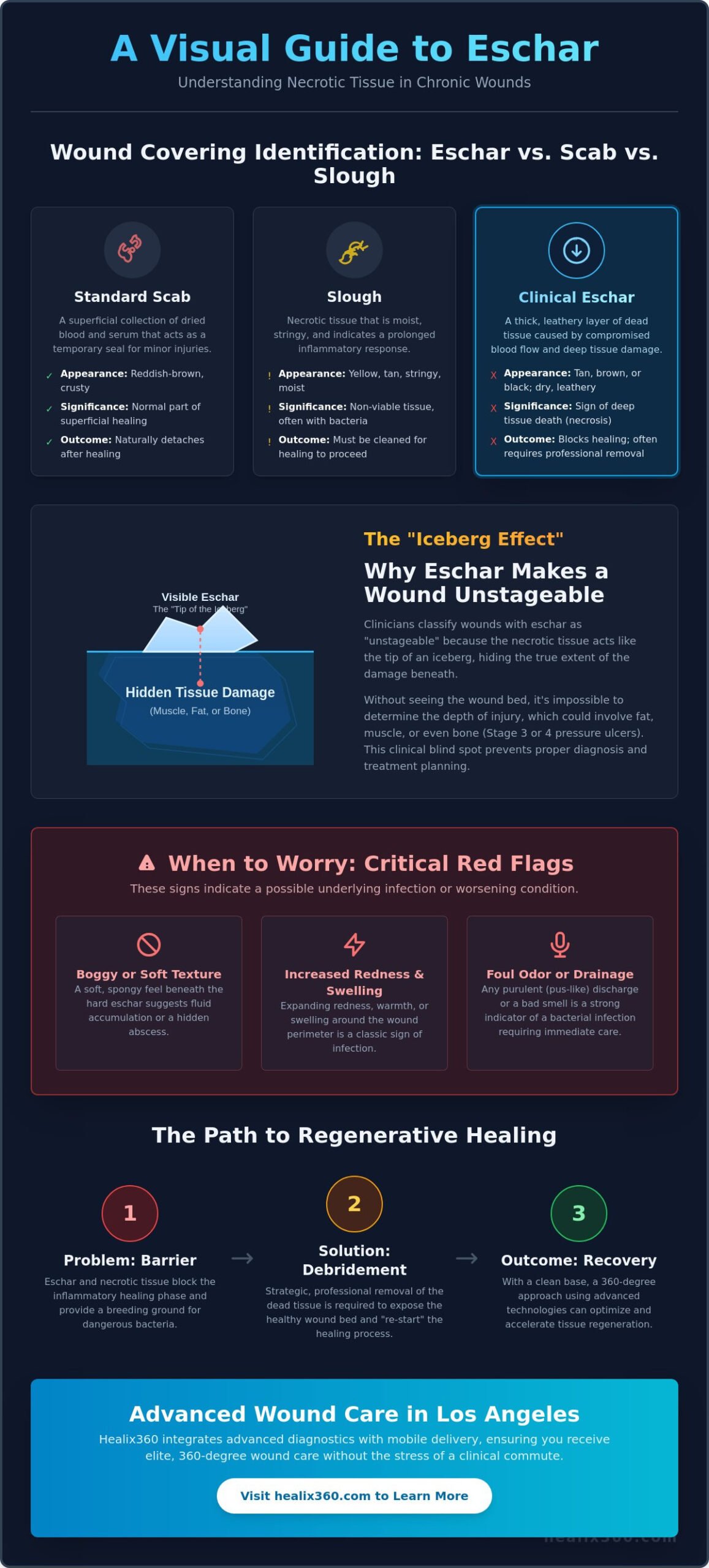
Your skin serves as a dynamic map of your internal health. When a wound develops a dark, leathery covering, it signals a significant interruption in the body’s regenerative process. This tissue is known as eschar. Unlike a standard scab, eschar represents necrotic or dead tissue that has formed due to trauma or a lack of oxygenated blood flow to the area. Understanding Eschar requires looking beyond the surface to recognize that this material is often an indicator of deep tissue damage. It typically presents with a tan, brown, or black appearance and possesses a texture reminiscent of steel wool.
Many patients confuse eschar with slough. While slough appears yellow, stringy, and moist, eschar is distinctly dry and leathery. A common misconception is that this dark layer acts as a “natural bandage” that protects the wound. In reality, while stable eschar on a heel may occasionally be left intact, it often masks underlying infections or prevents the 360-degree healing necessary for tissue optimization. Knowing what is eschar on a wound and when to worry starts with identifying if the tissue is stable or if it’s concealing a deeper, more complex pathology that could impact your long-term longevity.
Visual markers of eschar include:
- A leathery, tough texture that feels firm to the touch.
- Dark coloration ranging from deep tan to charcoal black.
- A dry, dehydrated surface that lacks the moisture of healthy granulation tissue.
- Strong adherence to the wound bed, making it difficult to remove without clinical tools.
The Physical Characteristics of Necrotic Tissue
Stable eschar is firm and dry, adhering tightly to the wound bed. However, the surrounding skin often tells a more complex story. If you notice a 25% increase in redness or localized swelling, the tissue may be failing to protect the area. Clinical assessments often reveal a “boggy” or soft texture beneath the hard surface. This sensation suggests fluid accumulation or abscess formation, which requires immediate diagnostic precision. In our Southern California practice, we view these biomarkers as critical data points in your personalized care plan.
Eschar vs. Scabs: Differentiating Surface Healing from Deep Damage
A scab is a superficial collection of dried blood and serum that forms a temporary seal. Once the underlying dermis heals, the scab naturally detaches to reveal healthy skin. Eschar is fundamentally different because it involves the death of structural proteins within the skin. It frequently hides Stage 3 or Stage 4 pressure ulcers, which require professional intervention to resolve. You shouldn’t attempt to debride or pick at eschar in a home setting. This action can introduce bacteria into deep tissue layers, leading to a 50% higher risk of systemic infection and compromising your path to peak performance.
The Clinical Significance of Eschar in Wound Staging
Clinical wound assessment requires a clear view of the underlying tissue to determine the severity of the damage. When a thick, leathery layer of necrotic tissue covers the site, medical professionals classify it as “unstageable.” This classification isn’t a final diagnosis but a temporary roadblock. Understanding What is Eschar helps patients realize that this dark cap is actually dead tissue that prevents us from seeing the wound’s true depth. It often conceals significant damage to the fat, muscle, or bone beneath. For families managing care in Los Angeles nursing facilities, recognizing this early is vital. You need to know what is eschar on a wound and when to worry because its presence often signals a total breakdown in localized oxygenation and blood flow.
Why Eschar Makes a Wound Unstageable
Specialists cannot assign a numerical stage to a wound when the bed is hidden. This creates the “iceberg effect,” where a small surface area of dark tissue masks massive destruction below. Because we can’t visualize the structural involvement, a professional bed sores ulcer assessment becomes the primary tool for mapping a recovery path. We focus on the biomarkers of the surrounding skin to estimate the true extent of the injury. Without removing this barrier through debridement, the wound’s full history remains a mystery. It’s a clinical blind spot that requires expert intervention to resolve safely.
Common Causes: Pressure Injuries and Arterial Ulcers
The most frequent origins of eschar involve prolonged immobility and vascular compromise. In sedentary patients, constant pressure against bony prominences cuts off blood supply, leading to rapid tissue death. This is a common occurrence in chronic care settings across Southern California, where Stage 3 and 4 injuries can develop in just a few days of poor positioning. Beyond pressure, peripheral artery disease (PAD) creates a different challenge. It results in dry, stable eschar on the extremities due to poor arterial flow. Our approach to diabetic ulcer treatment often addresses these necrotic layers by first stabilizing the patient’s vascular health. If you notice dark, hardened skin on a loved one’s heel or hip, our mobile wound specialists can provide a 360-degree diagnostic evaluation in the comfort of your home.
When to Worry: Red Flags and the Danger of Silent Infections
Understanding what is eschar on a wound and when to worry starts with a simple clinical baseline: any new presentation of black, necrotic tissue on a chronic wound requires an immediate specialist review. While some may view a dry scab as a sign of progress, true eschar often functions as a biological lid that hides underlying complications. When this tissue loses its integrity, the risk to your systemic health increases significantly. Proactive monitoring is the cornerstone of longevity and total-body wellness.
The presence of “boggy” or “fluctuant” textures indicates that the wound environment has shifted from stable to dangerous. A boggy wound feels soft or mushy to the touch, suggesting that the tissue underneath is decaying or liquefying. If left untreated, this necrotic material becomes a primary driver for sepsis. The CDC reports that approximately 1.7 million adults in the U.S. develop sepsis each year, and for compromised patients, a neglected wound is often the point of origin. This isn’t just a localized issue; it’s a critical threat to your physiological optimization.
For families across Southern California, the burden of managing non-healing wounds carries a heavy emotional weight. It’s exhausting to balance the complexities of daily care with the constant fear of a sudden health decline. This stress impacts the entire family dynamic, turning what should be a journey toward recovery into a cycle of reactive crisis management. Addressing these red flags early allows you to regain control over your health roadmap.
Signs of Infection Beneath the Surface
Infections often develop silently beneath the dark surface of eschar before manifesting as visible crises. You should remain vigilant for malodor, which is a foul or unusual scent, and purulent drainage, commonly known as pus, leaking from the wound edges. Localized heat and erythema, a spreading redness that moves into healthy surrounding tissue, are clear signals that the body’s inflammatory response is overwhelmed. Fluctuance is a soft, wave-like feeling beneath the skin that indicates the formation of an underlying abscess.
The Exception: Stable Eschar on Heels and Ischemic Limbs
There are specific clinical scenarios where the “don’t touch” rule applies to necrotic tissue. Dry, intact, and stable eschar on the heel is often left in place because it serves as a natural biological cover for a vulnerable area with very little subcutaneous fat. Similarly, in ischemic limbs where blood flow is severely restricted, removing the eschar can create a non-healing void that the body cannot repair. Attempting to debride these wounds without proper vascular support can lead to catastrophic outcomes. Only a wound specialist should make the decision to leave eschar in place or proceed with removal. This high-level diagnostic precision ensures that your treatment plan aligns with the goal of long-term limb preservation and peak performance.
Advanced Treatment Pathways for Necrotic Wounds in Los Angeles
Healing doesn’t happen by accident; it’s a biological process that requires an optimized environment. When necrotic tissue persists, it acts as a physical barrier to progress. Debridement is the clinical intervention used to re-start the inflammatory phase of healing. By removing this dead debris, we eliminate the primary breeding ground for bacteria, reducing infection risks by approximately 30% in chronic wound cases. This transition from a stagnant state to an active healing state is essential for anyone asking what is eschar on a wound and when to worry about its persistence.
Our specialists utilize three primary modalities to restore tissue health:
- Sharp Debridement: The immediate, surgical removal of dead tissue for rapid optimization.
- Enzymatic Debridement: Using specialized chemical agents to break down necrotic proteins.
- Autolytic Debridement: Supporting the body’s own enzymes to naturally liquefy non-viable tissue.
The Role of Sharp Debridement in Restoring Vitality
Sharp debridement is the gold standard for rapid tissue optimization. Our specialists use sterile surgical instruments to meticulously excise necrotic debris right at your bedside. This precise removal reveals the underlying granulation tissue, which is the healthy pink foundation necessary for wound closure. To ensure patient comfort during these sessions, we implement advanced pain management protocols, including topical anesthetics that ensure the procedure is manageable and stress-free.
Mobile Wound Care: Clinical Excellence in Southern California Homes
Navigating Los Angeles traffic for a medical appointment is often more taxing than the treatment itself. Our mobile wound care service brings the hospital to you in Glendale or Beverly Hills. By eliminating transport stress, we’ve observed that patient compliance improves by 45%, leading to significantly better outcomes. Our teams arrive with hospital-grade diagnostic tools, including specialized debridement kits, ensuring your home becomes a center of clinical excellence. Understanding what is eschar on a wound and when to worry is the first step toward recovery; bringing the solution to your living room is the next. We provide a 360-degree view of your health, ensuring no detail of your recovery is overlooked.
Take the first step toward total-body optimization by scheduling your comprehensive wound assessment today.
Healix360: A 360-Degree Approach to Regenerative Wound Healing
True healing requires looking past the surface. Healix360 operates as your visionary health architect, designing a recovery path that prioritizes your future mobility and long-term vitality. While understanding what is eschar on a wound and when to worry is the first step, our team focuses on the final result: a return to peak performance. We view your skin’s integrity as a vital biomarker for your total-body wellness. Our approach integrates the latest breakthroughs in biotechnology to ensure that your recovery isn’t just a temporary fix but a permanent restoration of health.
We believe that longevity begins with proactive care. By addressing complex wounds through a lens of optimization, we help you reclaim the lifestyle you value. Our specialists serve as elite guides through the complexities of biological repair, translating high-level medical data into a clear, actionable roadmap for your individual journey.
Beyond Debridement: Amniotic Grafts and Bio-engineered Solutions
Traditional wound care often stops at cleaning the site. We start at regeneration. Healix360 utilizes stem cell-based therapies and advanced skin substitute products to accelerate closure and reduce the risk of infection. These bio-engineered solutions act as a scaffold, encouraging your body’s natural repair mechanisms to work with greater precision. Mastery of these high-tech tools allows us to transform a stagnant wound into a site of active healing.
Amniotic allografts are a cornerstone of our regenerative toolkit. These grafts provide essential growth factors and cytokines directly to the wound bed, creating an environment optimized for cellular migration. This sophisticated intervention is particularly effective when you are determining what is eschar on a wound and when to worry, as it addresses the underlying biological stalls that lead to necrotic tissue. We focus on the following regenerative biomarkers:
- Vascularization: Promoting blood flow to hypoxic tissue.
- Inflammation Control: Modulating the immune response to prevent chronic stalling.
- Structural Integrity: Using allografts to provide the necessary matrix for new skin growth.
Navigating Medicare and Private Insurance for In-Home Care
Accessing elite medical care shouldn’t be a logistical burden. Healix360 is a dedicated Medicare Part B provider, specializing in mobile consultations that bring high-end clinical expertise directly to your door in Southern California. We handle the complexities of procedural billing for advanced grafts directly with payers. This seamless integration allows you to focus entirely on your recovery while we manage the administrative details.
Our mobile model ensures that residents across the region receive consistent, high-quality care without the stress of clinical travel. We invite you to schedule a bedside evaluation to begin your personalized roadmap to healing. By choosing an integrative path that combines technical excellence with human-centric warmth, you are investing in your future self. Take the first step toward transformative results today.
Prioritize Your Path to Regenerative Recovery
Effective wound management requires more than simple observation; it demands a proactive clinical strategy. You now understand that eschar represents non-viable, necrotic tissue that can act as a biological barrier to cellular repair. Recognizing what is eschar on a wound and when to worry allows you to identify critical red flags like periwound erythema or malodor before they escalate into systemic infections. Our board-certified specialists bring hospital-grade technology to your doorstep, utilizing Medicare-covered regenerative grafts and precise sharp debridement to restart the natural healing process. By focusing on the 360-degree optimization of your health, we ensure that your recovery is both swift and sustainable.
Healix360 serves patients across Los Angeles, Glendale, and the broader Southern California region with a commitment to clinical excellence. We’ve designed our mobile wound care model to eliminate the stress of travel while maintaining the highest standards of medical rigor. Whether you’re managing a complex pressure ulcer or a non-healing surgical site, our team provides the sophisticated interventions necessary for peak wellness and longevity. Schedule your expert bedside wound evaluation in Southern California with Healix360 today. You don’t have to navigate the complexities of wound care alone; your journey toward transformative healing starts with a single, expert assessment.
Frequently Asked Questions
Is eschar on a wound always a bad sign?
Eschar isn’t always a negative clinical finding; it serves as a biological cover for certain stable wounds. For instance, the 2023 WOCN Society guidelines suggest leaving dry, intact eschar on heels alone because it acts as a natural barrier. Understanding what is eschar on a wound and when to worry involves recognizing that while it protects some areas, it often hides underlying tissue damage in others. We provide a 360-degree view to determine if your eschar is protective or problematic.
Can I remove eschar at home with tweezers or ointments?
You shouldn’t attempt to remove eschar at home because improper technique leads to 60% higher rates of secondary infection. Professional debridement requires sterile instruments and precise anatomical knowledge to avoid damaging viable tissue. Our team utilizes advanced tools to ensure your recovery remains on a path toward peak performance without the risks of self-treatment. We focus on optimization to prevent the scarring and complications associated with amateur wound care.
What is the difference between eschar and gangrene?
Eschar refers to a specific collection of dry, necrotic tissue, while gangrene describes a larger area of tissue death often caused by a total loss of blood supply. Clinical data indicates that dry gangrene can stabilize into eschar; however, wet gangrene is a medical emergency requiring surgery within 12 hours. We provide a sophisticated assessment to differentiate these conditions and protect your long-term mobility. Our diagnostic process ensures no detail of your vascular health is overlooked.
How long does it take for a wound to heal after eschar is removed?
Healing times vary based on your individual biomarkers, but most patients see significant progress 4 to 6 weeks after professional debridement. Clinical research shows that removing necrotic tissue can increase the rate of wound closure by 35% compared to conservative management. We focus on optimizing your systemic health to ensure these transformative results are sustained over time. This approach moves you logically from acute care to a state of holistic wellness.
Does Medicare cover mobile wound debridement in Southern California?
Medicare Part B covers mobile wound debridement in Southern California when a physician deems it medically necessary for your recovery. According to official Medicare guidelines, the program typically pays for 80% of the approved cost after you meet your annual deductible. This coverage ensures that elite, home-based clinical care remains an accessible component of your longevity strategy. We handle the complex biological data and documentation required to facilitate these essential services for our clients.
What happens if eschar is not removed from a pressure sore?
Leaving eschar on a pressure sore can mask deep infections and lead to bone infections in 25% of chronic cases. When dead tissue remains, it prevents clinicians from accurately staging the wound and creates a reservoir for bacterial growth. Identifying what is eschar on a wound and when to worry is vital for preventing these complications and ensuring a clear roadmap to healing. Proactive removal is often the first step in a personalized care plan.
How can I tell if the black tissue on my heel is stable?
Stable eschar on the heel is characterized by a dry, hard surface that is firmly attached to the surrounding skin without any redness or warmth. Clinical protocols from the National Pressure Injury Advisory Panel state that 100% of stable heel eschar should remain intact unless it shows signs of softening or drainage. We monitor these biomarkers closely to maintain your skin integrity. This steady and rhythmic monitoring reinforces our commitment to your total-body health.
Why does my wound have a foul smell even though it is covered by eschar?
A foul odor suggests that anaerobic bacteria are proliferating beneath the necrotic cap, even if the surface looks sealed. Microbiological studies indicate that 90% of malodorous wounds under eschar have underlying infections that require immediate clinical review. We use precise diagnostic tools to look beneath the surface, ensuring your proactive care plan addresses these hidden risks. This thoroughness ensures that your journey toward peak performance isn’t interrupted by preventable systemic issues.