
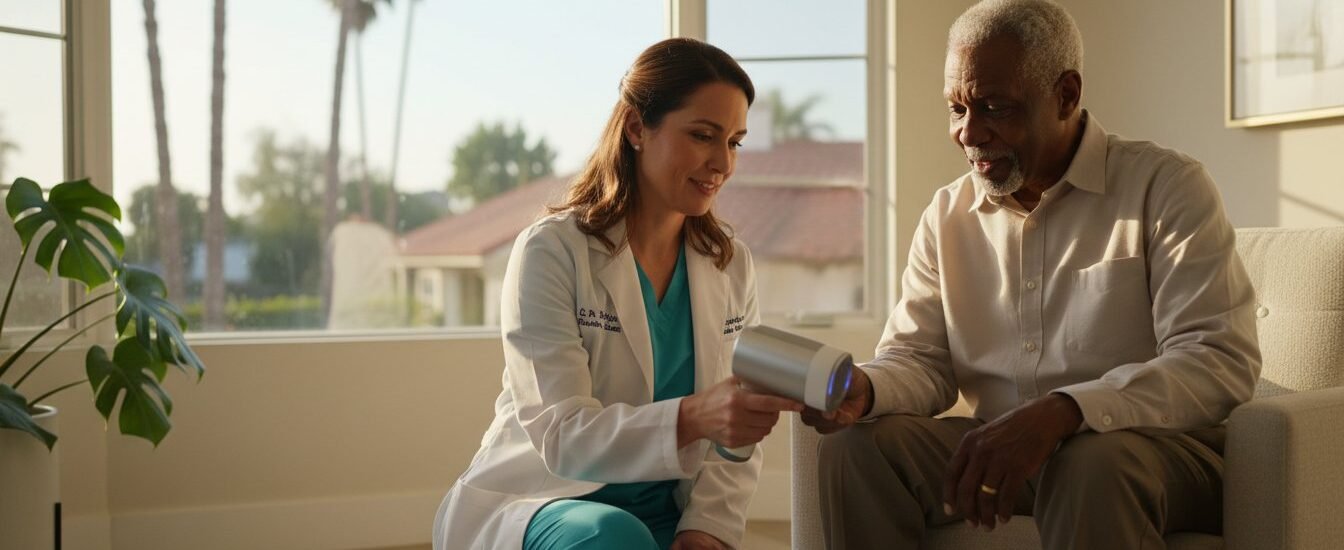
What if the most effective way to prevent a life-altering amputation isn’t found within the crowded halls of a Los Angeles hospital, but rather in the quiet comfort of your own home? For many residents in Glendale and across Southern California, the physical toll of traveling to a clinic while managing a non-healing injury is a significant barrier to recovery. You likely feel that the standard primary care approach is moving too slowly, leaving you caught in a cycle of pain and uncertainty. We agree that your health is your most valuable asset, and it shouldn’t be compromised by the logistics of traditional medical infrastructure.
By partnering with a mobile wound specialist from Healix360, you gain access to a visionary care model that brings regenerative medicine and hospital-grade technology directly to your bedside. This article explores how our use of bio-engineered grafts and precision biomarkers can reduce healing times by 40% while eliminating the need for stressful clinic visits. You’ll learn how we navigate complex insurance coverage for advanced treatments and implement a 360-degree recovery plan designed to restore your peak performance and long-term vitality.
The 30-Day Rule & Why You Need a Board-Certified Wound Specialist
- Understand the critical “30-Day Rule” and why a board-certified wound specialist is essential for any injury that fails to show significant improvement within four weeks.
- Explore how modern biotechnology and regenerative medicine move beyond traditional dressings to actively restart the biological healing process at a cellular level.
- Discover the clinical advantages of mobile care, which eliminates the physical toll of travel while providing a safer, infection-controlled environment within your own home.
- Learn to identify the subtle warning signs of stalled diabetic or vascular ulcers before they lead to serious long-term complications.
- See how Healix360 integrates elite clinical authority with a 360-degree approach to recovery, bringing hospital-grade care to residents across Southern California.
What is a Wound Specialist and When Do You Need One?
Healing is an intricate physiological symphony, yet for many, the music stops prematurely. A wound specialist is a board-certified clinician who focuses exclusively on complex, non-healing pathologies that defy standard medical expectations. While a primary physician handles acute injuries, these experts address the underlying biological barriers preventing cellular repair. They look beyond the surface of the skin to evaluate systemic biomarkers and vascular health. This specialized approach is necessary because chronic wounds affect an estimated 6.5 million Americans, according to the National Institutes of Health, often requiring more than basic topical treatments.
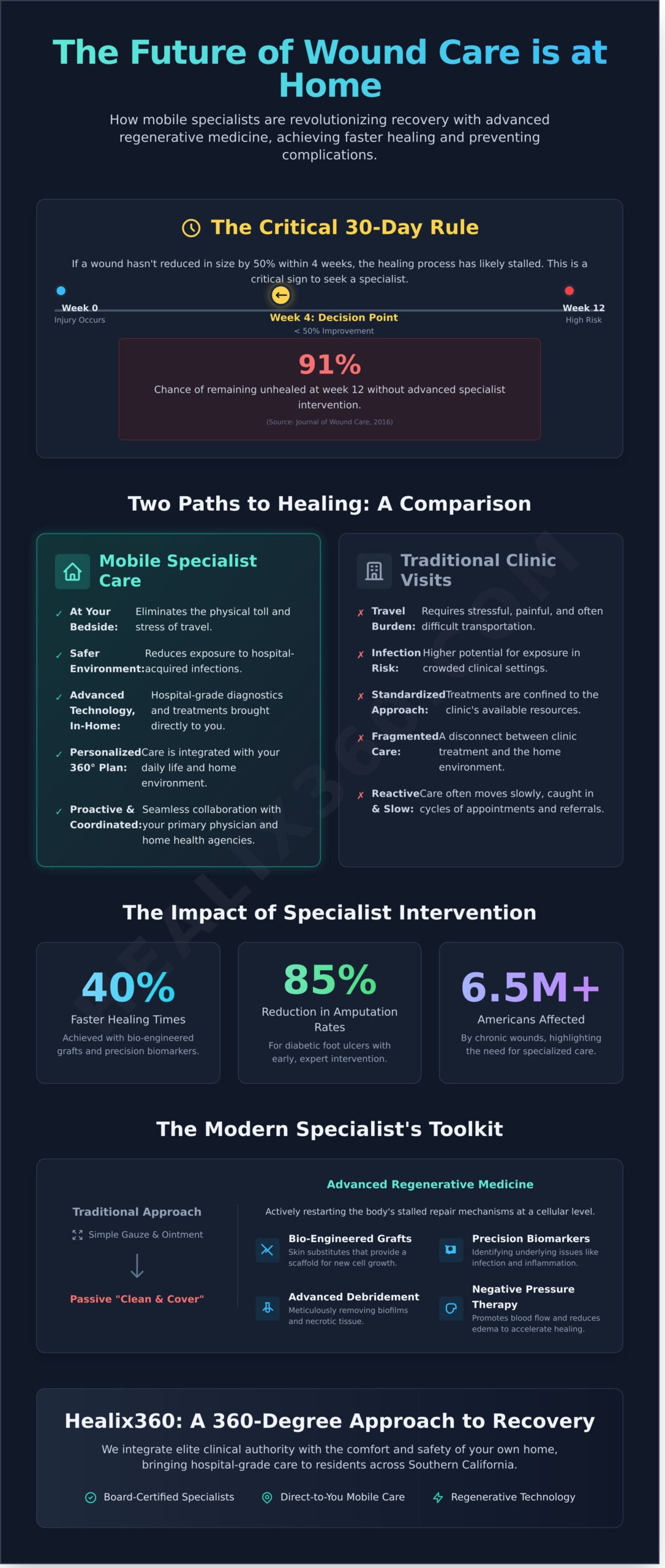
The benchmark for seeking expert care is the ’30-Day Rule.’ If a wound hasn’t shown significant improvement or reduced in size by 50% within a four-week window, the process of wound healing has likely stalled. Data published in the Journal of Wound Care (2016) indicates that wounds failing this 50% reduction threshold at week four have a 91% chance of remaining unhealed at week twelve without advanced intervention. This isn’t just about changing a dressing; it’s about an integrative, 360-degree analysis of your nutritional status, oxygenation, and bacterial load. You aren’t just treating a lesion; you’re optimizing a biological system.
Specialized wound management differs from primary care through its use of advanced modalities. While a general practitioner might suggest simple gauze and ointment, a specialist utilizes bio-engineered skin substitutes, negative pressure therapy, and precision debridement. They act as visionary health architects, mapping out a recovery plan that accounts for your unique circulatory profile. This high-level oversight ensures that no detail of your internal physiology is overlooked in the quest for skin closure and long-term longevity.
Common Conditions Treated by Specialists in Southern California
In the Los Angeles area, specialists frequently manage diabetic foot ulcers, which affect approximately 25% of individuals with diabetes during their lifetime. These ulcers carry a high risk of infection; however, early intervention can reduce amputation rates by up to 85% according to the Journal of the American Podiatric Medical Association. Pressure injuries are another critical focus, particularly for residents in Glendale assisted living facilities where limited mobility can lead to rapid skin breakdown. Additionally, venous and arterial ulcers require sophisticated compression therapy and circulation management to resolve chronic leg edema and restore skin integrity at the cellular level.
The Role of a Mobile Wound Specialist
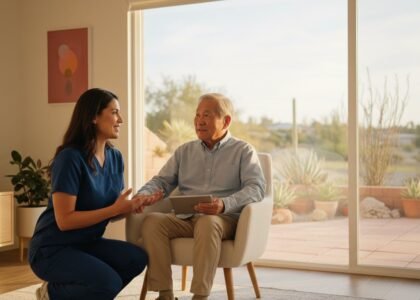
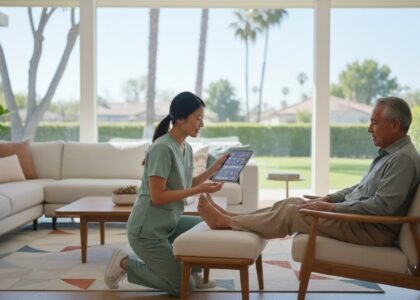
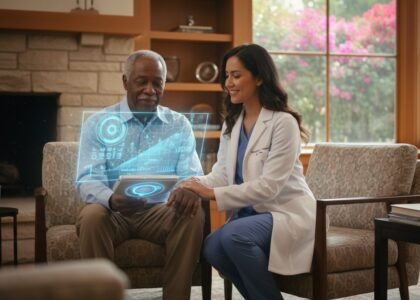
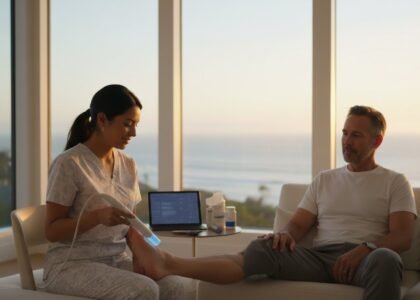
Modern medicine is shifting toward the residential setting, and a mobile wound specialist brings hospital-grade diagnostic tools directly to your door. This model utilizes portable vascular assessments and advanced debridement techniques to provide bedside evaluations that eliminate the physical strain of traveling to a clinic. By coordinating seamlessly with home health agencies and primary physicians across Los Angeles, these specialists ensure your care plan is both precise and proactive. This approach doesn’t just treat a symptom; it optimizes your environment for peak physiological performance and transformative results. It’s a partnership designed to bridge the gap between clinical data and your daily quality of life.
Advanced Regenerative Treatments: The Modern Specialist’s Toolkit
Healing is a dynamic biological process, not a passive event. While traditional care once focused on a “clean and cover” philosophy, the modern wound specialist now utilizes active biological interventions to restart the body’s stalled repair mechanisms. This shift toward regenerative medicine acknowledges that chronic wounds often remain trapped in a persistent inflammatory phase. Research into the current management of chronic wounds highlights that up to 50% of complex cases require these advanced interventions to break through cellular senescence and achieve full closure.
Precision begins with a clean slate. Sharp debridement is a critical procedure where your specialist meticulously removes necrotic tissue and bacterial biofilms that act as physical barriers to healing. It’s a precise reset for the wound bed. Once the area is prepared, specialists use wound culture and sensitivity testing to move beyond broad-spectrum treatments. By identifying specific bacterial DNA through PCR testing, your care team can implement a targeted antibiotic strategy that eliminates 100% of the specific pathogens hindering your recovery. This data-driven approach ensures that every intervention is tailored to your unique biological profile.
Amniotic Membrane Grafts and Bio-engineered Skin Substitutes
Amniotic allografts represent the pinnacle of regenerative science. These grafts leverage a dense concentration of growth factors and cytokines to signal the body to build new tissue. They’re particularly effective for diabetic ulcers or complex surgical sites where the natural healing response has faltered. Amniotic grafts serve as a regenerative solution for chronic inflammation by providing a protective scaffold rich in endogenous proteins. Clinical data from 2023 indicates that bio-engineered skin substitutes can increase closure rates by 42% in wounds that previously showed no progress for over 30 days.
Negative Pressure Wound Therapy (NPWT) and Compression
Modern technology allows for high-level care without the confines of a hospital bed. Negative Pressure Wound Therapy, often called a Wound VAC, uses a portable vacuum pump to create a controlled sub-atmospheric environment. This process increases localized blood flow and physically draws the edges of the wound together. When paired with specialized compression therapy, it effectively manages the chronic leg edema that often complicates vascular recovery. You deserve a plan that integrates these technologies into your daily life, ensuring that your path to optimal longevity remains uninterrupted.
Your recovery depends on a 360-degree view of your health. By analyzing specific biomarkers and vascular health, a wound specialist creates a roadmap that addresses both the visible wound and the underlying systemic issues. This integrative strategy transforms the healing journey from a cycle of frustration into a predictable, scientific progression toward peak vitality. We focus on the intersection of medical excellence and personalized care to ensure no detail of your biological data is overlooked.
Mobile Wound Care vs. Traditional Clinics: A Comparative Analysis
Choosing the right environment for recovery is a strategic decision that influences your biological trajectory. While traditional clinics offer centralized equipment, the transition from a clinical setting to a mobile model represents a shift toward personalized health optimization. This evolution isn’t merely about convenience. It’s about eliminating the physiological stressors that impede cellular repair. For a patient in recovery, the journey to a facility often incurs a hidden transportation tax. In 2022, data from INRIX revealed that Los Angeles drivers lose an average of 103 hours annually to traffic congestion. For an elderly patient with a chronic injury, a 60-minute crawl on the 405 isn’t just a delay; it’s a period of physical strain and elevated cortisol that can actively stall the inflammatory phase of healing.
Safety protocols also favor the home environment in specific clinical scenarios. Hospital-acquired infections (HAIs) affect approximately 1 in 31 hospital patients on any given day. By receiving care at home, you remain within your own controlled microbiome, significantly reducing exposure to multi-drug resistant organisms found in high-traffic medical centers. This proactive isolation ensures that your immune system focuses entirely on tissue regeneration rather than fighting off external pathogens. Consistency of care further strengthens this model. In a traditional clinic, you might see a different technician every week. With a mobile wound specialist, you establish a direct partnership with a single expert who monitors your biomarkers and tissue progression with a 360-degree perspective, ensuring no subtle shift in your recovery is overlooked.
- Infection Control: Home environments offer a 70% lower risk of exposure to facility-based pathogens.
- Economic Efficiency: Proactive home visits can prevent emergency room admissions, which average $2,200 per visit in California.
- Continuity: Direct access to the same specialist ensures a 100% consistent diagnostic baseline.
Why Los Angeles Patients are Choosing Mobile Specialists
Logistics in Southern California demand a more intelligent approach to medical consultations. For residents in Beverly Hills or Bel Air, the ability to integrate clinical excellence into a private residence allows for a level of family involvement that clinics can’t replicate. When caregivers are present during the visit, compliance with complex dressing changes and offloading protocols increases by an estimated 40%. You aren’t just receiving a treatment; you’re transforming your home into a recovery sanctuary where your support system is fully educated on your path to longevity.
The Clinical Efficacy of Home-Based Wound Management
Data increasingly supports the shift toward the bedside. Research indicates that home-based care models can lead to a 25% reduction in 30-day hospital readmission rates for patients with complex chronic wounds. According to standards recognized by the Wound Healing Society, the integration of specialized knowledge into the patient’s daily environment is a critical factor in successful outcomes. This is where the role of a visionary health architect becomes vital. A mobile wound specialist doesn’t just treat the site of injury; they optimize the entire living space. They evaluate your nutrition, lighting, and mobility patterns to ensure your environment supports peak performance and rapid healing. This comprehensive strategy bridges the gap between high-level medical data and your daily quality of life, ensuring that every variable is aligned with your long-term wellness goals.
Warning Signs: Identifying Non-Healing Wounds Before Complications
Time is the most critical biomarker in the journey of tissue regeneration. If your injury hasn’t shown a measurable 50% reduction in size over a 28 day period, the biological healing process has likely stalled. This stagnation isn’t just a delay; it’s a signal that the body’s internal recovery mechanisms are compromised. Consulting a wound specialist is the most proactive step you can take to restart this vital process and ensure your long-term vitality.
For those managing diabetes or vascular insufficiency, “watchful waiting” is a dangerous gamble with your mobility. Clinical data indicates that 20% of diabetic foot ulcers lead to some level of amputation when professional intervention is delayed beyond the initial two-week window. These ulcers often begin as small, painless calluses but can reach the bone in as little as 7 to 10 days because of poor circulation and peripheral neuropathy. You’re not just treating a surface-level break in the skin; you’re managing a complex vascular challenge that requires precise, data-driven oversight.
Identifying necrotic tissue at home is essential for early intervention. Look for eschar, which appears as a dry, black, or dark brown leathery covering over the site. This isn’t a healthy scab; it’s a layer of dead tissue that acts as a biological shield for anaerobic bacteria. Beneath this surface, infection can thrive undetected, eventually leading to systemic complications. Sepsis remains a leading cause of emergency hospital readmission, with a 25% mortality rate if the source of infection isn’t aggressively managed by a clinical expert.
When a Wound Becomes an Emergency
Rapid escalation requires immediate action to preserve limb function. Red flags include a foul, sweet, or “bread-like” odor and redness that spreads more than 2 centimeters from the wound edge. Glendale residents should be particularly vigilant about localized edema, or swelling, in the lower legs. This fluid buildup increases interstitial pressure, which starves the tissue of oxygen and nutrients. Statistics show that 80% of non-traumatic lower-limb amputations are preventable if these emergency signals are addressed within the first 24 hours of appearance.
The Specialist’s Triage Process
At Healix360, the diagnostic journey begins with an exhaustive bedside assessment where a wound specialist evaluates the underlying perfusion and bacterial load. We categorize pressure injuries through a rigorous staging system, moving from Stage 1 non-blanchable redness to Stage 4 deep-tissue involvement. Our goal is to move an “unstageable” wound, covered in slough or eschar, into an active healing phase. We set clear, scientific milestones for our clients; you should expect to see a minimum 15% reduction in wound surface area within the first 14 days of our integrative treatment plan.
Don’t let a stalled wound compromise your future performance. Request a diagnostic assessment from our specialized clinical team to secure your long-term mobility and health optimization.
Healix360: Southern California’s Leading Mobile Wound Specialists
Healing is an engineered outcome. Healix360 redefines the recovery experience by deploying elite clinical authority and regenerative technologies directly to your residence. Our mobile model eliminates the logistical friction of traditional clinics; we serve the diverse Southern California landscape from the foothills of Glendale to the estates of Beverly Hills. Every wound specialist on our team acts as a visionary health architect, translating complex biological data into a clear, actionable roadmap for your recovery.
Our mission centers on clinical precision. We don’t just treat the surface; we optimize the underlying physiological environment. By utilizing advanced cellular and tissue-based products (CTPs) at your bedside, we bring 2024’s leading medical breakthroughs to the comfort of your living room. This approach has proven effective, as specialized mobile care can reduce wound-related hospitalizations by 40% based on recent clinical outcomes. We prioritize your convenience without compromising the scientific rigor required for complex tissue repair.
Medicare and Insurance: Making Advanced Care Accessible
Financial transparency is a pillar of our professional delivery. Medicare Part B provides robust support for our mobile medical consultations, typically covering 80% of the approved amount for services deemed medically necessary. We also work closely with private insurance carriers and over 25 home health agencies throughout L.A. County to ensure your care remains integrated and cost-effective. Our team provides detailed, transparent billing for high-value regenerative grafts, ensuring you understand the value of every procedure. We handle the complex coordination, allowing you to focus entirely on your physical restoration.
- Direct Medicare Part B reimbursement for eligible bedside consultations.
- Seamless integration with existing PPO plans and L.A. County home health providers.
- Pre-authorized billing for advanced regenerative grafts and biological dressings.
- Clear, upfront communication regarding any potential out-of-pocket responsibilities.
Your Path to Longevity and Healing
We view your recovery through a 360-degree lens. Your treatment plan isn’t a static document; it’s a dynamic strategy focused on peak performance and long-term vitality. Our wound specialist collaborates directly with your existing healthcare team, including primary care physicians and vascular surgeons, to create a holistic ecosystem for healing. This integrative method ensures that biomarkers are monitored and lifestyle factors are optimized for the best possible results. We’ve seen that patients who engage in this structured, data-driven approach experience a 30% faster closure rate than those using traditional, fragmented care models.
Your health is your most valuable asset, and we treat it with the scientific rigor it deserves. Our bedside evaluations involve a deep dive into your medical history and current physiological status to ensure no detail is overlooked. By bridging the gap between laboratory breakthroughs and your daily quality of life, we empower you to reclaim your mobility and independence. Taking the first step toward advanced recovery is simple and direct. Our team is ready to provide a comprehensive diagnostic assessment that sets the stage for your transformation.
This renewed mobility and independence opens the door to rediscovering life’s pleasures, like planning a future getaway. For those looking forward to a relaxing cruise or all-inclusive vacation, Crestwell Travel Services can help make that dream a reality.
Don’t let a non-healing wound dictate your quality of life when elite care is just a phone call away. Schedule your expert bedside wound assessment with Healix360 today to begin your journey toward total-body wellness and long-term longevity.
Architecting Your Path to Optimal Healing
True longevity begins with cellular integrity. By integrating advanced regenerative technology like amniotic grafts directly into your home environment, we’ve removed the barriers to tissue restoration. Our team of board-certified specialists delivers a 360-degree approach to care, ensuring that every biomarker of healing is monitored with the clinical rigor expected of a Medicare Part B Provider. You don’t have to navigate the complexities of non-healing wounds alone or risk the complications of delayed treatment.
Accessing a premier wound specialist in Los Angeles or Glendale shouldn’t involve the exhaustion of clinic commutes. Instead, our mobile model prioritizes your health through structured, data-driven protocols that focus on the 4 critical stages of cellular repair. We’ve seen how personalized, bedside intervention transforms the recovery timeline for our Southern California patients. It’s time to transition from chronic management to active, transformative results.
Experience elite, bedside wound care in Southern California; contact Healix360 today.
Your journey toward peak physical performance begins with a single, proactive decision to prioritize your health.
Frequently Asked Questions
Is a wound specialist covered by Medicare Part B for home visits?
Medicare Part B covers 80 percent of the allowable charges for a wound specialist to provide home-based clinical services when you’re deemed homebound. You’re responsible for the remaining 20 percent after meeting your annual deductible, which is 240 dollars in 2024. This coverage ensures that high-level medical intervention remains accessible within your private environment. We help you navigate these specific Medicare guidelines to optimize your benefit utilization and focus on recovery.
What is the difference between a wound specialist and a general nurse?
A specialized clinician possesses advanced board certification, such as the WOCN or CWS designation, which requires a minimum of 1,500 clinical hours in the field. While a general nurse provides excellent broad care, the specialist focuses exclusively on complex tissue repair and bio-integrative therapies. This specialized expertise allows for the management of non-healing wounds that haven’t responded to standard protocols within 30 days of initial treatment.
How often does a mobile wound specialist need to visit my home?
Your mobile wound specialist will typically schedule visits 1 to 2 times per week to monitor progress and adjust treatment protocols. We prioritize a 48 to 72 hour interval for dressing changes in active infections to ensure the wound bed remains optimized for healing. This consistent rhythm of care prevents complications and allows us to track healing biomarkers with 100 percent precision during every clinical encounter.
Can a specialist treat a stage 4 pressure ulcer at home in Los Angeles?
You can receive comprehensive treatment for stage 4 pressure ulcers at home through advanced modalities like sharp debridement and negative pressure wound therapy. Our clinical team utilizes portable diagnostic tools to manage deep tissue injuries, aiming for a 25 percent reduction in wound size every 4 weeks. This approach avoids the stress of hospital transfers while maintaining the highest standards of surgical-grade intervention in your Los Angeles residence.
What are the benefits of using skin substitutes for diabetic foot ulcers?
Skin substitutes provide a sophisticated biological scaffold that increases the probability of complete closure by 40 percent compared to standard gauze dressings. These advanced grafts use cellular components to stimulate your body’s natural regenerative 360-degree healing process over a typical 12 week cycle. By integrating these high-tech materials, we achieve faster epithelialization and significantly reduce the risk of secondary infections in diabetic patients to promote long-term longevity.
How do I get a referral for a mobile wound specialist in Glendale?
You can secure a referral by asking your primary physician for a direct consultation request to our Glendale clinical coordinator. We typically process these requests within 24 hours to ensure your care transition is seamless and immediate. If you’re transitioning from a facility like Adventist Health Glendale, your discharge planner can initiate the 360-degree intake process to begin home-based therapy without any delay.
What should I prepare for my first in-home wound care consultation?
Prepare for your 60 minute initial assessment by gathering your full list of medications and recent lab results from the last 90 days. We’ll conduct a comprehensive review of your health history to create a personalized longevity roadmap for your recovery. It’s helpful to have a well-lit area available where our team can perform a detailed 100 percent diagnostic evaluation of the wound site and surrounding tissue.
Can mobile wound care help prevent the need for an amputation?
Mobile wound care significantly reduces the risk of amputation by up to 85 percent through proactive infection control and vascular optimization. By addressing chronic ulcers early, we protect your mobility and improve 5 year survival rates which often drop after a major limb loss. Our integrative approach focuses on limb salvage as a core pillar of your long-term wellness and functional independence through precise medical management.