


What if the most effective path to limb preservation didn’t involve a single trip to a sterile hospital wing or a crowded waiting room? For the 15% of individuals with diabetes who will face a chronic wound, the traditional clinical model often presents more logistical hurdles than actual solutions. You likely feel that the stress of navigating San Diego traffic and the risk of hospital-acquired infections shouldn’t be the price you pay for elite medical attention. It’s a valid concern; your home should be a sanctuary for healing, not a barrier to it.
This article shows you how to bring hospital-grade regenerative protocols directly to your doorstep. By integrating advanced biomarkers and cellular therapies into a mobile framework, we provide a clear roadmap for preventing amputation diabetic foot ulcer San Diego. You’ll discover how a 360-degree approach to wound optimization can lead to successful closure and long-term vitality without the need for invasive surgery. We’ll examine the specific regenerative technologies that are currently helping over 80% of patients achieve full healing in a home-based environment.
Key Takeaways
- Understand why the first four weeks of a diabetic foot ulcer are critical for long-term mobility and how local factors in San Diego can mask early symptoms.
- Discover how bio-engineered skin substitutes and amniotic grafts provide the cellular foundation for preventing amputation diabetic foot ulcer San Diego residents face.
- Learn how transitioning to mobile wound care eliminates the physical stress of travel and the risk of hospital-acquired infections, optimizing your recovery environment.
- Master a 360-degree approach to limb longevity by integrating high-tech inspection tools and advanced offloading strategies into your daily wellness ritual.
- Explore how Healix360 brings board-certified expertise and hospital-grade technology directly to your home for a seamless, elite healing experience.
The Critical Window for Amputation Prevention in San Diego
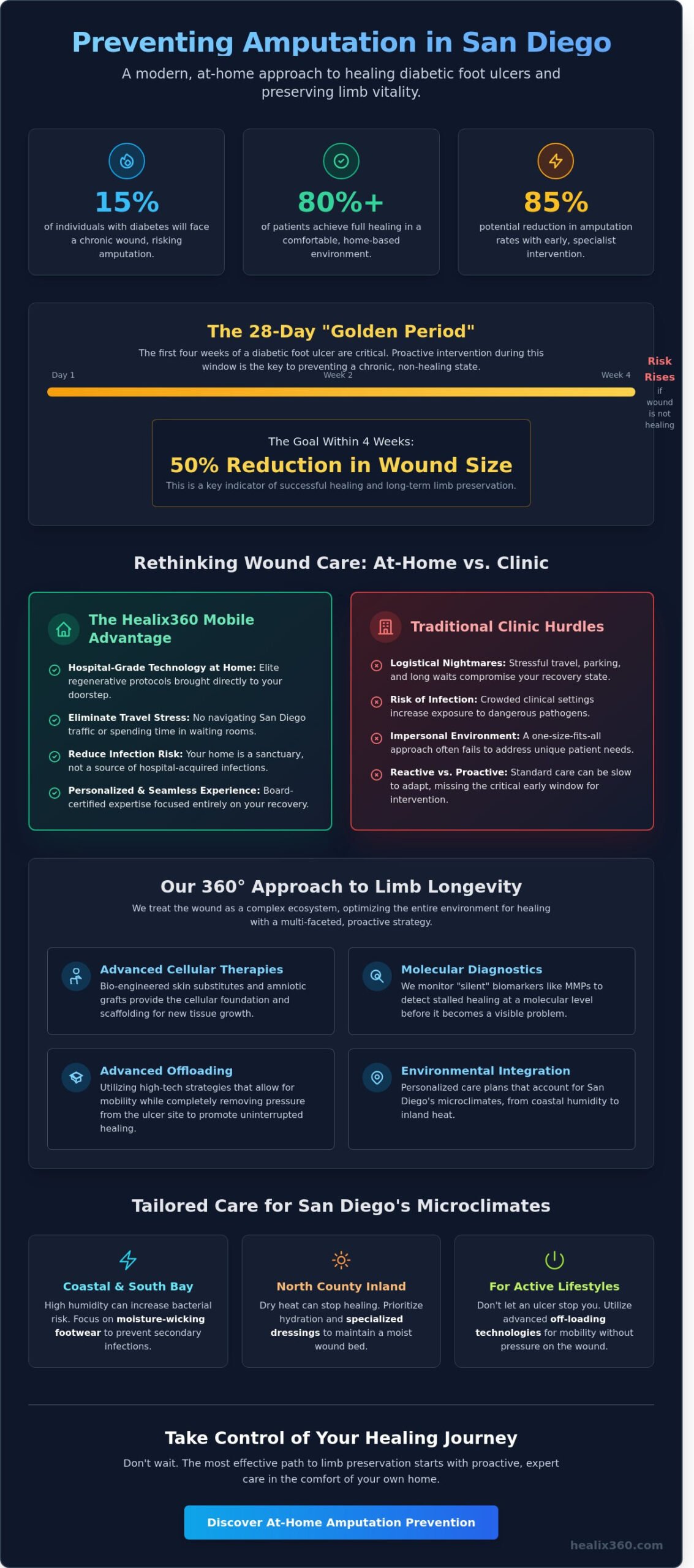
Timing dictates your clinical trajectory. In the specialized field of limb salvage, the first 28 days of a diabetic foot ulcer represent a “Golden Period” where proactive intervention is most effective. If a wound fails to show a 50% reduction in size within this four-week window, the statistical risk of long-term complications rises. At Healix360, we view this timeframe as a vital diagnostic phase for preventing amputation diabetic foot ulcer San Diego, utilizing advanced diagnostics to intercept the transition from an acute injury to a chronic, non-healing state.
San Diego residents often maintain high levels of physical activity, which is excellent for cardiovascular health but can mask the onset of foot trauma. Peripheral neuropathy, a common companion to diabetes, dulls the pain signals that would normally alert a patient to an injury. When you combine this lack of sensation with the active lifestyles found in our coastal community, small abrasions can quickly escalate into deep tissue infections before they’re even noticed. We monitor “silent” biomarkers, such as elevated matrix metalloproteinases (MMPs), which signal that a wound’s healing cycle has stalled at a molecular level. Data from Southern California health regional reports indicates that early specialist intervention can reduce amputation rates by as much as 85%, emphasizing the need for immediate, high-precision care.
When a Diabetic Foot Ulcer Becomes a Limb-Threatening Emergency
The transition from a manageable wound to a clinical emergency is often subtle. San Diego patients should look for localized heat, persistent redness, or new swelling as primary red flags. We adhere to the 30-day rule: if standard wound care hasn’t achieved significant closure in one month, the situation requires advanced regenerative intervention. Waiting to see if a wound “gets better on its own” is the leading driver of diabetic amputations. Success in preventing amputation diabetic foot ulcer San Diego depends on shifting from reactive patching to a sophisticated, 360-degree optimization of the wound environment.
The Impact of Southern California Climate on Wound Healing
Our local microclimates play a direct role in how your body repairs tissue. The humidity often found in the South Bay can create a moist environment that accelerates bacterial colonization in open wounds. Conversely, the dry heat in North County can lead to wound desiccation, which halts the migration of healthy skin cells. We provide tailored guidance for our patients based on their specific zip code:
- Coastal and South Bay: Focus on moisture-wicking footwear to prevent fungal overgrowth and secondary infections.
- North County Inland: Prioritize hydration and specialized dressings that maintain a balanced, moist wound bed.
- Active Lifestyle: Utilize off-loading technologies that allow for mobility without putting pressure on the ulcer site.
By integrating these environmental factors into a personalized care plan, we ensure that your recovery isn’t just a goal, but a predictable outcome of scientific precision.
Advanced Science of Limb Preservation: Regenerative Grafts and Substitutes
Traditional wound care often fails because it’s reactive. Healix360 utilizes bio-engineered skin substitutes to address the cellular dysfunction inherent in chronic wounds. By integrating these advanced materials, we focus on preventing amputation diabetic foot ulcer San Diego through proactive biological intervention rather than simple coverage. These substitutes don’t just protect the wound; they interact with the patient’s own cells to stimulate growth and repair.
A diabetic neuropathic ulcer isn’t just a hole in the skin; it’s a site of stalled biological processes. Regenerative medicine targets these failures by introducing tissue scaffolds that mimic natural anatomy. Our 360-degree view of wound biology ensures we address chronic inflammation, compromised blood flow, and the lack of cellular scaffolding simultaneously. Research from the National Library of Medicine emphasizes that a structured approach to the Prevention of Amputation is vital for long-term patient outcomes. We treat the wound as a complex ecosystem that requires specific biological catalysts to thrive.
Amniotic Allografts: The Gold Standard for Non-Healing Ulcers
Amniotic membrane grafts represent the pinnacle of regenerative technology. These grafts contain a rich concentration of growth factors and cytokines that suppress inflammation and promote rapid epithelialization. Unlike traditional skin grafts, which require a donor site and carry a higher risk of rejection, amniotic allografts provide a ready-made biological matrix. They act as a natural barrier while signaling the body to accelerate its own healing mechanisms. Our specialists apply these grafts directly at your bedside. This mobile delivery model ensures that even patients with limited mobility receive elite-level clinical care in their own homes, which is a cornerstone of preventing amputation diabetic foot ulcer San Diego strategies.
The Role of Sharp Debridement in Preparing the Wound Bed
Healing cannot begin in the presence of dead tissue. Sharp debridement is the intentional removal of necrotic or infected material to expose healthy, bleeding tissue. This process essentially reboots the wound’s biological clock, shifting it from a chronic, stagnant state back into an acute healing phase. Healix360 clinicians perform this precise procedure during residential visits to ensure the wound bed is optimized for regenerative grafts. You can learn more about how we integrate these techniques in our Advanced Skin Substitute Treatments in Southern California guide. If you’re ready to optimize your healing journey, consider a consultation with our mobile wound team to discuss a personalized preservation plan.
Mobile Wound Care vs. Traditional Clinics: The San Diego Advantage
Healing begins where you feel most secure. For patients focused on preventing amputation diabetic foot ulcer San Diego, the traditional trek to a centralized medical facility often creates a “Mobility Gap” that actively sabotages recovery. Driving through San Diego traffic or waiting in high-traffic lobbies isn’t just an inconvenience. It’s a physiological stressor. Clinical data suggests that elevated cortisol levels from travel-related stress can delay wound closure by up to 25% compared to patients treated in a relaxed, familiar environment. We prioritize your biology by removing these external hurdles.
Healix360 bridges this gap by bringing clinical excellence directly to your door. By shifting the site of care, we eliminate exposure to hospital-acquired infections like MRSA, which affect 1 in 31 hospital patients on any given day. You receive a 360-degree view of your health from the same board-certified specialist during every assessment. This consistency ensures that even the smallest change in tissue perfusion or biomarker data is caught immediately. We coordinate your treatment roadmap with San Diego home health agencies and your primary care physician to ensure every facet of your longevity is optimized through a unified, data-driven strategy.
Why In-Home Visits Are Essential for Patients with Limited Mobility
Physical exertion often exacerbates leg edema and venous insufficiency. For residents in La Jolla, Chula Vista, or Escondido, the logistics of transport can be prohibitive and physically taxing. Mobile care preserves your energy for what matters: cellular repair. You can learn more about our regional standards in this Expert Mobile Wound Care in Los Angeles & Glendale guide. When you protect your feet through proactive, at-home monitoring, you maintain the peak performance of your circulatory system without the wear and tear of a commute.
Medicare Part B and Insurance: Navigating the Costs of Mobile Care
Financial clarity is a pillar of professional care. Healix360 operates as a Medicare Part B provider for mobile medical consultations. This means your at-home visits are often covered similarly to an office visit. Proactive management is a strategic investment in your future. Preventing a single $50,000 hospital stay through consistent at-home debridement and assessment is a clear victory for both your health and your finances. Ask your insurance provider about “home-based procedural billing” to understand how your specific plan supports this integrative approach to preventing amputation diabetic foot ulcer San Diego.
A 360-Degree Plan for Daily Diabetic Foot Health and Longevity
True health optimization requires more than reactive treatment; it demands a sophisticated, 360-degree view of your biological data. When you’re preventing amputation diabetic foot ulcer San Diego, the strategy must evolve from simple wound management to total-body optimization. This transition relies on identifying new biomarkers of pressure before they manifest as physical trauma. High-tech tools, such as infrared thermometry, allow you to detect temperature spikes that precede ulceration by up to seven days. By monitoring these “hot spots,” you can intervene before the skin integrity fails, ensuring your mobility remains uninterrupted.
Offloading strategies serve as the silent partners of regenerative grafts. While advanced biologics provide the foundation for repair, custom orthotics ensure the new tissue isn’t compromised by mechanical stress. Clinical data indicates that professional offloading can reduce peak plantar pressure by 30%, which is vital for long-term limb viability. Complementing this is nutritional optimization and weight management; for instance, the Houston Medical Wellness Clinic offers specialized metabolic support to help patients reduce physical strain on their feet. Similarly, maintaining oral health is a critical component of systemic diabetic management, with practices like Colony Dental Care providing the personalized attention necessary to prevent infections that could hinder recovery elsewhere in the body. A diet rich in anti-inflammatory biomarkers, including high-dose Vitamin C and Zinc, supports collagen synthesis and immune function. Since nearly 3.2 million Californians live with diabetes, local residents must prioritize these factors to counteract the cellular damage caused by chronic hyperglycemia.
The Daily Diabetic Foot Checklist for San Diego Residents
- Step 1: Visual inspection. Use a high-definition mirror under bright LED lighting to scan for erythema or blisters. Look for subtle changes in skin texture that indicate early-stage pressure stress.
- Step 2: Sensory check. Identify any new areas of numbness or tingling. Since neuropathy can mask pain, you’ve got to rely on tactile feedback or professional neuro-sensory testing to gauge your status.
- Step 3: Climate-specific hydration. San Diego’s coastal air often masks low humidity levels, which can drop below 45% during Santa Ana winds. Maintain skin integrity by using medical-grade emollients to prevent fissures that invite infection.
Long-Term Prevention: Beyond the Initial Healing
Transitioning from active wound care to a maintenance mindset is where true longevity is won. This involves managing vascular health with the same precision as blood glucose. A 2021 clinical review highlighted that 50% of patients with diabetic ulcers also struggle with peripheral artery disease (PAD). Without adequate blood flow, even the most advanced treatments will fail to sustain tissue. Integrating compression therapy is often necessary for those managing edema in legs, as fluid retention can significantly impede the delivery of oxygen to the foot. Regular vascular screenings ensure that your circulatory system remains a robust highway for healing nutrients, effectively preventing amputation diabetic foot ulcer San Diego from becoming a recurring threat.
Take control of your health journey by scheduling a comprehensive longevity consultation with our mobile clinical team.
Healix360: San Diego’s Leaders in At-Home Amputation Prevention
Healix360 operates as an elite network of board-certified specialists focused on Southern California’s most complex clinical scenarios. We don’t just manage wounds; we architect recovery environments. Our mobile units bring high-tier technology, including amniotic tissue grafts and Negative Pressure Wound Therapy (NPWT), directly to your bedside. This transition of care from the clinic to the home is a decisive factor in preventing amputation diabetic foot ulcer San Diego patients often struggle with during recovery. By utilizing these regenerative tools in a stable, home-based setting, we maximize the body’s innate healing potential and significantly reduce the risk of secondary infections that often occur during frequent hospital visits.
The Healix360 promise centers on a 360-degree view of patient health. This means we treat the individual, not just the biological site of the wound. Our clinicians analyze specific biomarkers and lifestyle factors to create a personalized longevity roadmap. This approach ensures that the underlying causes of vascular compromise are addressed alongside the immediate wound care needs. We provide a level of scientific rigor and human-centric warmth that transforms the recovery experience from a clinical burden into a proactive journey toward peak performance.
Collaborating with Your San Diego Healthcare Team
Successful recovery requires a unified front. We act as a specialized extension of your existing medical team, coordinating directly with your podiatrist or endocrinologist to ensure no detail is overlooked. This collaborative model ensures that every glycemic shift or vascular update is accounted for in your recovery plan. Our team serves as a vital bridge for patients transitioning from acute hospital stays to long-term home stability. You can learn more about our specific protocols for diabetic ulcer treatment and how we integrate these into a broader wellness strategy. We focus on total-body optimization to ensure that preventing amputation diabetic foot ulcer San Diego becomes a permanent victory rather than a temporary fix.
Schedule Your At-Home Wound Assessment Today
Initiating professional mobile care is a streamlined process designed to reduce stress for both patients and caregivers throughout San Diego County. We’ve removed the logistical hurdles of traditional wound clinics, replacing them with a sophisticated, on-demand service. To ensure your first visit is productive, please have the following ready for our specialists:
- A comprehensive medical history including past surgical notes.
- A current list of all medications and dosages.
- Contact information for your primary care physician or specialist.
- Insurance documentation for verification of benefits.
Our clinicians use this data to perform a deep-dive diagnostic during your initial consultation. This allows us to implement advanced interventions like regenerative grafts immediately when indicated. Don’t wait for a crisis to choose excellence. Proactive intervention is the most effective tool for limb preservation and the restoration of your daily quality of life.
Secure Your Mobility with Advanced In-Home Care
Preserving your mobility requires a proactive shift from reactive treatment to high-tech intervention. Clinical data indicates that early specialized care can reduce amputation risks by as much as 85 percent in diabetic patients. By integrating regenerative amniotic grafts and mobile diagnostic tools, the path to preventing amputation diabetic foot ulcer San Diego residents face becomes a streamlined, at-home experience. You don’t have to navigate the logistical hurdles of traditional clinics when board-certified specialists bring a 360-degree recovery plan directly to your living room. This approach prioritizes your longevity by addressing biomarkers of healing before complications escalate.
Healix360 operates as a dedicated Medicare Part B Provider, ensuring that elite-level wound care remains accessible and meticulously organized. Our board-certified wound specialists are experts in regenerative amniotic grafts, a technology that leverages biological data to accelerate tissue repair. We view your health as a masterpiece of biological engineering that deserves precision and constant optimization. Schedule your advanced at-home wound assessment with Healix360 today. Your journey toward long-term health and peak performance starts with a single, decisive step toward expert care.
Frequently Asked Questions
Is it possible to prevent amputation if I already have a deep diabetic ulcer?
Yes, limb salvage is achievable through advanced interventions like cellular tissue products and precise debridement. The American Podiatric Medical Association reports that 85% of diabetes-related amputations begin with a foot ulcer, yet early specialized care significantly reduces these risks. By utilizing a 360-degree view of your vascular health, we focus on preventing amputation diabetic foot ulcer San Diego residents face by closing wounds before they reach the bone.
Does Medicare cover mobile wound care and skin substitutes in San Diego?
Medicare Part B covers 80% of the cost for medically necessary wound care services and skin substitutes when administered by a qualified specialist. The 2024 Medicare Physician Fee Schedule includes specific reimbursement codes for bioengineered skin substitutes applied in a home setting. You’re responsible for the remaining 20% unless you have supplemental insurance. This allows elite clinical care to be delivered directly to your home without the logistical strain of a hospital visit.
How long does it take for an amniotic graft to start healing a diabetic foot ulcer?
You’ll typically see a measurable reduction in wound surface area within 14 to 21 days of the first application. Clinical data published in the Journal of Wound Care indicates that amniotic tissue grafts can achieve a 70% wound closure rate within 12 weeks of treatment. These grafts act as a biological scaffold. They provide essential growth factors that optimize your body’s natural regenerative capacity for transformative results.
Can Healix360 provide Wound VAC (NPWT) therapy at my home in San Diego?
Yes, we deploy portable Negative Pressure Wound Therapy (NPWT) systems designed for seamless integration into your daily life. This technology uses controlled suction to remove excess fluid and promote granulation tissue formation. This process is vital for preventing amputation diabetic foot ulcer San Diego patients often risk. Our specialists manage the entire setup and dressing changes, ensuring your therapy remains consistent with the highest clinical standards.
What is the difference between a standard podiatrist and a mobile wound specialist?
A mobile wound specialist brings a laboratory-grade environment to your door, focusing exclusively on complex tissue regeneration and longevity. While a standard podiatrist manages general foot health in a clinic, our specialists use advanced biomarkers to create a personalized roadmap for healing. We prioritize a holistic wellness approach that integrates your home environment into the recovery process. This ensures no detail of your health is overlooked.
How often will a specialist visit my home during the treatment process?
You’ll receive a visit from our clinical team once or twice per week depending on the complexity of your personalized care plan. Research shows that consistent monitoring every 7 days significantly improves outcomes for chronic wounds by allowing for timely debridement and dressing adjustments. This rhythmic cadence of care ensures your recovery stays on track toward peak performance and long-term limb stability. It’s a proactive partnership for your health.
What happens if my diabetic ulcer shows signs of infection during at-home care?
We immediately initiate an integrative protocol that includes bedside cultures and targeted antimicrobial therapy. If our diagnostics detect a 10^5 bacterial load or higher, we adjust your treatment plan within 24 hours to prevent systemic complications. Our visionary health architects monitor these biomarkers closely to ensure your safety. We maintain the integrity of your healing journey without requiring an emergency room visit, keeping you in the comfort of your own home.
Why is San Diego a unique environment for managing diabetic foot health?
San Diego’s coastal climate and active outdoor lifestyle require a specific focus on moisture management and footwear optimization. With over 250,000 residents living with diabetes in the county, the demand for specialized, mobile care is high. Our local expertise allows us to navigate these environmental factors. We provide a 360-degree view of your health that bridges the gap between clinical data and your daily quality of life in Southern California.