
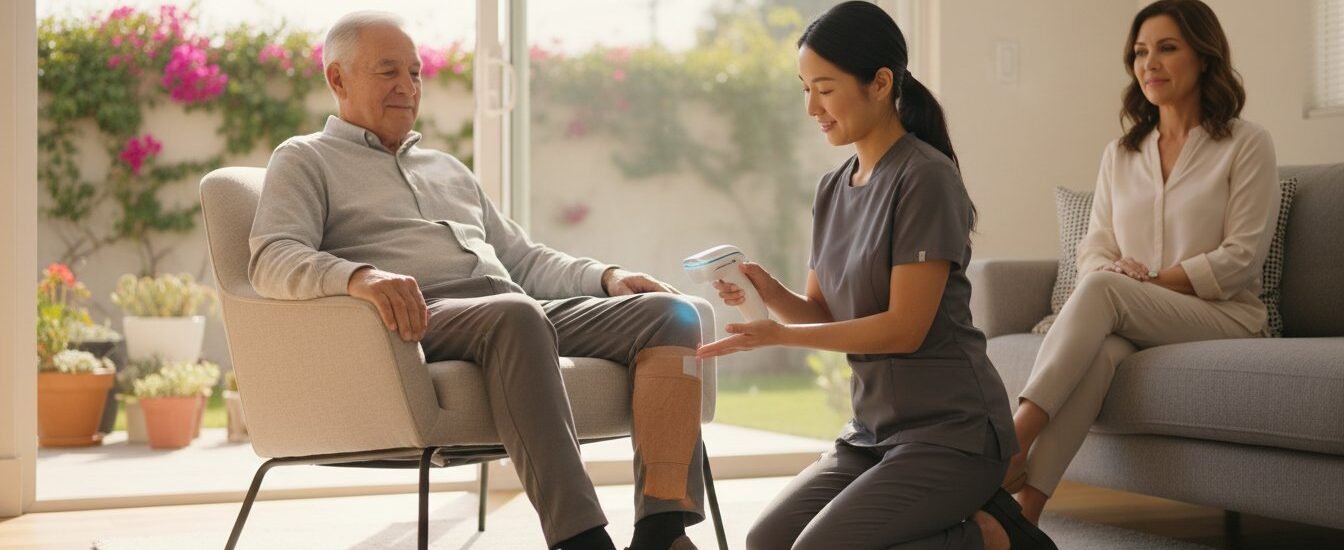
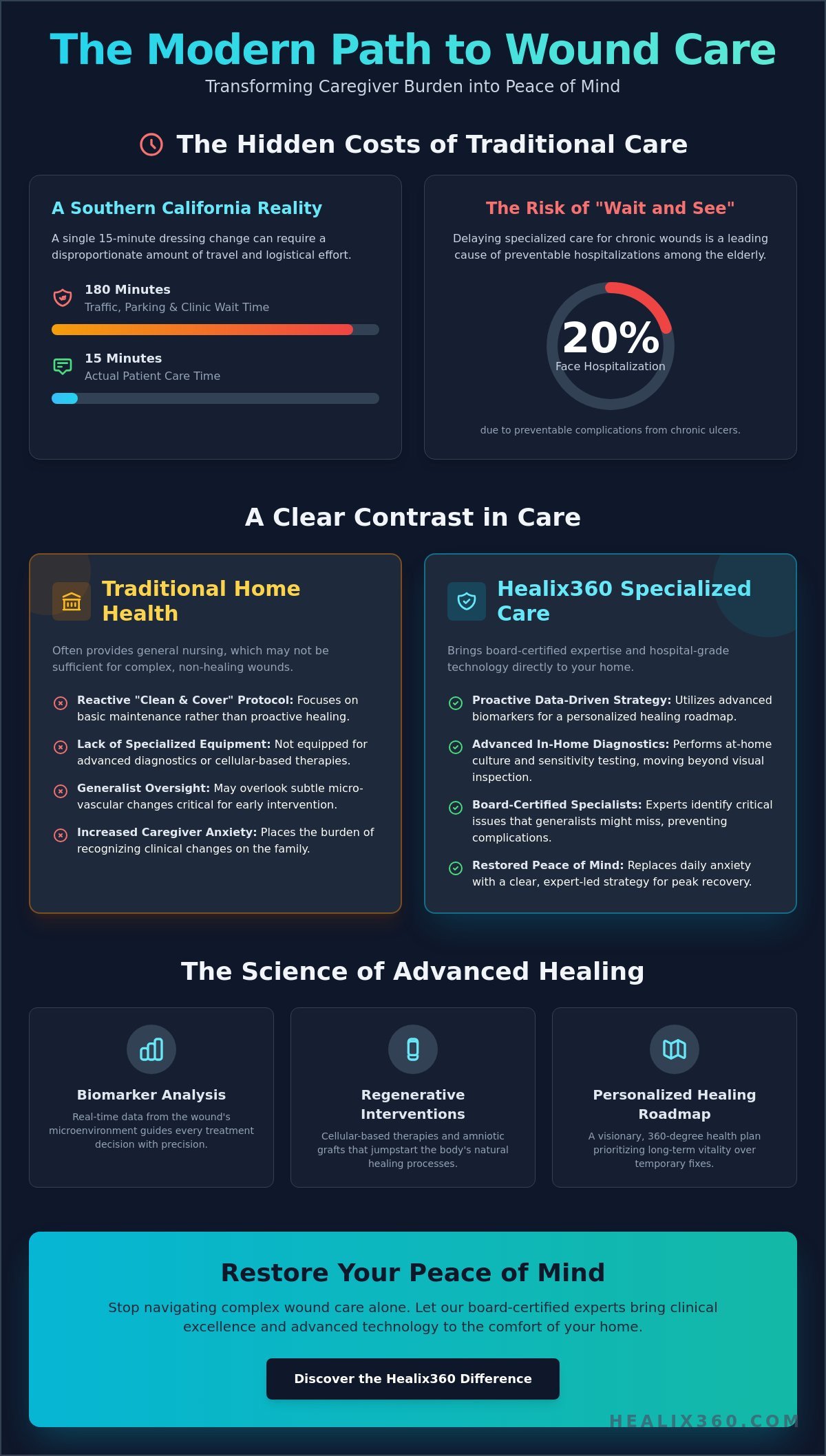
In early 2026, a Southern California family caregiver spent 180 minutes navigating traffic and complex logistics for a single 15-minute dressing change; this scenario illustrates a significant gap in traditional wound management. You likely recognize the quiet anxiety that accompanies every bandage removal, where the fear of infection meets the physical exhaustion of transporting a loved one to a distant clinic. It’s a heavy burden to manage clinical data and recovery milestones while trying to maintain a sense of normalcy at home.
This article demonstrates how specialized mobile medical intervention restores true peace of mind for caregiver wound care by bridging the gap between hospital-grade technology and your front door. You’ll discover how our board-certified experts utilize advanced biomarkers and precision diagnostics to accelerate the healing process without the stress of travel. We’ll outline the exact roadmap to reducing caregiver burnout through a 360-degree approach that prioritizes both patient longevity and your own mental well-being. By integrating clinical excellence with the comfort of your environment, we transform a complex medical challenge into a manageable path toward peak recovery.
Key Takeaways
- Understand how to navigate the complexities of aging in place by transforming the daily burden of wound monitoring into a structured, expert-led process.
- Explore the science of regenerative interventions and how a personalized healing roadmap optimizes the biological recovery process beyond basic medical supplies.
- Gain a clear framework for evaluating your current medical support, contrasting standard home health with the elite diagnostic capabilities of specialized mobile units.
- Implement a professional-grade assessment checklist to document physiological changes with the precision required for high-level clinical collaboration.
- Discover how the Healix360 experience restores peace of mind for caregiver wound care by providing a 360-degree view of patient health through advanced in-home evaluations.
The Caregiver’s Burden: Navigating Complex Wound Management in Southern California
Caring for a loved one with a non-healing wound is a marathon that tests both physical stamina and emotional resilience. In the sprawling urban landscape of Southern California, where traffic and distance often complicate access to specialized clinics, the responsibility of daily dressing changes falls heavily on family members. This constant vigilance creates a persistent state of anxiety. You aren’t just a daughter or a spouse; you’ve become a de facto clinical technician. Achieving true peace of mind for caregiver wound care requires moving beyond basic bandages toward a proactive, data-driven strategy.
The stakes of aging in place are exceptionally high. Many families adopt a “wait and see” approach, hoping a small abrasion will resolve on its own. However, delay is often the precursor to emergency room visits. Statistics from 2024 indicate that approximately 20% of elderly patients with chronic ulcers face hospitalization due to preventable complications. The most significant fear for any caregiver is missing the silent onset of infection. Redness, warmth, or a subtle change in odor can signal a shift from a localized issue to a systemic threat before you even realize the situation has escalated.
The Hidden Risks of Non-Healing Wounds
A wound becomes a clinical “chronic” case if it fails to show 50% surface area reduction within 30 days. When the biological machinery of recovery stalls, the risk of systemic sepsis or lower-limb amputation increases exponentially. The science of wound healing dictates that stagnant tissue is a magnet for biofilm, a protective layer for bacteria that resists standard cleaning. For those managing complex cases at home, consulting a comprehensive guide to bed sores is an essential step in identifying the early biomarkers of tissue decay.
Why Traditional Home Health Often Isn’t Enough
Standard home health agencies often provide general nursing, but they frequently lack the specialized equipment required for advanced tissue optimization. A “clean and cover” protocol is rarely sufficient for a complex diabetic ulcer or a Stage IV pressure injury. To provide genuine peace of mind for caregiver wound care, interventions must be more precise. This includes:
- Board-certified assessments: Utilizing specialists who can identify micro-vascular changes that generalists might overlook.
- Advanced diagnostics: Moving beyond visual inspection to perform at-home culture and sensitivity testing.
- Precision technology: Implementing cellular-based therapies that jumpstart the body’s natural regenerative processes.
Relying on outdated protocols doesn’t just slow down recovery; it places the patient at risk of a 360-degree health collapse. True mastery over wound management involves integrating high-tech diagnostics with a compassionate, human-centric approach that views the patient as a whole person, not just a clinical data point.
Beyond Basic Bandages: The Science of Advanced Wound Healing
Advanced wound care transcends the traditional cycle of cleaning and covering. It’s a sophisticated integration of biological interventions and regenerative science designed to restore skin integrity from the cellular level. Healix360 operates as a visionary health architect, constructing a personalized healing roadmap for every patient that prioritizes long-term vitality over temporary fixes. This approach relies on the rigorous analysis of specific biomarkers. These biological indicators provide our specialists with real-time data on the wound’s microenvironment, guiding every decision with mathematical precision. We’ve shifted the paradigm from reactive treatments to a proactive model of longevity-focused skin health. This high-level clinical oversight provides the essential peace of mind for caregiver wound care by replacing daily anxiety with a clear, data-driven strategy.
Regenerative Medicine: Amniotic Grafts and Stem Cell Therapy
Amniotic membrane grafts serve as a sophisticated biological scaffold, providing the structural framework necessary for new tissue growth. These grafts are rich in essential growth factors that stimulate cellular migration and proliferation. This process is vital for closing stubborn diabetic and pressure ulcers that have stalled in the inflammatory phase. According to the Evaluation and management of chronic wounds, a structured assessment is the first step in successful recovery. You can find technical depth on these specific interventions in our guide to skin substitute treatments. This regenerative focus ensures we aren’t just managing a wound; we’re optimizing the body’s natural capacity for repair.
Negative Pressure and Bio-engineered Solutions
Negative Pressure Wound Therapy (NPWT), often referred to as a Wound VAC, utilizes controlled sub-atmospheric pressure at the bedside to remove excess fluid and promote blood flow to the site. It’s a highly effective tool for complex surgical sites or deep chronic wounds that affect an estimated 6.7 million people in the United States. For wounds requiring more intensive intervention, we utilize bio-engineered skin substitutes. A bio-engineered skin substitute is a lab-grown biological alternative that mimics the properties of human skin to facilitate closure. These solutions are key components of our 360-degree view of patient health, ensuring that even non-responsive wounds have a path toward resolution. If you’re ready to see how these technologies can transform the recovery journey, explore our comprehensive healing solutions today.
Comparing Care Models: General Home Health vs. Mobile Specialists
Choosing between a general home health agency and a specialized mobile wound unit is a pivotal decision for your family’s health trajectory. Most generalists provide a broad spectrum of care, from physical therapy to medication management, but their wound care often stops at basic dressing changes. You deserve a framework that prioritizes clinical outcomes over mere maintenance. While generalist nurses might visit once or twice a week, specialized mobile units function as a hospital-grade clinic on wheels, bringing advanced diagnostics directly to your bedside. This distinction is vital for achieving true peace of mind for caregiver wound care, as it moves the strategy from reactive patching to proactive healing.
The specialized model integrates a 360-degree view of patient health. We look beyond the perimeter of the wound to evaluate systemic factors like vascular integrity, nutritional biomarkers, and overall longevity. This level of scrutiny ensures that no underlying pathology is ignored. Research from the University of Florida College of Medicine confirms that a multidisciplinary, specialized approach significantly improves patient safety and healing rates in complex cases. By choosing a specialist, you’re opting for physician-led consultations that occur with higher frequency and greater diagnostic depth than standard home health protocols allow.
The Specialist Advantage: Board-Certified Expertise
Precision is the cornerstone of effective recovery. Having a board-certified specialist at the bedside prevents the diagnostic errors that often plague generalist care models. One of the most critical interventions we perform is sharp debridement, which is the surgical removal of necrotic tissue. It’s a procedure that requires high-level clinical mastery to perform safely in a home setting. Our team ensures a seamless transition for those requiring advanced surgical wound care post-discharge, bridging the gap between the operating room and the living room. This continuity of care reduces the risk of hospital readmission, which currently affects nearly 20% of patients with chronic wounds within 30 days of discharge.
Logistics and Convenience for SoCal Families
Time is your most finite resource. In the high-traffic corridors of Southern California, a simple appointment in Glendale or Los Angeles can easily morph into a 3-hour round trip. We eliminate this logistical burden entirely. By transforming the home into a sterile, high-tech treatment environment, we reduce the physical and emotional trauma often associated with transporting a compromised patient. Scheduling becomes a collaborative process rather than a rigid hurdle. For the busy caregiver, this efficiency doesn’t just save time; it restores the emotional bandwidth needed to focus on your loved one’s holistic wellness. This streamlined logistics model is a core component of providing peace of mind for caregiver wound care in a fast-paced urban landscape.
A Caregiver’s Roadmap: Managing Wounds with Professional Support
Effective wound management restores peace of mind for caregiver wound care by transforming a clinical burden into a predictable, data-driven process. Success in 2026 requires a structured approach that prioritizes cellular optimization and professional oversight. This roadmap empowers you to move beyond reactive care into a proactive state of health architecture, ensuring that every intervention serves the goal of long-term longevity.
- Step 1: Conduct a daily visual assessment using a standardized checklist to track wound dimensions and tissue viability.
- Step 2: Document precise changes in drainage volume, color, and odor for your mobile specialist to analyze during their next visit.
- Step 3: Prioritize nutritional optimization; protein and hydration serve as the fundamental building blocks for cellular repair.
- Step 4: Coordinate with Medicare Part B providers to streamline billing and minimize out-of-pocket expenses.
- Step 5: Offload the heavy medical decision-making to a mobile wound care partner, allowing you to focus on the emotional well-being of your loved one.
The Role of Nutrition and Lifestyle in Healing
Southern California’s focus on longevity begins with metabolic health. Healing a chronic wound is an energy-intensive process that requires specific biomarkers to be in peak ranges. You should ensure a high intake of Zinc and Vitamin C to facilitate collagen synthesis, alongside high-quality proteins that fuel tissue regeneration. For those also managing circulatory issues, exploring managing edema in legs provides essential vascular health tips that accelerate the body’s natural recovery speed.
Navigating Medicare and Insurance in 2026
Understanding the financial landscape is vital for long-term peace of mind for caregiver wound care. Healix360 operates as a Medicare Part B provider, which significantly simplifies the billing process for families. Mobile specialist visits are coded differently than standard home health services; they often allow for more frequent, high-level interventions without the typical restrictions of homebound status. Use this checklist to verify your coverage:
- Confirm the provider accepts Medicare Part B assignment for specialist consultations.
- Verify coverage for advanced biological grafts and cellular-based products.
- Ensure the mobile service includes all necessary diagnostic testing and imaging.
Take the first step toward clinical excellence in your own home. Schedule a consultation with Healix360 to optimize your loved one’s healing journey today.
Healix360: Restoring Peace of Mind through Expert In-Home Care
Healix360 functions as an elite architectural guide for Southern California families navigating the high-stakes environment of chronic wound management. We’ve engineered a clinical model that brings the precision of a high-end medical facility into the comfort of your living room. By mastering complex biological data and translating it into a clear, actionable roadmap, we ensure every patient benefits from a 360-degree view of their recovery. This sophisticated approach provides the essential peace of mind for caregiver wound care that transforms a taxing medical event into a structured journey toward longevity.
The Healix360 Experience is a meticulous progression from the initial bedside evaluation to successful wound closure. Our specialists don’t just look at the surface; they assess deep tissue biomarkers and vascular health to create an integrative care plan. We maintain active partnerships with leading home health agencies and case managers across Los Angeles, ensuring a seamless flow of information between all members of the medical team. This level of synergy eliminates the gaps in care that often lead to setbacks, allowing the caregiver to step back from the role of medical coordinator and return to the role of a supportive family member.
Our clinical philosophy is rooted in the idea that mastery over data leads to better outcomes. We utilize advanced diagnostic tools to monitor healing progress in real-time, adjusting protocols as the biological landscape shifts. This proactive stance prevents complications before they arise, anchoring the patient’s recovery in scientific certainty rather than guesswork. It’s a premium level of service designed for those who view their health as their most valuable asset and refuse to settle for standard, reactive treatments.
Our Service Area: From Glendale to Beverly Hills
Our mobile clinical units are strategically positioned to serve the greater Los Angeles area, including Glendale, Beverly Hills, and the surrounding Southern California corridors. We understand that mobility is often a significant challenge for those requiring advanced interventions. That’s why we offer comprehensive bedside wound evaluations in private residences, assisted living facilities, and skilled nursing centers. Our team brings the latest breakthroughs in science directly to the patient, ensuring high-level care is always attainable regardless of the setting. You can explore our detailed methodology and local coverage by viewing the full specialist guide for 2026.
Take the Next Step Toward Healing
It’s time to stop the cycle of uncertainty that often accompanies chronic wound management. Requesting a professional bedside assessment allows our visionary health architects to intervene with precision and stop the progression of non-healing wounds. This specialized intervention leads to peak performance in patient recovery and restores a sense of holistic wellness to the entire household. We believe in providing a clear path forward that is both data-driven and deeply human. Contact Healix360 today for expert mobile wound care.
Advancing Your Journey Toward Restoration
Managing complex recovery in 2026 requires more than traditional dressings; it demands a sophisticated integration of regenerative science and mobile precision. By transitioning from general home health models to specialized bedside intervention, you ensure your loved one benefits from board-certified expertise without the stress of clinic transport. Healix360 delivers this evolution through advanced amniotic grafts, which utilize biological scaffolding to accelerate tissue repair in chronic wounds. As a Medicare Part B provider, we bridge the gap between elite clinical technology and the comfort of your home environment. This shift in care philosophy provides the essential peace of mind for caregiver wound care, transforming a daily burden into a structured path toward healing. You aren’t just managing a condition; you’re optimizing a recovery outcome through data-driven methodology. Our team stands ready to architect a personalized roadmap that prioritizes both clinical excellence and human dignity. Restore your peace of mind with a professional bedside wound evaluation from Healix360. You have the power to change the trajectory of this journey today.
Frequently Asked Questions
Is mobile wound care covered by Medicare Part B in Southern California?
Yes, Medicare Part B covers 80% of the allowable charges for mobile wound care when a specialist determines the treatment is medically necessary. The remaining 20% is typically managed through supplemental insurance plans or secondary providers. This coverage applies to Southern California residents under the 2024 Medicare Physician Fee Schedule. You’ll receive a detailed breakdown of how these clinical benefits support your long-term health optimization goals and diagnostic needs.
What are the first signs that a wound is becoming infected?
Watch for periwound redness that extends more than 2 centimeters from the wound edge or a sudden 50% increase in drainage volume. These clinical markers suggest the wound’s bioburden is rising. If you notice a localized temperature increase of 3 degrees or more compared to surrounding skin, it’s time for a professional assessment. Catching these biomarkers early ensures we maintain a steady trajectory toward transformative results and avoid systemic complications.
Can a mobile specialist perform debridement at my home in Los Angeles?
Qualified specialists perform sharp, mechanical, or enzymatic debridement directly in your Los Angeles residence to remove necrotic tissue. This procedure is essential because devitalized tissue stalls the healing cycle and increases infection risks. By utilizing bedside debridement, we eliminate the 3-hour round trip often required for clinic visits. This precision-focused approach ensures your recovery environment stays comfortable while we optimize the wound bed for rapid cellular regeneration.
How do amniotic membrane grafts help wounds heal faster than standard dressings?
Amniotic membrane grafts accelerate healing by delivering over 200 essential growth factors and cytokines directly to the wound site. Clinical data from the Journal of Wound Care indicates these biological dressings can achieve closure 40% faster than standard saline-soaked gauze. This advanced technology acts as a visionary blueprint for your body. It guides new tissue growth and restores structural integrity with a level of precision that traditional bandages simply can’t match.
What is the difference between home health nursing and a mobile wound specialist?
Home health nursing provides generalized support, while a mobile wound specialist delivers a 360-degree view of complex wound pathology. Our specialists utilize advanced diagnostics and bio-engineered grafts that standard nursing protocols don’t include. This level of clinical authority offers true peace of mind for caregiver wound care by ensuring every biomarker is monitored. We move beyond simple dressing changes to active longevity management and data-driven recovery plans.
How often will a specialist visit my home for wound care assessments?
Most treatment plans involve 1 weekly assessment to monitor the wound’s progression and adjust the biological interventions as needed. High-acuity cases may require 2 visits per week during the initial 14-day stabilization phase to ensure optimal outcomes. This structured cadence ensures no detail of your recovery is overlooked. We provide a clear, actionable roadmap that tracks healing percentages at every encounter to guarantee the peak performance of the treatment plan.
What should I do if my loved one’s surgical wound starts to open?
Immediately apply a sterile, saline-moistened gauze to the area and notify your specialist for an urgent diagnostic evaluation. Dehiscence affects approximately 3% of surgical sites and requires a professional to assess the depth of the separation. Don’t attempt to close the wound with adhesive strips yourself. Our team will provide an immediate review to prevent further complications and preserve the integrity of the surgical site through proactive, expert intervention.
Does my loved one need to be homebound to receive mobile wound care services?
Patients don’t need to meet the strict homebound criteria required by Medicare Part A to access our specialized mobile services. We operate under Medicare Part B, which allows individuals to receive elite medical care at home for convenience, safety, and better outcomes. This flexibility provides essential peace of mind for caregiver wound care by removing the logistical burden of medical transport. It allows you to focus on holistic wellness rather than complex transit schedules.