
What if the biological blueprint for healing your most stubborn wound is already coded within regenerative science, waiting for the right delivery system? For the 6.5 million Americans living with chronic wounds, the standard cycle of frequent travel to clinics and basic dressing changes often leads to a plateau in recovery. If you’re seeking stem cell therapy for non-healing ulcers Los Angeles offers a sophisticated, mobile alternative that prioritizes your longevity and comfort. We understand the quiet anxiety that comes when a wound refuses to close; it’s especially heavy when the threat of infection or amputation feels like a constant shadow.
You deserve a clinical partner that views your health through a 360-degree lens rather than focusing on a single symptom. This article details how our integrative approach uses amniotic grafts and cellular optimization to jumpstart the body’s natural repair mechanisms. We’ll show you how we’ve eliminated the friction of traditional care by bringing advanced regenerative medicine directly to your home. You’ll learn how these transformative protocols prevent complications and restore your mobility. This allows you to focus on your lifestyle instead of your bandages, ensuring your path to recovery is as seamless as the results we achieve.
Key Takeaways
- Understand how regenerative breakthroughs shift the focus from perpetual wound management to active closure through advanced cellular recruitment.
- Discover how stem cell therapy for non-healing ulcers Los Angeles provides a clinical-grade solution delivered directly to your home to protect fragile tissue from the stress of travel.
- Learn why amniotic membrane grafts serve as a cornerstone for healing by addressing chronic inflammation and promoting rapid angiogenesis.
- Identify the specific criteria for diabetic and venous ulcer recovery to determine if these sophisticated mobile interventions are the right path for your health optimization.
- Gain insight into the Healix360 philosophy of visionary health architecture, where board-certified expertise meets the convenience of high-end, personalized care.
Chronic Ulcers and the Regenerative Breakthrough in Los Angeles
Your body’s ability to repair itself is its most sophisticated asset. When that process stalls, it isn’t just a medical inconvenience; it’s a barrier to the active, high-performance lifestyle you’ve built in Southern California. We’re seeing a fundamental shift in how the Los Angeles medical community approaches chronic wounds, moving away from passive observation toward active biological intervention. By integrating stem cell therapy for non-healing ulcers Los Angeles providers are now able to address the cellular exhaustion that prevents closure and restore the trajectory of health.
A non-healing ulcer is a wound that fails to progress through the expected healing stages within 4 weeks. For many, these wounds become static, trapped in a cycle of inflammation that standard treatments can’t break. This stagnation often leads to a decline in quality of life, yet the emergence of regenerative medicine offers a 360-degree view of recovery. We no longer settle for “wound management” when “wound closure” is the clinical gold standard. This transition relies on high-tech diagnostics and cellular catalysts that reignite the body’s dormant repair mechanisms.
Why Traditional Wound Care Fails
Conventional wound care often focuses on the surface, but the real struggle happens at the cellular level. Chronic diabetic and venous ulcers frequently enter a stalled inflammatory phase where the body’s natural repair signals become muffled and ineffective. This biological “noise” prevents the transition to the proliferative phase where new tissue actually forms.
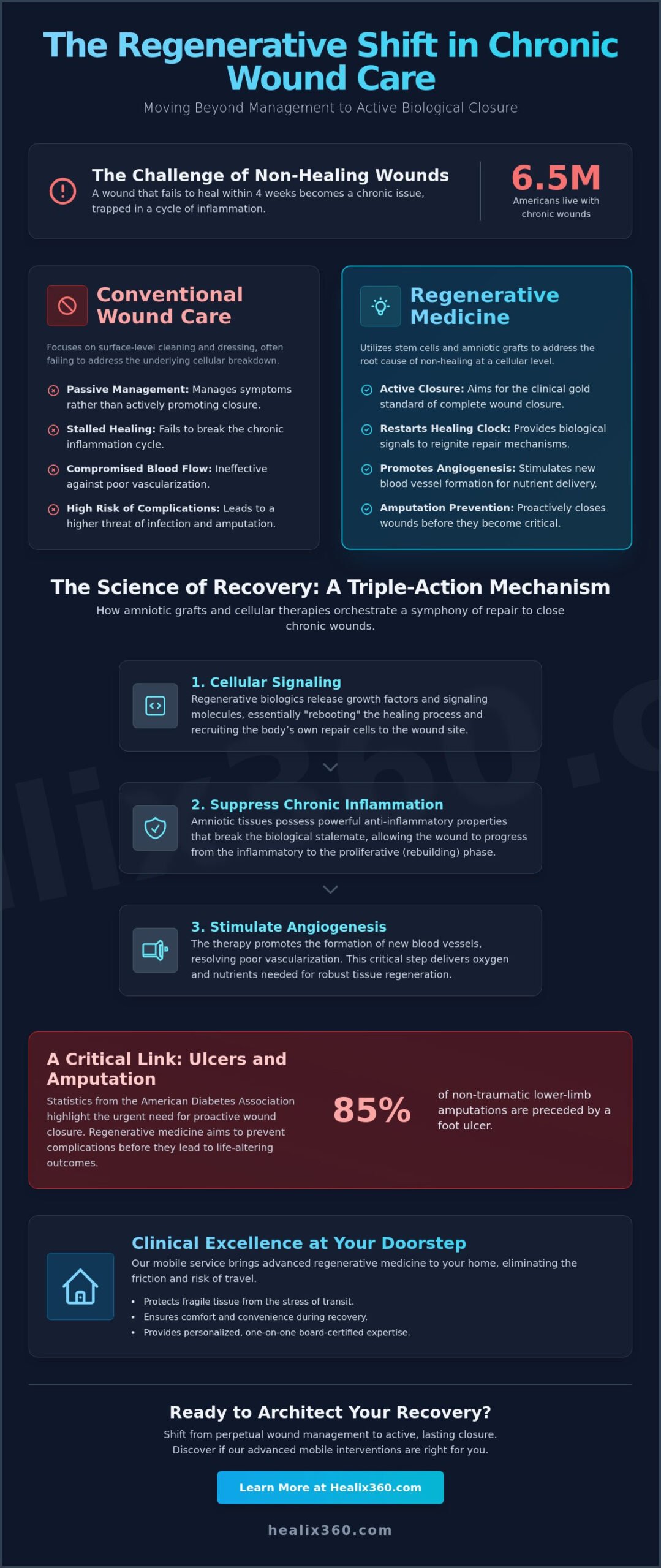
Poor vascularization remains a primary culprit in these failures. In patients with peripheral artery disease or advanced diabetes, the delivery of oxygen and essential nutrients to the wound site is severely compromised. Without adequate blood flow, the local environment becomes toxic, preventing standard dressings from achieving lasting results. Statistics from the American Diabetes Association indicate that foot ulcers precede 85% of non-traumatic lower-limb amputations, a figure that underscores the urgent need for more than just a clean bandage.
The Regenerative Medicine Advantage
We’re moving beyond simple topical applications to cellular-level intervention. Understanding The Science of Stem Cell Therapy allows us to leverage these cellular messengers to bridge the gap between chronic inflammation and active recovery. This approach introduces vital biomarkers and signaling molecules that essentially restart the healing clock, providing the “instructions” the tissue needs to rebuild itself.
- Cellular Signaling: Regenerative biologics release growth factors that recruit the body’s own repair cells to the site of injury.
- Angiogenesis: Modern therapies focus on stimulating new blood vessel formation to resolve the issues of poor vascularization.
- Amputation Prevention: Proactive intervention aims to close wounds before they reach a critical stage, preserving limb integrity and long-term mobility.
By optimizing the biological environment, we aim for peak performance in tissue repair. This isn’t just about healing a wound; it’s about safeguarding your longevity. In a city that values excellence and precision, stem cell therapy for non-healing ulcers Los Angeles represents the intersection of cutting-edge science and transformative personal health.
The Science of Recovery: How Stem Cells and Amniotic Grafts Close Wounds
Chronic wounds represent a biological stalemate where the body’s natural repair mechanisms have stalled. Breaking this cycle requires more than traditional dressings; it demands a fundamental shift in the wound’s microenvironment. By utilizing stem cell therapy for non-healing ulcers Los Angeles residents can now access mobile treatments that target the cellular root of the problem. These therapies work through a triple-action mechanism: they recruit local repair cells, suppress chronic inflammation, and stimulate the growth of new blood vessels. This orchestration of cellular activity is what allows a wound that has been open for months to finally begin the closure process.
Clinical data supports this shift toward regenerative interventions. Research published by the National Institutes of Health confirms that innovative stem cell therapies significantly improve closure rates for complex lesions by delivering concentrated signaling molecules directly to the site of injury. While traditional bio-engineered skin substitutes often provide a temporary cover, regenerative solutions like autologous stem cells and amniotic tissues actually reintegrate with the patient’s own biology. This process transforms a stagnant wound bed into a dynamic site of tissue synthesis, optimizing the area for long-term health and stability.
Amniotic Membrane Grafts Explained
Amniotic tissue represents a gold standard in regenerative material due to its high concentration of over 200 essential growth factors and signaling cytokines. These grafts serve as a sophisticated skin substitute, providing a natural extracellular matrix that acts as a scaffold for new skin cells. Unlike synthetic options, amniotic grafts are immunologically privileged, meaning they rarely trigger a rejection response. This biological framework allows for rapid epithelialization, effectively sealing the wound and protecting the underlying tissue from external pathogens.
Angiogenesis and Tissue Regeneration
Oxygen is the primary currency of healing. Many chronic wounds, particularly deep diabetic neuropathic ulcers, suffer from microvascular dysfunction that starves the tissue of nutrients. Regenerative therapies trigger angiogenesis, the formation of new capillary networks, which restores vital oxygenation to the deep layers of the dermis. This revitalized blood flow is essential for closing deep ulcers that have resisted standard care for over 120 days.
Beyond structural repair, these treatments modulate the immune response to ensure a clean recovery environment. Stem cell therapy reduces persistent inflammation to prevent secondary infections and localized tissue necrosis. This proactive approach ensures the healing process remains on track and avoids the setbacks common in traditional wound care. If you’re ready to explore how these clinical breakthroughs can restore your mobility, consider a personalized consultation with the experts at Healix360 to map out your recovery roadmap.
Clinical Excellence at Your Doorstep: The Mobile Advantage in L.A.
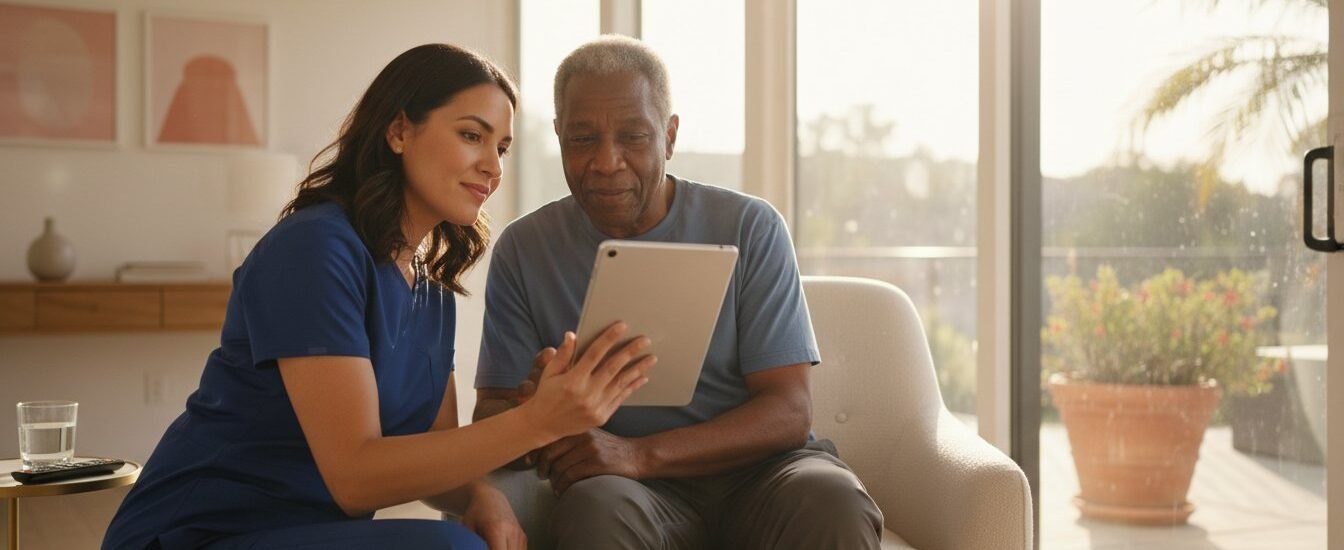
Travel is often the silent enemy of wound recovery. For a patient in Beverly Hills or Glendale dealing with chronic leg or foot ulcers, the logistics of a clinical visit involve significant physical strain. Every movement into a vehicle or onto an exam table creates shear force on fragile tissue, often stalling the biological progress made in previous weeks. Healix360 eliminates these risks by bringing a board-certified clinical suite directly to your residence. We maintain rigorous sterile protocols that mirror a traditional surgical environment while prioritizing your comfort. Our team manages the entire process through a 360-degree view, coordinating seamlessly with your existing home health agencies and family members to ensure a unified care plan.
Why Mobile Care is Safer for Ulcer Patients
Reducing exposure to hospital-acquired infections (HAIs) is a primary clinical goal. Data from the CDC indicates that roughly 1 in 31 hospital patients has at least one HAI on any given day. By receiving stem cell therapy for non-healing ulcers Los Angeles in your own home, you bypass these opportunistic pathogens. Healing happens faster when your nervous system is at rest. The psychological security of your own living room lowers systemic cortisol, which directly supports the cellular environment needed for regenerative grafts to take hold. We’ve seen that patients who remain in a familiar environment maintain better nutritional compliance and higher morale, both of which are critical for longevity and tissue repair.
Precision Logistics in Southern California
Our specialists navigate the complexities of mobile wound care across the diverse geography of Los Angeles County. We utilize portable, high-resolution imaging and diagnostic tools for precise bedside evaluations. This isn’t a basic home visit; it’s a mobile surgical intervention. Our protocols include:
- Advanced sharp debridement to prepare the wound bed for cellular integration.
- Digital wound measurement and tracking to provide objective data on healing velocity.
- Regenerative graft application using cryopreserved tissues that are transported in specialized temperature-controlled units.
- Integrated communication with your primary care physician to ensure all biomarkers are optimized.
This level of logistical precision ensures that stem cell therapy for non-healing ulcers Los Angeles reaches patients who were previously considered too high-risk for transport. We’ve optimized our delivery model to ensure that the quality of care in a West Hollywood apartment or a Pasadena estate is identical to that of a top-tier surgical center. By removing the barrier of transportation, we empower you to focus entirely on your biological recovery and long-term vitality.
Is Regenerative Therapy Right for You? A Practical Guide for Residents
Determining your eligibility for advanced wound care is the first step toward restoring your mobility. If you’ve struggled with a wound that hasn’t shown 50% improvement over a 30-day period, your body likely needs a biological catalyst. Our clinical team uses stem cell therapy for non-healing ulcers Los Angeles to address the cellular stagnation that halts the natural repair cycle. We bring these sophisticated interventions directly to your home, removing the logistical barriers that often delay critical care.
Ulcer Types That Benefit Most
Chronic wounds are not just skin-deep issues; they’re complex biological failures. Our mobile specialists focus on high-risk cases where traditional dressings have failed to produce results. We prioritize diabetic ulcer treatment to prevent the 80% of non-traumatic amputations that begin with a simple foot sore. For patients in skilled nursing facilities, we provide targeted bed sores ulcer management to stop stage 3 and 4 pressure injuries from leading to systemic infection. We also optimize recovery for venous & arterial ulcers by addressing the underlying circulatory dysfunction that prevents oxygen from reaching the tissue.
Navigating Insurance and Medicare
A common hurdle for many Los Angeles residents is the perceived cost of innovation. Medicare Part B frequently covers mobile medical consultations and the application of amniotic grafts when medical necessity is documented. Healix360 manages the complex billing for these procedural advanced wound treatments directly. You don’t have to decipher the codes yourself. Clinical data shows that up to 90% of chronic wounds can reach closure within 12 weeks when biological grafts are utilized. This makes regenerative options a cost-effective alternative to prolonged hospital stays or repeated surgical debridement.
Your journey begins with a comprehensive mobile consultation. We evaluate your biomarkers, nutritional status, and the wound bed architecture to create a roadmap for longevity. We don’t just patch the surface; we rebuild the foundation of your health. By choosing stem cell therapy for non-healing ulcers Los Angeles, you’re investing in a future where your movement isn’t limited by a persistent injury. Our goal is to achieve complete wound closure while empowering you with the tools to prevent recurrence.
Healix360: Visionary Health Architects for Advanced Wound Recovery
Healix360 operates as a visionary health architect, treating the recovery process as a sophisticated biological reconstruction. We believe that medical care should respect patient dignity by providing elite, clinical-grade interventions within the comfort of a private residence. Our network consists of board-certified specialists across Southern California who specialize in complex tissue regeneration. By collaborating directly with home health agencies and hospital discharge teams, we ensure a 360-degree view of the patient’s recovery. This seamless integration eliminates the gaps in care that often lead to readmissions, providing a stable bridge from the hospital bed to long-term vitality.
A Partnership in Longevity
Our approach transcends the standard medical procedure; it’s a commitment to lifestyle optimization. We don’t just dress a wound. We analyze the underlying biomarkers and vascular health to create a personalized roadmap for recovery. This is critical because research indicates that roughly 25% of diabetic foot ulcers won’t heal through traditional methods alone. By utilizing stem cell therapy for non-healing ulcers Los Angeles patients can access at home, we target the root cause of cellular stagnation. This proactive stance is essential for preventing severe complications. Since nearly 85% of non-traumatic lower-limb amputations begin with a simple foot ulcer, our goal is to intervene before gangrene or systemic infection becomes a reality. We view every patient interaction as an opportunity to enhance longevity and restore peak physical performance.
Getting Started with Healix360
Starting the journey toward recovery shouldn’t be a bureaucratic hurdle. We’ve designed a streamlined referral process that empowers both patients and case managers to secure rapid intervention. Our mobile teams are equipped with advanced diagnostic tools, bringing the laboratory and the specialist directly to the patient’s bedside. We currently serve a wide range of Southern California communities, including:
- Santa Monica and the Westside: Providing rapid response for coastal residents.
- Glendale and Pasadena: Offering specialized care for the Tri-City area.
- Beverly Hills and West Hollywood: Delivering discreet, high-end medical solutions.
- Downtown Los Angeles: Supporting urban recovery with mobile efficiency.
Your health is your most valuable asset, and it deserves a data-driven, meticulous approach. Don’t wait for a minor wound to become a life-altering complication. Contact Healix360 today to schedule a comprehensive mobile assessment. Our specialists will evaluate your specific needs and determine if stem cell therapy for non-healing ulcers Los Angeles is the right catalyst for your healing journey. Take the first step toward a transformative recovery and reclaim your quality of life.
Take the Next Step Toward Lasting Wound Recovery
True healing requires more than just superficial treatment; it demands a fundamental shift in how your body repairs itself. By utilizing advanced regenerative amniotic grafts, our mobile service brings the latest biological breakthroughs directly to your door. This model eliminates the logistical barriers of traditional clinics, allowing our board-certified wound care specialists to focus entirely on your physiological optimization. When you choose stem cell therapy for non-healing ulcers Los Angeles, you’re investing in a 360-degree recovery plan that prioritizes your long-term longevity and daily comfort.
As a dedicated Medicare Part B Provider, Healix360 bridges the gap between elite medical technology and practical accessibility. We’ve streamlined the path to recovery by combining clinical rigor with a human-centric approach that respects your time and your goals. Our architects of health don’t just manage chronic conditions; they utilize precise biomarkers to trigger transformative results. It’s time to reclaim your independence and move beyond the constraints of non-healing wounds.
Schedule your mobile wound evaluation with Healix360 today and experience the confidence that comes with expert, proactive care. Your journey to peak performance starts with a single, decisive action toward better health.
Frequently Asked Questions
Does Medicare cover stem cell therapy for ulcers in Los Angeles?
Medicare Part B typically covers regenerative tissue grafts for chronic wounds when standard treatments haven’t shown progress after 30 days. Our team conducts a thorough review of your specific coverage to ensure your treatment plan is fully optimized. This proactive approach allows you to focus on healing while we handle the clinical documentation required for your benefits.
Is amniotic membrane grafting the same as stem cell therapy?
Amniotic membrane grafting is a specific, highly effective branch of regenerative medicine that utilizes biological scaffolding to stimulate healing. While people often search for stem cell therapy for non-healing ulcers Los Angeles, these grafts actually work by providing essential growth factors and cytokines to the wound site. This method recruits your own cells to rebuild tissue and restore your health from the inside out.
How many treatments are typically needed for a non-healing ulcer to close?
Most patients see total wound closure within 4 to 12 weekly applications of advanced regenerative grafts. Research from the Journal of Wound Care shows that these biological treatments can accelerate healing by 40 percent compared to traditional dressings. Your individual roadmap to recovery is based on your specific biomarkers and the initial size of the ulcer.
Is the mobile wound care procedure painful?
The application of regenerative therapy is a non-invasive and generally painless process performed in the comfort of your home. We use precise techniques to prepare the wound bed, applying localized numbing if any debridement is required to ensure your total comfort. Our goal is to provide a sophisticated clinical experience that feels supportive and empowering rather than clinical or cold.
Can I receive regenerative therapy if I am in an assisted living facility?
Yes, we bring our advanced mobile solutions directly to residents in assisted living and skilled nursing facilities throughout the region. We partner with your existing care team to provide a 360-degree view of your recovery, ensuring every detail is managed with precision. This eliminates the stress of transport and keeps you in an environment that supports your long-term longevity.
What is the success rate for stem cell therapy in diabetic foot ulcers?
Clinical data published in the journal Diabetes Care indicates that amniotic tissue grafts achieve a 90 percent healing rate within 12 weeks. In contrast, standard wound care often results in success rates of only 50 percent during that same timeframe. Utilizing stem cell therapy for non-healing ulcers Los Angeles provides a data-driven path to avoiding the 15 percent risk of amputation associated with chronic diabetic wounds.
How do I know if my wound is “non-healing” and needs a specialist?
A wound is medically defined as non-healing if it hasn’t decreased in size by at least 50 percent after 28 days of standard care. These stalled wounds require a shift in strategy to overcome biological barriers that prevent natural closure. If your ulcer has persisted for more than 4 weeks, a specialist can use advanced diagnostics to restart your body’s regenerative cycle.
Why choose mobile wound care over a traditional wound center?
Mobile wound care provides an elite, personalized experience that saves you the 3 to 5 hours typically spent traveling to and waiting at a traditional clinic. We bring peak-performance medical technology to your home, which eliminates the risk of hospital-acquired infections and respects your personal schedule. It’s a visionary approach to health that places your comfort and time at the center of the clinical journey.