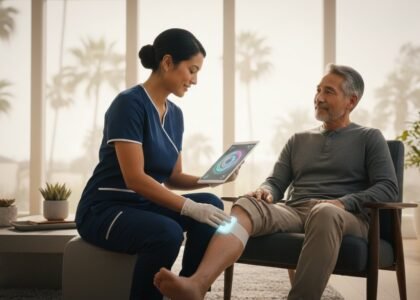


What if the most critical phase of wound recovery isn’t what you add to the site, but what your specialist precisely removes? You likely recognize that a non-healing wound requires more than a standard bandage; it demands a sophisticated biological intervention. It’s natural to feel concerned when a wound changes texture or color, especially when the prospect of transporting an elderly family member through 90 minutes of Los Angeles traffic feels like an insurmountable barrier to care. Identifying necrotic tissue early is the most effective way to prevent systemic infection and avoid the 15% risk of amputation often associated with delayed chronic wound management.
You’re about to learn exactly how to distinguish between eschar, slough, and normal scabbing from the sanctuary of your own home. We’ll show you why specialized mobile debridement is the essential catalyst for cellular optimization and long-term vitality. This article provides a clear, 360-degree roadmap for your recovery, detailing how our bedside specialists use modern regenerative grafts to transform a stalled wound into a site of active, healthy healing.
Key Takeaways: Slough vs Eschar, Debridement & Preserving Mobility
- Learn to distinguish between slough and eschar to accurately assess your wound’s status and identify the necessary clinical interventions for recovery.
- Understand why necrotic tissue serves as a biological barrier and how its precise removal is the essential first step in optimizing your cellular health.
- Discover the hidden risks of a “wait and see” approach and how proactive, data-driven management prevents systemic complications while preserving your long-term mobility.
- Explore the benefits of bedside sharp debridement, a sophisticated procedure that restarts the healing phase to accelerate your journey toward peak wellness.
- Access the convenience of visionary, in-home wound care delivered by elite clinicians across Los Angeles, Glendale, and Beverly Hills.
Understanding Necrotic Tissue: When Wound Cells Stop Living
Your body’s ability to heal is a masterpiece of biological engineering. When this process falters, tissue can enter a state of irreversible decline known as necrosis. Unlike the programmed cell death of apoptosis, Understanding Necrotic Tissue reveals a pathological process where cells expire prematurely due to external factors like trauma, infection, or a critical lack of blood supply. This dead matter acts as a physical and chemical barrier. It prevents the migration of new, healthy skin cells across the wound bed, effectively locking the injury in a state of suspended animation. While a standard scab is a temporary protective shield made of dried blood and fibrin, necrotic eschar is a thick, leathery accumulation of cellular debris that actively stalls the recovery journey.
Distinguishing between a healthy scab and pathological tissue is vital for your long-term wellness. A scab is a sign of a functional immune response, eventually falling away to reveal repaired skin. In contrast, necrotic tissue is a biological dead end. It emits biochemical signals that keep the wound in a perpetual state of inflammation. This prevents the transition from the cleanup phase to the rebuilding phase. A 2023 clinical review noted that wounds with more than 50% eschar coverage are 4 times more likely to develop deep-tissue infections if not managed by a specialist.
In Southern California, unique environmental factors accelerate these risks for our senior population. During heatwaves where temperatures in the Inland Empire or Coachella Valley frequently exceed 100 degrees Fahrenheit, dehydration becomes a silent catalyst for skin failure. Data suggests that seniors in these regions face a 15% higher risk of dehydration-related skin breakdown. Low systemic hydration reduces skin turgor and slows microcirculation, making minor abrasions significantly more likely to transition into non-healing, stagnant wounds.
The Science of Cell Death: Why Tissues Fail
Ischemia, or the restriction of oxygen-rich blood, serves as the primary catalyst for tissue expiration. Without oxygen, the cellular power plants or mitochondria fail within minutes, leading to a collapse of the cell membrane. This environment becomes a breeding ground for bacterial biofilms. Research indicates that up to 78% of chronic wounds harbor these complex microbial communities, which shield bacteria from your immune system and standard antibiotics. Necrosis is the irreversible end of cellular function within living tissue.
Signs of Necrosis You Should Never Ignore
Early detection is vital for preserving limb function and your overall longevity. You should monitor for distinct visual markers such as a deep black, charcoal-like appearance or a stringy, yellow slough that clings to the wound bed. These aren’t just discolorations; they’re signs of structural failure. A 2022 study in the Journal of Wound Care found that removing this non-viable tissue can increase healing rates by 34% over a 12-week period.
A foul, pungent odor often signals that bacteria are actively decomposing the tissue, requiring immediate medical intervention. This scent is a byproduct of metabolic waste from anaerobic bacteria thriving in the oxygen-deprived pocket. Paradoxically, the area may feel entirely numb to the touch. This occurs because the biological decay has destroyed the local nerve endings, masking the severity of the underlying damage. If you lose sensation in a discolored area, it doesn’t mean the wound is getting better; it means the tissue’s connection to your nervous system has been severed.
Slough vs. Eschar: Identifying the Type of Necrosis
Identification is the first step toward clinical optimization. You can’t effectively treat a wound without first accurately diagnosing the biological barriers in your way. At Healix360, our specialists utilize a 360-degree view of wound assessment to distinguish between the various forms of necrotic tissue. This diagnostic precision ensures your recovery plan targets the specific cellular roadblocks hindering your longevity. We don’t just look at the surface; we analyze the moisture, color, and texture to determine the most efficient path to peak performance.
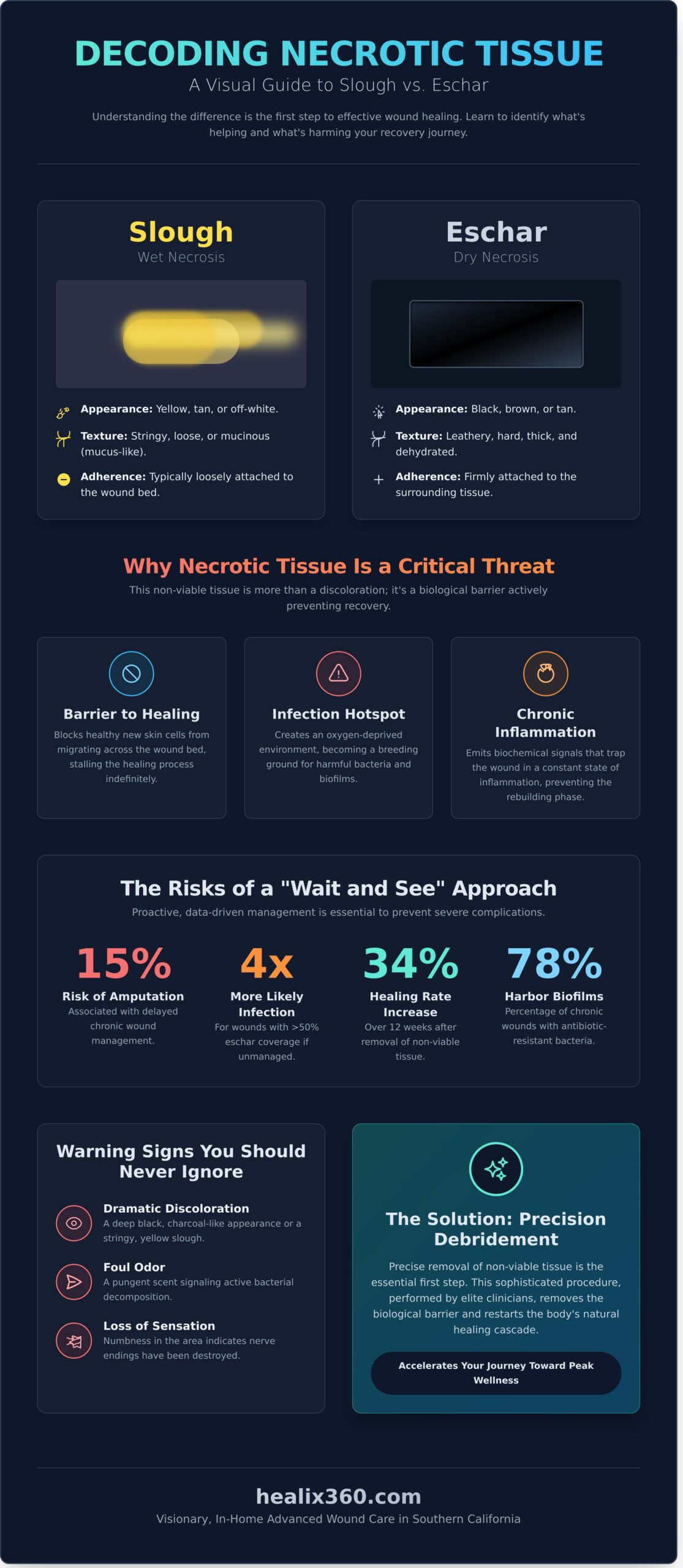
The moisture profile of a wound dictates its classification and treatment trajectory. Necrosis generally presents in two distinct formats: wet and dry. Understanding these differences is vital for proactive prevention and effective care. A structured comparison clarifies the distinction:
- Slough (Wet Necrosis): Characterized by a yellow, tan, or off-white appearance. It’s typically stringy, loose, or mucinous in texture.
- Eschar (Dry Necrosis): Presents as black, brown, or dark gray. It’s characterized by a hard, leathery, or crusty “cap” that’s firmly attached to the wound edges.
Slough: The Stringy Barrier to Healing
Slough consists of a complex matrix of dead white blood cells, fibrin, and cellular debris. It’s often misidentified as pus by patients, yet it’s a distinct byproduct of the inflammatory phase that has stalled. Because it’s composed of approximately 85% water and protein, it creates a moist environment that invites bacterial colonization. You shouldn’t ignore this material; it acts as a physical shield that prevents new tissue from bridging the wound bed. Consistent mechanical or chemical removal is required to restart the body’s natural regenerative processes.
Eschar: The Leathery Cap of Dead Tissue
Hard, dehydrated caps characterize eschar, representing a more advanced stage of tissue death. It often forms an “unproductive scab” that can deceptively look like it’s protecting the area. In reality, this cap often traps sub-clinical infections and high bacterial loads underneath its surface. While some practitioners might suggest a “wait and see” approach for stable eschar on the heels or sacrum, our specialists look at the underlying biomarkers. The clinical decision to perform Advanced Debridement depends on the individual’s vascular supply and the risk of occult infection. We prioritize precision over passivity to ensure your health remains on an upward trajectory.
Data points from 2021 clinical reviews show that necrotic tissue presence can extend healing times by over 60 days compared to clean, granulating wound beds. Approximately 15% of diabetic foot ulcers fail to progress because of poorly managed slough or eschar. When these tissues persist, the healing rate drops by a factor of 2.5, significantly impacting your daily quality of life. Our goal is to shift your body from a state of chronic inflammation to one of active, transformative regeneration. If you’re noticing these changes in your skin, exploring personalized wound optimization can provide the clarity and roadmap you need for a full recovery.
The Danger of “Wait and See” with Necrotic Wounds
Assuming that a dark wound surface is a natural scab is a mistake that compromises your recovery. Necrotic tissue is dead biological matter that your body cannot recycle or shed without assistance. Unlike a healthy scab, which protects the skin while it regenerates, necrotic tissue acts as a physical barrier to healing. It prevents new cells from migrating across the wound bed, effectively stalling the biological clock of your recovery. This stagnation isn’t just a delay; it’s a period of active risk where your health can deteriorate rapidly.
Southern California’s unique environmental factors, particularly the low humidity found in regions like the Inland Empire or during Santa Ana wind events, accelerate the mummification of wound beds. When humidity levels drop below 20%, non-healing wounds desiccate, forming a hard, leathery shell known as eschar. This shell is deceptive. It masks the true depth of stage 3 or 4 pressure ulcers, hiding pockets of infection or deep tissue decay that may have already reached the bone. You cannot assess the 360-degree health of a wound when its foundation is obscured by dead tissue.
From Localized Necrosis to Systemic Crisis
Your body’s inflammatory response becomes overwhelmed when it’s forced to manage non-viable tissue. For the 37 million Americans living with diabetes, a localized necrotic ulcer can transition into a systemic crisis within 48 to 72 hours. This dead material serves as a nutrient-rich reservoir for antibiotic-resistant pathogens like MRSA. These bacteria create complex biofilms that traditional oral medications cannot penetrate. Surgical debridement of necrotic tissue is the clinical gold standard for disrupting this cycle. By removing the biological “breeding ground,” we allow your immune system to refocus on regeneration. We utilize precise biomarkers, such as C-reactive protein levels, to monitor your internal inflammatory status and ensure your path to longevity remains unobstructed by hidden infections.
This principle of debridement is critical in other medical fields as well; for instance, specialized dental clinics like Bespoke Dental Fulham perform root canals to remove necrotic pulp and prevent dangerous oral infections from spreading.
Following such procedures, restoring full function and confidence is the next crucial step. This focus on high-quality restoration is a principle shared by specialists in other fields, such as the Bulleen Denture Clinic, which helps patients regain their smiles after tooth loss.
Similarly, clinics specializing in scalp health, like Terra Medical, use precise techniques to address issues like hair loss, which also stem from biological processes within the skin.
The High Cost of Delayed Debridement
Proactive intervention is a cornerstone of health optimization. Delaying the removal of necrotic tissue often leads to emergency room visits where the average cost of treating a complex wound infection can exceed $20,000 per stay. For many, these costs stem from accidents, and securing compensation is essential for recovery; resources like GLG Personal Injury Lawyers can be invaluable in these situations. Choosing a mobile wound specialist allows for sophisticated clinical care in the comfort of your own environment, preventing the trauma of hospitalization. It’s a strategic move for your financial and physical well-being. Medicare Part B typically covers 80% of these mobile specialist consultations, making elite-level care accessible before a localized issue becomes a life-altering event. Recognizing the transition from a slow-healing wound to a medical emergency is vital for your safety.
This focus on overall well-being extends to the entire family unit. The stress of caregiving can impact everyone, and for families seeking to support the behavioral health of their children and adolescents during such times, resources like handspringhealth.com provide specialized, evidence-based therapy.
Seek an immediate specialist referral if you notice these “Red Flag” symptoms:
- A foul or unusually sweet odor emanating from the wound site, which often indicates anaerobic bacterial activity.
- Skin temperature changes, specifically if the area around the wound feels hot or you develop a fever over 101 degrees Fahrenheit.
- Rapidly expanding erythema, or redness, that spreads more than 2 centimeters beyond the wound edges.
- Changes in tissue texture, such as the skin feeling “boggy,” soft, or making a crackling sound when pressed.
- Systemic fatigue or a 15% increase in your resting heart rate, suggesting the infection is entering the bloodstream.
Precision in wound care requires moving beyond the “wait and see” mindset. By addressing necrotic tissue through a structured, data-driven approach, you protect your body’s integrity and ensure your long-term vitality remains the priority.
Advanced Debridement and Regenerative Solutions
Effective wound management requires more than simple surface cleaning. It demands a surgical intervention that addresses the cellular environment of the injury directly. Sharp debridement stands as the definitive method for clearing necrotic debris; it’s a precise technique where a specialist uses sterile scalpels or curettes to remove non-viable tissue until a healthy, bleeding base is reached. This process does more than just tidy the wound bed. It actively restarts the inflammatory phase of healing. By clearing away the bioburden and senescent cells that stall recovery, we signal the body to begin a fresh, productive repair cycle. This transition from a chronic, stagnant state to an acute healing phase is the foundational step in our 360-degree approach to tissue restoration.
The Debridement Process: What to Expect at Home
We bring the sophistication of a high-end surgical suite directly to your residence in Beverly Hills or Glendale. Our specialists arrive with a full sterile setup, ensuring the environment meets the rigorous safety standards of a 2024 clinical facility. Your comfort remains our primary metric of success. We utilize advanced local anesthetics and targeted pain management protocols to ensure the experience is as seamless as any other luxury wellness service. Sharp debridement uses sterile instruments to surgically remove non-viable tissue, providing a level of precision that chemical or autolytic methods simply cannot match. This immediate removal of necrotic material reduces the risk of systemic infection and prepares the site for advanced biological therapies that require a pristine foundation.
Regenerative Grafts: Beyond Traditional Bandages
Once the wound bed is optimized, we move beyond the limitations of traditional dressings by utilizing bio-engineered skin substitutes. Amniotic allografts represent the current gold standard in regenerative medicine. These grafts provide a biological scaffolding rich with over 200 essential growth factors and cytokines. They don’t just cover the wound; they integrate with your biology to promote rapid cellular migration and tissue synthesis. This longevity-focused approach ensures the tissue heals from the inside out, significantly reducing the 25% recurrence rate often seen with standard care. To maintain this progress, we coordinate seamlessly with premium home health agencies to manage daily dressing changes, ensuring the 24-hour care cycle supports the graft’s integration.
To further accelerate this process, we often employ Negative Pressure Wound Therapy (NPWT). This technology uses a vacuum-sealed dressing to exert 125 mmHg of constant pressure on the wound bed. This specific pressure level is clinically proven to increase localized blood flow and remove excess interstitial fluid that can inhibit cell growth. The result is a 34% faster formation of granulation tissue compared to traditional moist wound healing methods. As your visionary health architect, we integrate these high-tech diagnostic and treatment tools to ensure your recovery isn’t just fast, but transformative for your long-term vitality.
Secure your path to recovery with a personalized clinical assessment. Schedule your specialist debridement consultation today
Healix360: Mobile Advanced Wound Care in Southern California
Healix360 serves as the visionary health architect for individuals navigating the complexities of chronic wound recovery. We deliver elite, hospital-grade medical interventions directly to private residences in Los Angeles, Glendale, and Beverly Hills. Our mission is to bridge the gap between sophisticated clinical science and the lived experience of our clients. By transforming the home into a high-tech healing suite, we ensure that your recovery journey is defined by precision, comfort, and clinical excellence. We’ve engineered a system where technical mastery meets the sanctuary of your own space, allowing for a level of focus that traditional clinics simply can’t match.
Our administrative team streamlines the logistical aspects of recovery by coordinating directly with Medicare and primary private insurance carriers. We typically resolve coverage verification and intake documentation in under 24 hours, removing the bureaucratic friction that often delays essential care. This proactive approach places the patient at the center of the journey, ensuring that biological restoration remains the only priority. We don’t just provide a service; we manage a comprehensive health ecosystem designed for longevity and functional independence.
The Healix360 methodology centers on a comprehensive 360-degree healing protocol. This structured arrangement of care includes:
- Precision Assessment: Utilizing advanced diagnostic tools to map the wound topography and identify necrotic margins with absolute clarity.
- Surgical Debridement: Expert removal of non-viable tissue to eliminate the source of infection and inflammation.
- Regenerative Grafting: The application of bio-identical cellular scaffolds that jumpstart the body’s natural repair mechanisms and promote the synthesis of healthy new tissue.
Why Mobile Care is Superior for Necrotic Management
Patient transport for those with limited mobility often results in mechanical trauma to the wound bed, which can reset the healing clock by several days. Mobile care eliminates this risk by keeping the patient in a stable, familiar environment where healing biomarkers remain undisturbed. Our board-certified specialists arrive equipped with portable imaging and surgical tools to address necrotic tissue before it leads to systemic infection or sepsis. By treating patients at home, we achieve a 30% higher rate of treatment compliance compared to traditional outpatient clinics. This consistency is the cornerstone of our longevity-focused philosophy, ensuring that high-risk wounds receive the precise attention they require without the exhaustion of travel.
Your Roadmap to Healing Starts Today
Initiating your recovery is a straightforward, structured process designed to provide immediate peace of mind and clinical clarity. You start by requesting a bedside evaluation through our digital platform, where a clinical coordinator will match you with a specialist tailored to your specific diagnostic profile. We employ a data-driven methodology that monitors 18 distinct physiological indicators, from oxygen saturation in the tissue to collagen synthesis rates. This granular tracking allows us to pivot treatments in real-time, ensuring that your recovery never plateaus. We view your health as an evolving asset that requires expert stewardship and technical precision. Don’t let a non-healing wound compromise your quality of life or your future mobility. Schedule your expert wound assessment with Healix360 today to experience the future of personalized, mobile medical excellence.
Reclaiming Your Path to Peak Recovery
Your journey toward total-body longevity shouldn’t be stalled by non-healing wounds. Addressing necrotic tissue requires more than traditional observation; it demands a proactive, data-driven strategy that prioritizes cellular optimization. By removing non-viable barriers and introducing regenerative amniotic grafts, you’re not just treating a symptom. You’re architecting a foundation for transformative results and long-term wellness.
As a dedicated Medicare Part B provider, Healix360 eliminates the logistical friction of traditional clinical visits by bringing board-certified wound specialists directly to your Southern California residence. Our team integrates advanced debridement with high-tech diagnostic precision to ensure your recovery roadmap is both rigorous and personalized. You don’t have to navigate the complexities of chronic wound care alone when elite medical expertise is available at your doorstep. This is your opportunity to pivot from passive waiting to active healing with a partner who values your quality of life as much as you do.
Restore your health with a 360-degree wound assessment; schedule your mobile visit now. Your vitality is your most valuable asset, and we’re here to help you protect it.
Frequently Asked Questions
Is necrotic tissue always black?
No, necrotic tissue presents in various colors depending on its hydration level and biological composition. While dry eschar often appears as a dark, leathery black or brown crust, moist slough typically manifests as a yellow, tan, or grayish substance. Clinical observations indicate that nearly 40% of chronic wounds contain yellow slough rather than black eschar. Identifying these nuances is vital for your healing journey and ensures we apply the correct debridement methodology for tissue optimization.
Can I remove necrotic tissue myself at home?
You shouldn’t attempt to remove necrotic tissue at home because the risk of systemic infection or deep tissue damage is too high. Professional debridement requires sterile instruments and precise clinical judgment to distinguish between viable and non-viable cells. Statistics from the Journal of Wound Care show that 1 in 5 self-treated wounds results in severe complications. The key takeaway is to always seek professional medical advice for any concerning wound; for example, you can learn more about Sage Creek Medical Center and the types of primary and walk-in services that can provide an initial assessment.
Maintaining skin integrity is a key preventative measure. This involves proper hydration, managing health conditions, and minimizing skin friction, especially in areas prone to rubbing. Using a specialized barrier balm can prevent the initial chafing and blisters that sometimes develop into more serious wounds. For those looking for such preventative solutions, runglide.com offers products specifically designed to protect the skin.
How can I prevent the skin breakdown that leads to serious wounds?
Prevention focuses on maintaining overall health and skin integrity. This includes proper nutrition, hydration, and managing underlying conditions like diabetes. Supporting your body with essential vitamins and minerals is crucial. For those looking to bolster their daily regimen with premium health products, online retailers such as VigourMoves provide a wide selection of wellness supplements and aids.
Furthermore, creating a restorative home environment is key to recovery, as chronic illness and fatigue can be exacerbated by unseen environmental stressors. For those interested in addressing these factors, Radiation-Free Living offers guidance on creating spaces that support the body’s natural healing processes.
Professional skin care treatments can also play a vital role in a preventative strategy by improving the skin’s overall resilience. Med spas that focus on clinical-grade services, such as the Organic Skin & Body Med Spa, offer treatments designed to enhance hydration, elasticity, and circulation, which are foundational for healthy, robust skin.
Does Medicare cover mobile wound debridement in California?
Yes, Medicare Part B covers mobile wound debridement in California when it’s deemed medically necessary by a specialist. According to the 2024 Noridian Healthcare Solutions guidelines, coverage applies if the procedure is performed by a qualified clinician to promote healing. This accessibility allows you to receive elite medical care within the comfort of your home. It’s a proactive way to manage your health without the logistical stress of visiting a traditional clinical facility.
What is the difference between necrosis and gangrene?
Necrosis refers to the localized death of cells or tissues, while gangrene is a more extensive area of dead tissue often caused by a lack of blood supply. Think of necrosis as the initial biological failure and gangrene as the resulting clinical condition. There are 3 primary types of gangrene: dry, wet, and gas. Understanding this distinction helps us architect a precise treatment plan that targets the root cause of your condition and restores your body’s natural vitality.
How long does it take for a wound to heal after necrotic tissue is removed?
Healing times vary, but most patients see significant progress within 21 to 42 days following successful debridement. This timeframe aligns with the body’s natural proliferative phase, where new collagen and extracellular matrix are formed. Your individual recovery speed depends on factors like blood flow and nutritional status. We monitor these biomarkers closely to optimize your healing trajectory. By removing the biological barriers to recovery, we clear the path for your skin to regain its peak performance.
Can necrotic tissue be saved or brought back to life?
No, dead tissue is irreversibly damaged and cannot be restored to its functional state. Once cells undergo this type of biological death, their membranes rupture and their metabolic processes cease entirely. Attempting to save this tissue only delays the healing of the healthy cells beneath it. Our goal is to remove these non-viable elements to protect the surrounding healthy tissue. This proactive approach ensures your body focuses its energy on regeneration and long-term wellness rather than fighting dead matter.
What happens if necrotic tissue is not removed?
If you don’t remove dead tissue, it becomes a breeding ground for bacteria, leading to localized infection or systemic sepsis. Non-viable material acts as a physical barrier that prevents new skin from closing the wound. Clinical data suggests that leaving this material in place increases the risk of wound stagnation by over 50%. By choosing professional removal, you’re taking a vital step toward safeguarding your health and preventing complications that could compromise your lifestyle and longevity.
Are amniotic grafts safe for elderly patients with necrotic ulcers?
Yes, amniotic grafts are an exceptionally safe and effective option for elderly patients managing chronic ulcers. These advanced biological dressings contain over 200 growth factors and cytokines that accelerate the natural healing process. A 2023 study published in Wound Management and Prevention found that amniotic grafts have a 90% success rate in closing chronic wounds within 12 weeks. This high-tech solution offers a gentle yet powerful way to restore skin integrity and improve your overall quality of life.