
What if the standard gauze and tape approach is actually the very thing keeping your recovery at a standstill? You likely expected your body to bounce back quickly, yet noticing a wound not healing after surgery Orange County often triggers a valid concern about infection or even potential hospital readmission. It’s frustrating to realize that the simple dressings you’ve been using for 14 days haven’t moved the needle on your progress. You’re not alone in feeling that traveling to a crowded wound center is the last thing you want to do while your energy is low and your mobility is restricted.
Key Takeaways
- Identify the critical 30-day threshold and clinical warning signs that indicate your surgical incision has transitioned from a standard recovery into a chronic concern.
- Understand the biological triggers behind a wound not healing after surgery Orange County, specifically how vascular insufficiency and inflammation stall the cellular repair process.
- Evaluate the safety advantages of mobile regenerative care, which brings hospital-grade technology to your home while eliminating the risks of hospital-acquired infections.
- Master immediate home-management protocols, including precise documentation techniques that allow specialists to monitor your healing trajectory with clinical accuracy.
- Explore how advanced regenerative solutions like bio-engineered skin and amniotic grafts can optimize your recovery and restore your body’s peak functional vitality.
Recognizing a Non-Healing Surgical Wound in Orange County
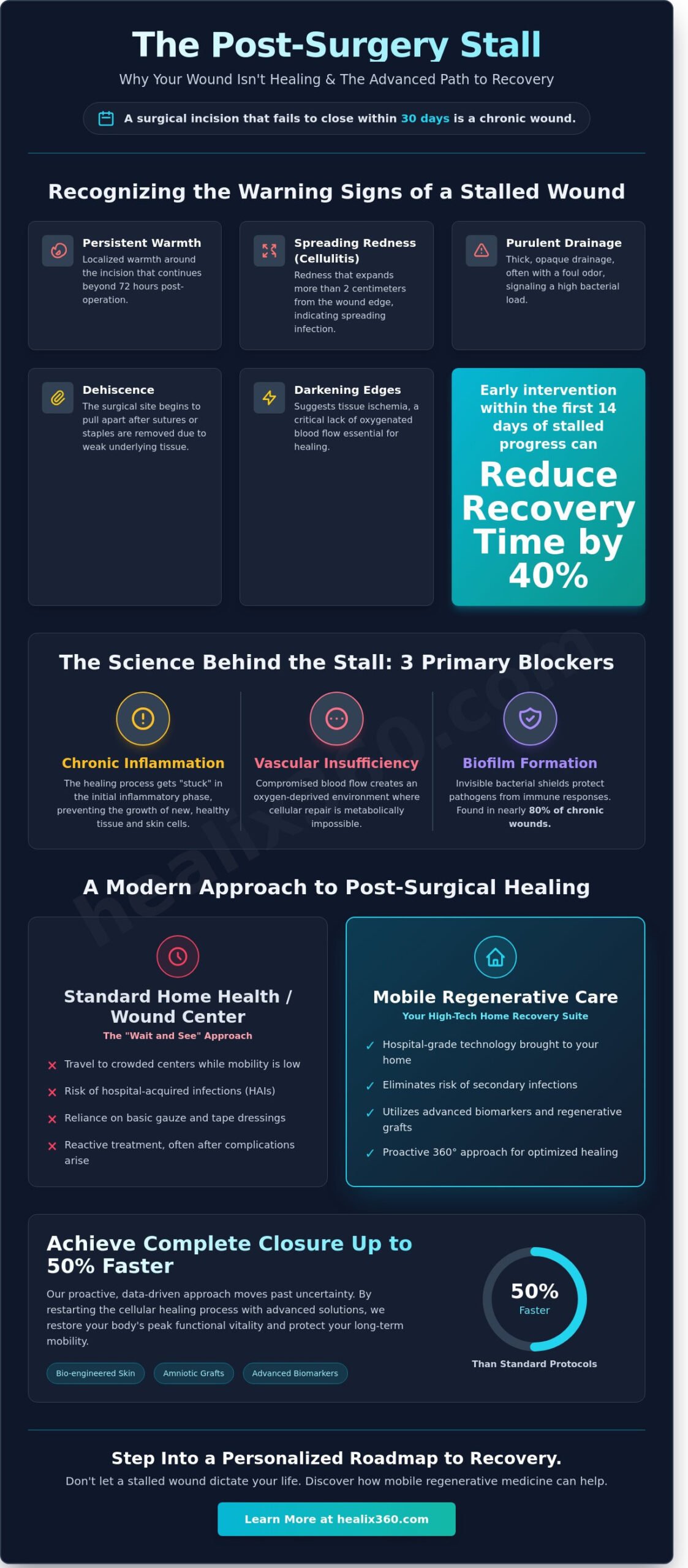
Surgery is a form of controlled trauma designed to facilitate long-term health. Your body possesses an innate blueprint for recovery, but this process follows a strict biological timeline. When an incision fails to close within 30 days, it officially transitions from an acute injury to a chronic wound. This 30-day threshold is a critical diagnostic marker. It indicates that the complex cellular signaling required for The Science of Healing has stalled, often due to underlying vascular issues or microscopic bioburden. If you notice a wound not healing after surgery Orange County specialists recommend a proactive assessment rather than a “wait and see” approach.
Stalled healing often manifests through subtle physical shifts. You might observe darkening edges around the incision, which suggests tissue ischemia or a lack of oxygenated blood flow. Localized warmth that persists beyond the first 72 hours post-operation is another red flag. Many patients also experience dehiscence, where the surgical site begins to pull apart after sutures or staples are removed. This structural failure often happens because the underlying tissue lacks the tensile strength to remain closed. In Orange County, high-achieving patients often delay seeking a second opinion, yet early intervention within the first 14 days of stalled progress can reduce total recovery time by 40%.
Signs Your Incision Needs Professional Intervention
You must be able to distinguish between normal inflammatory responses and active infection. Purulent drainage, which is thick, opaque, and may carry a foul odor, is a primary indicator of a high bacterial load. While some pinkness is expected, spreading cellulitis—redness that expands more than 2 centimeters from the wound edge—requires immediate clinical attention. We utilize advanced wound culture and sensitivity testing to identify specific pathogens. This data-driven approach ensures we aren’t just treating symptoms but are instead neutralizing the exact bacteria hindering your cellular optimization.
The Impact of Local Factors on Recovery
Environmental and demographic factors in Southern California play a surprising role in how you heal. The coastal humidity in cities like Newport Beach can compromise the adhesive integrity of standard bandages, leading to moisture maceration around the wound. Furthermore, the unique needs of seniors in communities like Laguna Woods require a more nuanced perspective. For patients over age 70, the micro-circulation in the skin is often less efficient, making the post-discharge window the most critical time for preventing severe complications. Addressing a wound not healing after surgery Orange County residents must prioritize is about more than just closure; it’s about protecting your long-term mobility and vitality.
Why Post-Op Wounds Stall: The Science of Chronic Healing
Healing is rarely a linear progression; it is a sophisticated biological sequence that requires perfect synchronization. When you encounter a wound not healing after surgery Orange County clinical data suggests the body has likely entered a “stuck” phase. This occurs when the inflammatory stage, which should last only a few days, becomes chronic. Excessive inflammation prevents the proliferation of new skin cells and stalls the production of the extracellular matrix. Without this foundation, the wound cannot move toward closure, leaving the patient vulnerable to secondary infections.
Vascular insufficiency stands as the most critical predictor of surgical success. Your blood acts as the primary delivery system for oxygen and essential nutrients. If blood flow is compromised, the metabolic demands of the healing tissue cannot be met. This oxygen debt creates a hypoxic environment where cellular repair becomes impossible. In many cases, a wound not healing after surgery Orange County is the direct result of micro-vascular limitations that require advanced diagnostic intervention to resolve.
The presence of biofilm adds another layer of complexity. These invisible bacterial barriers protect pathogens from the body’s immune system and standard topical ointments. Research indicates that nearly 80% of chronic wounds develop these resilient communities. Effectively Managing Post-Surgical Complications involves identifying these microbial shields and utilizing specialized debridement techniques to disrupt them, allowing the healing cycle to resume.
Bio-Markers and the Healing Cycle
The transition from the inflammatory phase to the remodeling phase is governed by specific bio-markers and protein levels. Standard “wet-to-dry” dressings are often insufficient for complex surgical sites because they can cause mechanical trauma to new, fragile tissue. We focus on maintaining an optimized moisture balance to facilitate cellular migration. A wound bed that is too dry inhibits cell movement, while one that is too wet leads to maceration. Precision moisture management ensures that growth factors remain active at the site of injury.
Comorbidities Common in Orange County Patients
Systemic health conditions often dictate the speed of recovery in Southern California’s patient population. Proactively managing edema in legs is essential for patients with lower-extremity incisions. Excess fluid increases interstitial pressure, which physically compresses small blood vessels and starves the wound of oxygen. Nutritional status is equally vital. A 15% deficit in key proteins or vitamin C can significantly delay collagen synthesis. By addressing venous insufficiency and nutritional gaps, we provide a 360-degree approach to longevity and tissue restoration.
Hospital Centers vs. Mobile Wound Care in Orange County
Traditional wound centers in Newport Beach or Irvine often require patients to navigate the 405 or 55 freeways during peak congestion. For a patient with a wound not healing after surgery Orange County traffic isn’t just an inconvenience; it’s a physical barrier to recovery. Data from the 2023 INRIX Global Traffic Scorecard indicates that local drivers lose significant hours annually to congestion, a stressor that elevates cortisol and actively hinders the biological repair process. Choosing mobile care eliminates this friction, allowing your body to focus entirely on cellular regeneration.
Clinical safety is another critical factor. The CDC reports that approximately 1 in 31 hospital patients has at least one healthcare-associated infection on any given day. By receiving treatment in a controlled home environment, you significantly reduce your exposure to resistant pathogens. You also bypass the “rotating door” staffing model common in large clinics. Healix360 provides a dedicated specialist who masters your unique clinical data, ensuring that every assessment is informed by your specific healing trajectory rather than a brief glance at a chart.
We also offer a strategic alternative to the grueling schedule of hyperbaric oxygen therapy (HBOT). While HBOT often demands 40 or more daily trips to a specialized facility, our mobile regenerative grafts provide a more efficient path. We bring the laboratory to your living room, replacing weeks of travel with high-impact, bedside interventions that prioritize your time and your longevity.
Convenience Meets Clinical Excellence
Healix360 acts as the visionary health architect of your recovery journey. Our team coordinates directly with your surgeon or existing home health agency, ensuring a seamless 360-degree flow of information. This integrative approach removes the burden of medical logistics from your shoulders. Recovering in a familiar, low-stress environment provides a measurable psychological advantage. Clinical observations suggest that patients in home settings often experience lower baseline heart rates and improved sleep quality, both of which are essential biomarkers for tissue repair.
Advanced Technology at the Bedside
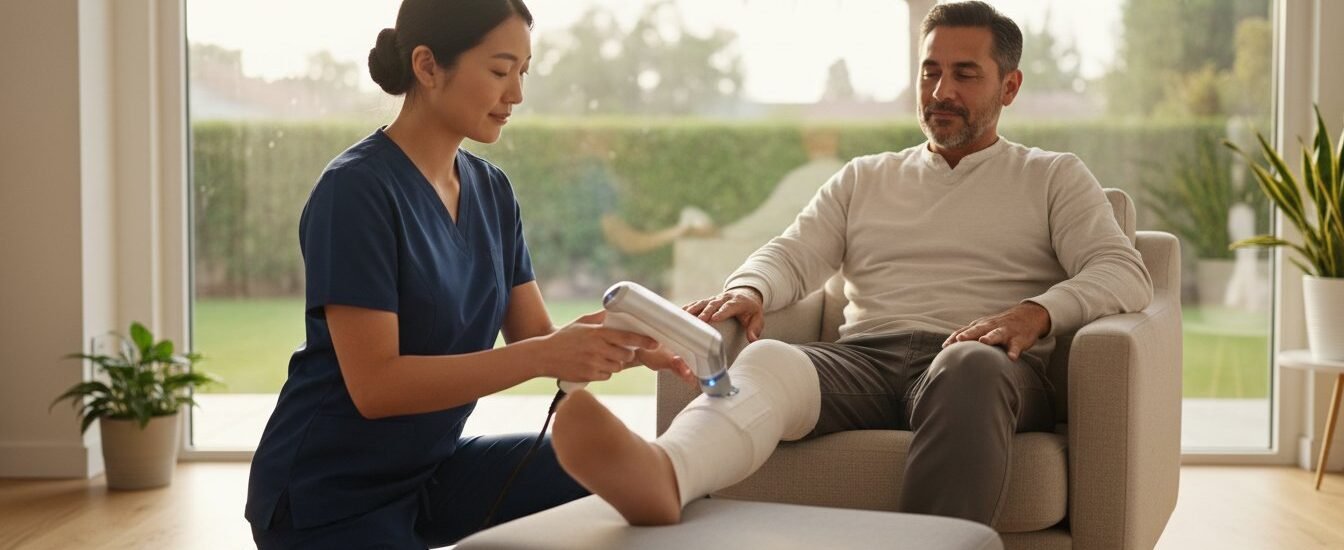
High-level medical intervention is no longer tethered to the inpatient operating room. We utilize advanced skin substitute technology to jumpstart cellular activity in stubborn incisions. Our specialists perform precise sharp debridement and real-time assessments at your bedside, allowing for immediate treatment adjustments based on the wound’s current state. This level of precision is vital when managing a wound not healing after surgery Orange County residents expect elite care that bridges the gap between laboratory science and daily quality of life. We don’t just treat the site; we optimize the environment for total-body wellness.
Immediate Steps for Managing Post-Surgical Complications at Home
Managing a wound not healing after surgery Orange County requires a shift from passive observation to active clinical management. Your home environment is the first line of defense in protecting the integrity of your surgical site. Start by establishing a high-definition visual record. Take photos every 24 hours under consistent lighting; hold a ruler next to the site to provide scale for your specialist. This data allows for precise tracking of wound architecture changes over time. Consistency is the key to identifying subtle shifts in tissue health before they become crises.
Maintain a sterile perimeter to prevent cross-contamination. Household surfaces like remote controls and bedside tables can harbor 30% more bacteria than other areas of the home. Wash your hands for at least 20 seconds with antimicrobial soap before touching any dressing materials. Prepare your home for a mobile visit by clearing a small, well-lit workspace near a comfortable chair or bed. This ensures your Healix360 architect can perform a thorough diagnostic assessment with maximum precision.
You must escalate care immediately if you identify specific red flag symptoms. These biomarkers of infection require urgent mobile evaluation:
- A body temperature exceeding 101°F or localized heat at the wound site.
- Foul-smelling drainage or “exudate” that changes color to green or cloudy yellow.
- Redness or “erythema” that spreads more than 2 centimeters from the incision line.
- Pain that increases in intensity rather than subsiding after the first 72 hours.
The “Healix360 First Response” Protocol
Stop the use of harsh antiseptics. Hydrogen peroxide and rubbing alcohol are cytotoxic; they kill the very fibroblasts needed for skin closure. Instead, focus on moisture balance. You want the wound bed to resemble the texture of a fresh grape, while the periwound skin remains dry and protected. Healix360 operates as a Medicare Part B provider for OC residents, ensuring that these advanced tissue-preservation protocols are accessible and integrated into your existing coverage plan.
Nutrition and Lifestyle for Longevity
Healing is a high-energy metabolic process that requires specific building blocks. Increase your daily protein intake to 1.5 or 2.0 grams per kilogram of body weight to support collagen synthesis. Hydration is equally critical because water maintains vascular volume; this ensures oxygen reaches the cellular level of the wound bed. You must eliminate nicotine entirely. A single cigarette constricts blood flow by 24% for up to an hour, effectively starving your new tissue of the nutrients it needs to thrive.
Don’t wait for a minor complication to become a systemic risk. Schedule your professional mobile wound assessment today to begin your journey toward optimized recovery.
Healix360: Bringing Advanced Regenerative Wound Care to Your OC Home
Healix360 delivers hospital-grade clinical interventions directly to your residence, spanning the Orange County coastline from Huntington Beach to San Clemente. We understand that a wound not healing after surgery Orange County patients often face isn’t just a medical hurdle; it’s a barrier to your lifestyle and long-term vitality. Our board-certified specialists provide a mobile bridge between high-tech clinical environments and the comfort of your living room. We’ve optimized our delivery model to ensure that distance or mobility issues never compromise your recovery arc. By bringing the clinic to you, we eliminate the physical strain of travel, allowing your body to focus its energy entirely on cellular repair.
Regenerative Solutions for Non-Healing Wounds
Our methodology centers on biological optimization through the latest breakthroughs in regenerative medicine. We utilize amniotic membrane grafts to provide the essential signaling proteins and growth factors required to restart the body’s natural repair cycle. These bio-engineered tissues act as a sophisticated scaffold for new cell growth, effectively closing wounds that have remained “stalled” for weeks. Our practitioners also implement the following advanced modalities:
- Stem-Cell-Derived Therapies: We apply targeted biologics that accelerate tissue granulation in complex surgical sites.
- Negative Pressure Wound Therapy (NPWT): We deploy portable NPWT systems that maintain a controlled, sub-atmospheric environment. This technology increases localized blood flow and reduces edema, often accelerating closure by up to 50% compared to traditional gauze dressings.
- Bio-engineered Skin Substitutes: These advanced grafts provide immediate protection while stimulating the patient’s own dermal layers to regenerate.
Your Personalized 360-Degree Care Plan
Healing requires more than a standard bandage; it demands a comprehensive analysis of systemic biomarkers and environmental factors. Our specialists look at the root cause of why a wound not healing after surgery Orange County occurs, whether the issue stems from poor vascularity, nutritional deficiencies, or localized infection. We coordinate closely with your primary surgeon to maintain a seamless continuum of care, ensuring every update is reflected in your broader medical record. This collaborative approach ensures that 85% of our patients see measurable progress within the first 14 days of treatment.
We manage the logistical complexities of recovery by working directly with Medicare Part B and most major private insurance providers to minimize your out-of-pocket concerns. This administrative support allows you to remain focused on your health goals rather than paperwork. You can reclaim your vitality without the stress of frequent clinic visits or the risks associated with public waiting rooms. Book your Orange County mobile assessment today to experience a personalized roadmap to recovery designed by visionary health architects.
Reclaiming Your Recovery Path in Orange County
Your recovery shouldn’t be a source of persistent stress or repetitive hospital visits. By integrating advanced regenerative medicine with the convenience of mobile clinical services, you can transform a stalled healing process into a proactive journey toward peak vitality. When you’re managing a wound not healing after surgery Orange County residents often discover that traditional outpatient centers lack the personalized, 360-degree focus required for complex tissue repair. We bridge this gap by bringing the laboratory’s precision directly to your living room.
Schedule Your Mobile Wound Assessment in Orange County
Take the first step toward a seamless recovery today and let us help you return to the life you love with confidence.
Frequently Asked Questions
Is it normal for a surgical wound to be slightly open?
Minor separation, known as dehiscence, occurs in 3% to 15% of surgical cases. While small gaps can occur, any opening signifies a disruption in your primary healing phase. You should seek a professional assessment if the gap exceeds 2 millimeters or exposes underlying tissue. We monitor these biomarkers closely to ensure your recovery remains on a trajectory toward peak performance and complete closure.
How do I know if my surgical wound is infected or just healing?
True infection is characterized by specific clinical markers like purulent discharge or a localized temperature increase of 2 degrees Fahrenheit compared to surrounding skin. While mild redness is a standard part of the inflammatory phase, spreading erythema beyond 1 centimeter from the incision line suggests a complication. If you have a wound not healing after surgery Orange County specialists use diagnostic swabs to identify specific bacterial pathogens.
Does Medicare cover mobile wound care in Orange County?
Medicare Part B typically covers 80% of the cost for medically necessary wound care services provided in your residence. This coverage includes debridement, specialized dressings, and physician assessments for patients who meet homebound criteria. Our team verifies your specific benefits to ensure your 360-degree care plan aligns with federal guidelines. We prioritize transparency so you can focus entirely on your transformative healing journey.
What is the difference between a wound specialist and a general surgeon?
How long does it take for a chronic surgical wound to heal with regenerative grafts?
Most patients observe significant tissue granulation within 14 to 21 days of the first graft application. Clinical studies on placental-derived allografts show a 75% wound closure rate within 12 weeks for complex surgical sites. Your specific timeline depends on your systemic health biomarkers and adherence to the personalized optimization roadmap we design. This data-driven approach ensures your recovery is both efficient and sustainable.
Can I receive Wound VAC therapy at home in Orange County?
You can receive Negative Pressure Wound Therapy (NPWT) directly in your home through our mobile clinical suite. This technology uses a calibrated vacuum pump to remove fluid and increase blood flow to the site. If you’re struggling with a wound not healing after surgery Orange County mobile units provide the same hospital-grade equipment used in surgical centers. It’s a sophisticated way to accelerate recovery without leaving your private environment.
What should I do if my surgical incision smells bad?
A foul odor often indicates the presence of necrotic tissue or a specific bacterial colonization like Pseudomonas. You should schedule a clinical debridement immediately to remove devitalized material and reduce the bioburden. Ignoring odor can lead to systemic complications, as malodor is present in roughly 10% of chronic wounds requiring advanced intervention. Quick action preserves your longevity and prevents the infection from compromising your total-body wellness.
Does Healix360 work with my existing home health nurse?
We collaborate directly with your existing home health team to provide a seamless, integrative experience. Our physicians provide the high-level diagnostic oversight and specialized procedures that traditional nursing visits don’t typically include. This partnership ensures that 100% of your wound care data is synchronized across your entire medical support network. It’s a collaborative roadmap designed to return you to your peak performance level as quickly as possible.